
Design of Various Fish
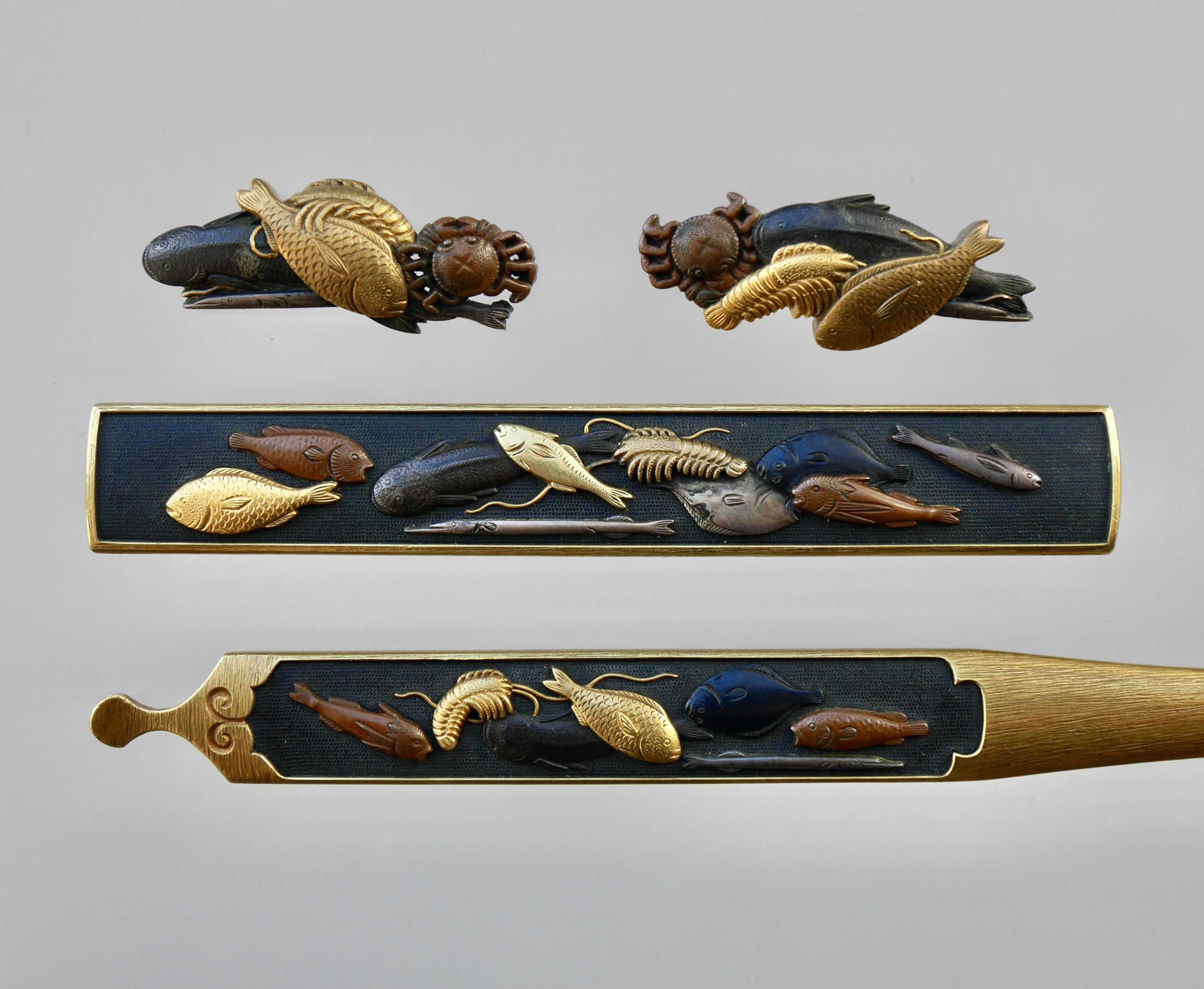
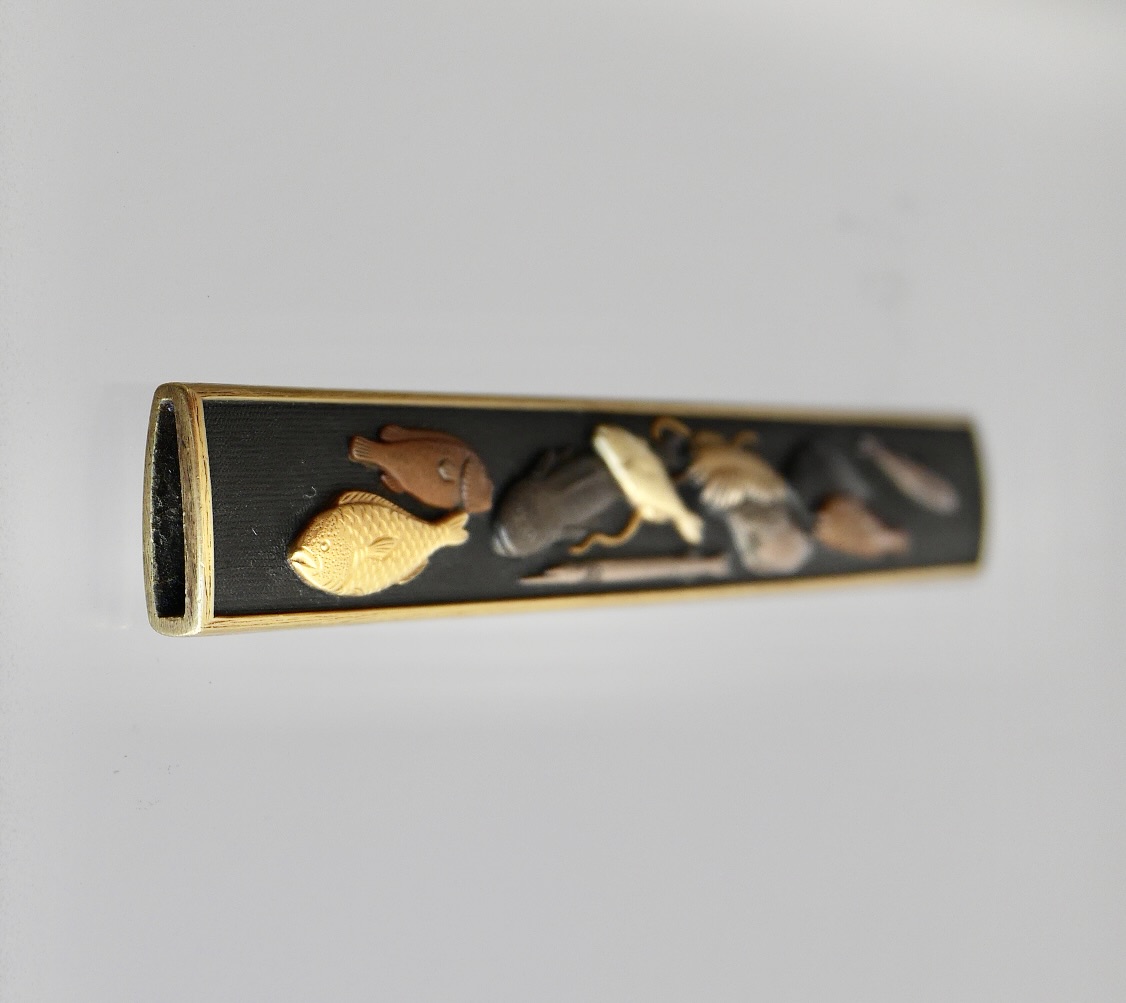
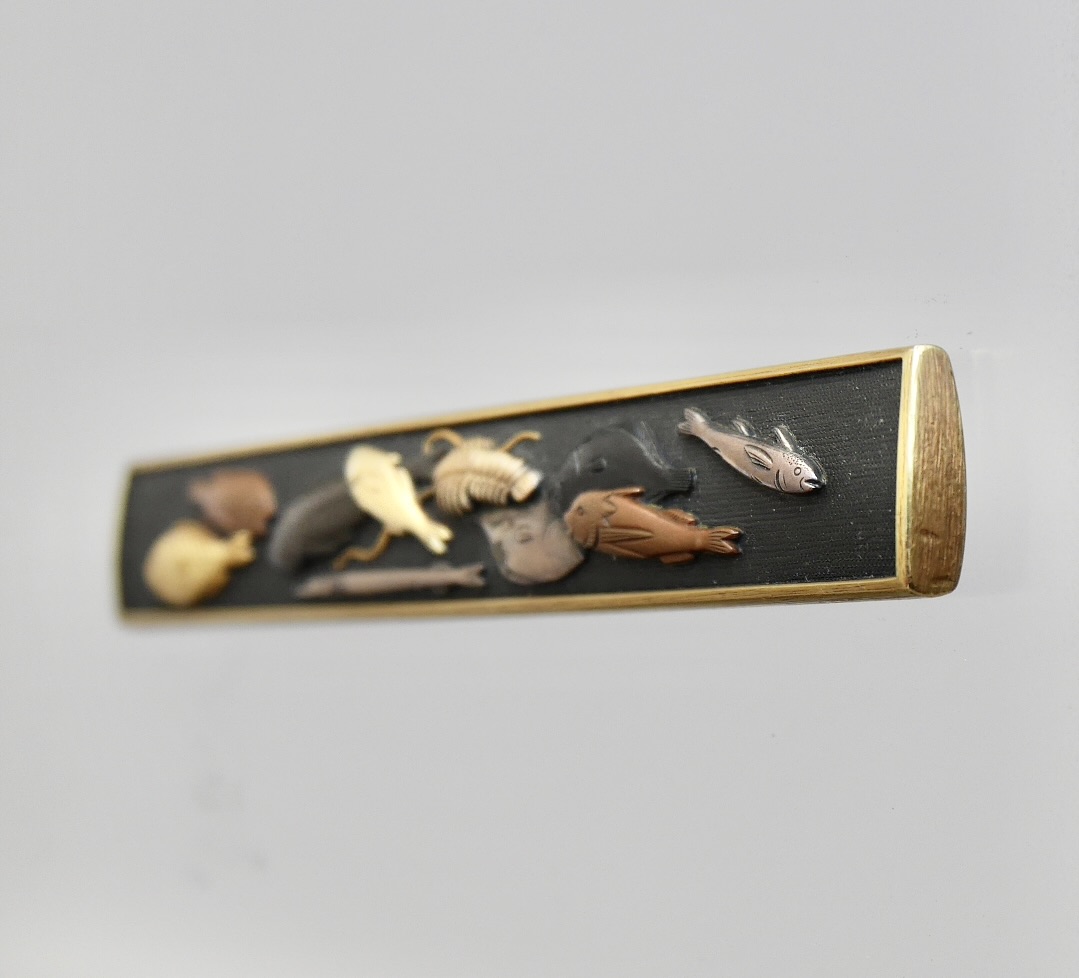
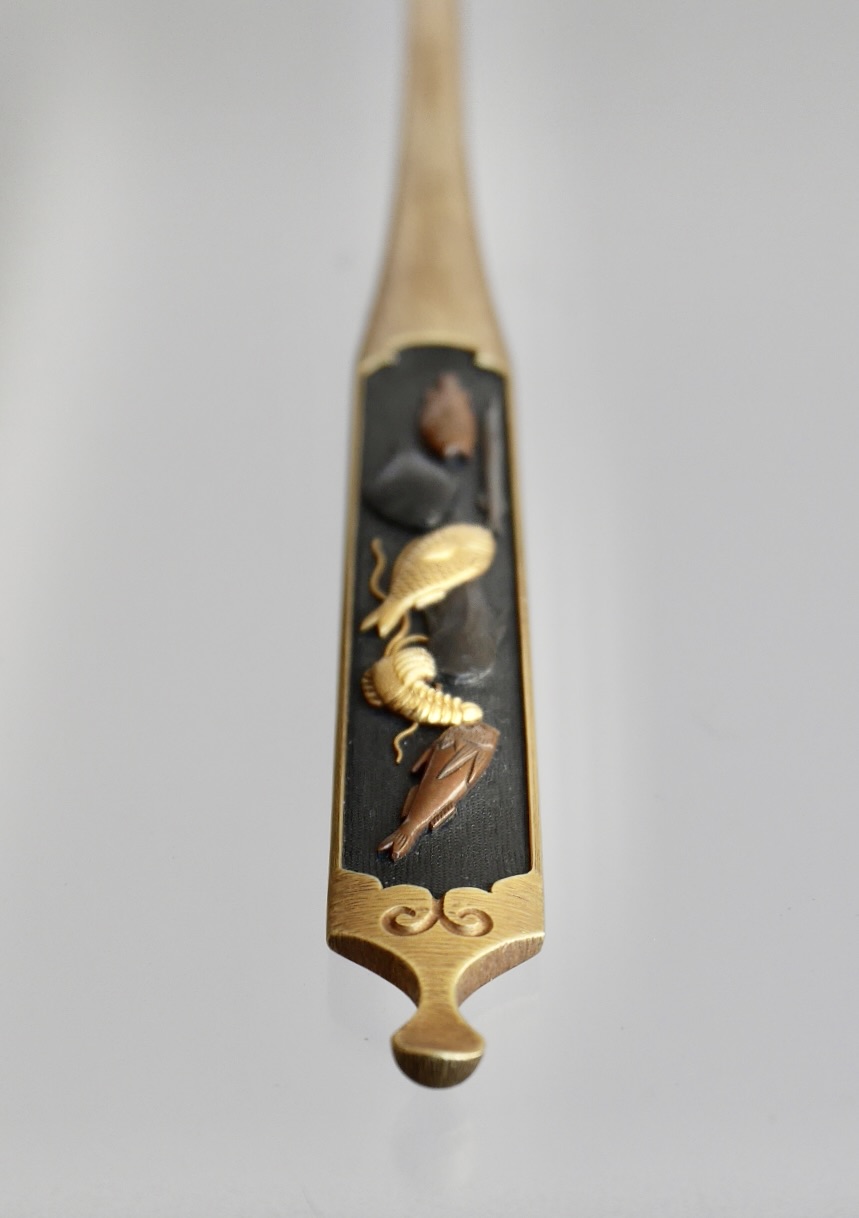
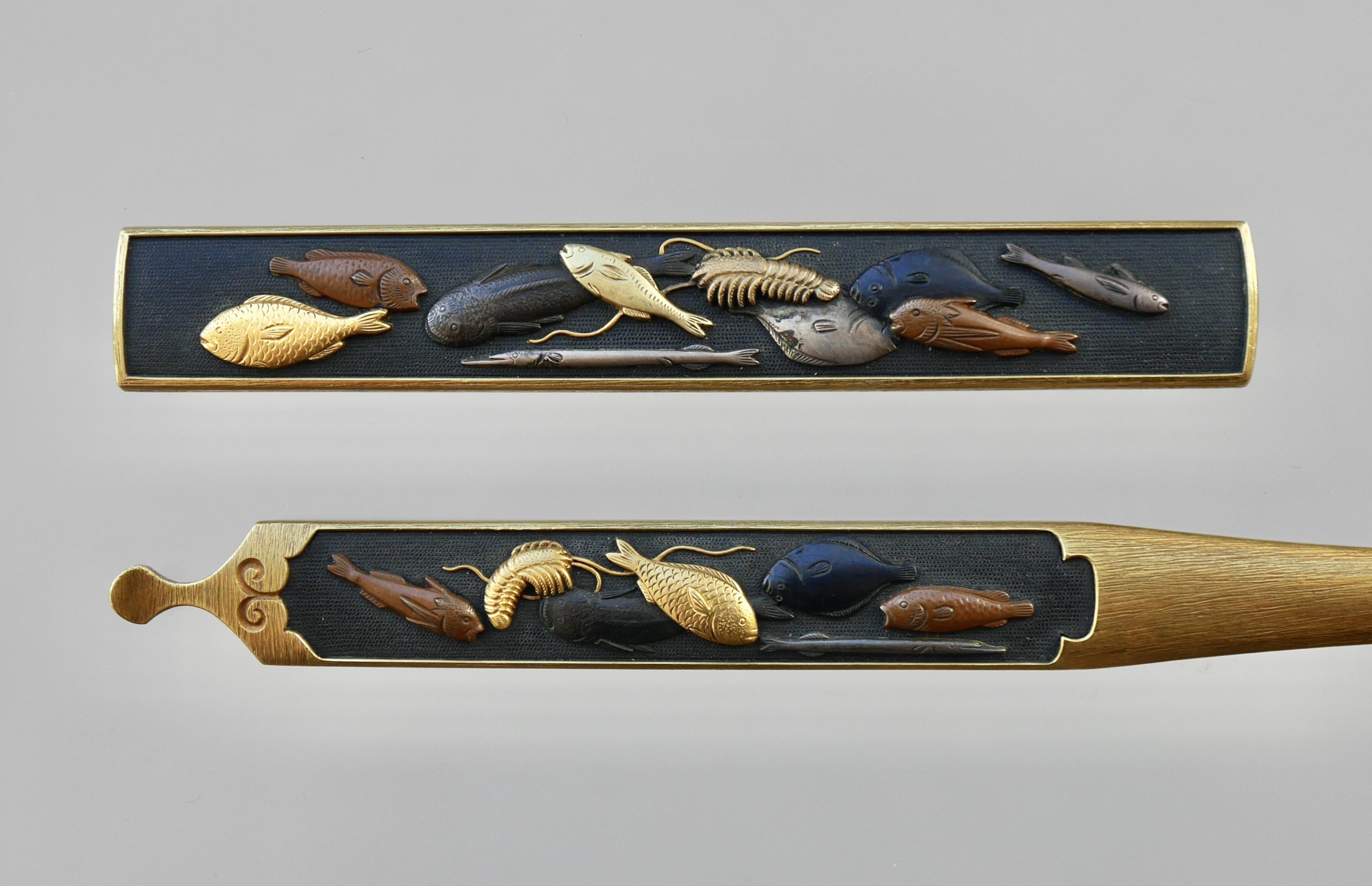
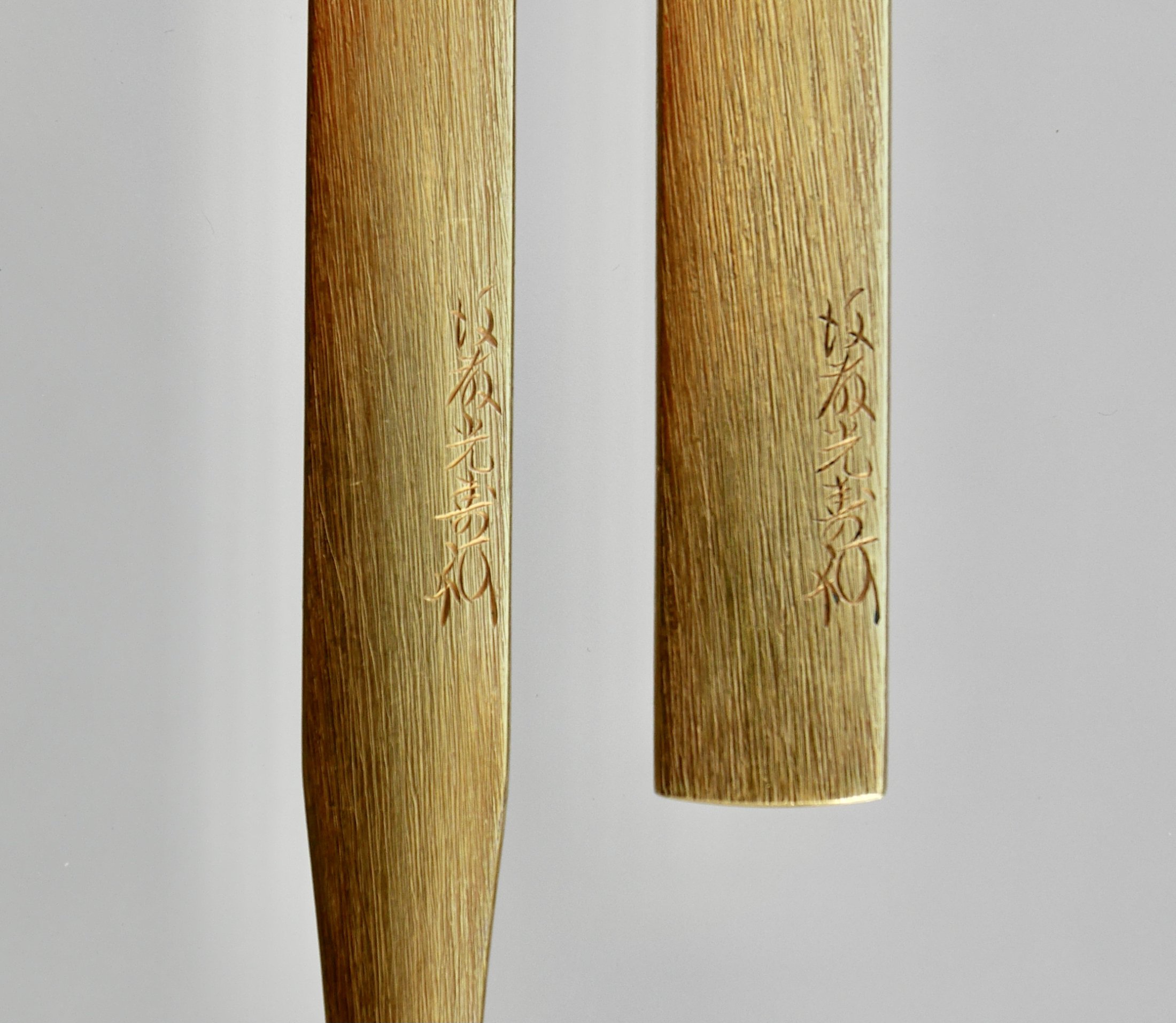
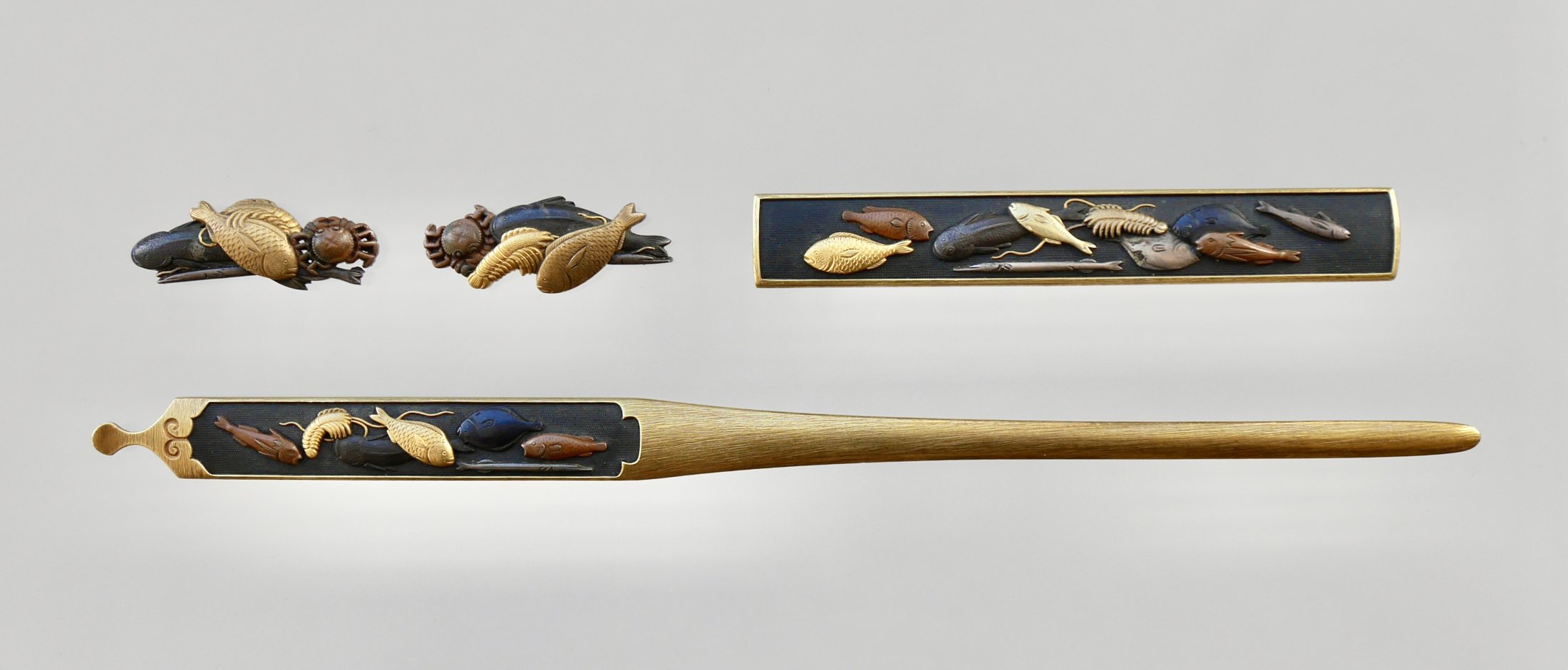
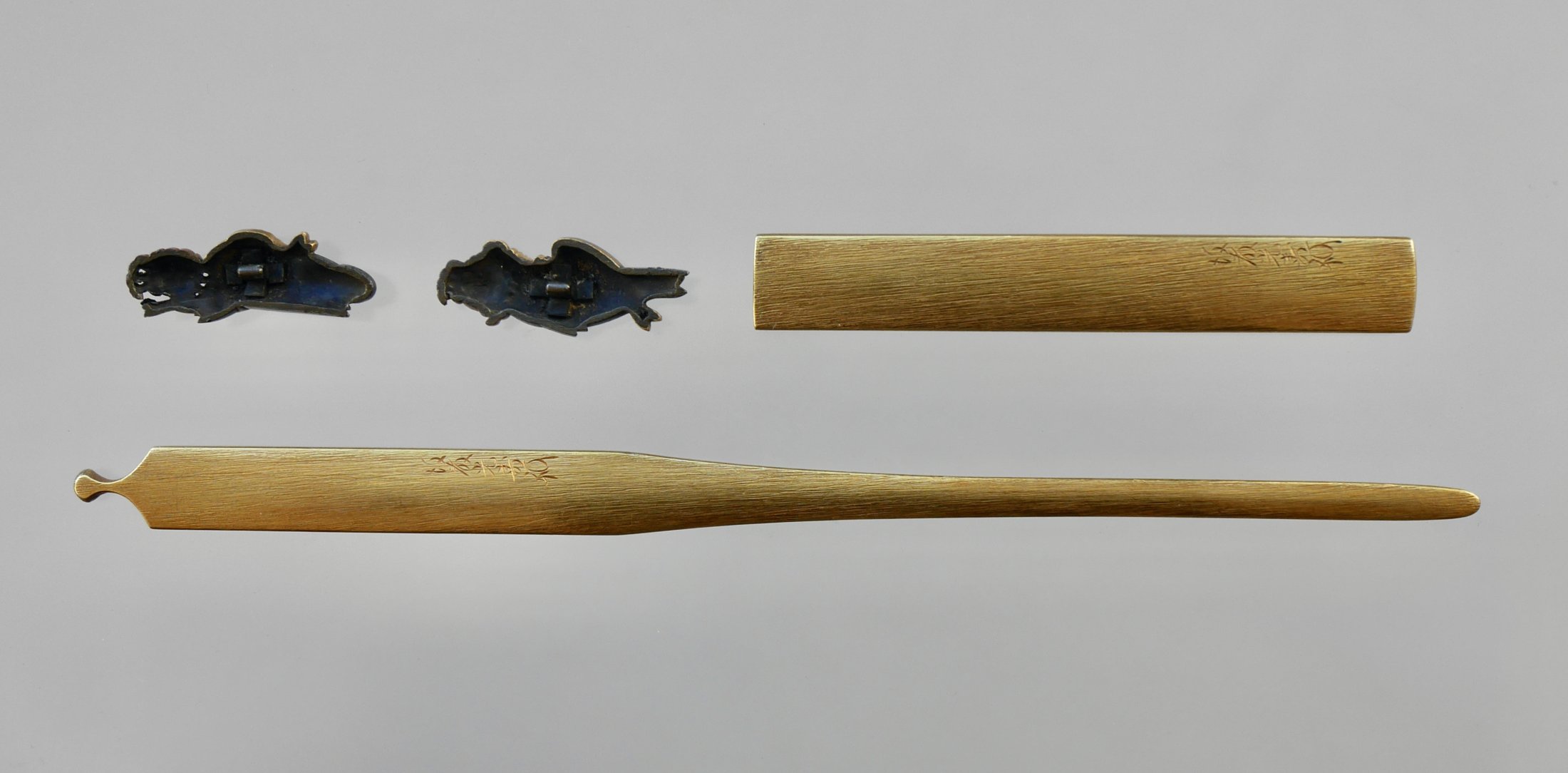
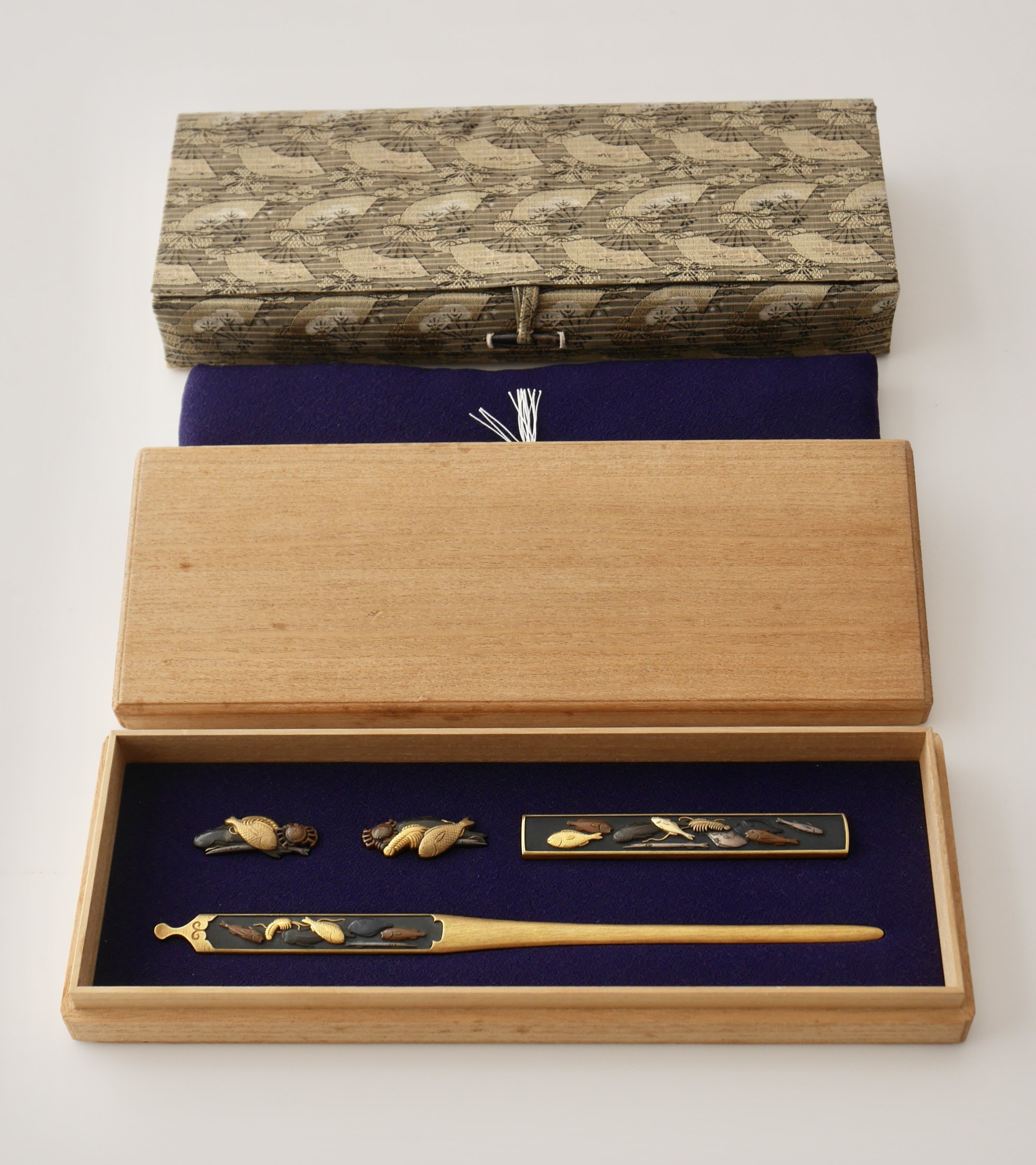
Gotō Tsūjō was born in Kanbun 4 (1664) as the son of Senjō, himself the son of the celebrated master Gotō Kenjō. Mitsuyoshi, who had been designated heir to the tenth-generation Renjō, died young at the age of twenty-five, leaving no successor. Tsūjō was therefore adopted into the main line and succeeded as the eleventh generation of the Gotō family in Genroku 10 (1697) at the age of thirty-four. From early times, the saying “Yū, Kō, and Tsū” referred to Yujo, Kōjō, and Tsūjō as the three great masters of the Gotō family carving tradition.
This period saw the emergence of many outstanding machibori masters, including Yokoya Sōmin, celebrated as the founder of machibori, as well as Nara Toshinaga, Tsuchiya Yasuchika, and Sugiura Joi, who together were known as the “Narasan-saku” (Three Great Masters of the Nara School). Their free imagination, innovative styles, and dynamic compositions were highly admired at the time.
In such an age, Tsūjō’s achievement in competing with these great machibori artisans by devising a wide variety of motifs and bold new compositions, while at the same time contributing to the continued prestige of the Gotō family, has long been highly esteemed.
This mitokoromono with a design of various fish represents one of these innovative new motifs and is not seen prior to Tsūjō’s time. The lively and brilliant atmosphere of the fish markets of Edo can almost be felt within the composition, and the theme must also have appealed to samurai tastes of the period. The set depicts a variety of sea creatures, including sea bream, shrimp, crab, flounder, halfbeak, horse mackerel, and catfish, rendered in vivid combinations of red-gold, blue-gold alloy, shibuichi, shakudō, and suaka.
At the same time, the fish are subtly stylized, elevating the composition into a work fully in keeping with the dignity and tradition of the Gotō family. Entirely free from damage or flaws, this mitokoromono is a masterwork worthy of being treasured, and one that vividly expresses Tsūjō’s distinctive individuality.