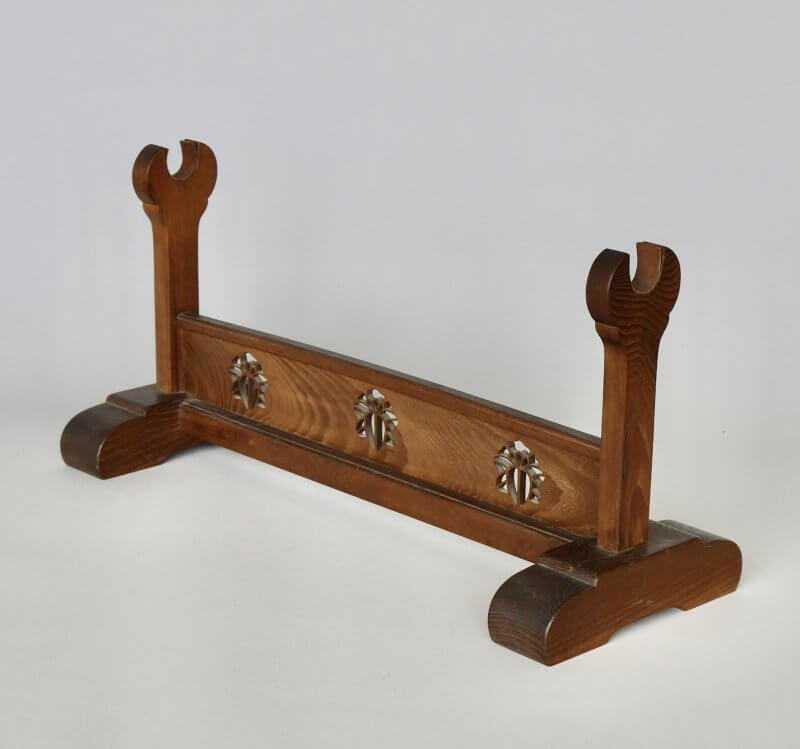
Black lacquered sword rack with chigai-takanoha mon of the Asano family. Heirloom of Geishū Asano family

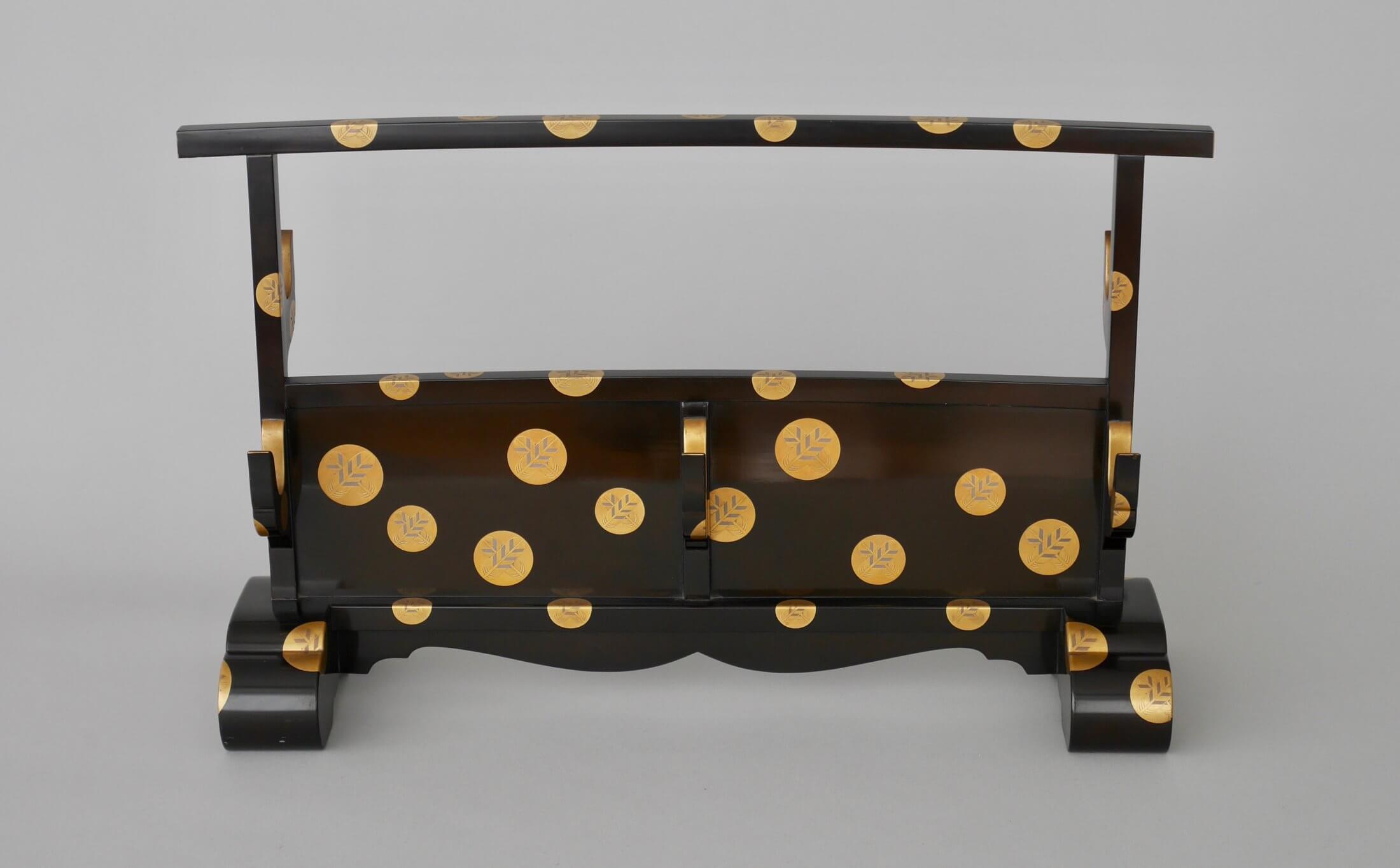
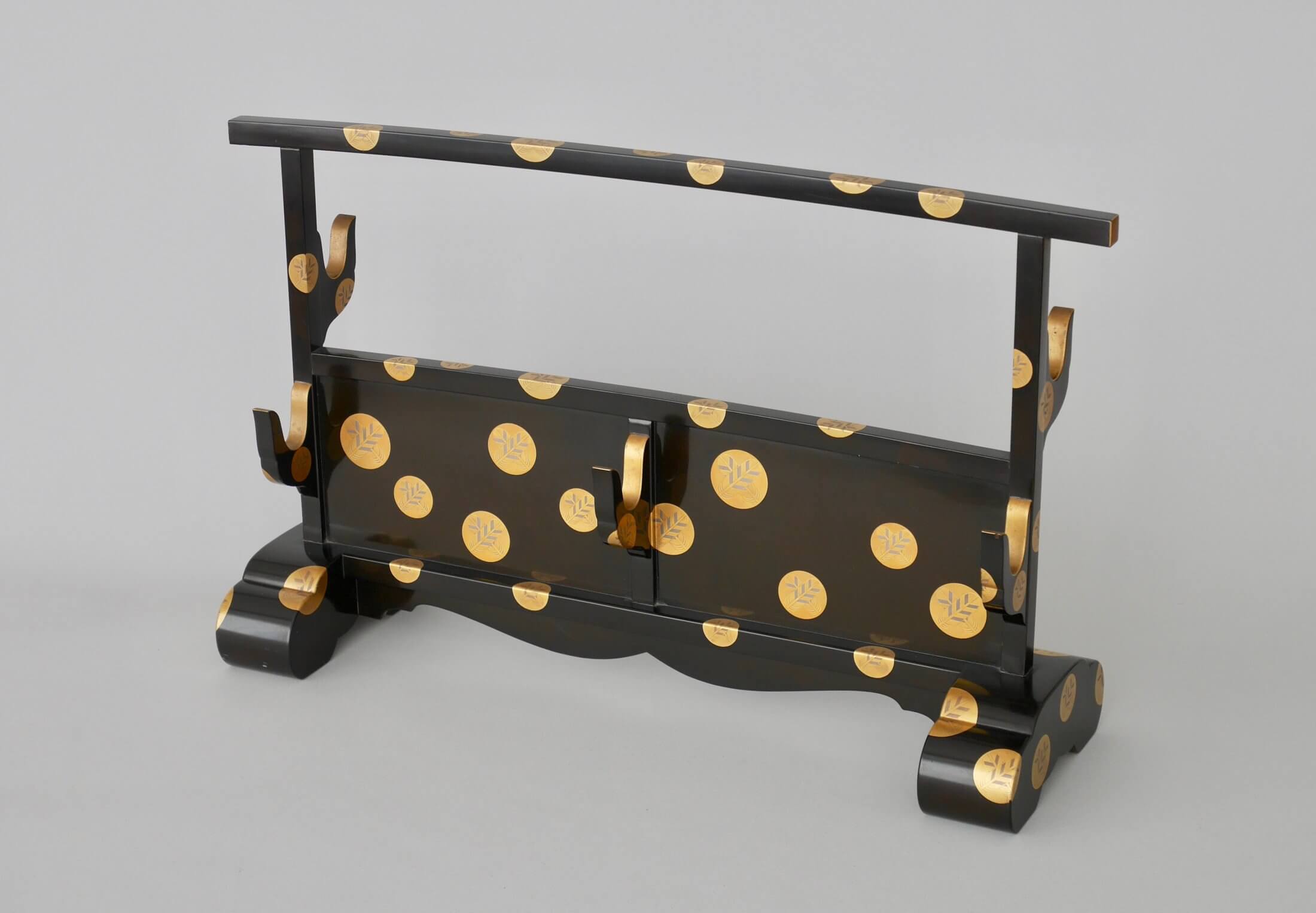
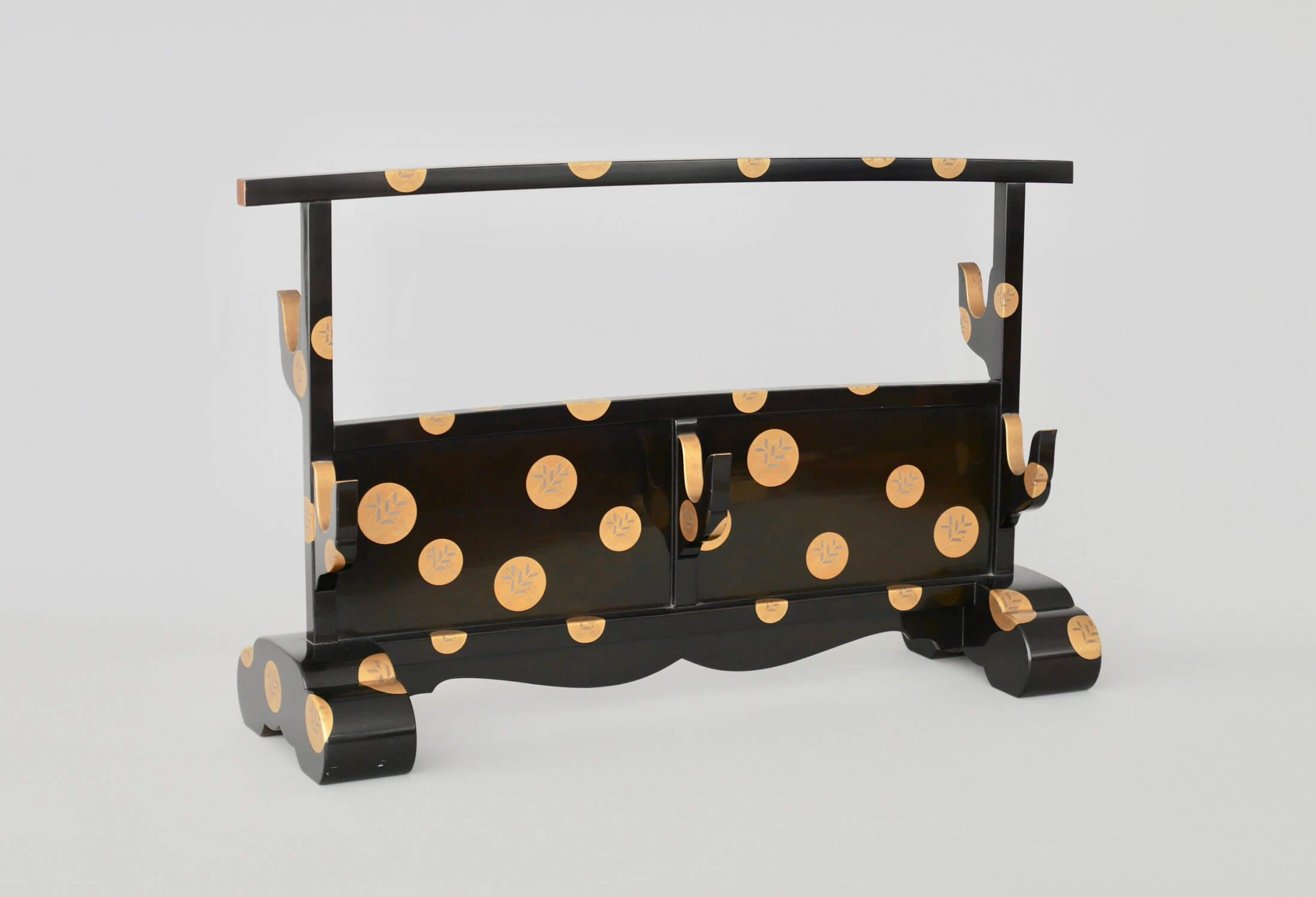
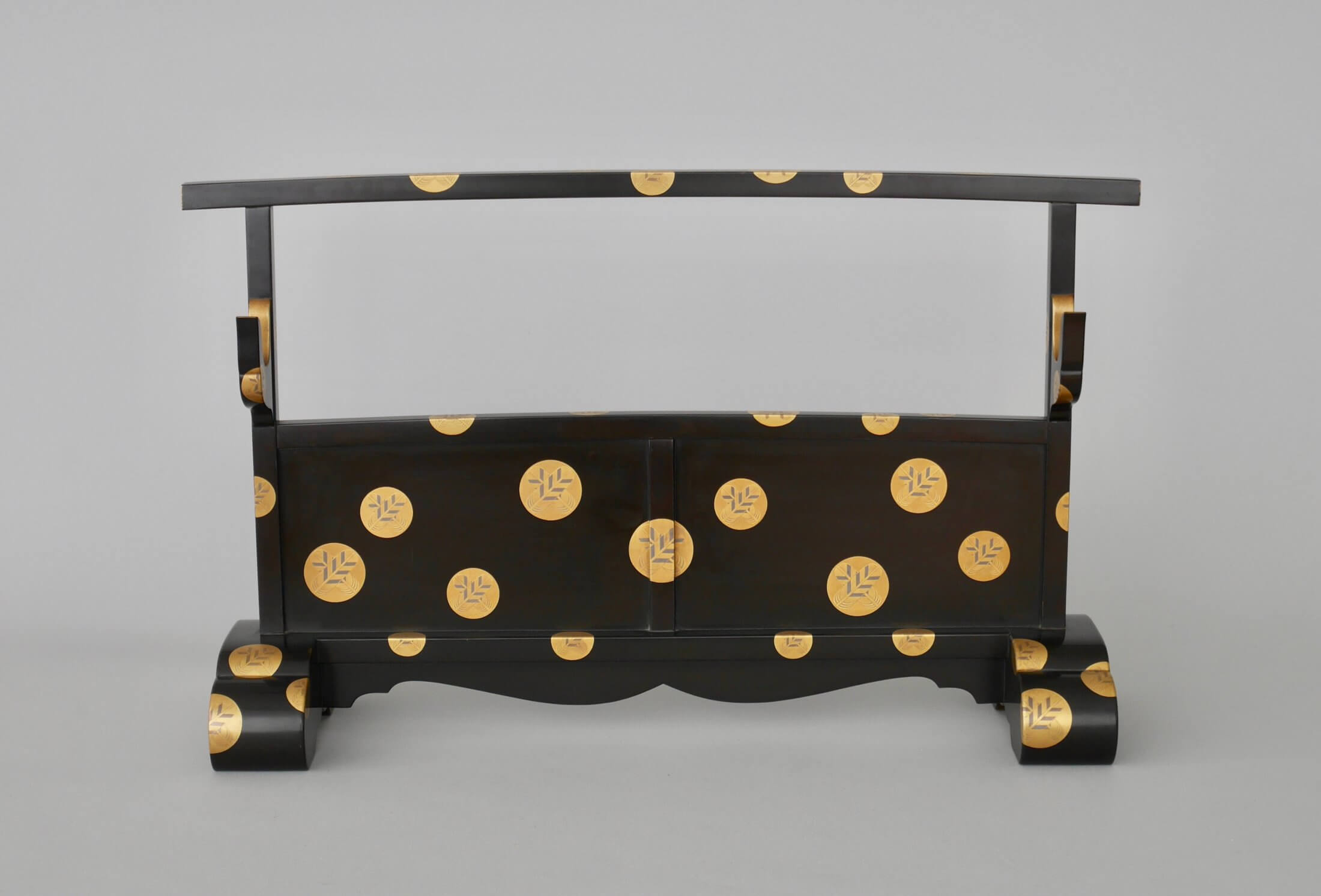
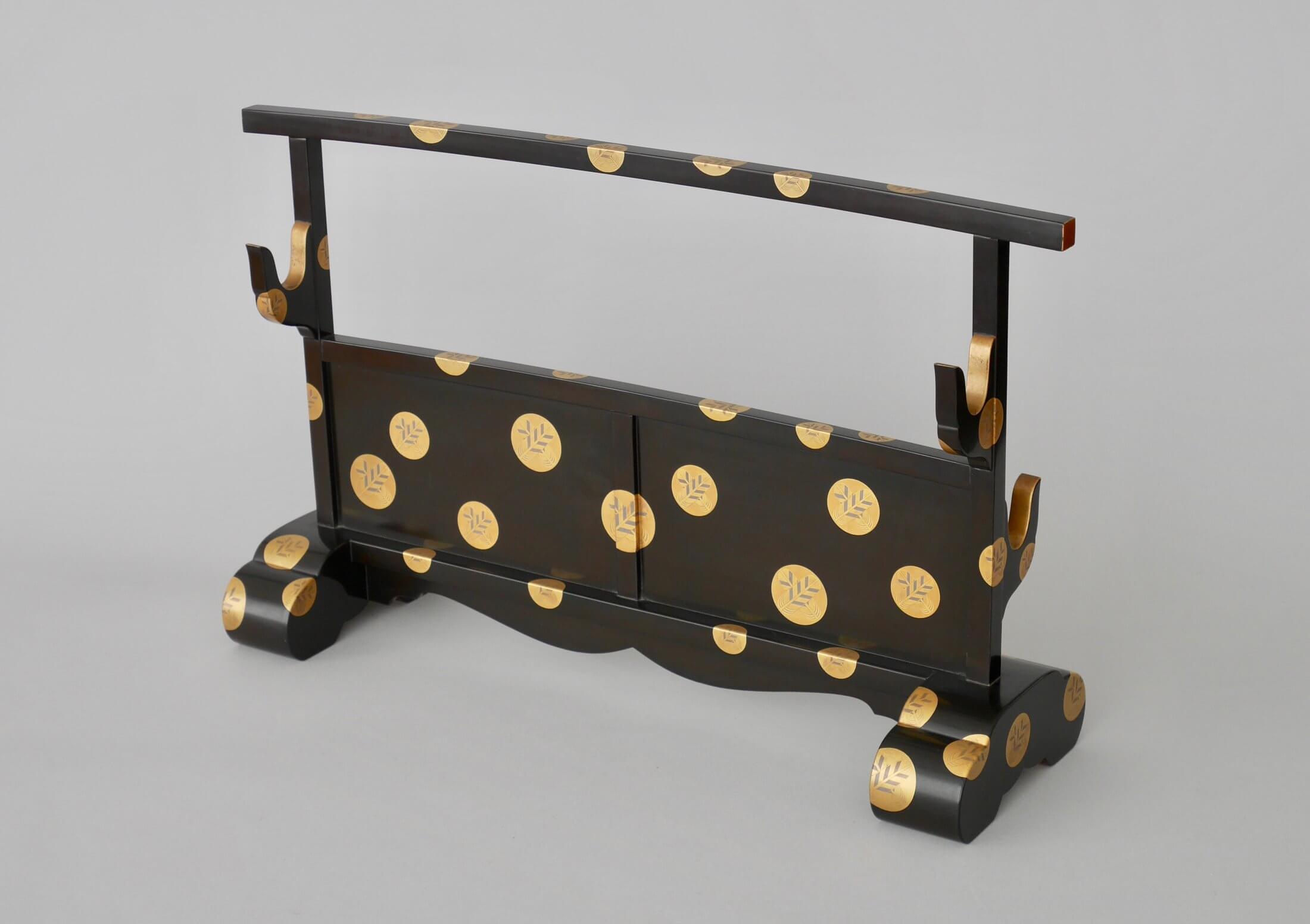
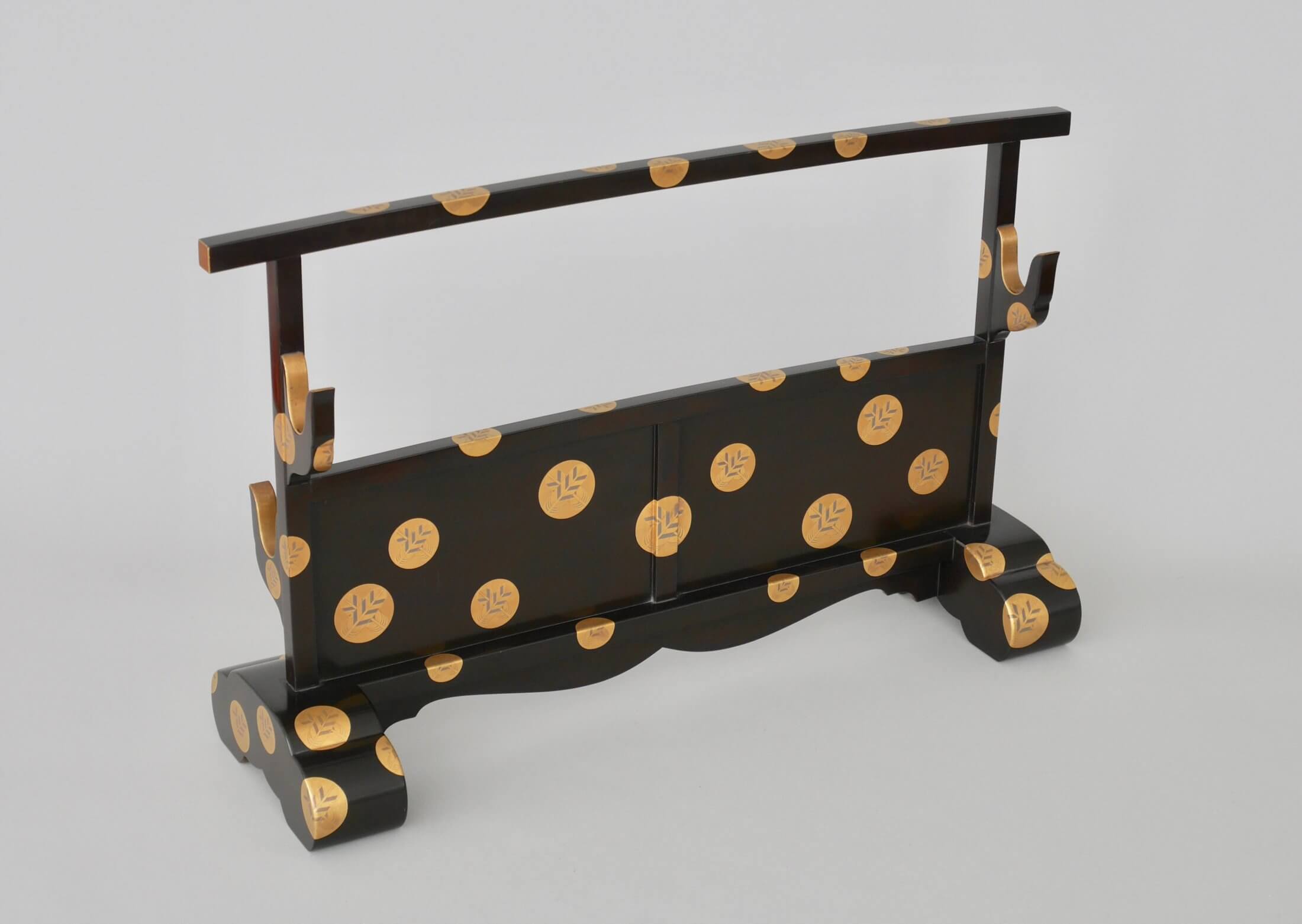
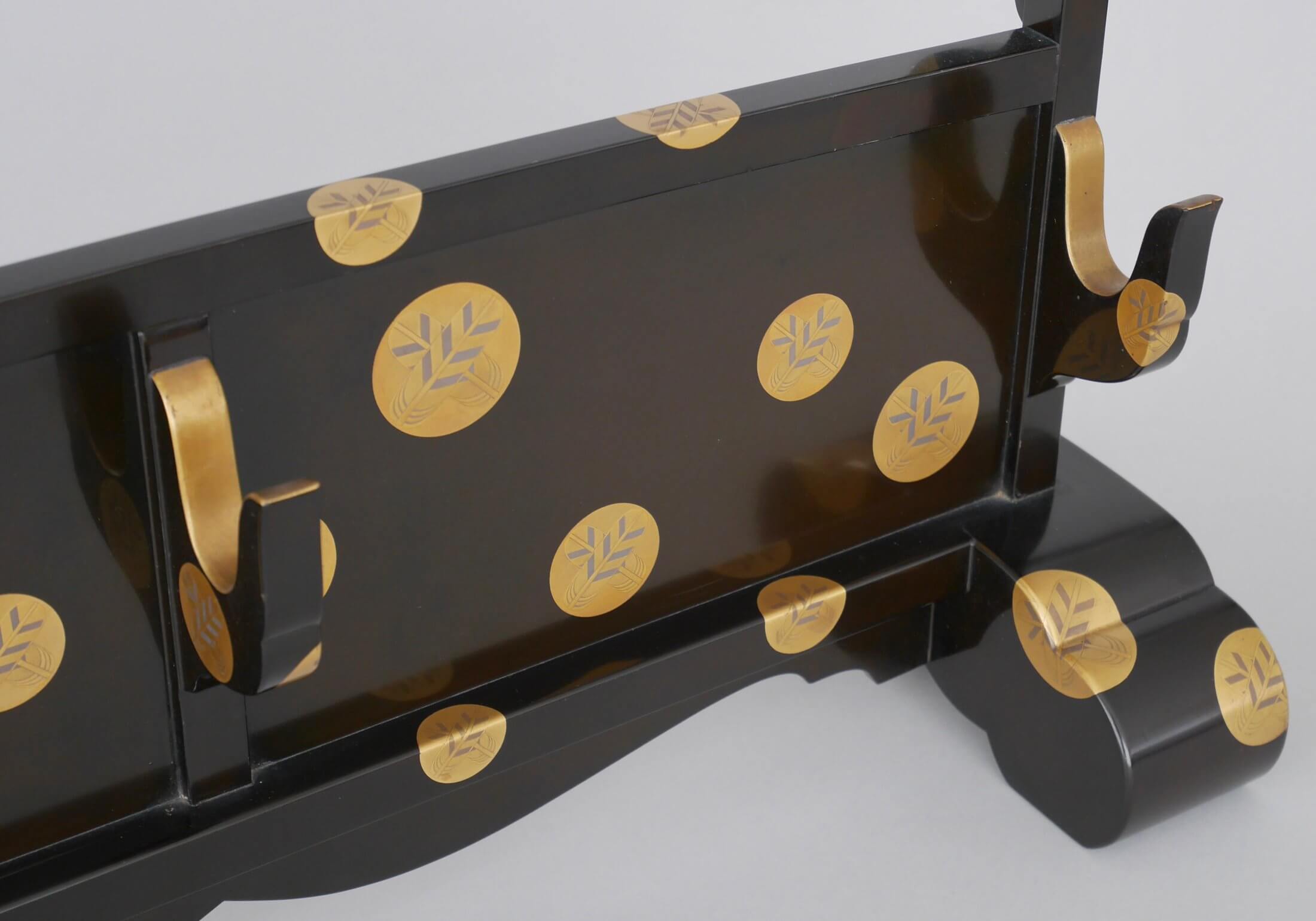
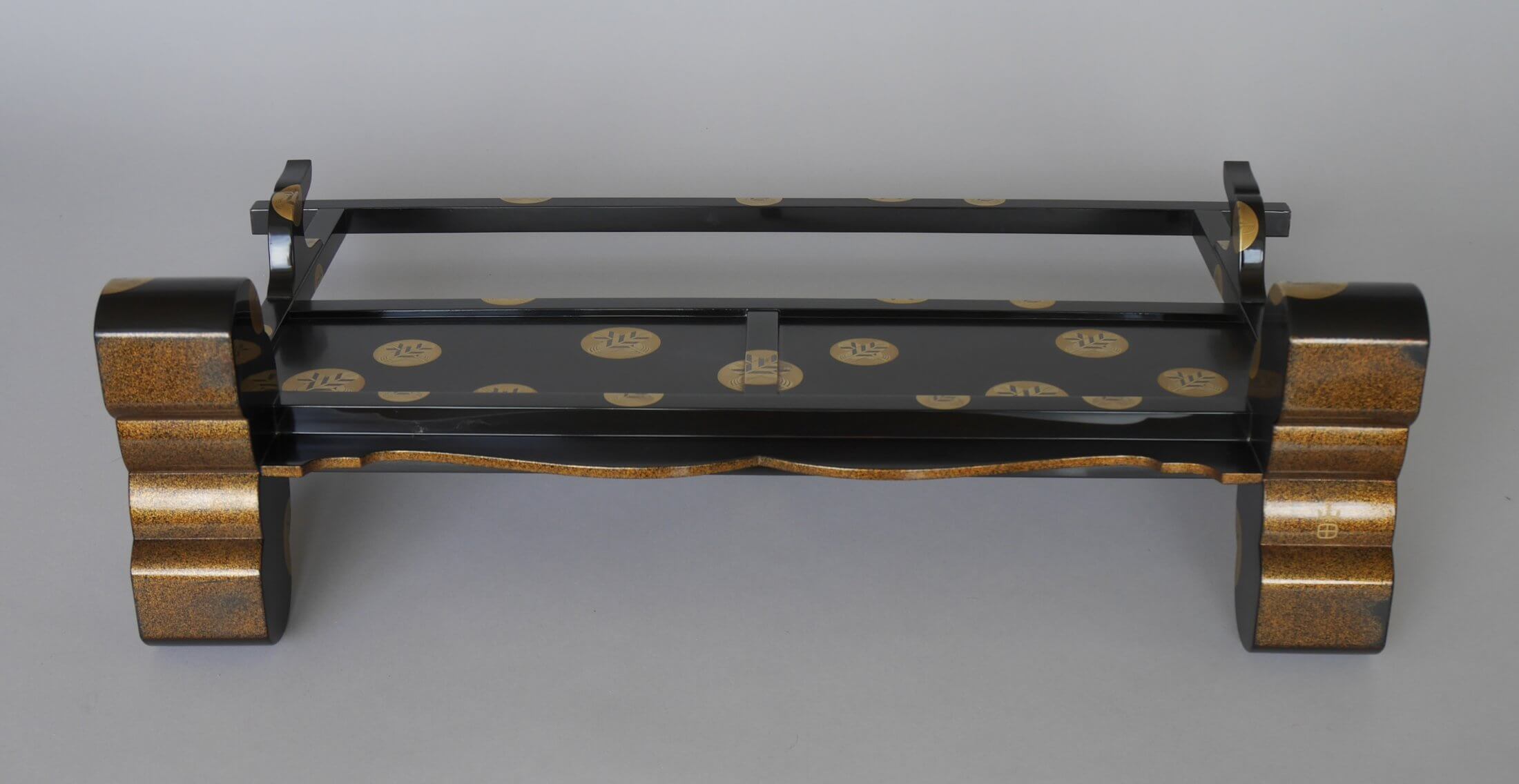
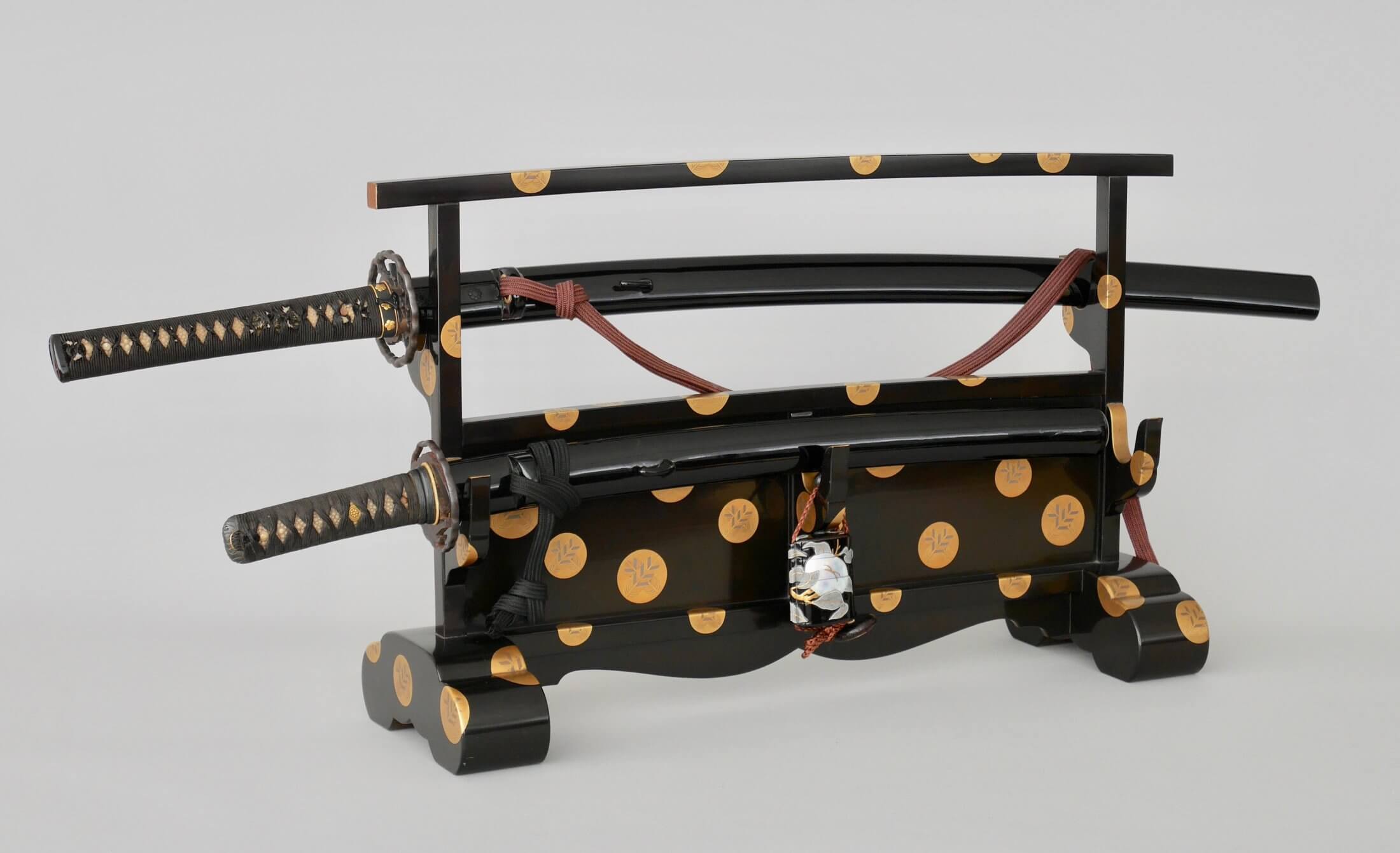
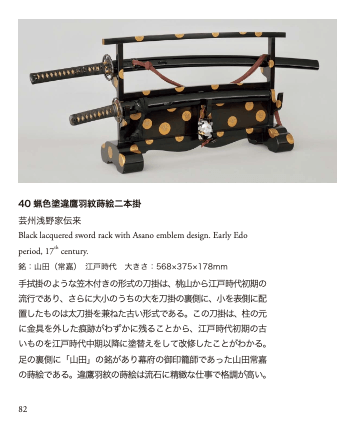
This type of sword rack, with kasagi (top rail) resembling that of tenugui-gake (a piece of furniture for hanging a hand towel), developed as warfare changed. Since katanagake and tenugui-gake were not available in the field during military campaigns, sword racks of this type were made together with matching tenugui-gake. This style was particularly popular from the Momoyama period through the early Edo period. An even older arrangement, in which the larger sword of a daishō was placed on the back of the sword rack and the smaller sword on the front, also allowed the sword rack to serve as a tachi-gake.
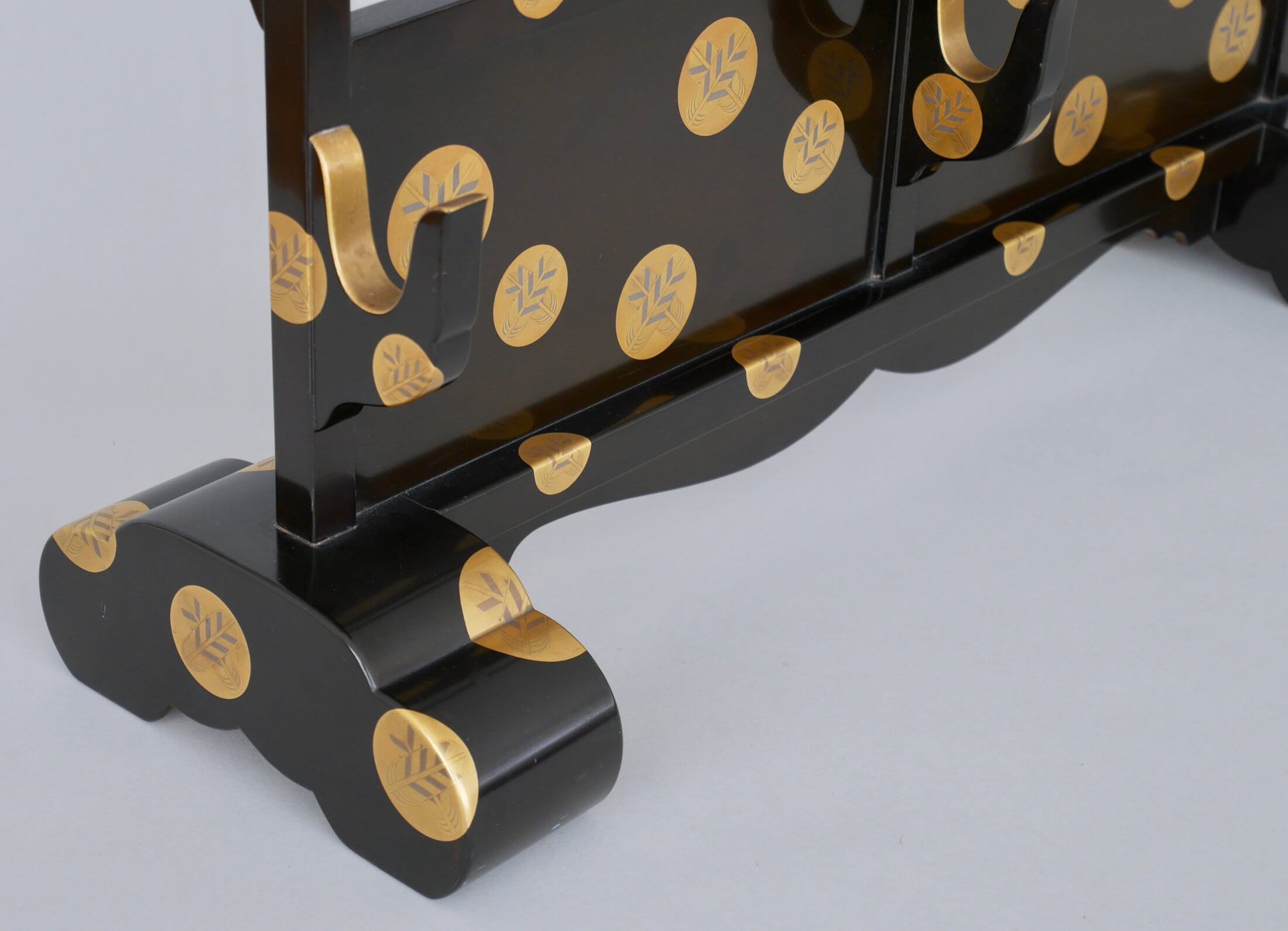
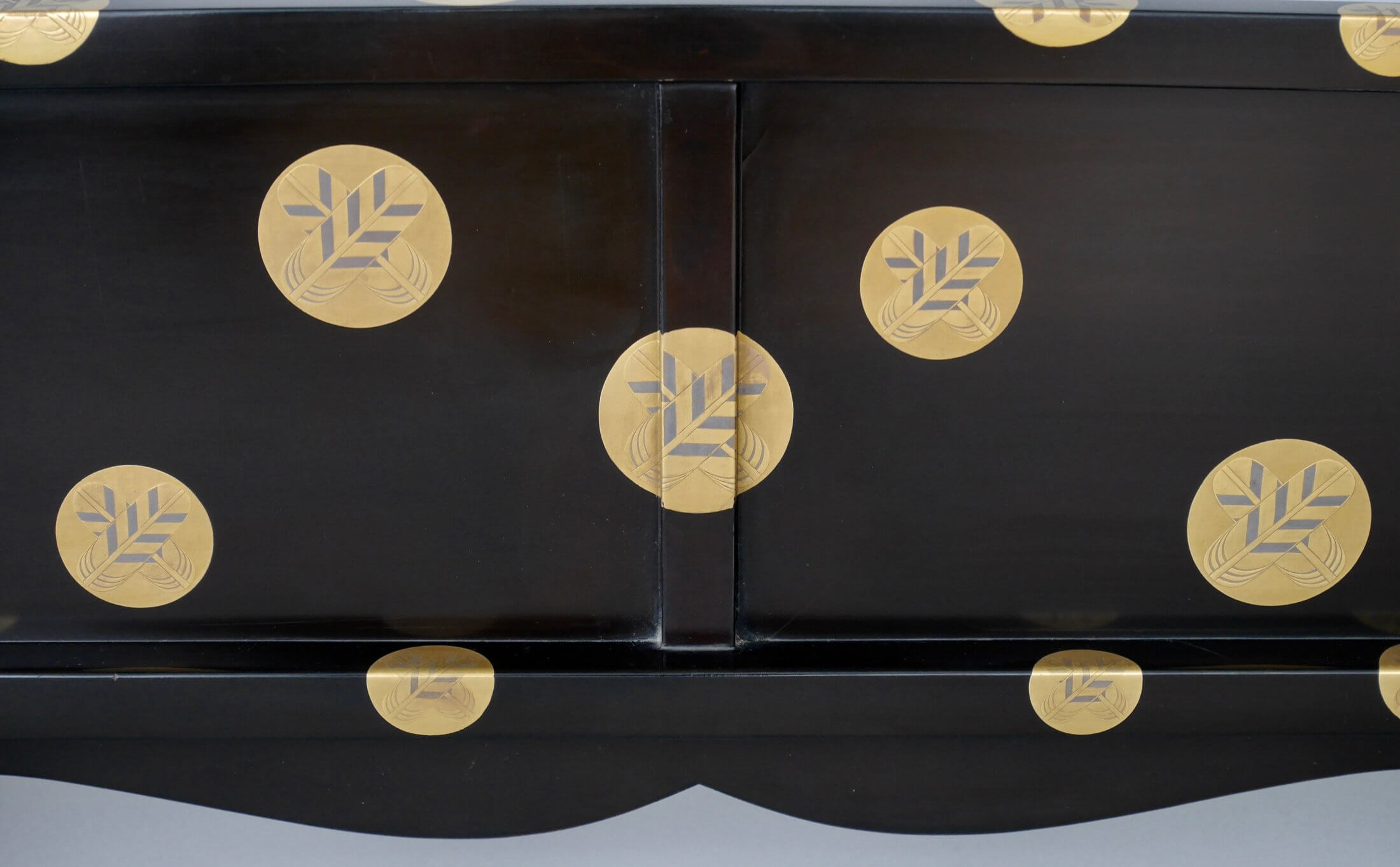
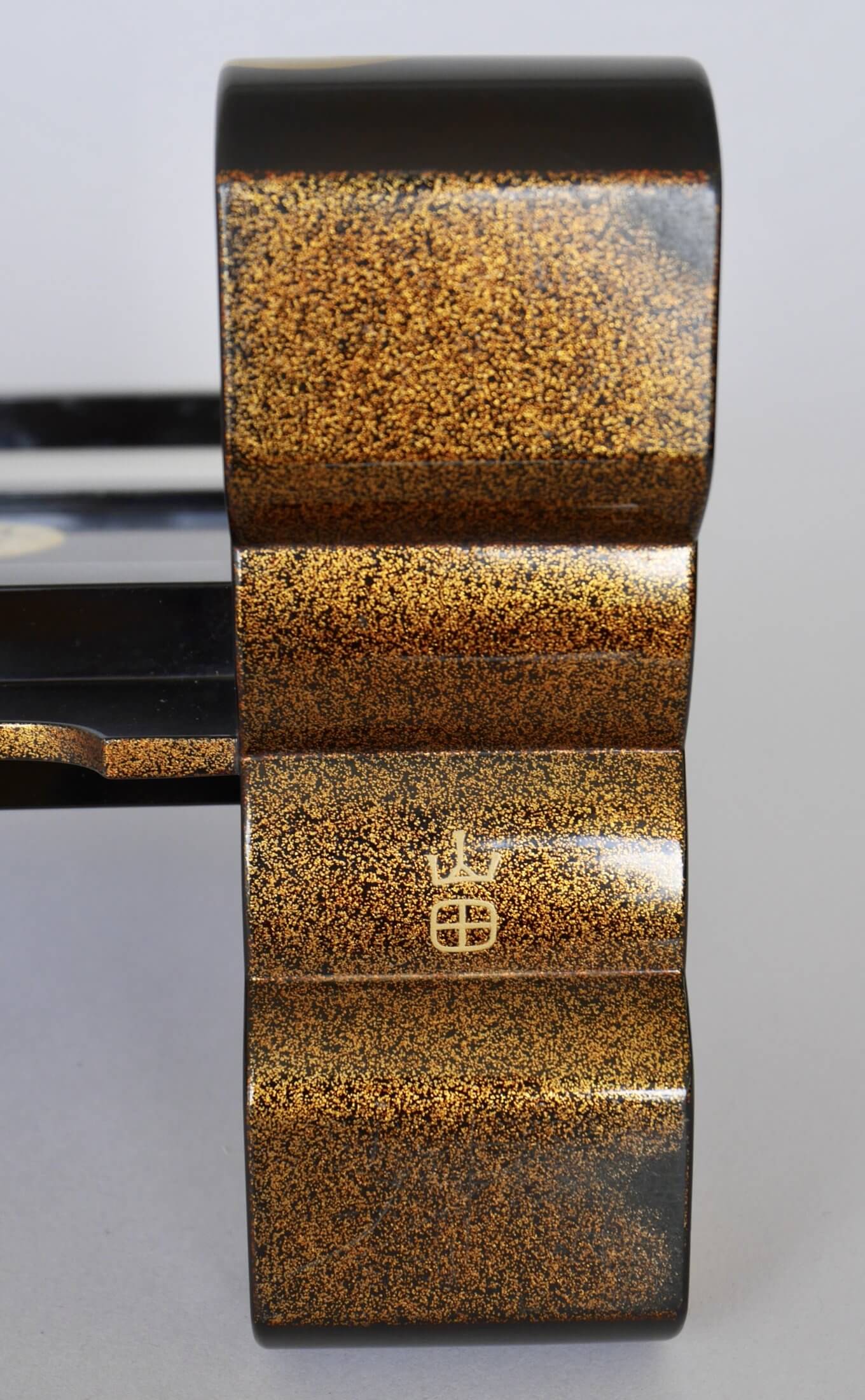
Faint traces where metal fittings were once attached remain at the bases of the hashira (pillars), indicating that this early Edo-period sword rack was later relacquered and refurbished, probably during or after the middle Edo period. The signature “Yamada” on the underside of the ashi (legs) identifies the maki-e work by Yamada Jōka (1775-1850), who served as an inrō craftsman for the Edo shogunate. The maki-e decoration of the crossed hawk-feather crests (chigai takanoha-mon) is exceptionally precise, giving the piece a refined and dignified appearance.
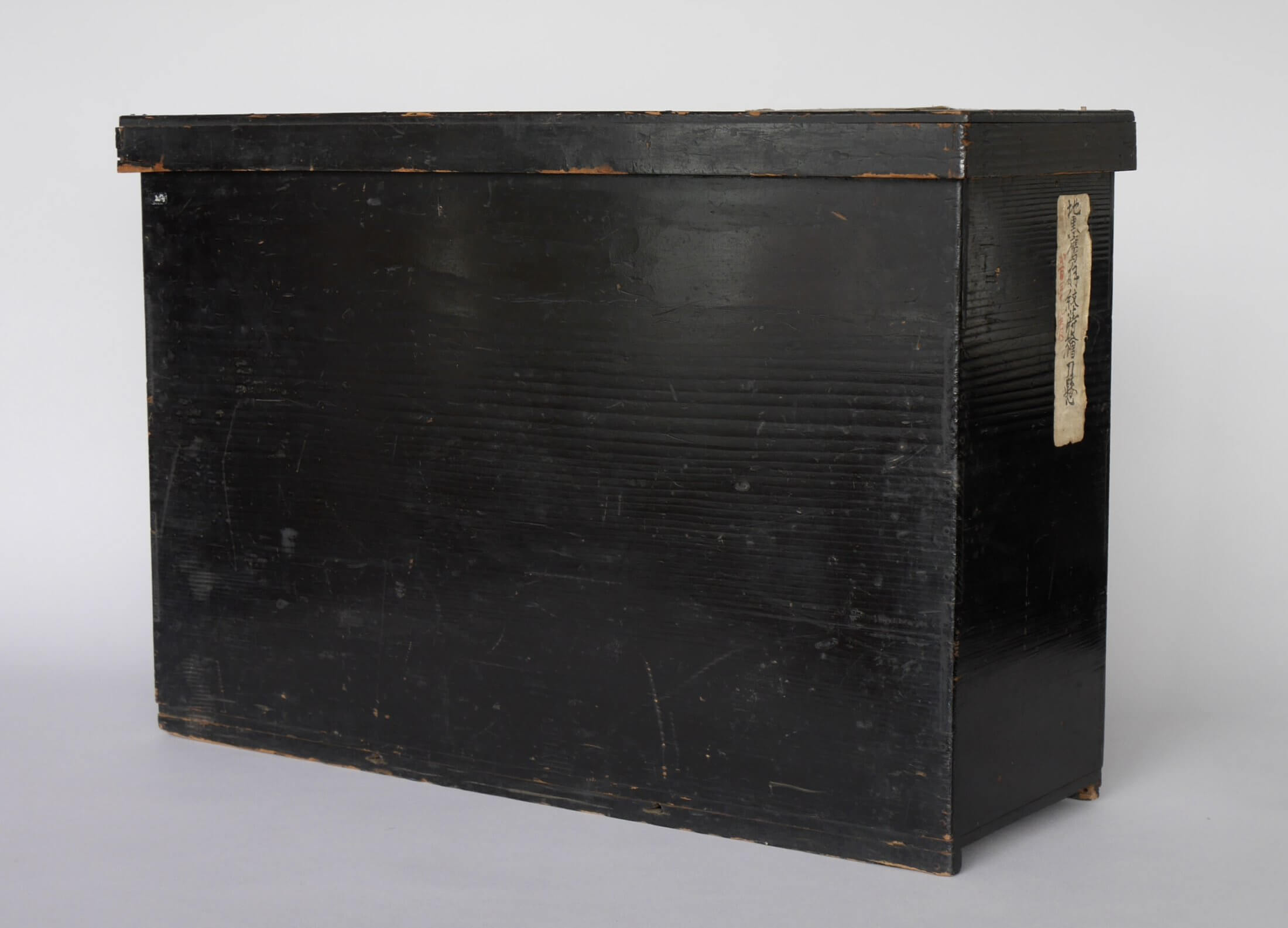
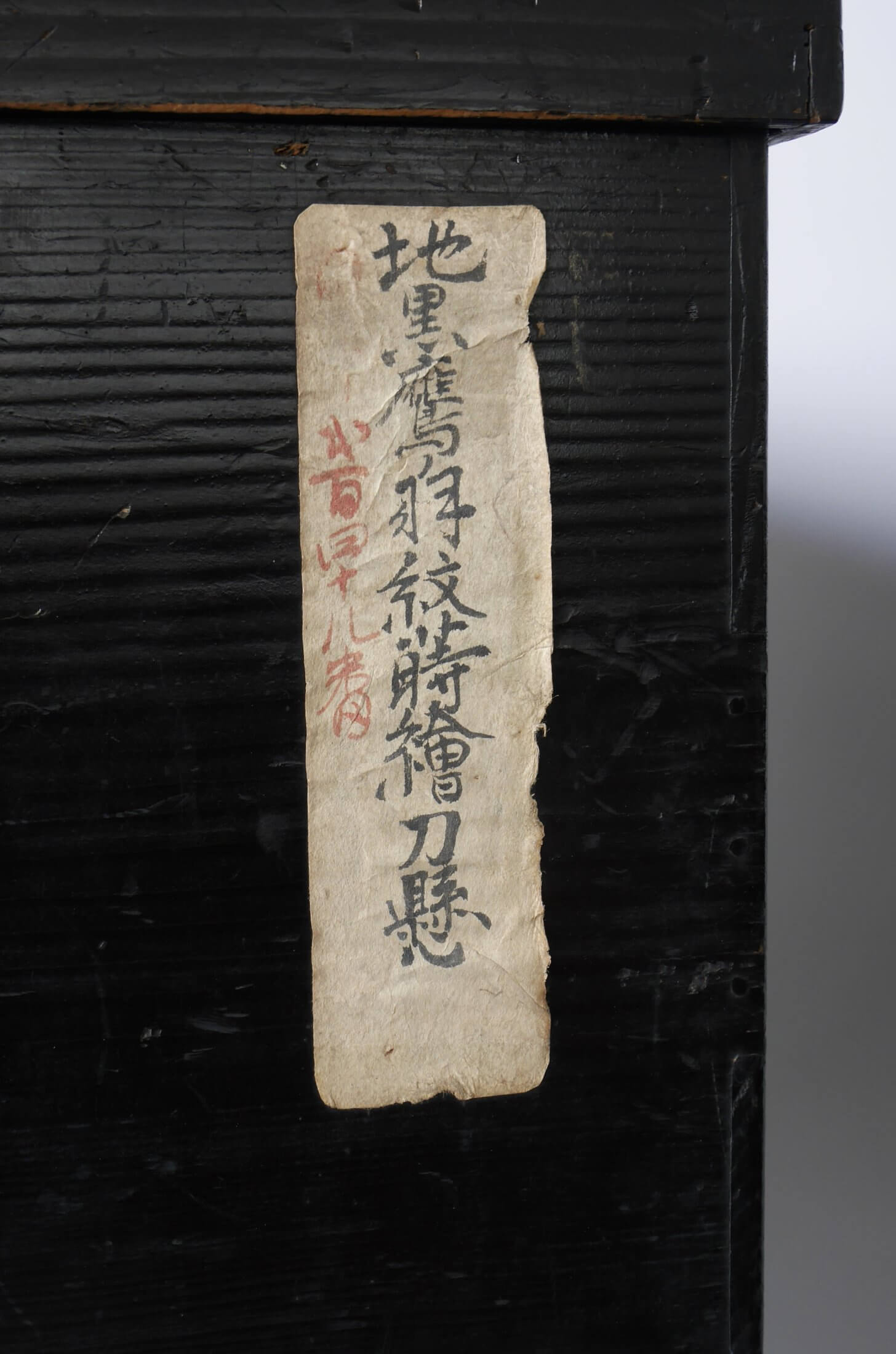
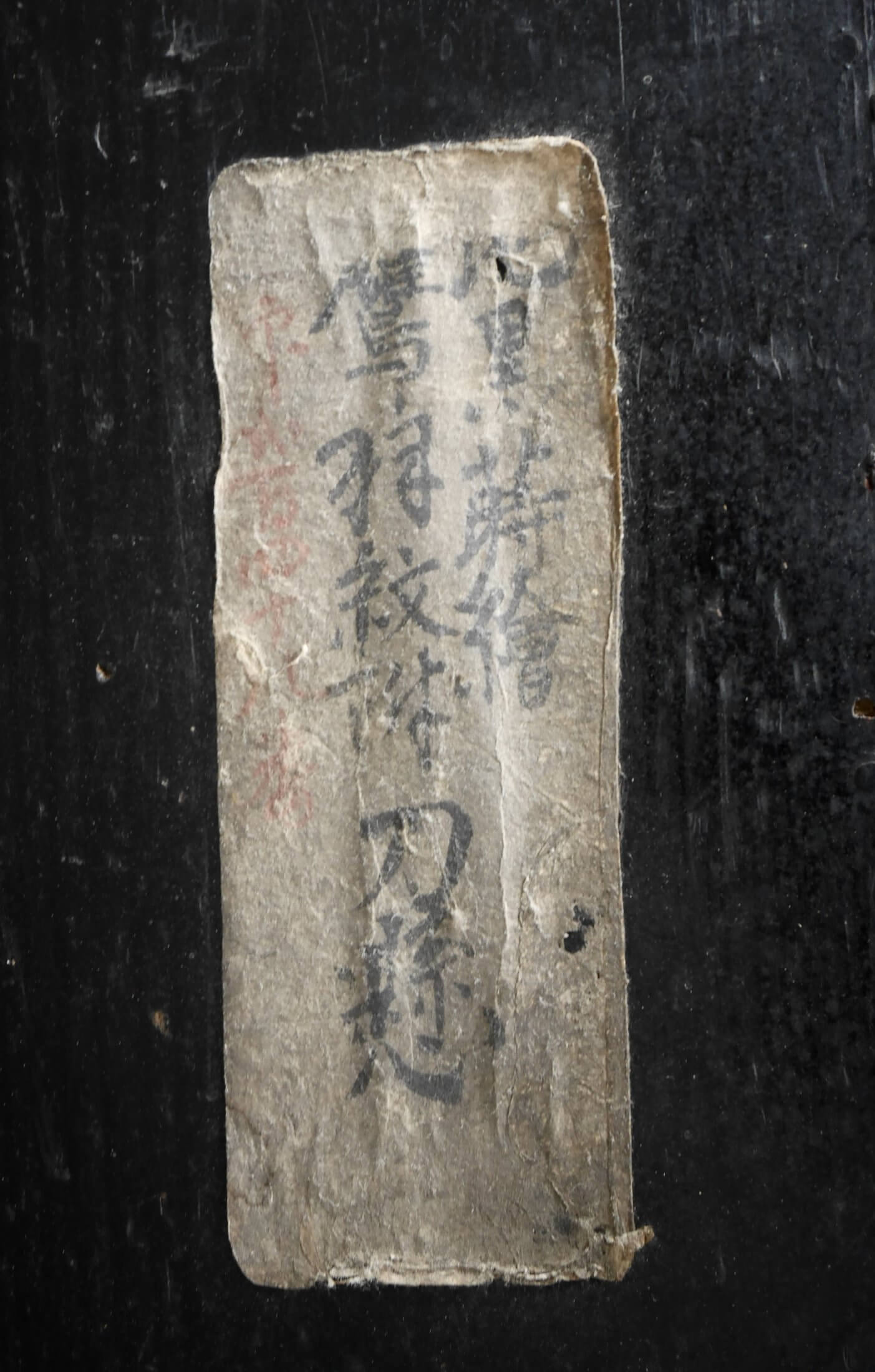
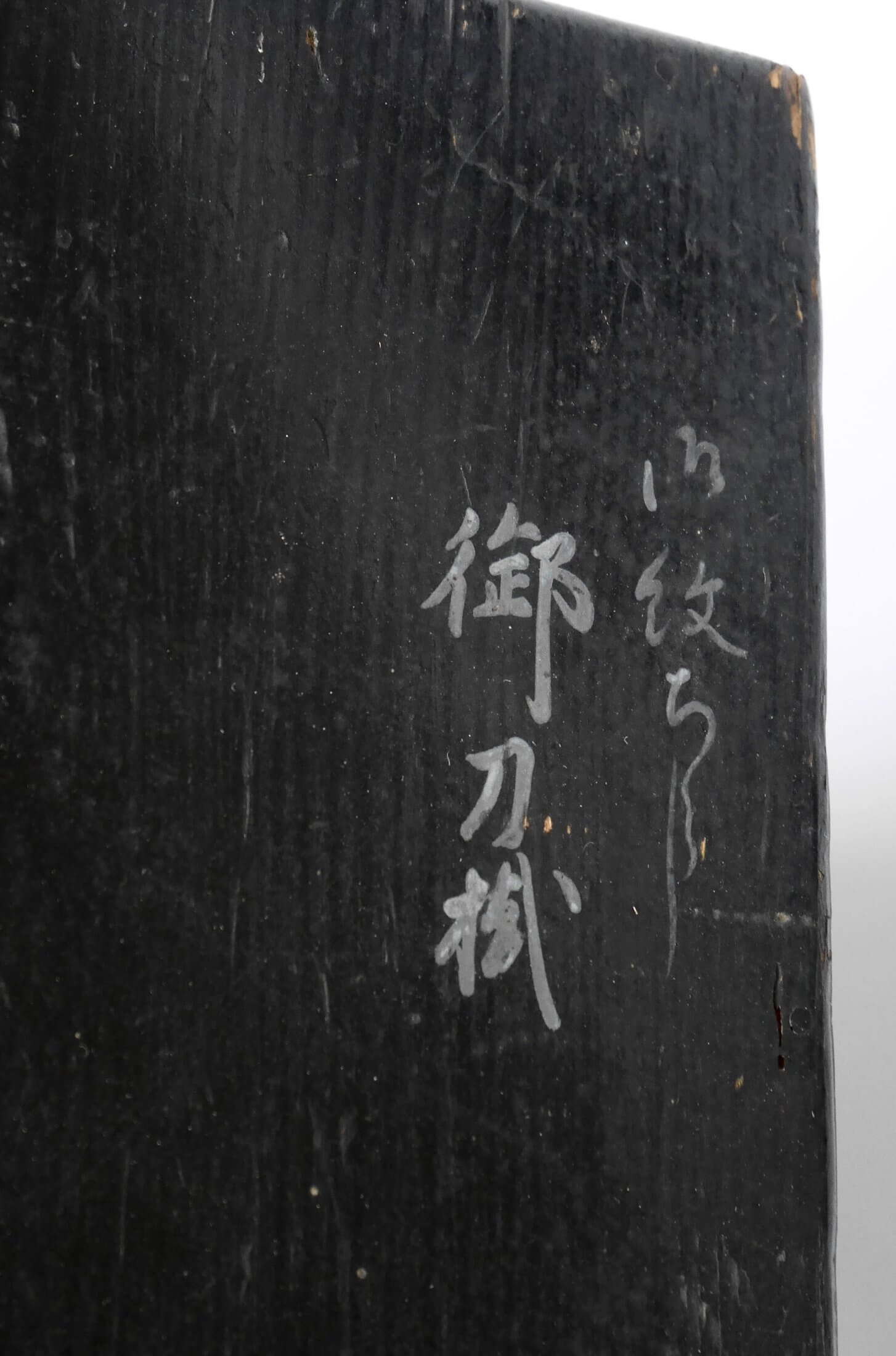
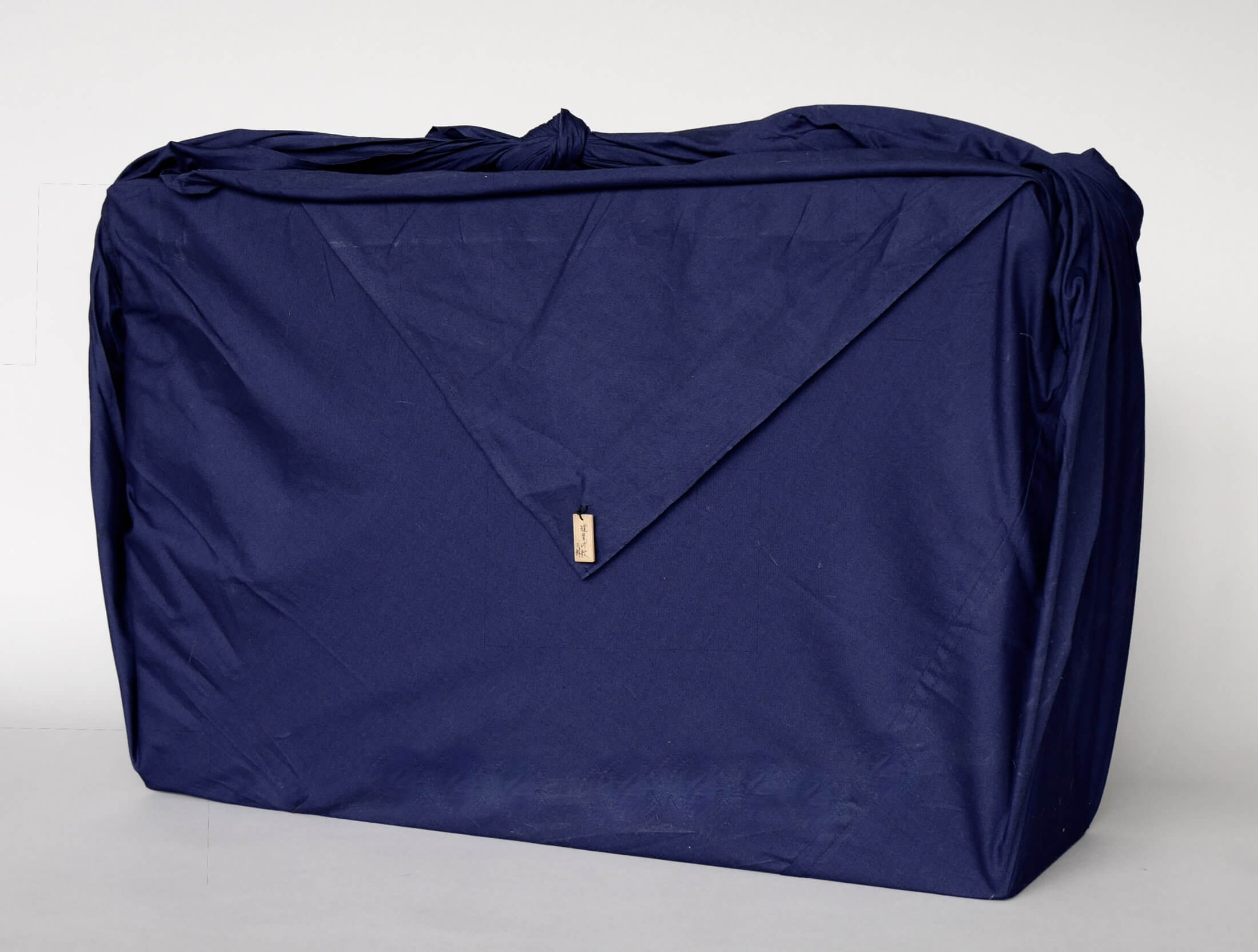
The accompanying box is finished in black roiro lacquer and bears the inscription “Gomon Chirashi O-katanagake” (Sword Rack with Scattered Crests) in silver maki-e. Such a box would have been reserved for formal furnishings belonging to a daimyō family. A paper label on the box bears an auction number written in red, beneath which the name “Asano family” can still be faintly discerned.