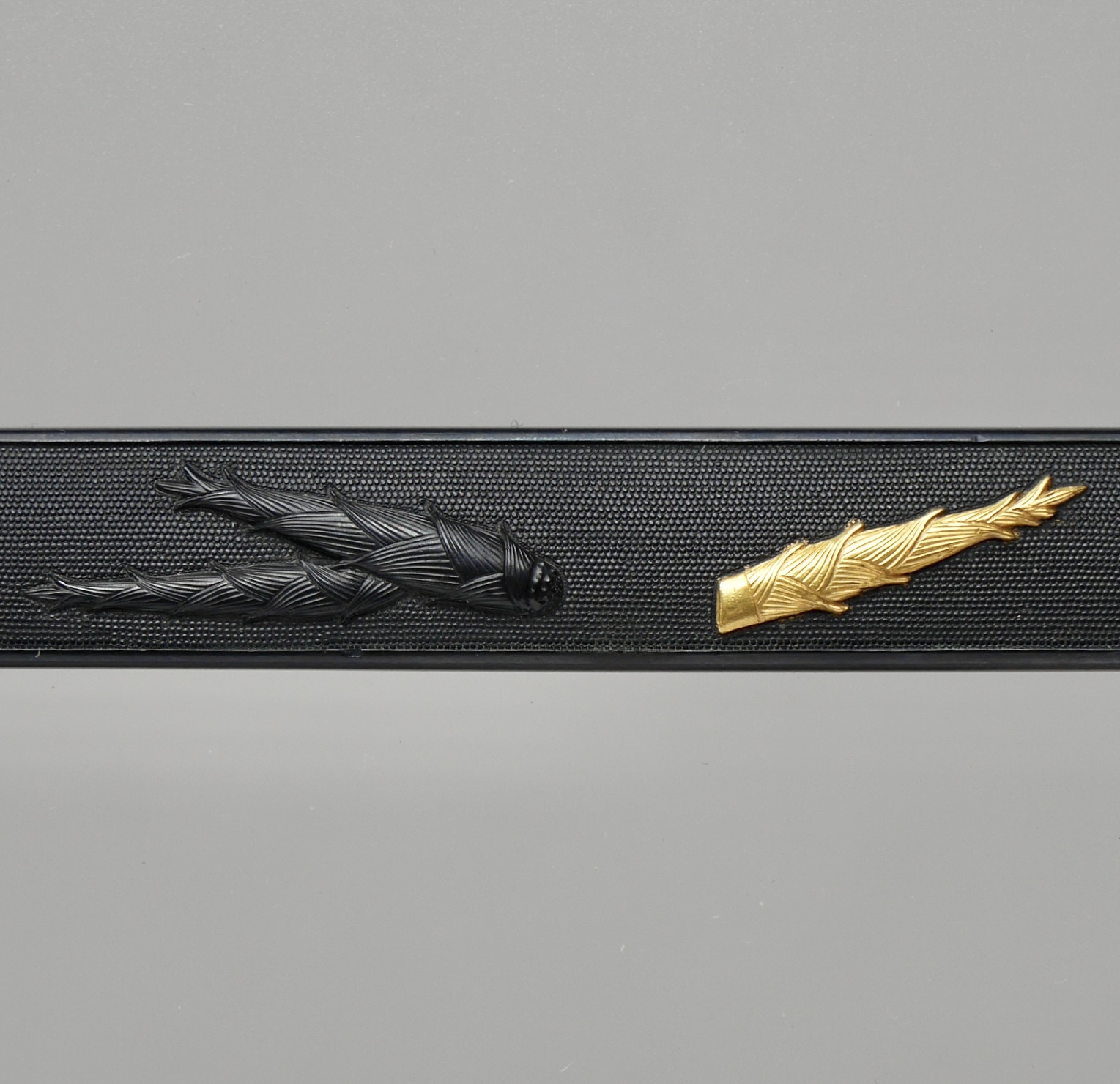
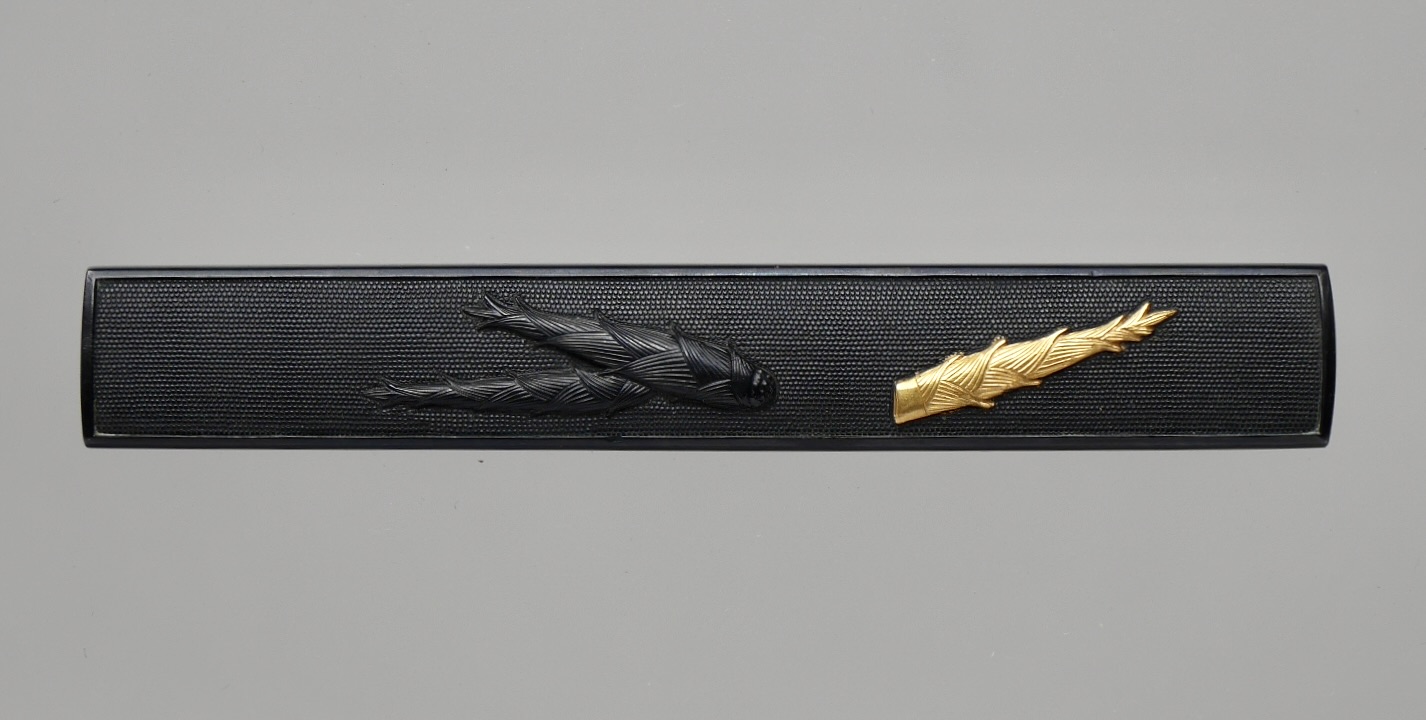
Design of Three Bamboo Shoots
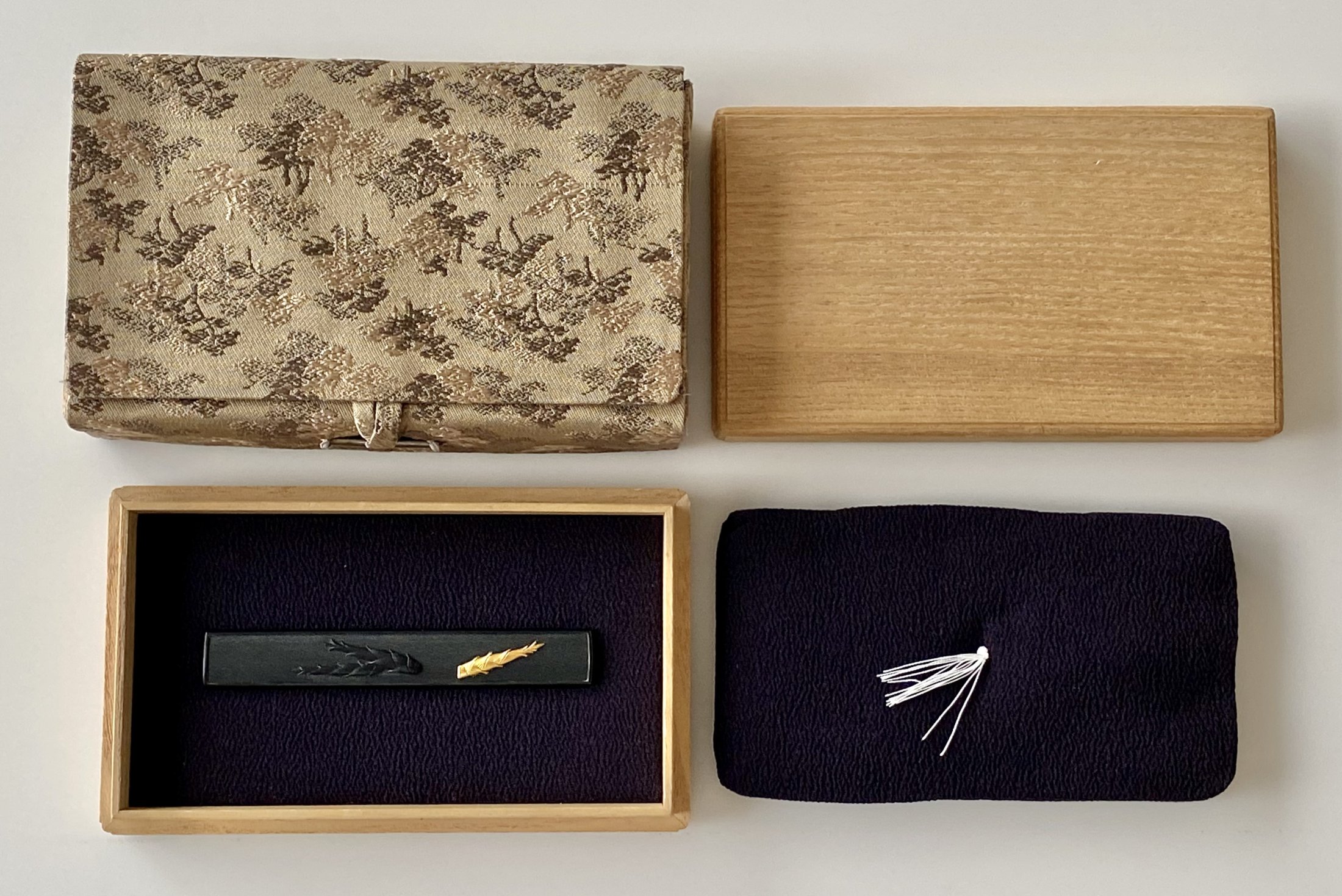
The Gotō school of metal artisans was founded by Yūjō in the Muromachi period and continued through seventeen generations to Tenjō (Mitsunori), serving successive rulers as their official metal artisans.
Mitsumasa (Kōri) was born in Genroku 2 (1689), the eldest son of the renowned master Tsūjō, the twelfth-generation head of the Gotō family, and succeeded as the thirteenth-generation head in Kyōhō 6 (1721). At the time, the machibori tradition was at its height, with such prominent artists as Yokoya Sōyo, Yanagawa Naomasa, Ōmori Terumasa, and Hamano Shōzui active. Responding to the artistic climate of the time, the Gotō school also produced works with innovative designs that could rival those of the machibori kinko.
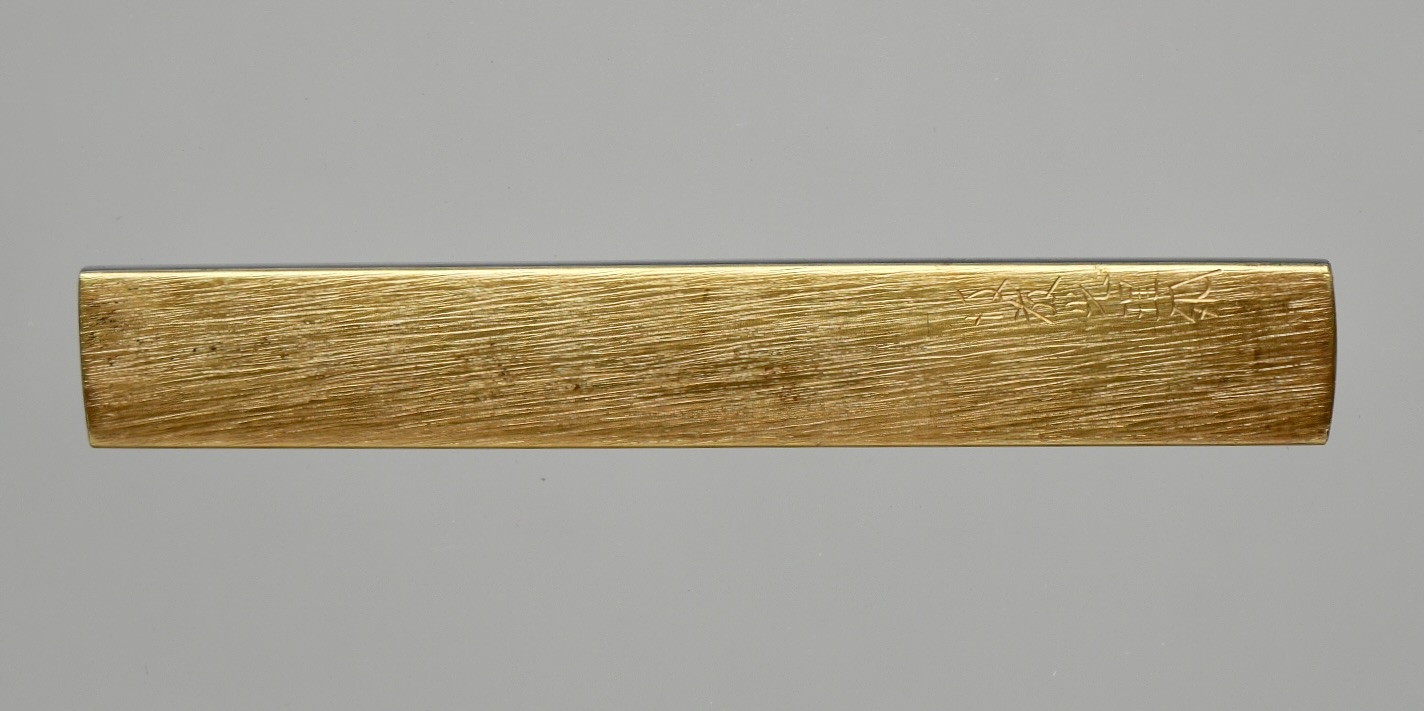
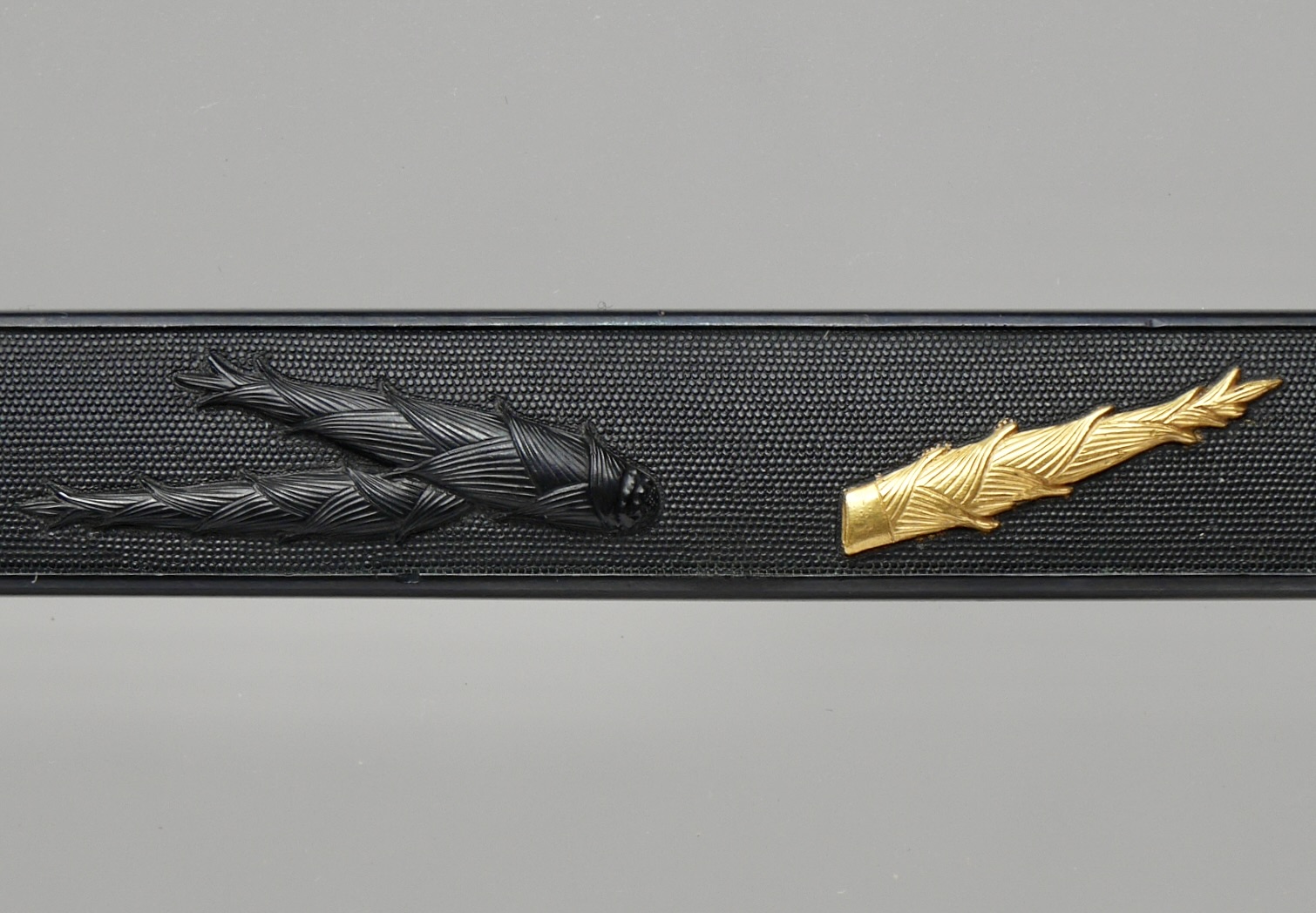
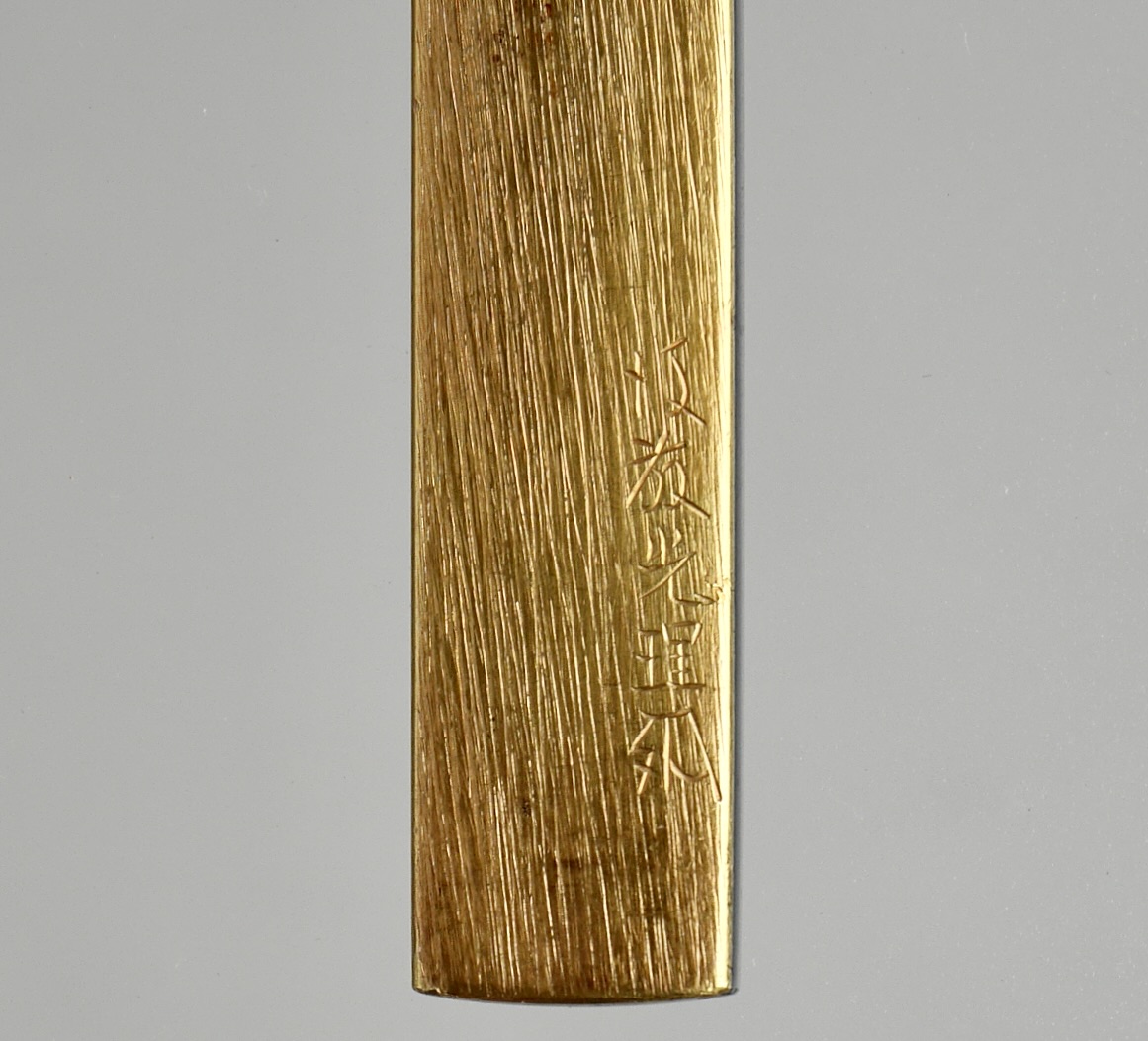
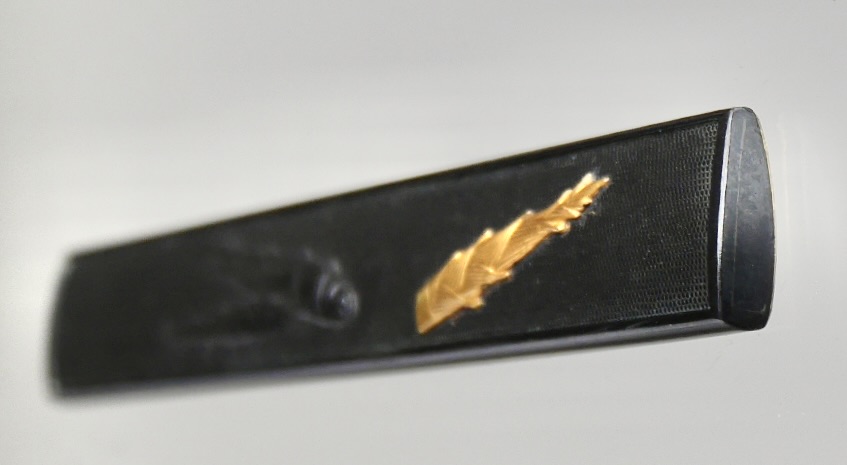
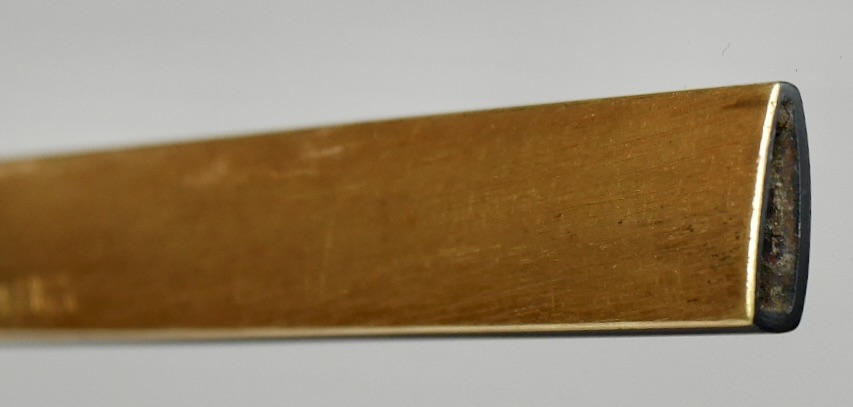
Although the bamboo shoots on this kozuka are rendered in the traditional Gotō manner, their carefully considered arrangement creates a composition with a sense of movement and atmosphere, revealing Mitsumasa’s sophisticated artistic sensibility. The decoration of the front is restrained, while the use of a gold reverse plate gives definition and balance to the piece as a whole. Combining the dignity characteristic of the Gotō school with an engaging design, this is a particularly appealing kozuka.
The design on the front is restrained, while the use of a gold reverse plate gives definition and balance to the piece as a whole. With the characteristic dignity of the Gotō school and an engaging composition, this kozuka offers much to appreciate and enjoy.