Design of Paulownia Mon and Hi-jōgi
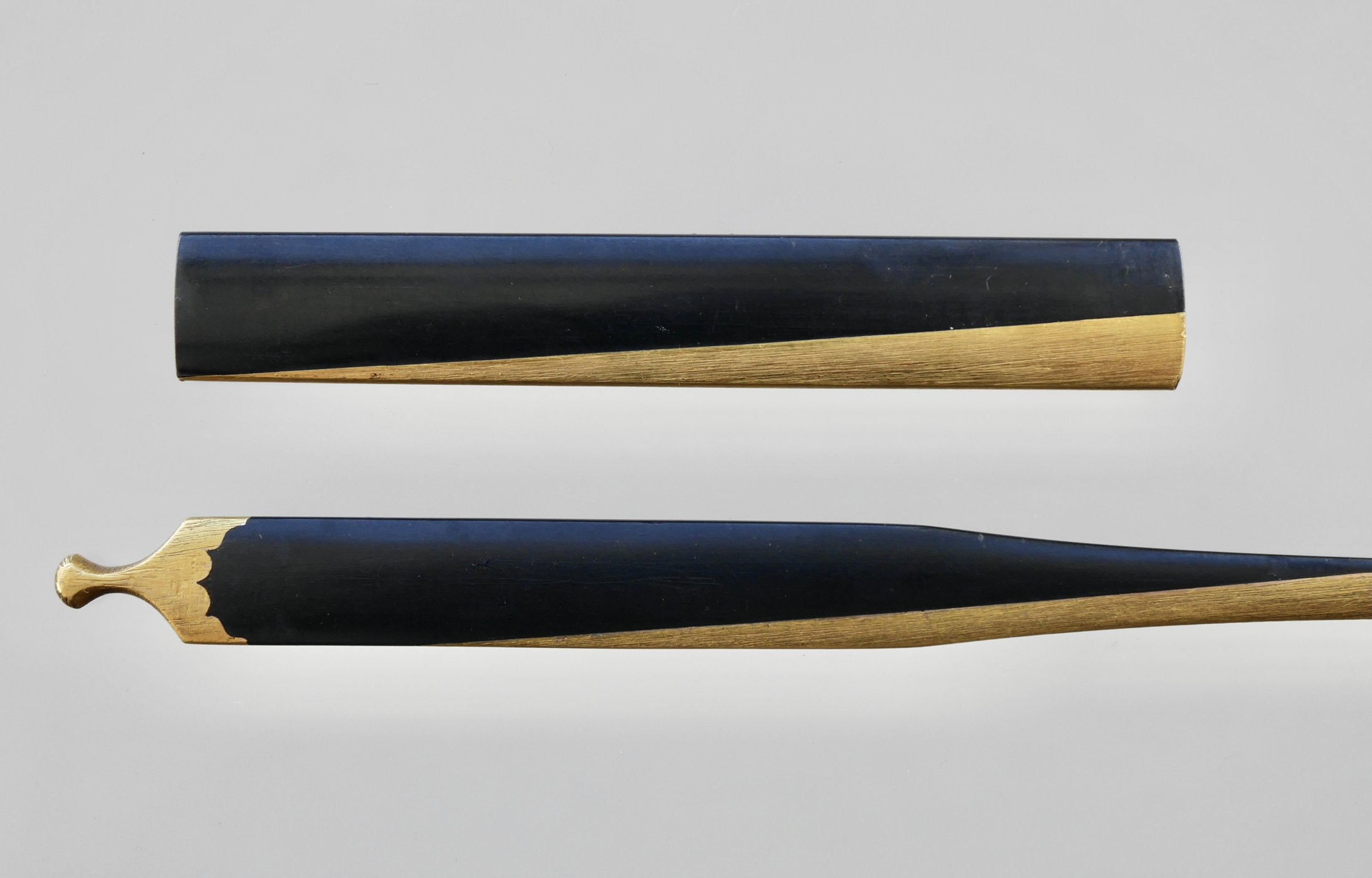
Gotō Yūjō, born in Eikyō 12 (1440), is regarded as the founder of Japanese metal carving and an unparalleled master representing the craft traditions of Higashiyama culture. According to the genealogy of the main Gotō family line, Sōjō was born in Chōkyō 1 (1487) and died in Genki 2 (1571), indicating that he lived to a considerable age for his time. As the second-generation head of the Gotō kinko family, he served the Ashikaga shogunate for many years and further developed the artistic style established by his father, Yūjō.
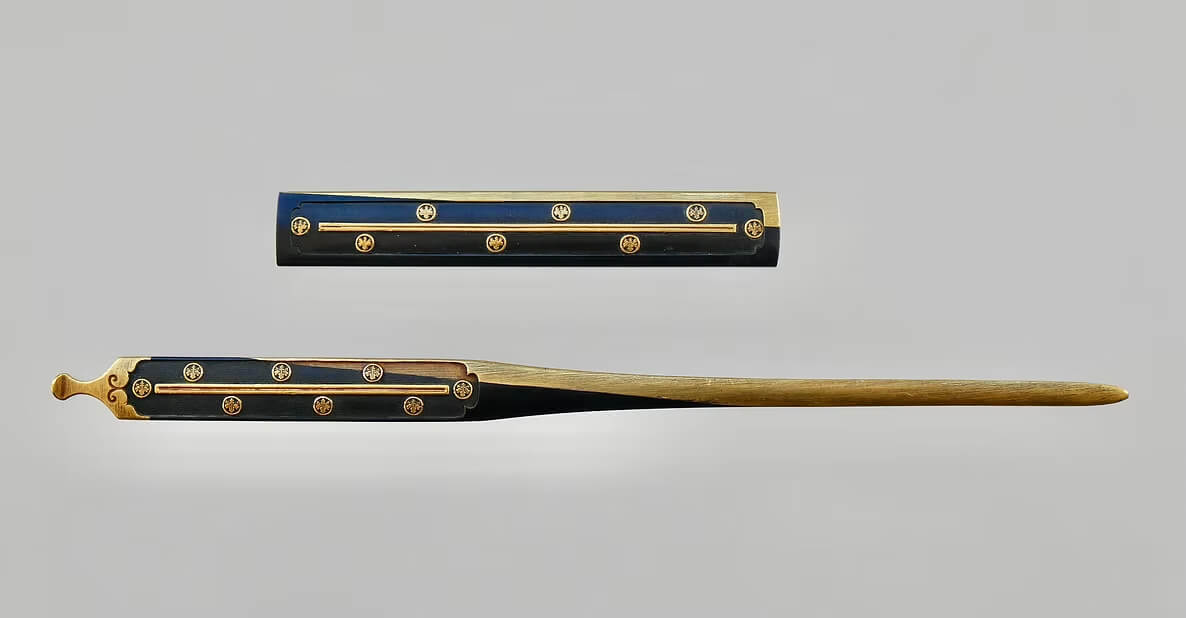
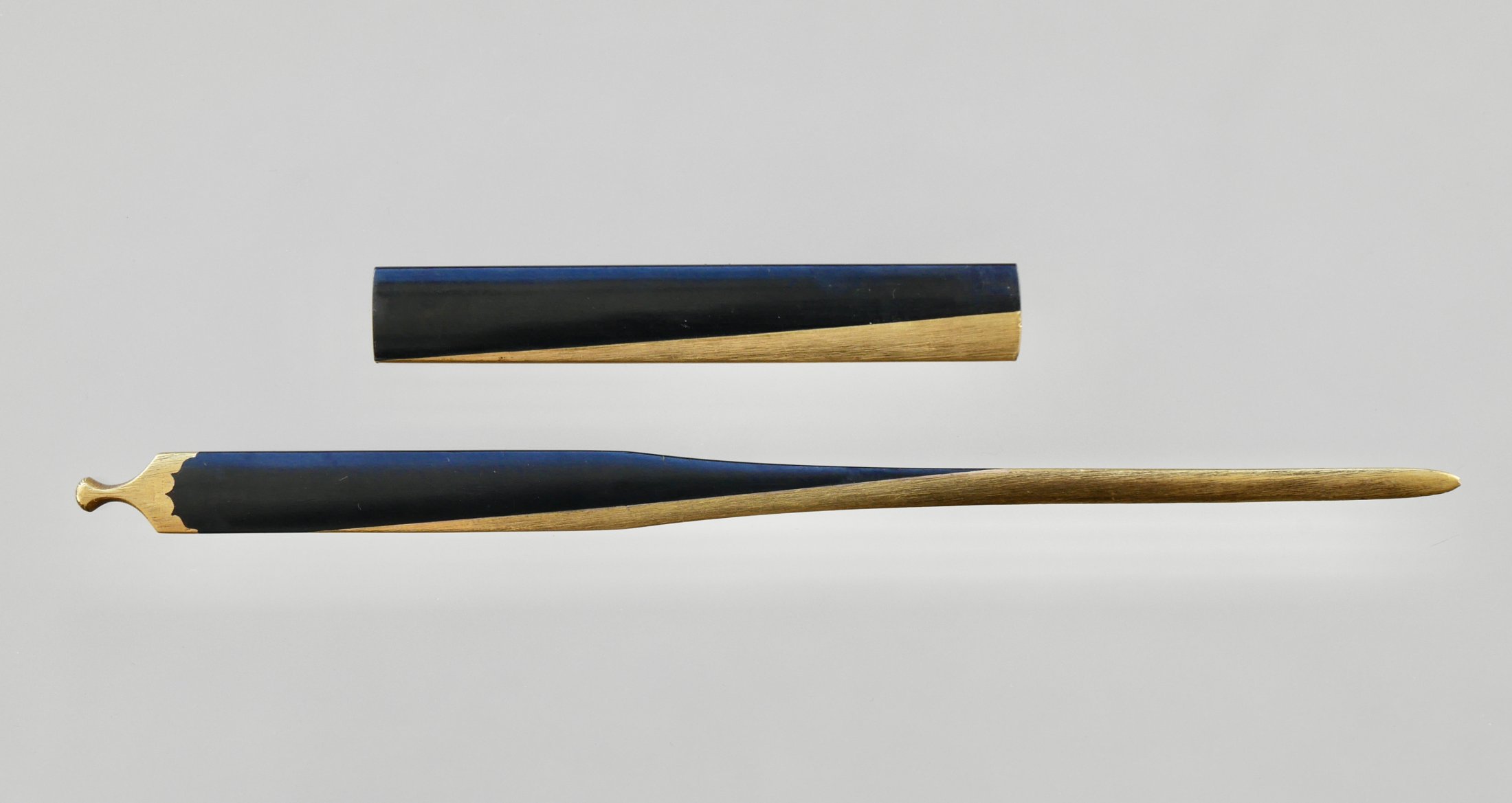
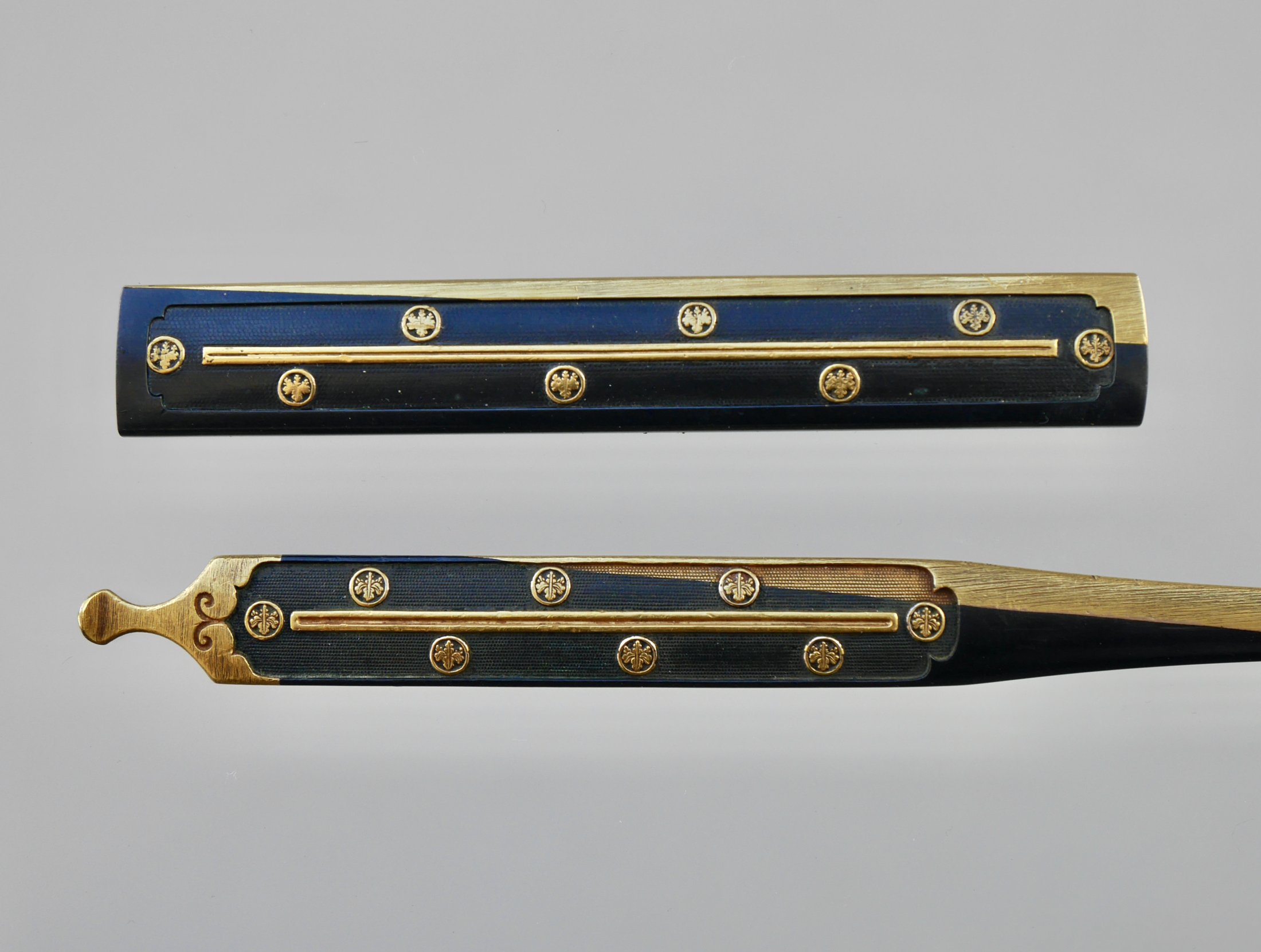
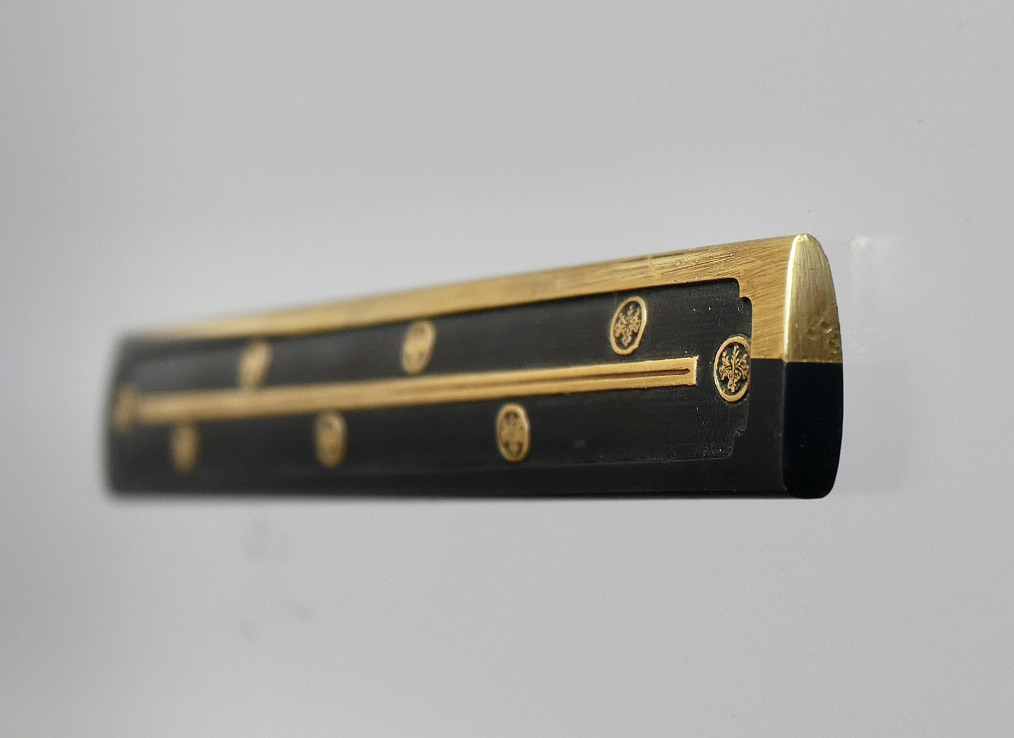
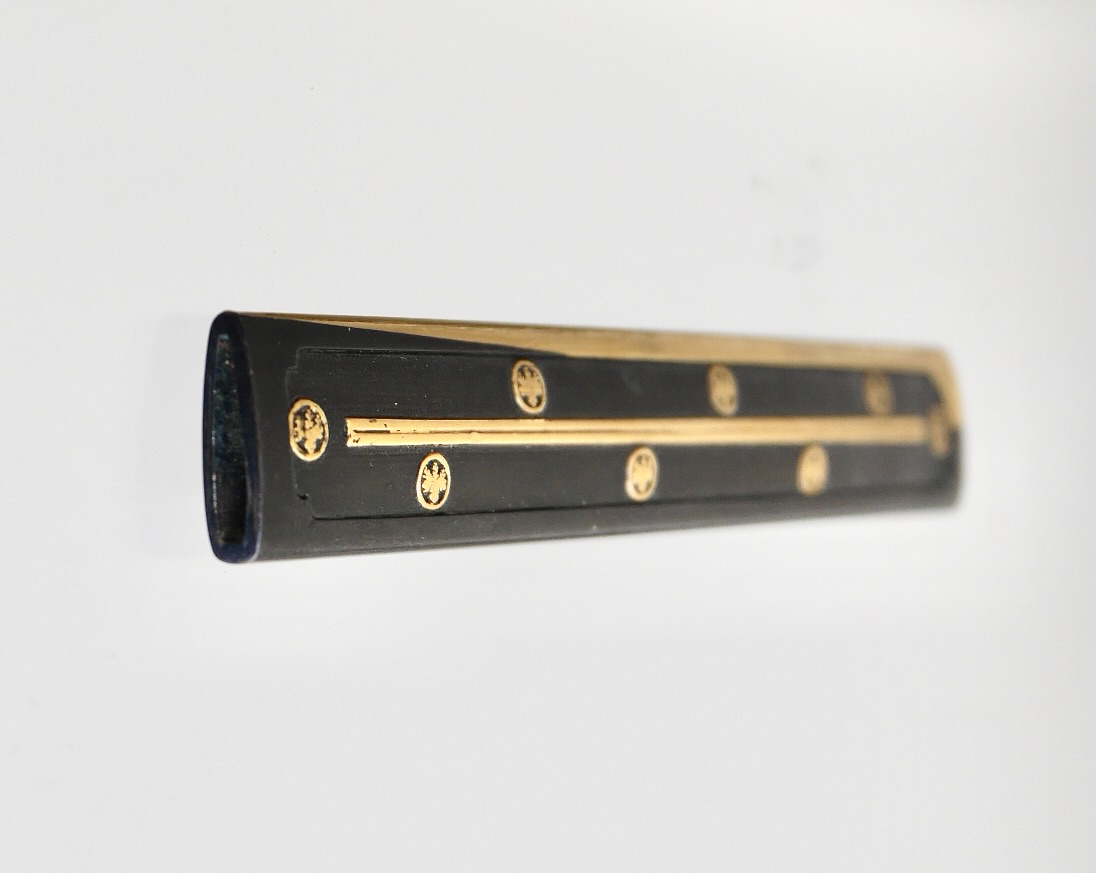
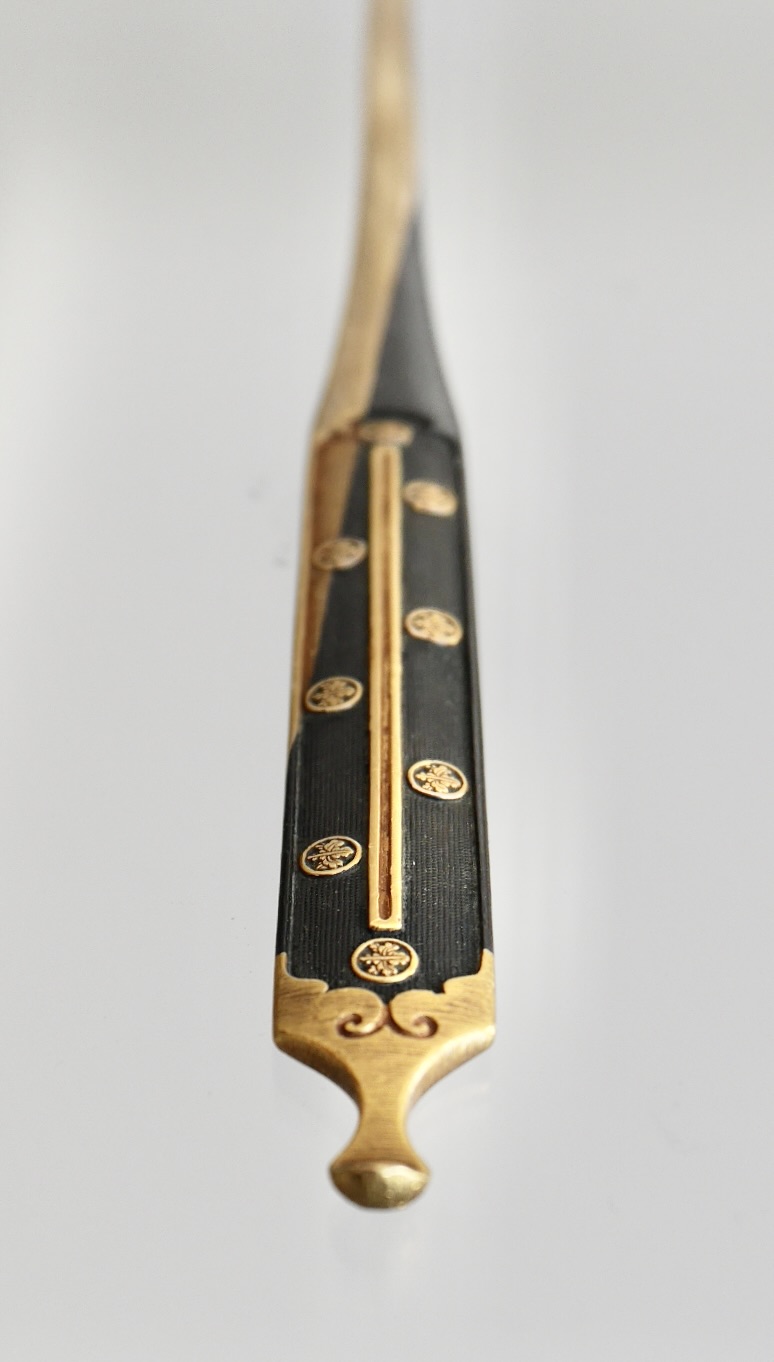
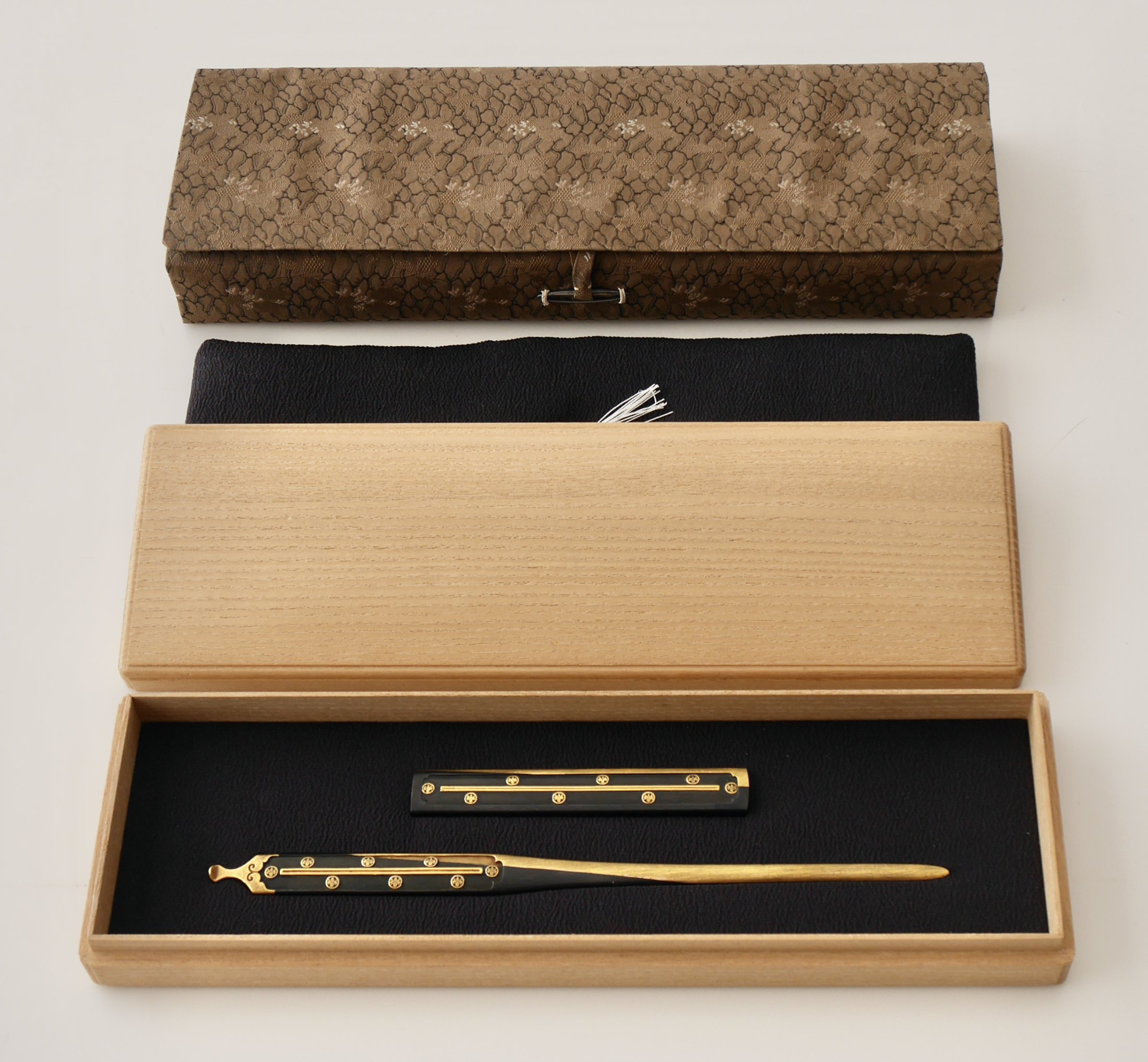
This futatokoro, consisting of a kōgai and kozuka, is an elegant work characteristic of the Gotō family, featuring paulownia crests arranged along a hi-jōgi design. The kōgai is original, while the kozuka has been remounted using a kōgai of the same design.
In the Ōuchi Mondō, which bears a colophon dated Eishō 6 (1509), it is recorded: “The Shogun’s sword fittings… the menuki are small paulownia motifs applied within roundels; the kōgai is of shakudō with gold applied to the rim; moreover, on either side of the hi are paulownia motifs, similar to the menuki, applied in gold; in total, there are eight paulownia crests; the tip of the kōgai is set 2 to 3sun (approximately 6 to 9 cm) apart and joined by a gold sogi-tsugi (scarf joint).” As Eishō 6 predates Yūjō’s death by three years, and “the Shogun” refers to Ashikaga Yoshizumi, the kōgai described in this text must undoubtedly be the work of Yūjō.
This kōgai corresponds closely to that description. The thick application of gold, the sharply defined paulownia crests, and the slightly undulating nanako ground—characteristic of Yūjō—suggest that, rather than Sōjō as stated in the NBTHK certificate, this piece is more likely the work of Yūjō himself. Although the nanako on the kozuka is somewhat larger in comparison to that of the kōgai, the paulownia crests and hi-jōgi motif retain a refined and well-balanced appearance, indicating that it too may have been remounted from a work by Yūjō.
Exceptionally well preserved, this is a masterpiece that has been carefully treasured for over five hundred years.