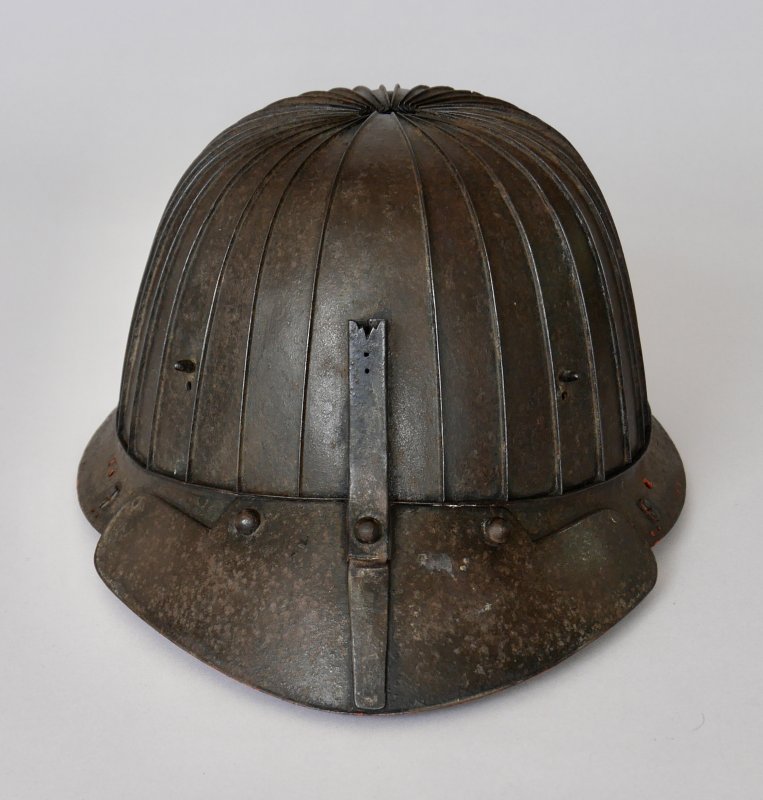
Russet-Iron Nimai-dō Gusoku with Russet-Iron Sixty-Two-Plate Suji-kabuto
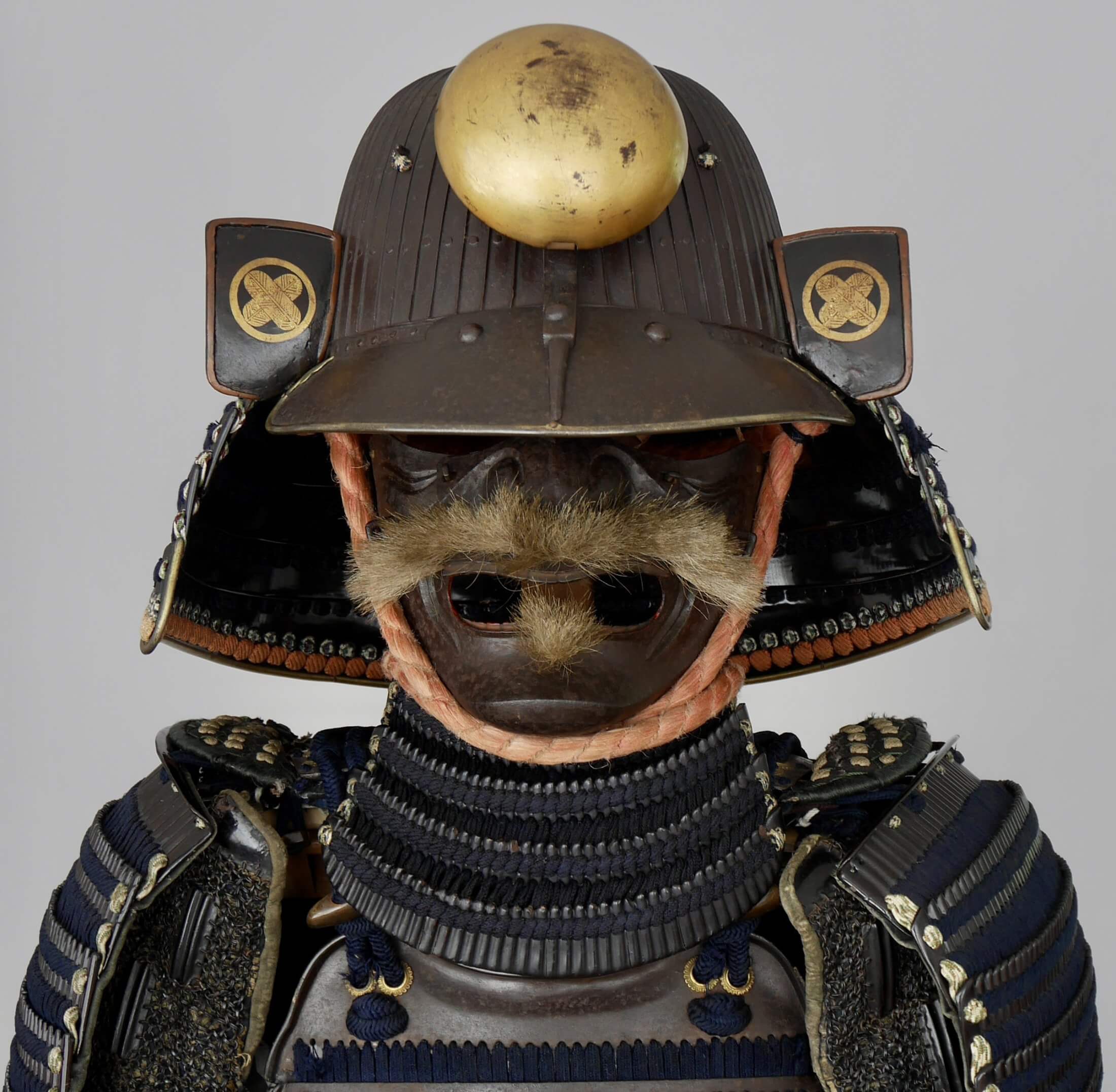
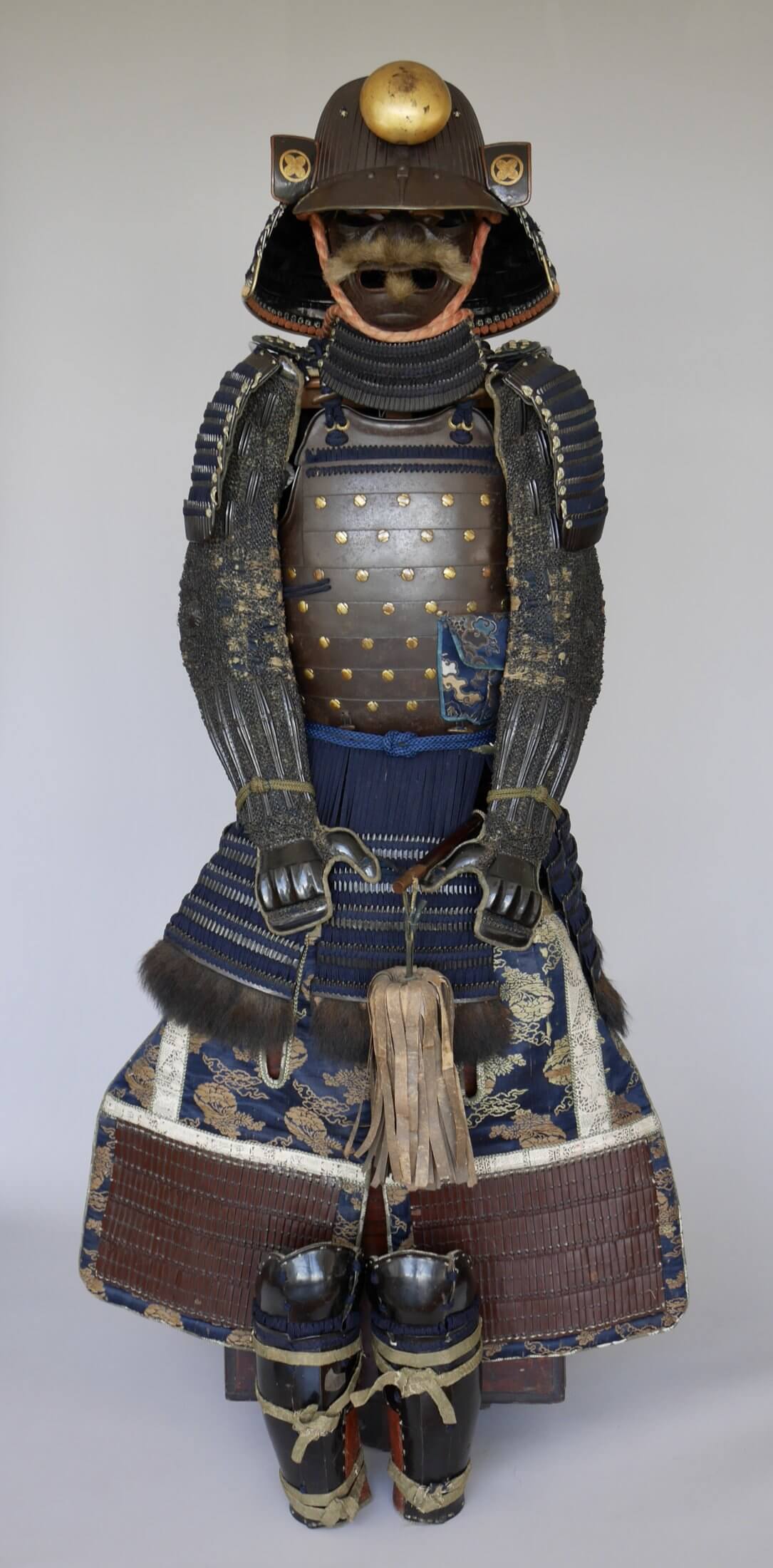
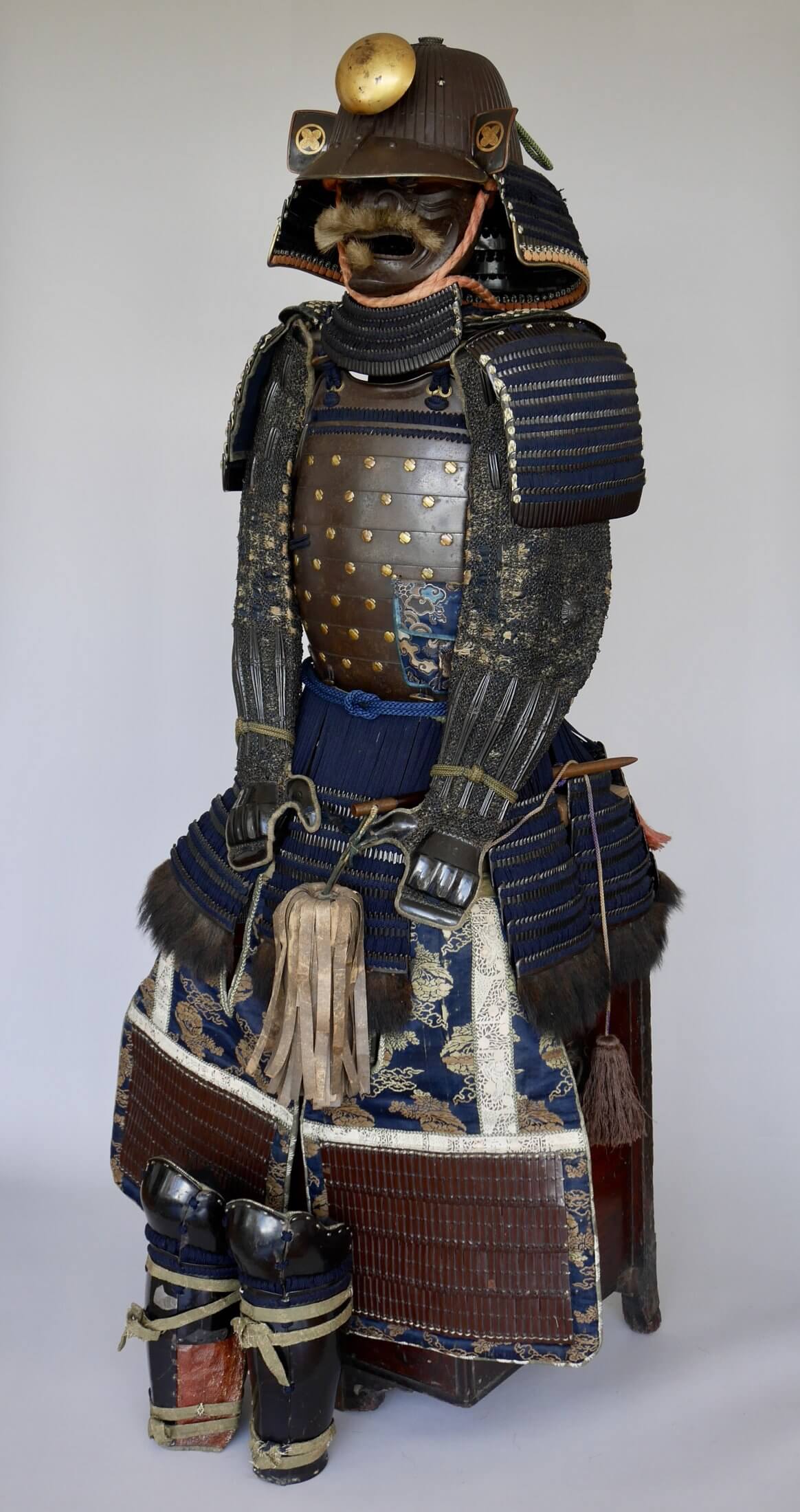
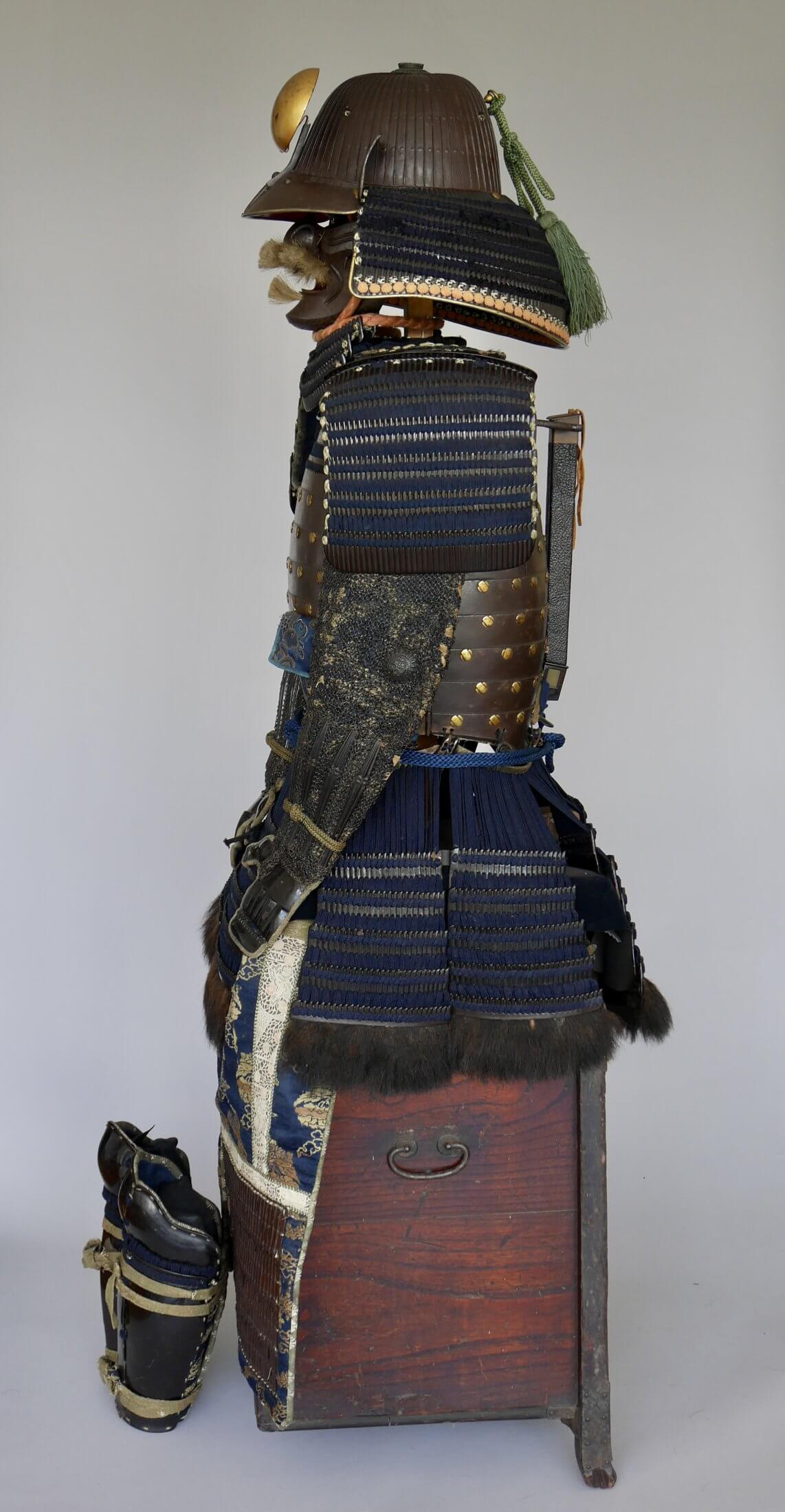
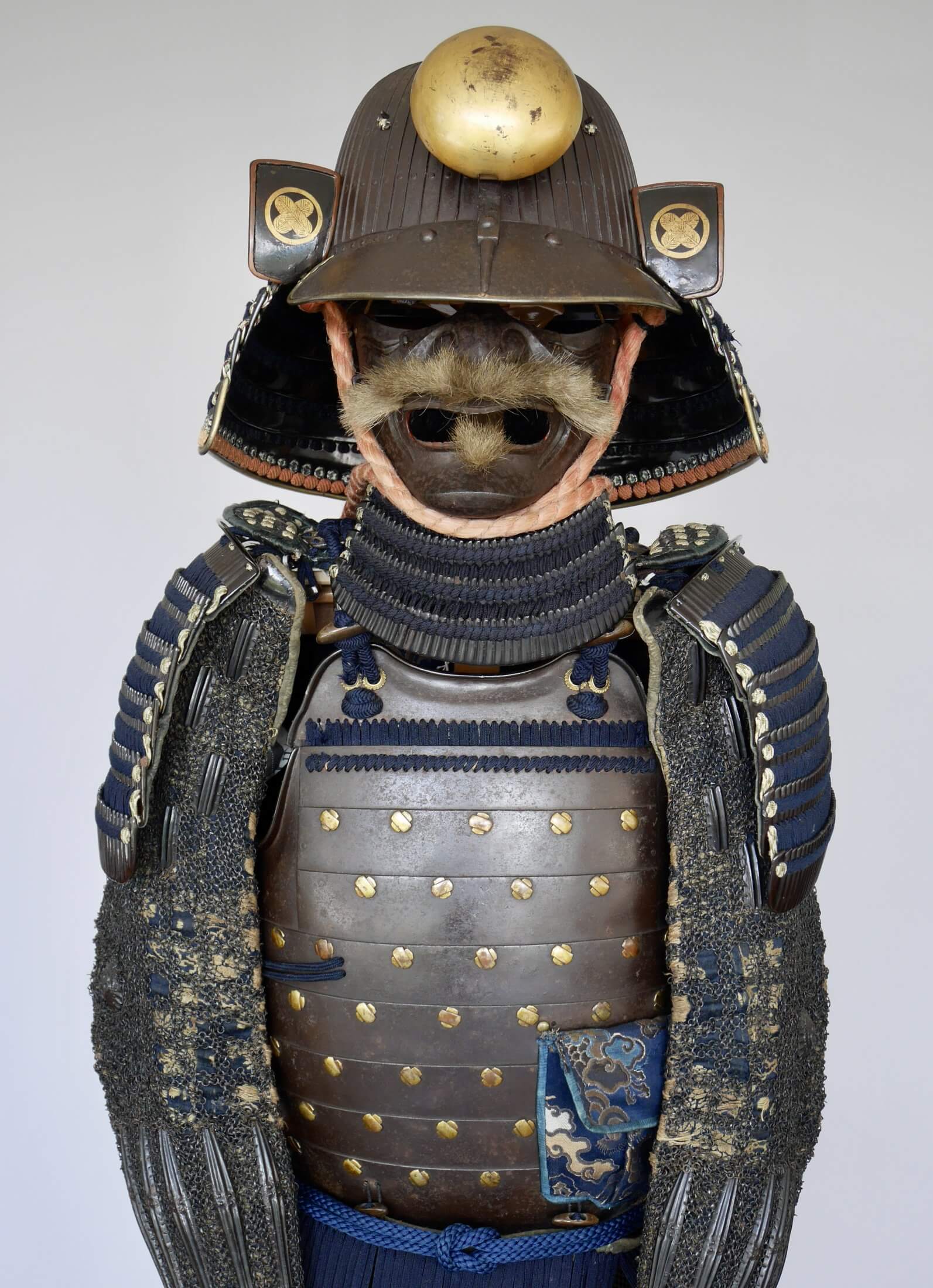
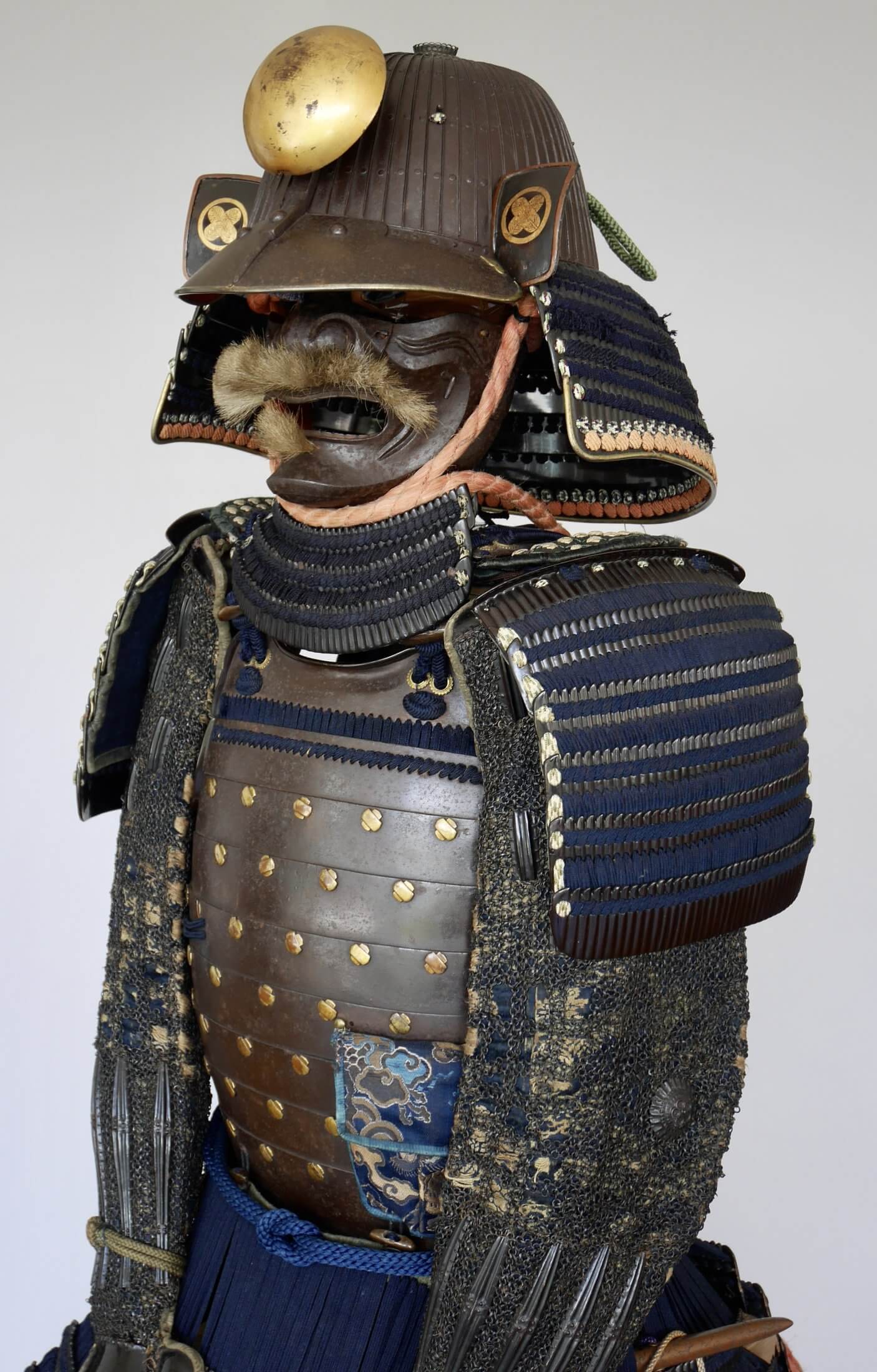
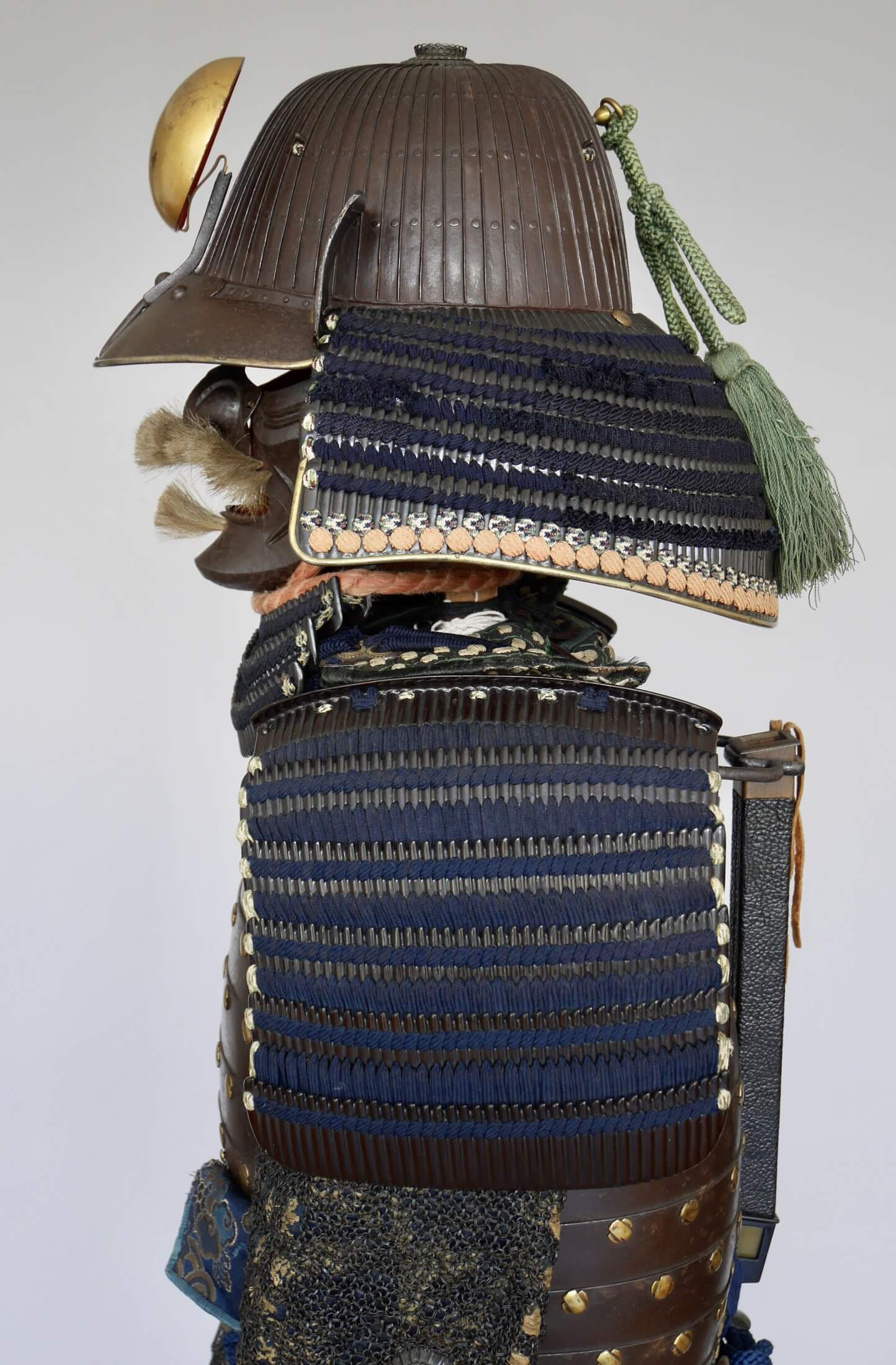
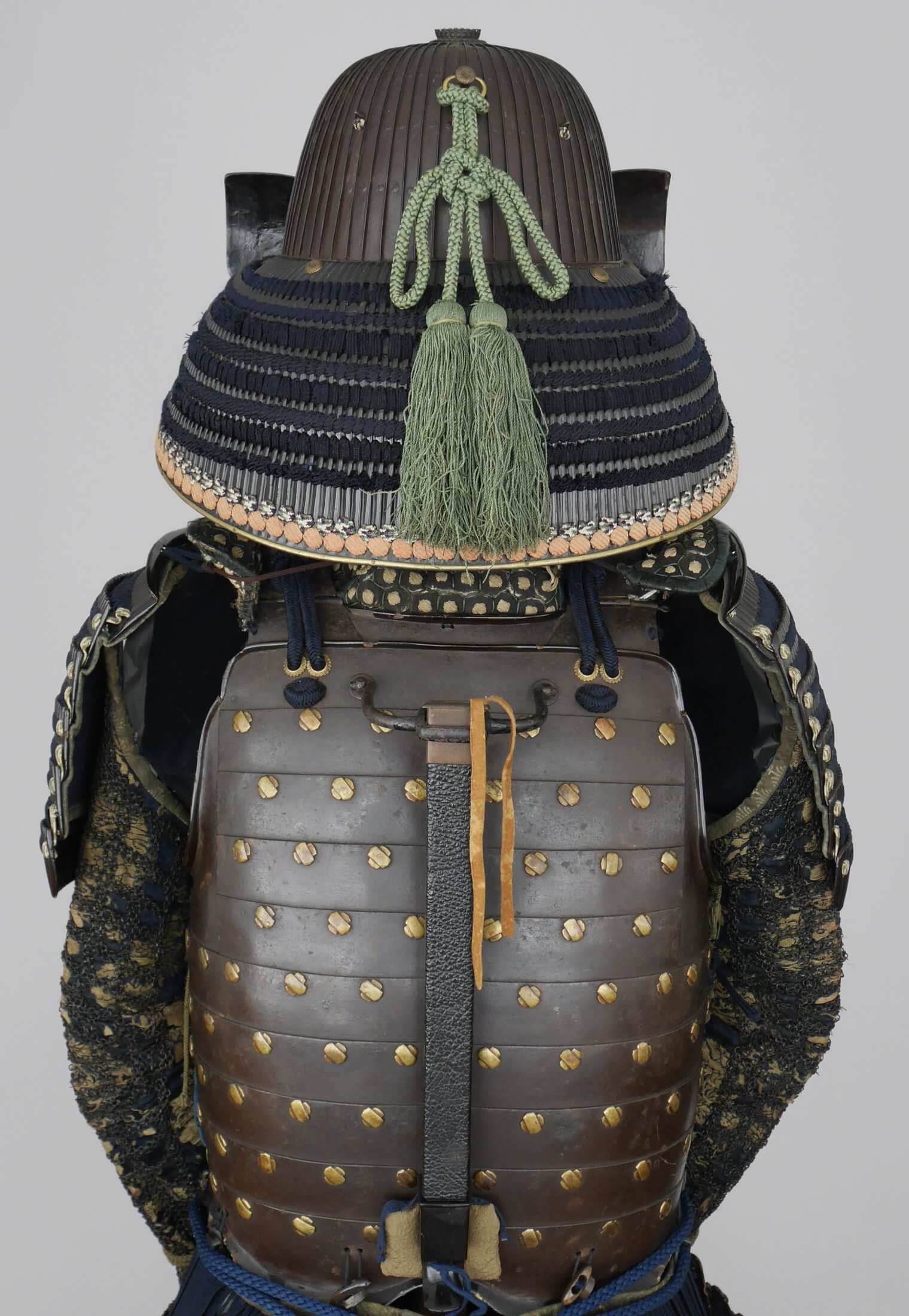
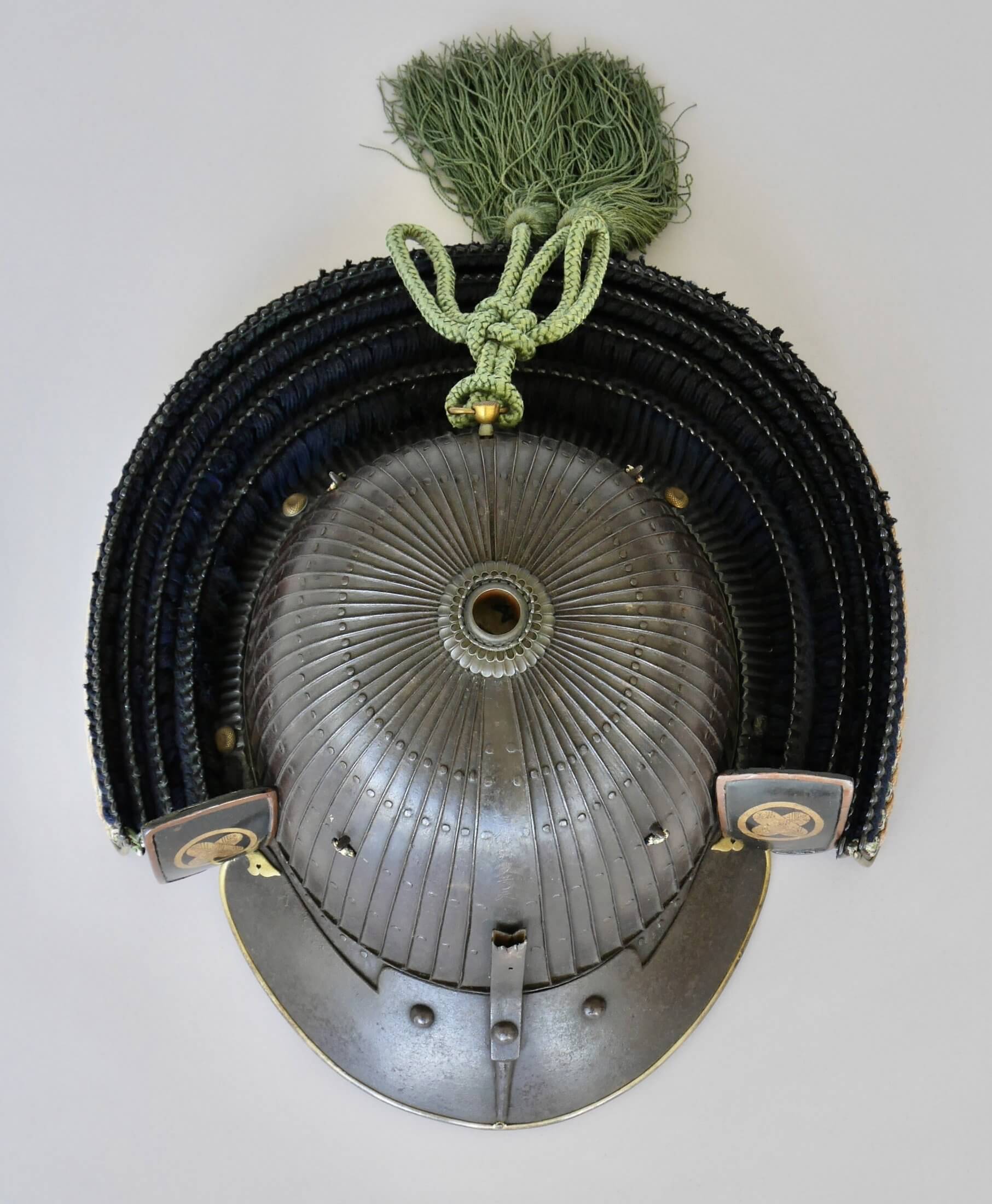
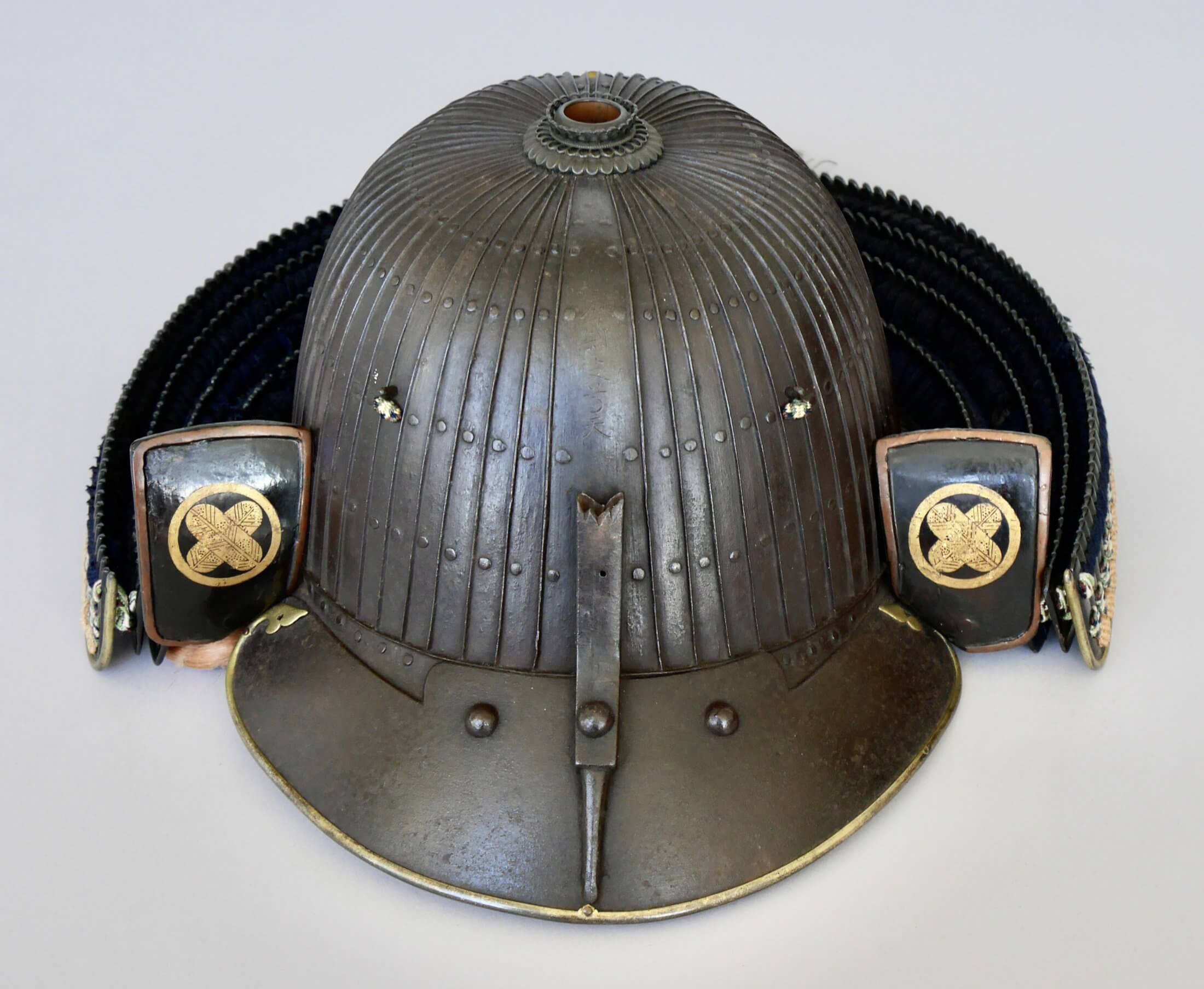
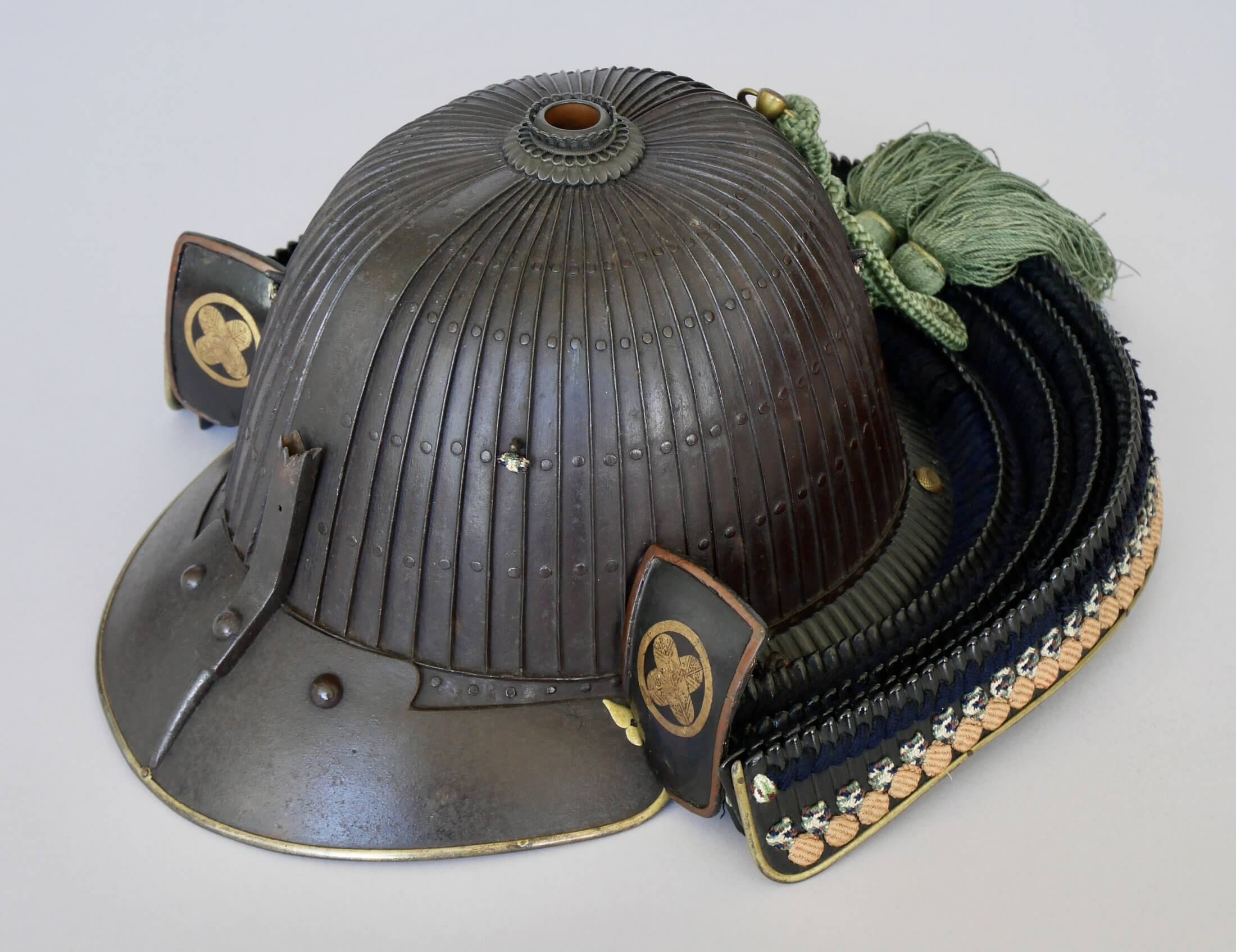
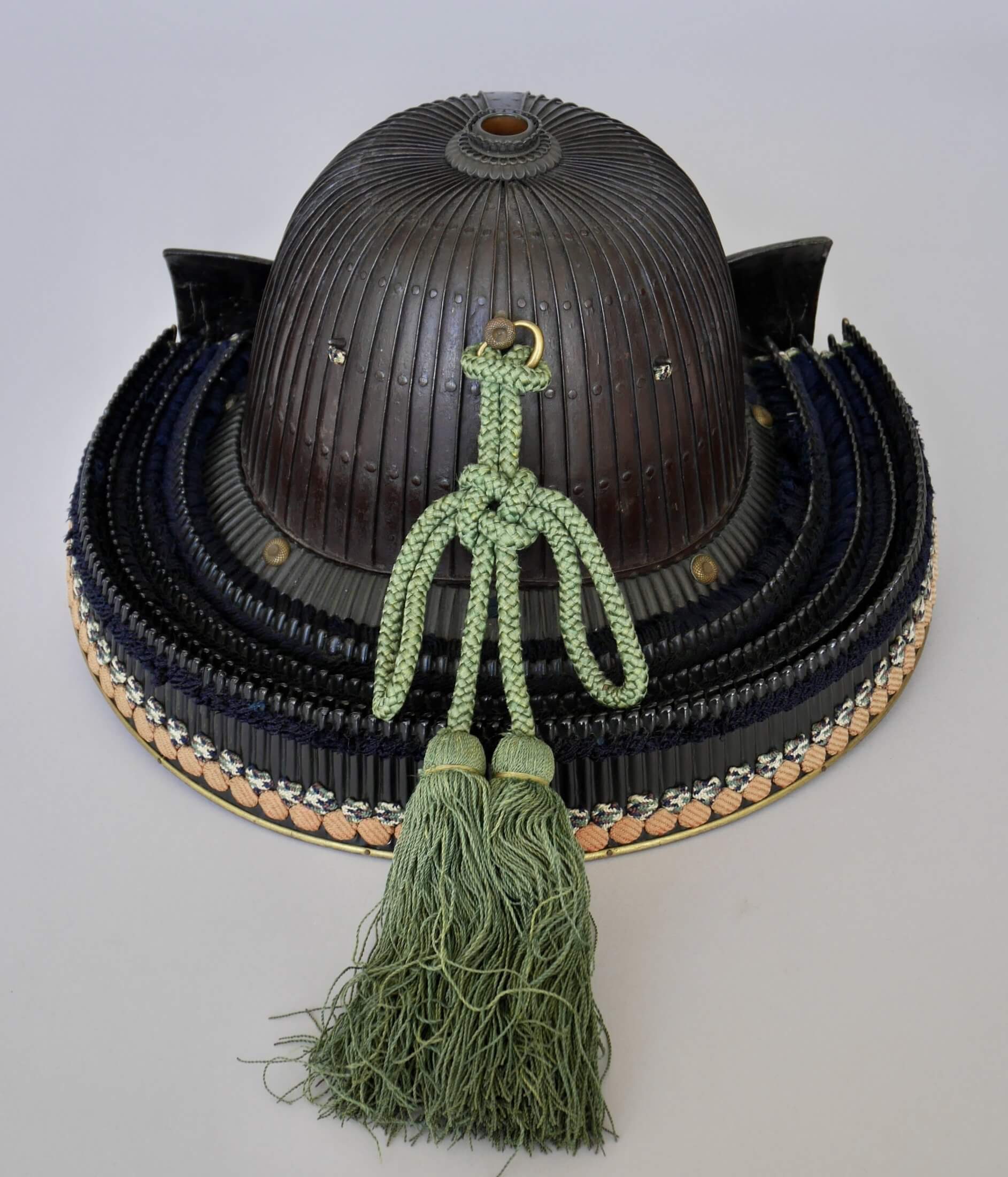
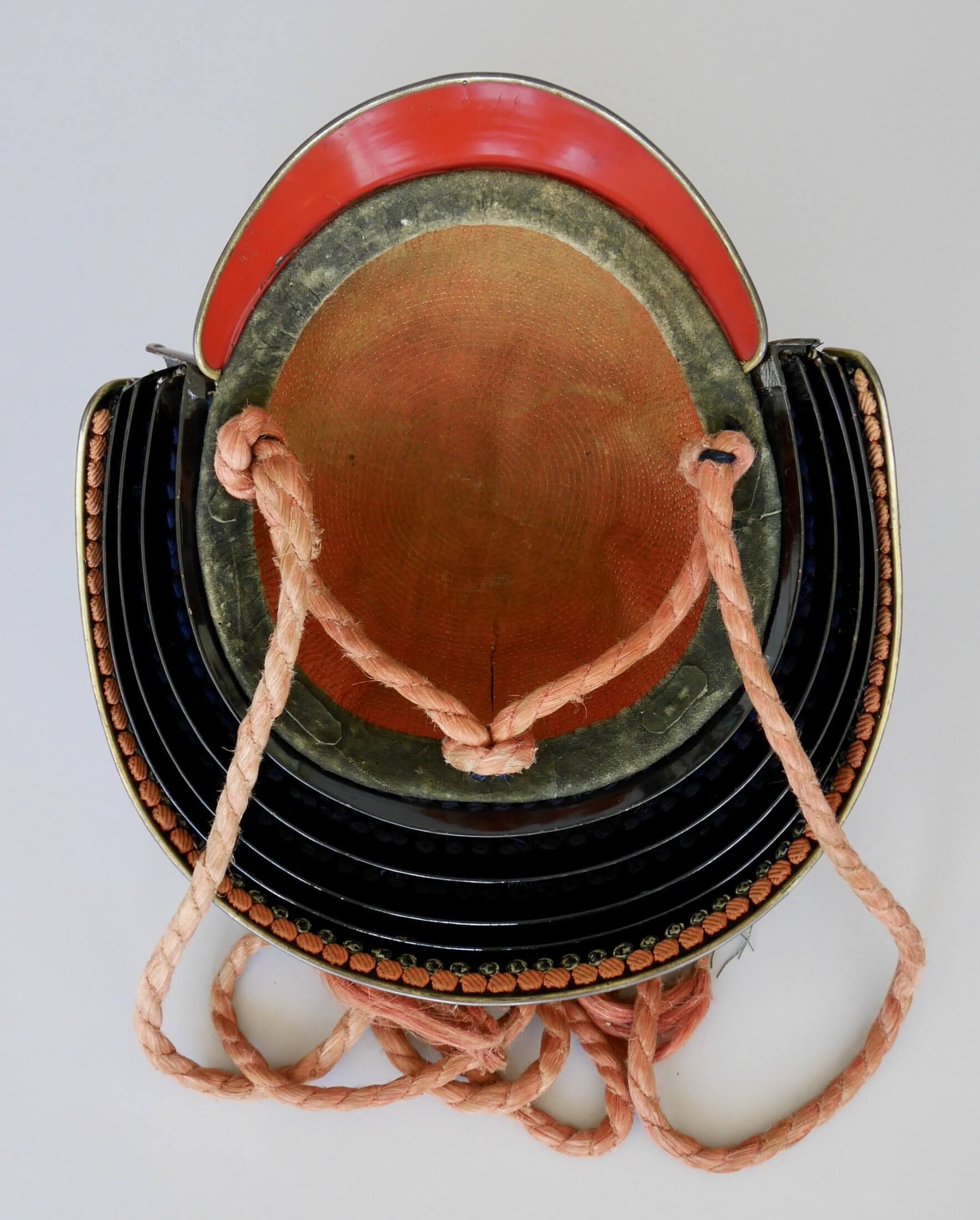
The helmet bowl is constructed from sixty-two well-forged iron hagi-ita (individual iron plates forming the helmet bowl), each given a slight convexity. There are four haridome-byō (retaining rivets) in each vertical row. The plates at the sides and rear rise almost vertically, giving the bowl a restrained, compact, and well-balanced form.
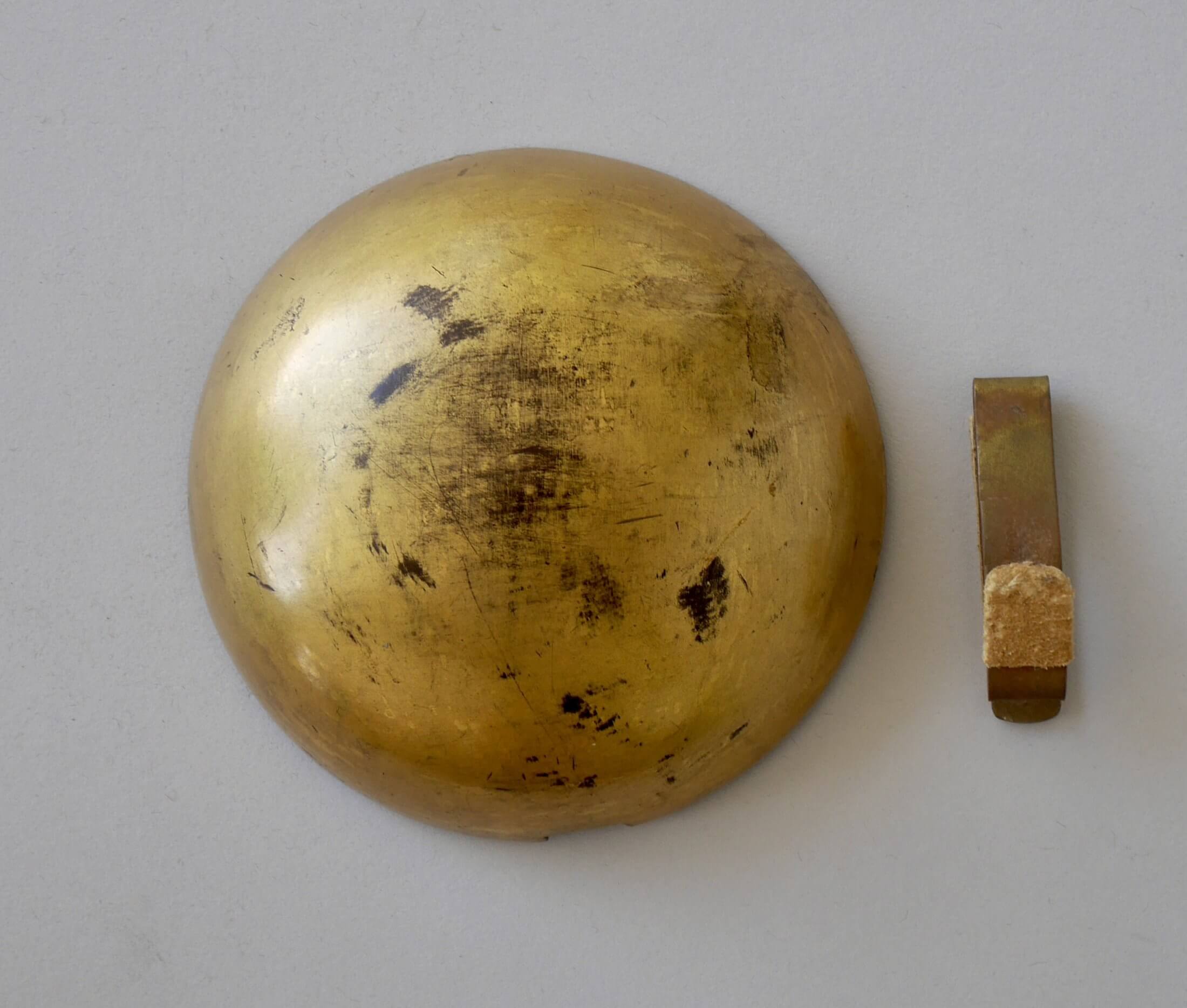
The mabisashi (peak) is of tōsei form, edged in gilt copper (fukurin), and secured by sankō-byō (three decorative rivets). The end of the haraedate-dai (crest holder) tapers to a narrow point, but lacks a shinogi (ridge), distinguishing its construction somewhat from that associated with the Saotome school. The hachimanza (decorative fitting surrounding the opening at the top of the bowl) is composed of five superimposed elements: an inverted chrysanthemum, an upright chrysanthemum, a rounded rim, and further chrysanthemum elements. Around the middle of the bowl are finely formed shiten-byō (four standing rivets), with hibiki-no-ana (small holes associated with them) pierced directly below and decorated with takuboku-ito (distinctively patterned braided cord in white, green, and purple). The kasa-jirushi-tsuke-no-kan (ring for attaching an identification flag) is secured by a chrysanthemum-shaped rivet head. The maedate (forecrest), made of lacquered wood with applied gold leaf, represents the sun disk in three-dimensional form.
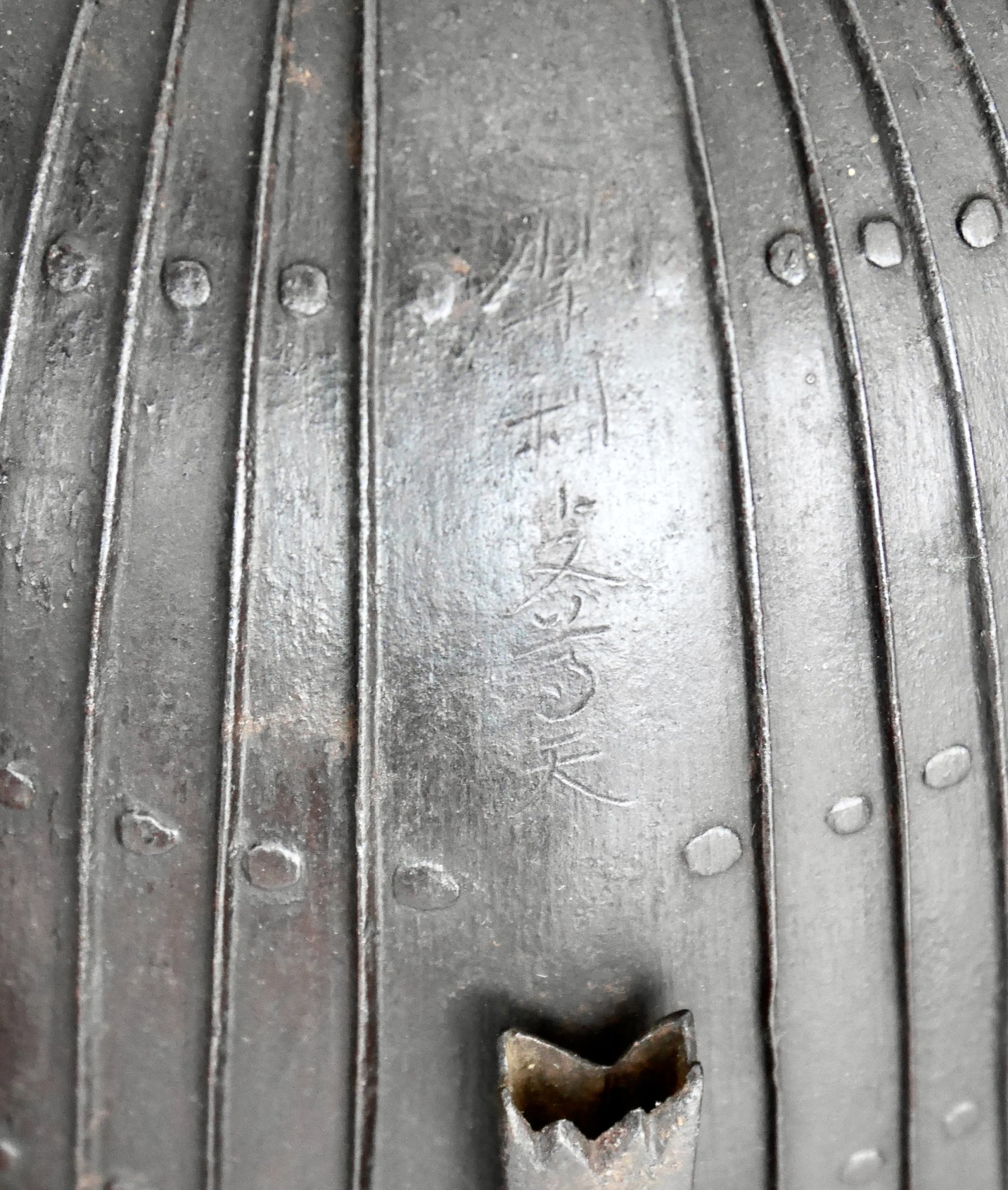
The shikoro (neck guard) consists of five tiers of iron kiritsuke-moriage-kozane (raised simulated individual plates), finished in roiro (polished black lacquer) and laced with dark blue cord. The mimi-ito (border lacing) and uneme (decorative horizontal lacing) are worked in takuboku-ito, while the hishinui (cross-knot lacing) is scarlet. The lowest plate with cross-knot lacing also has gilt edging (fukurin). The single-tier fukigaeshi (the portion of the neck guard that are turned back at the front) are finished in roiro and decorated in gold maki-e with the chigai-takanoha (crossed hawk feathers) family mon. Although the helmet bears no maker’s signature, the characters 摩利支天尊 “Marishiten-son” (Marishiten, a Buddhist protective deity) are engraved high on the front center of the bowl. The helmet as a whole is exceptionally well formed.
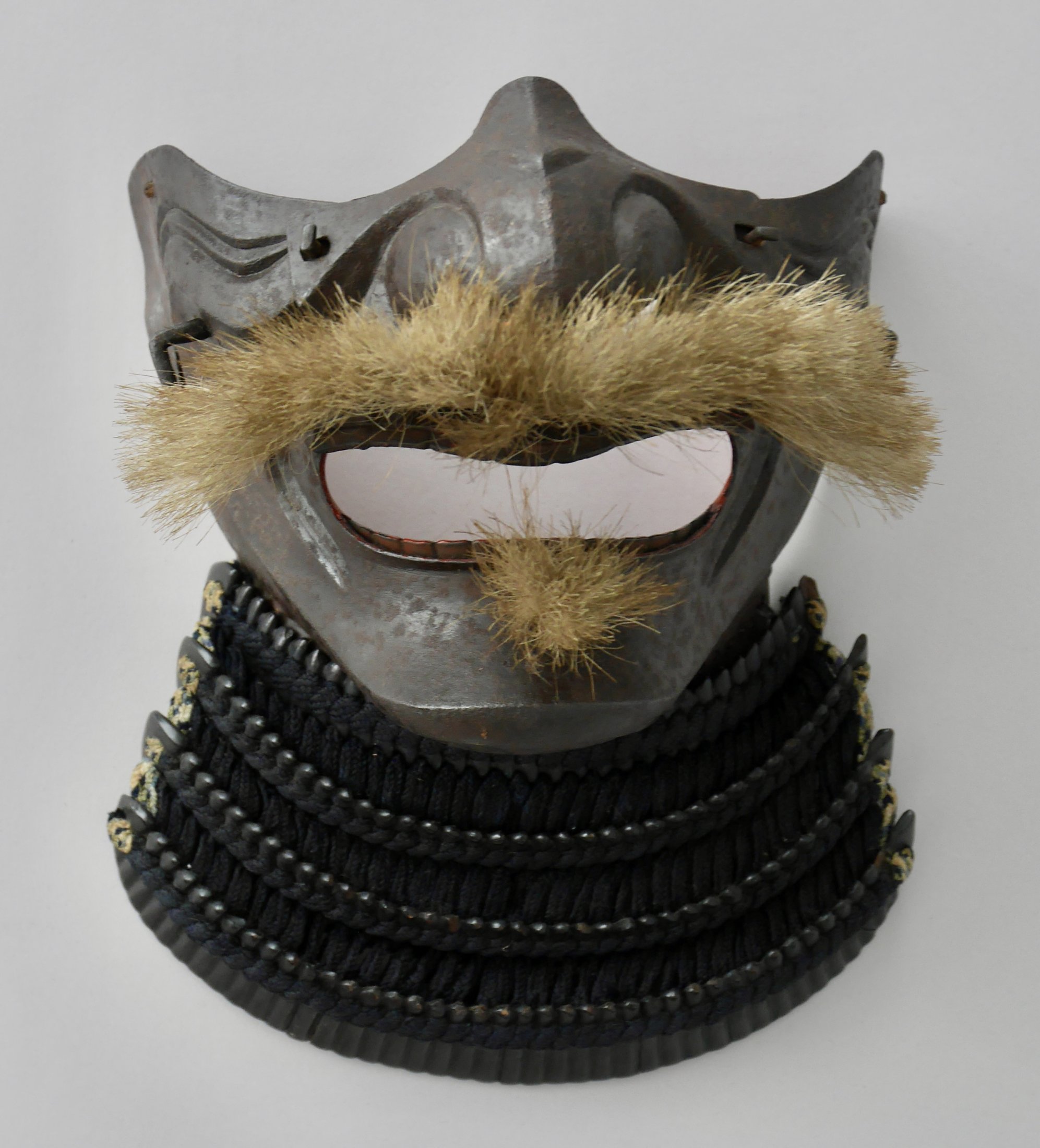
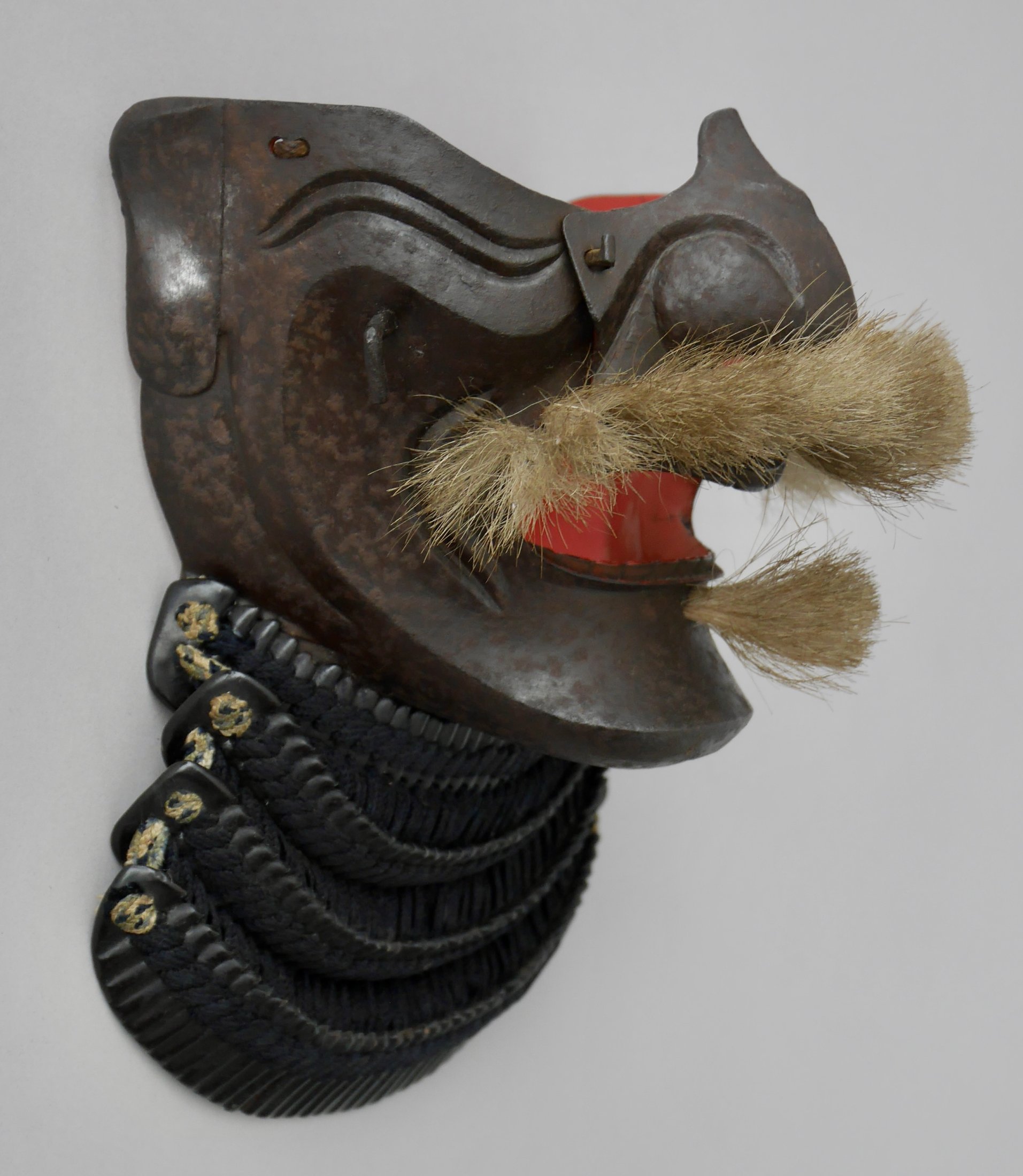
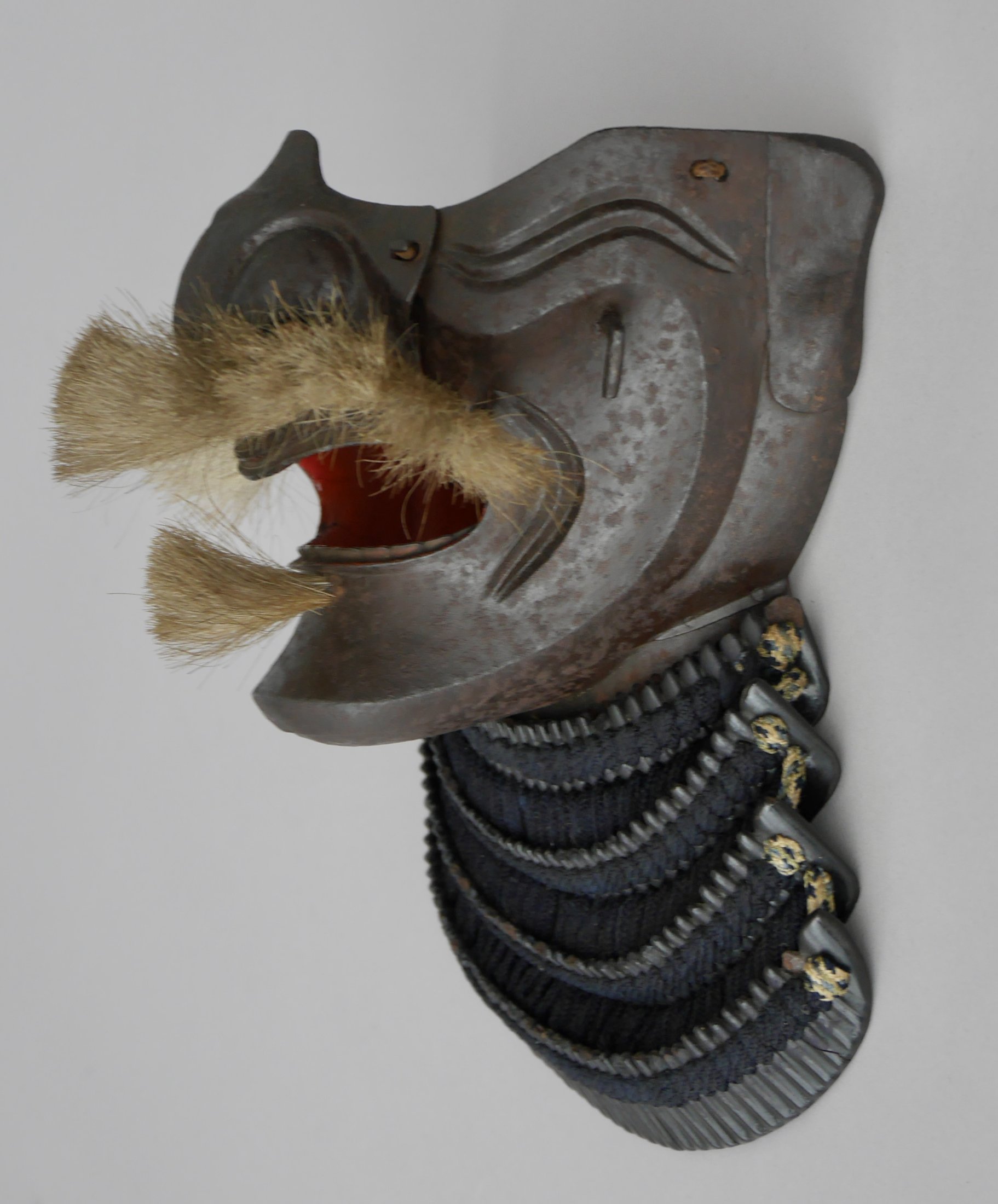
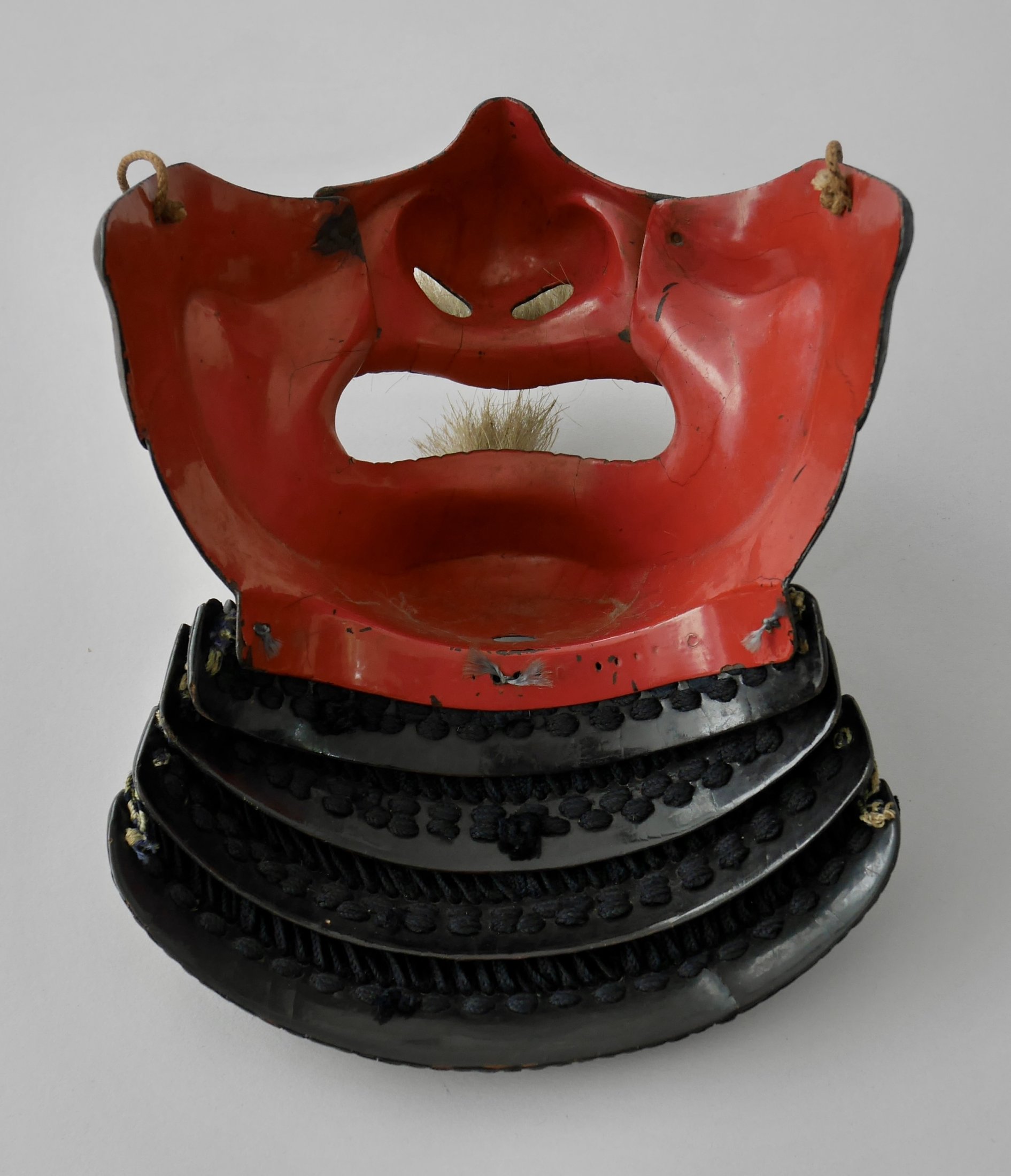
The mengu (face armor) is of russet-iron and takes the form of a ressei-bō (fierce-expression half mask), with two deeply defined wrinkles. Its tare (throat guard) consists of four tiers of iron kiritsuke-moriage-kozane, finished in roiro (polished black lacquer) and laced in dark blue, with takuboku-ito used for the border lacing.
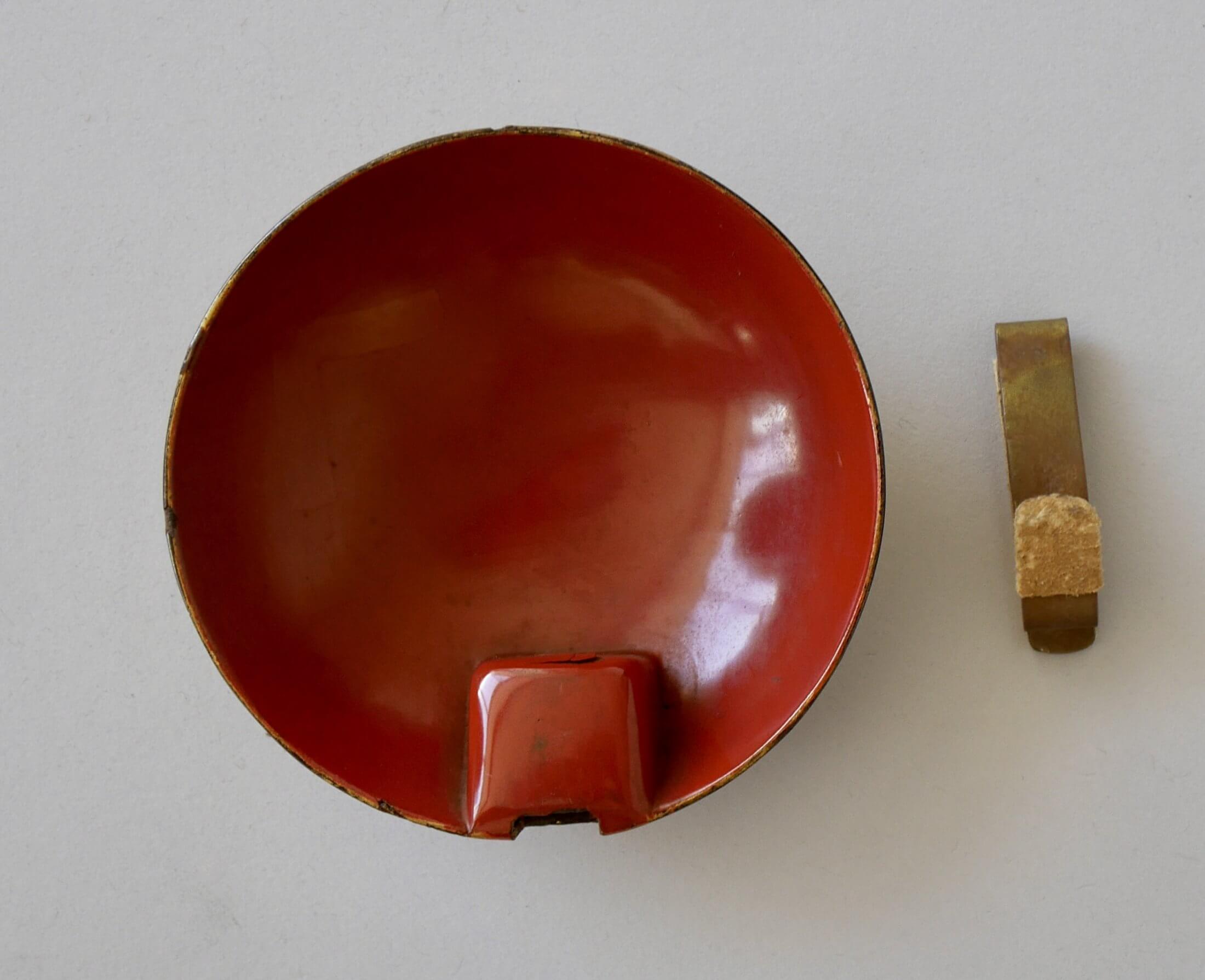
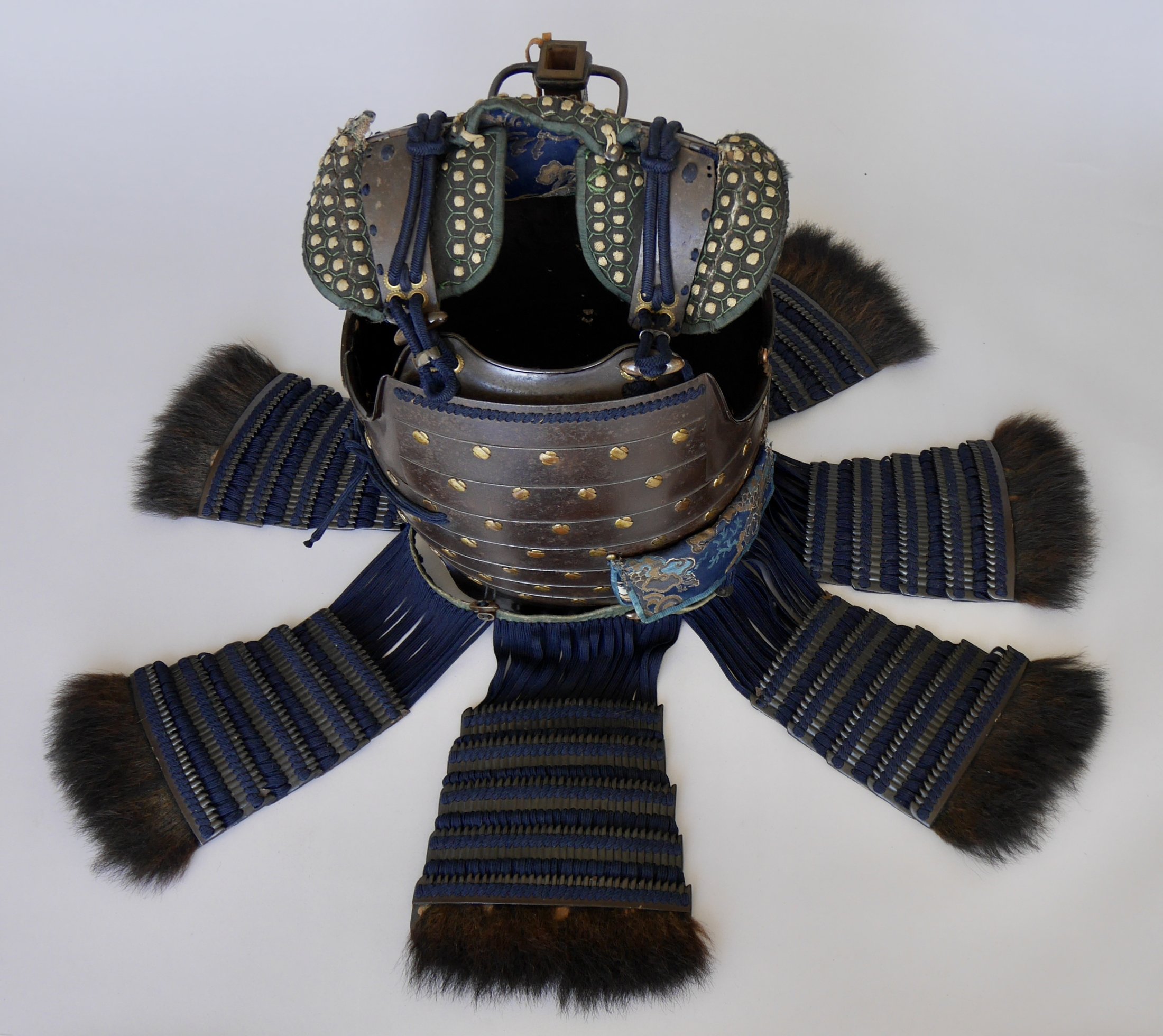
The dō (cuirass) is constructed of russet-iron plates, with four tiers at the front tateage (upper section of the cuirass), five at the rear, and five forming the nagagawa (bottom section of the cuirass). The uppermost front tier is laced in dark blue, while the remaining sections are secured with gilt fittings arranged to resemble crossed knot lacing. A hanagami-ire (pocket for paper) is fitted to the front. At the back are a gattari (upper support for the banner socket) and machiuke (lower fitting securing the banner socket), together with an ukezutsu (banner socket); even the original leather cord for securing the banner survives.
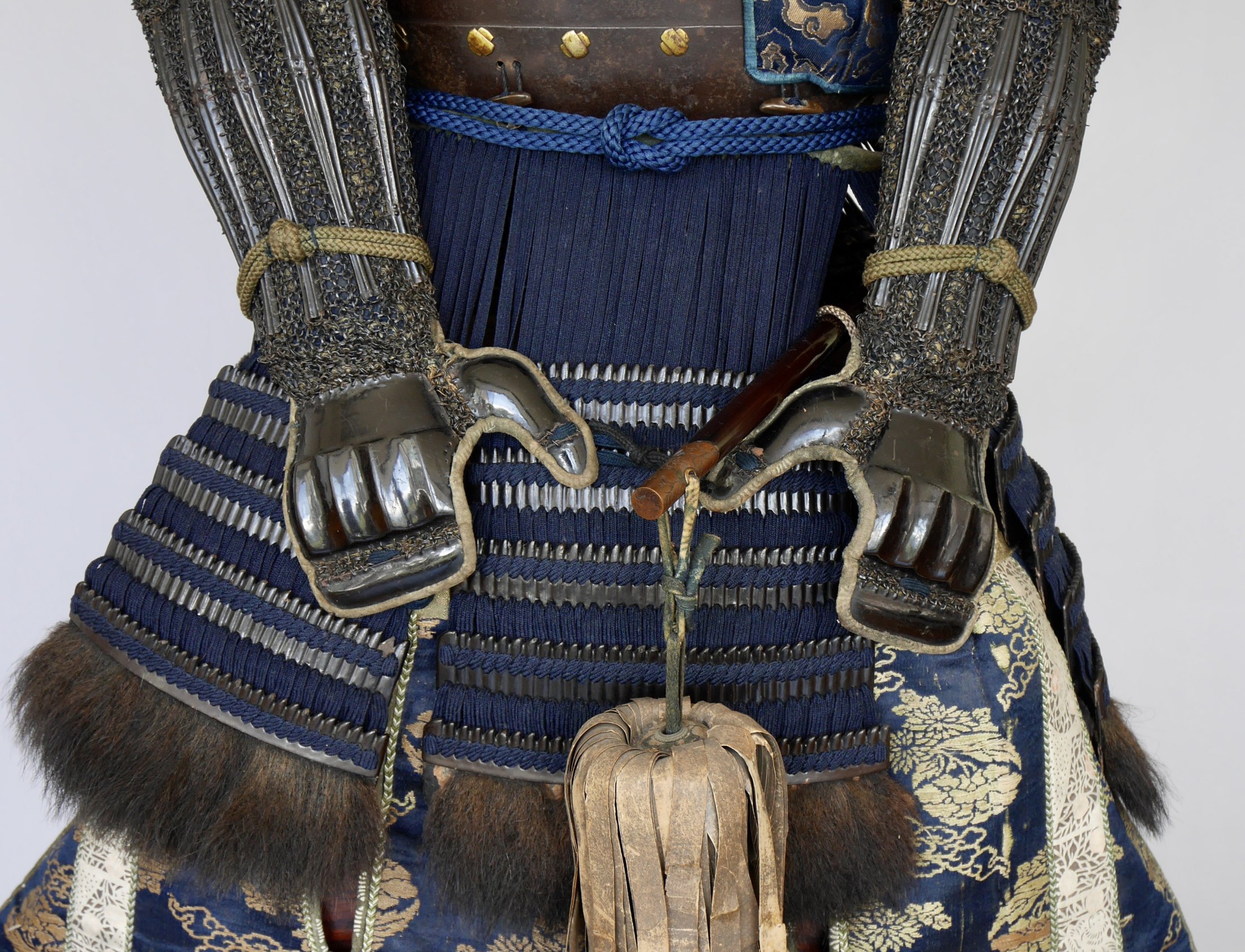
The eri-mawari (collar defense) incorporates kikkōgane (small hexagonal iron plates), covered in dark blue woolen cloth, joined with green diamond-pattern stitching, and accented with white thread. The detachable kusazuri (tassets) are made of hardened leather kiritsuke-moriage-kozane, finished in polished roiro and laced in dark blue. Bear fur is applied along the lowest plates.
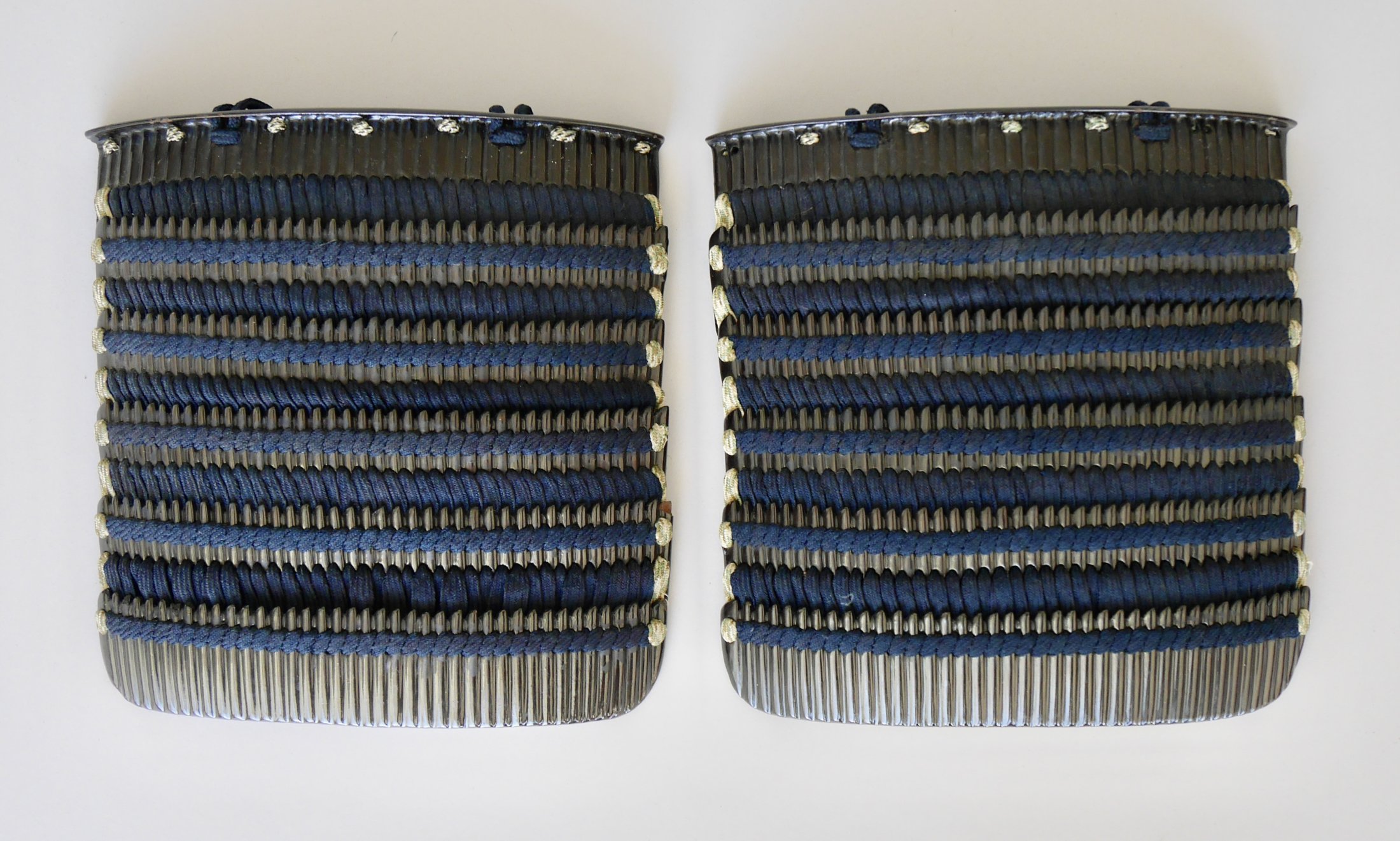
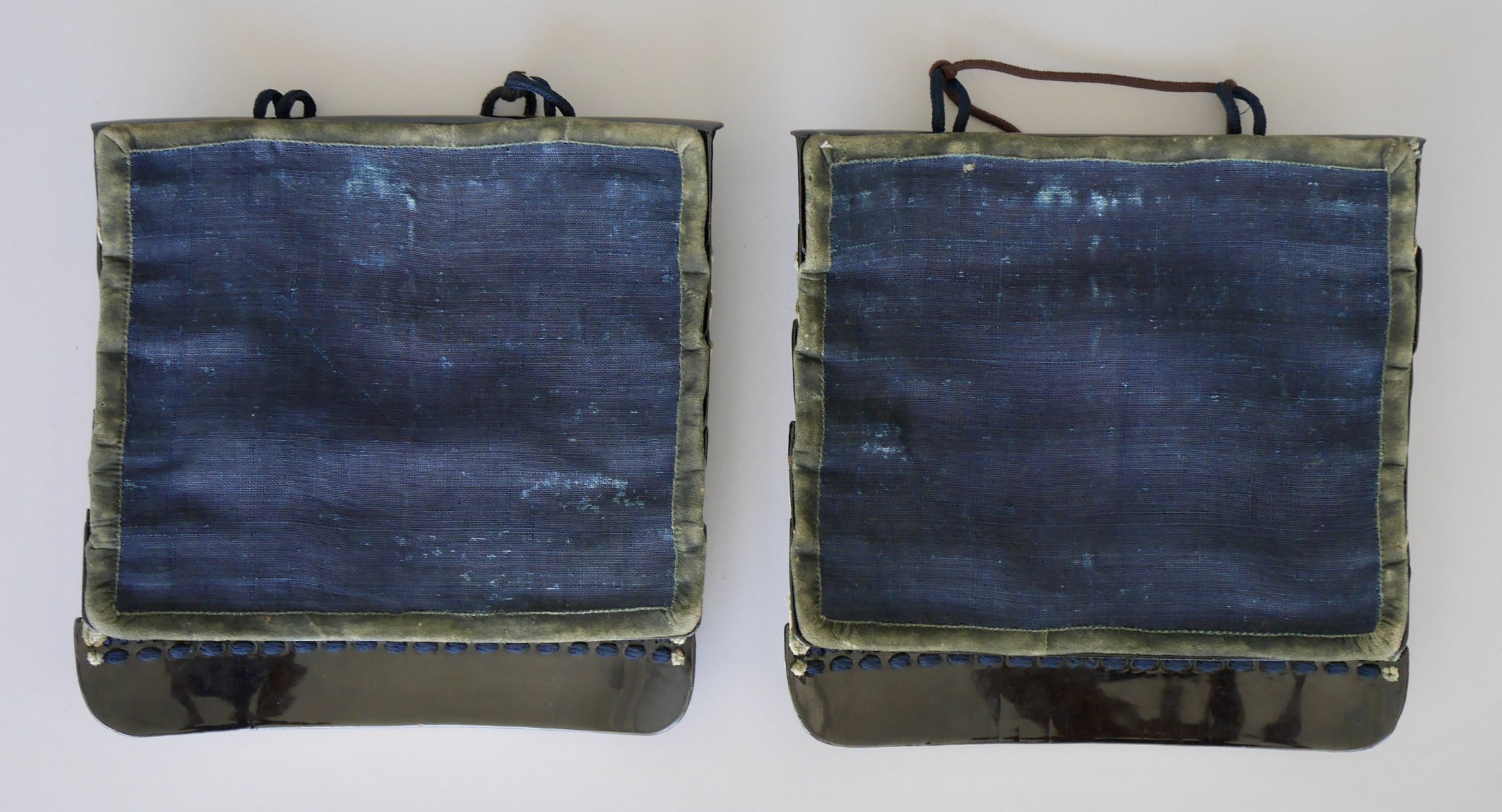
The sode (shoulder guards) consist of six tiers of iron kiritsuke-moriage-kozane, finished in roiro and laced in dark blue. Their border lacing and other details are finished in the same manner as the tare.
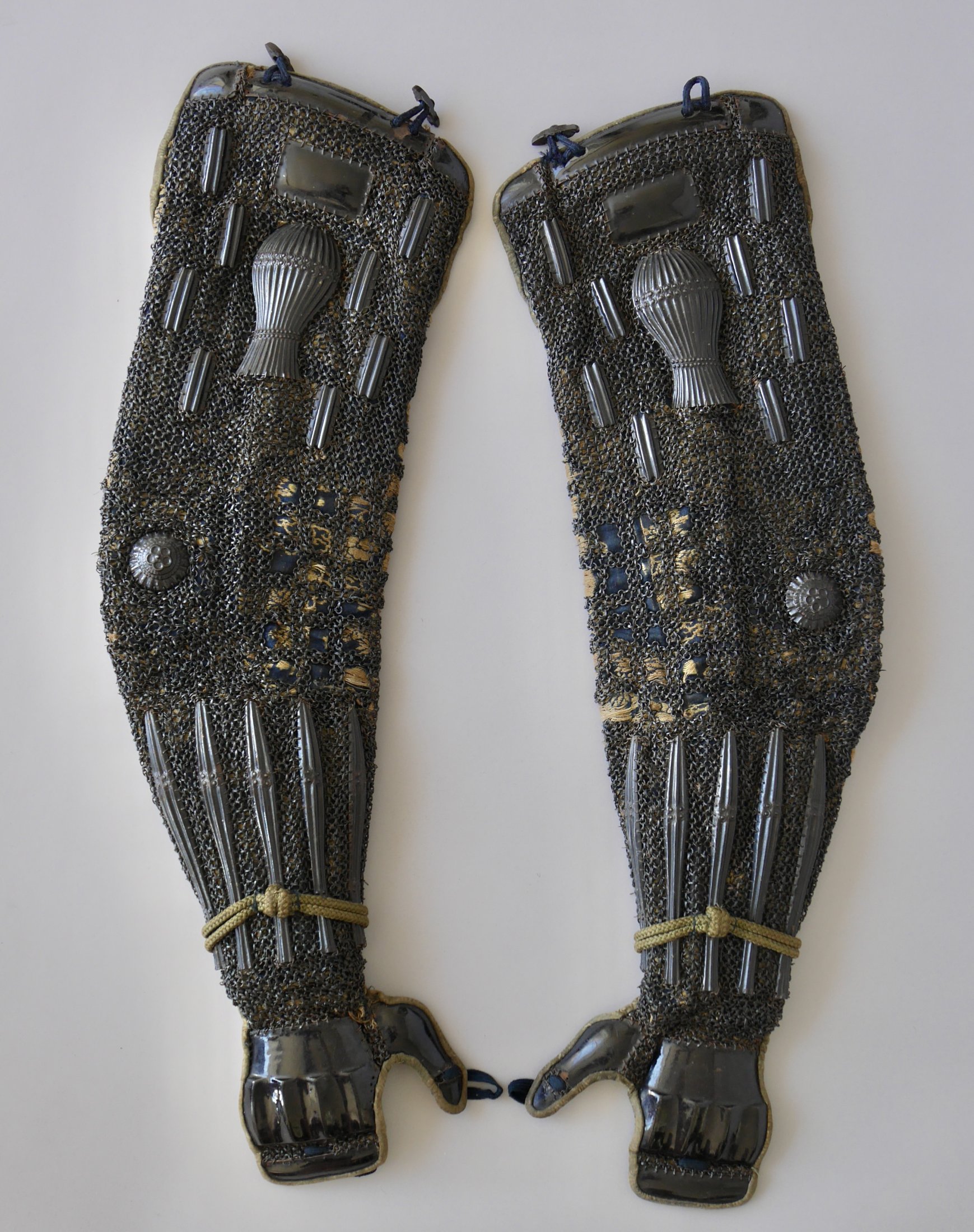
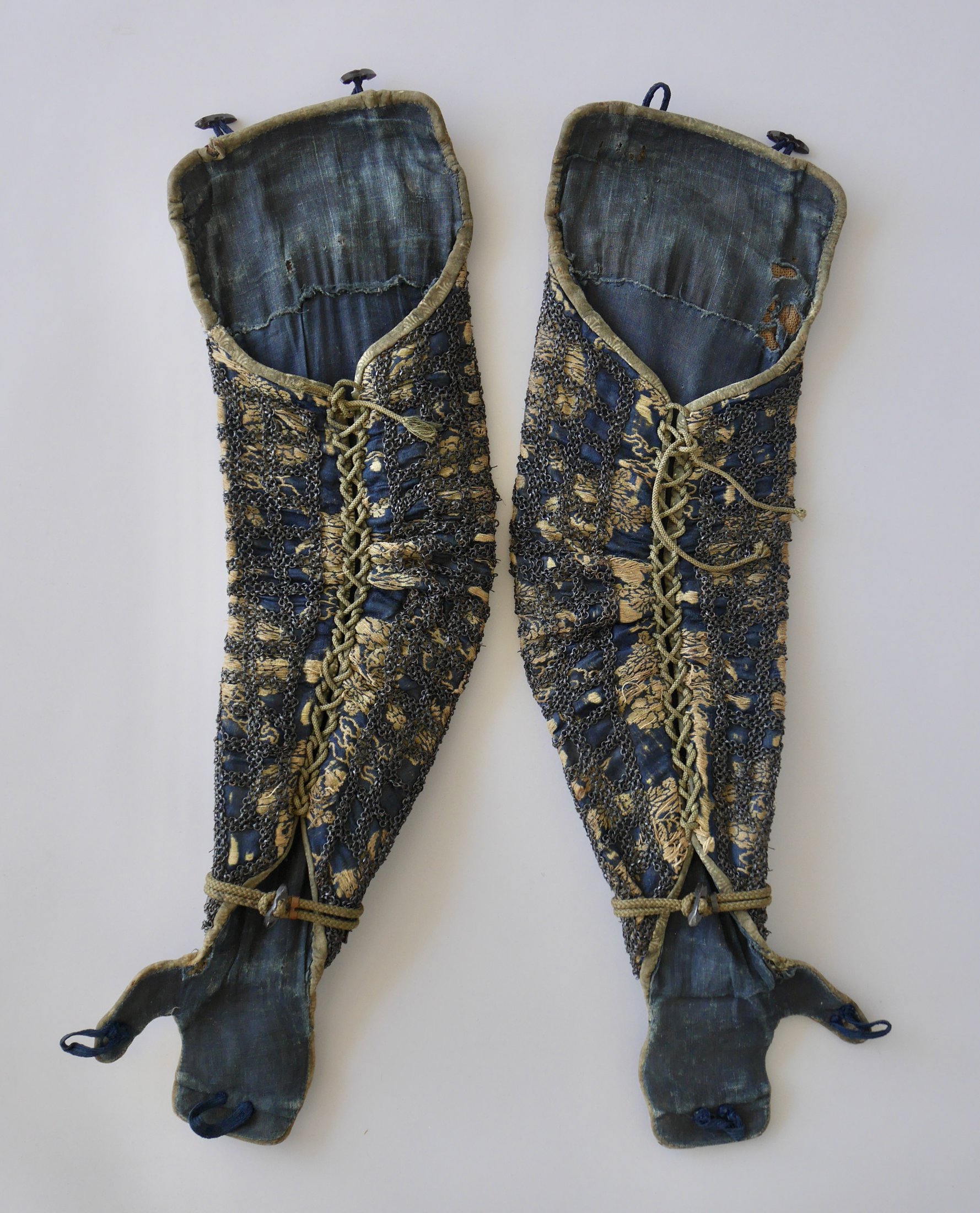
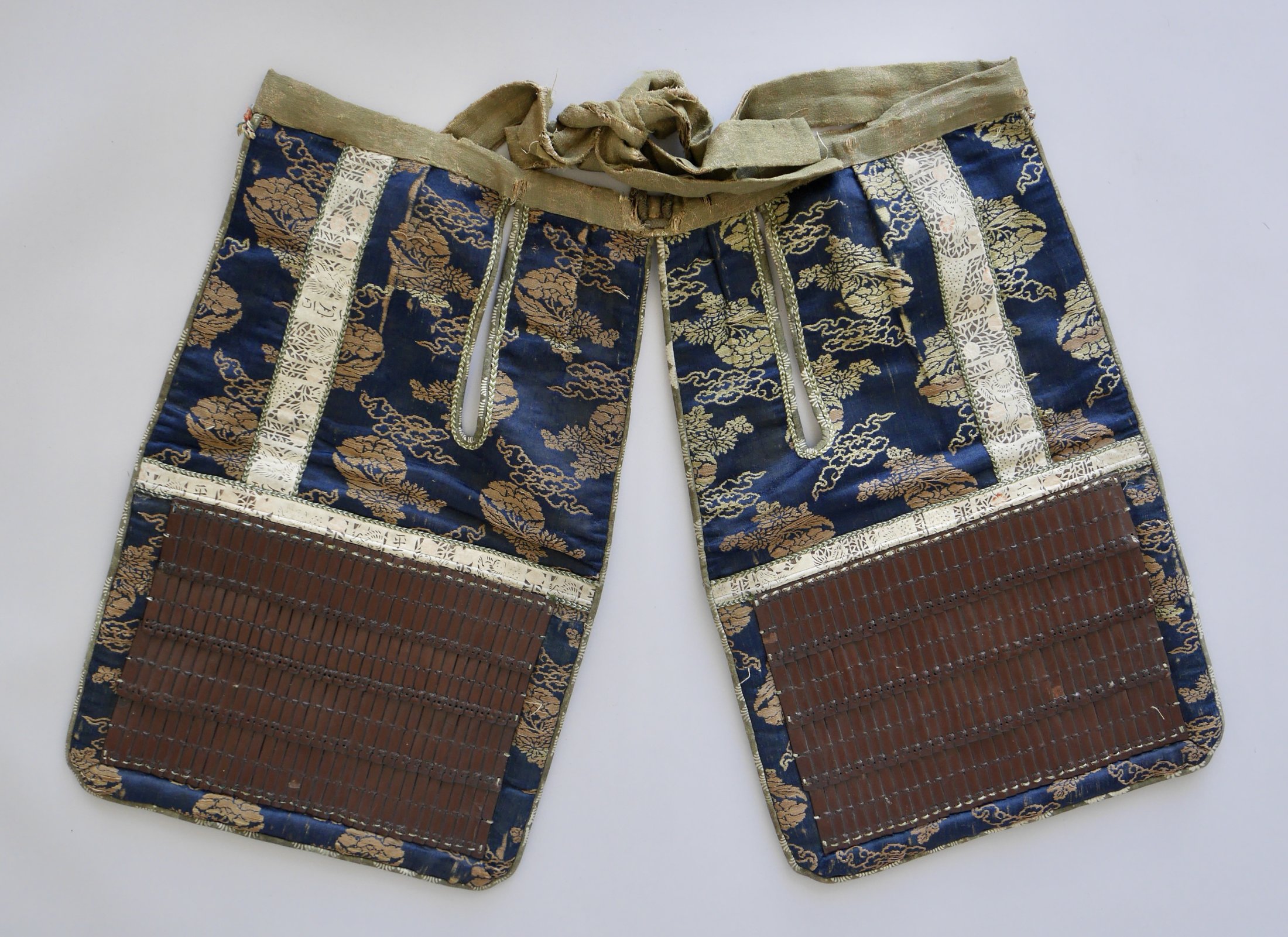
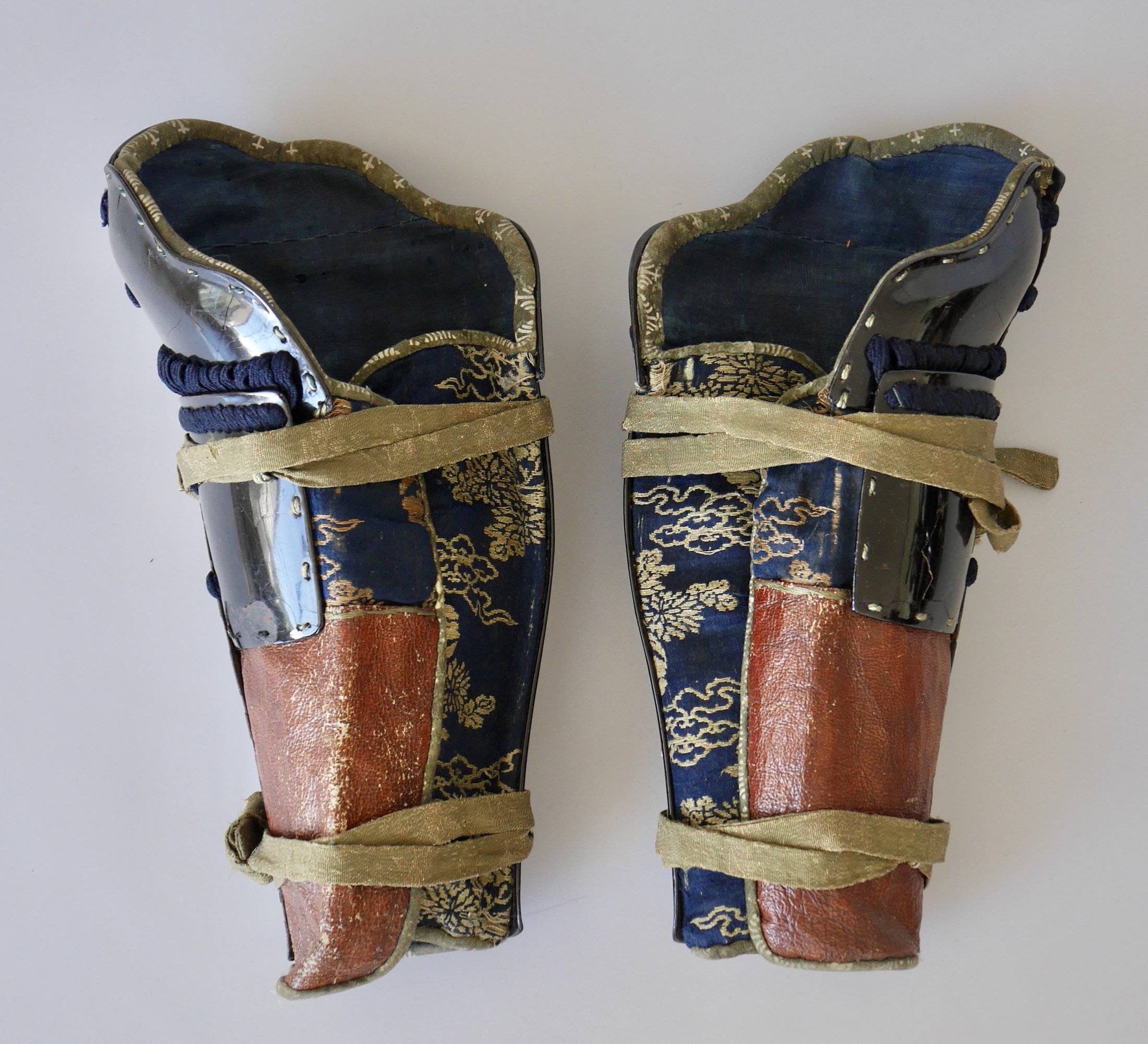
The kote (sleeves), haidate (thigh guards), and suneate (shin defenses) share a unified ieji (textile foundation) of gold brocade with dark blue ground, woven with designs of peonies, branching chrysanthemums, and auspicious clouds.
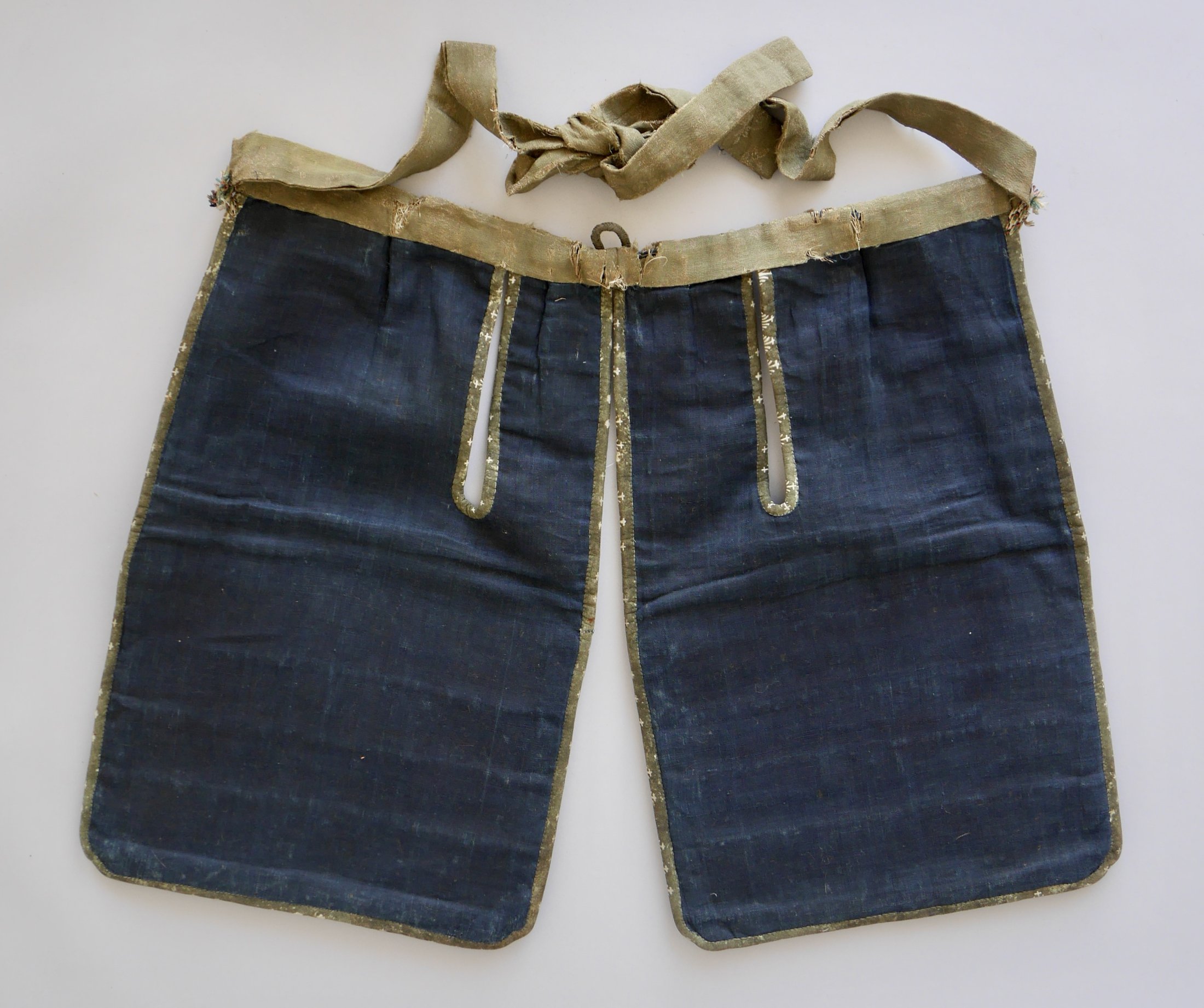
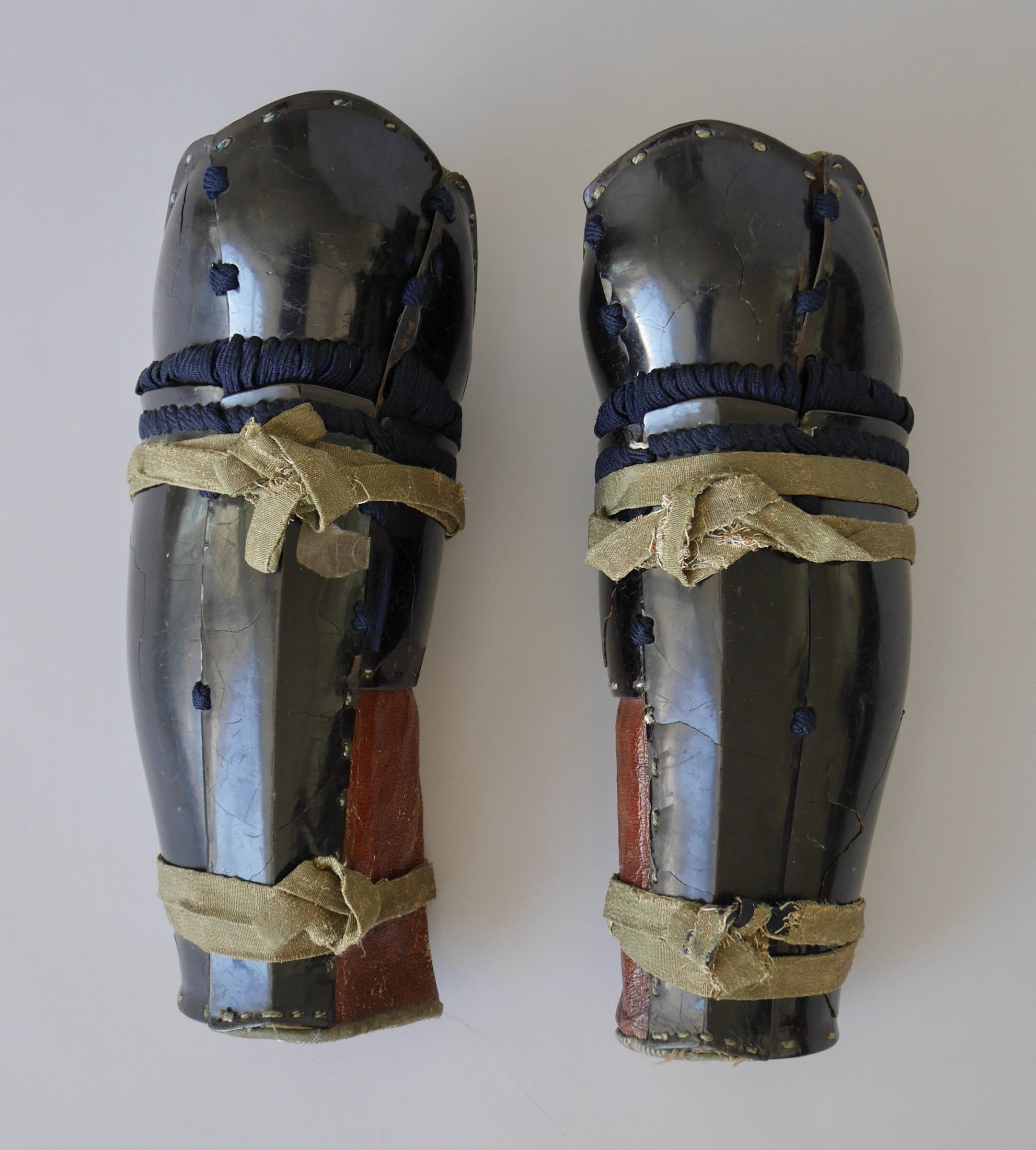
The iron kote, finished in polished roiro, have shiwa-fukube (gourd-shaped iron plate) construction on the upper arms and shiwa-shino (narrow elongated iron plates) below, creating a distinctive form. The haidate (thigh guards) are arranged with rows of small plates finished in russet-colored lacquer, an arrangement devised to give the armor a particularly decorative appearance. The iron sanbon-suneate (three-plate shin guards), also finished in roiro, have their leather components colored in a russet tone, creating a harmonious visual balance with the haidate.
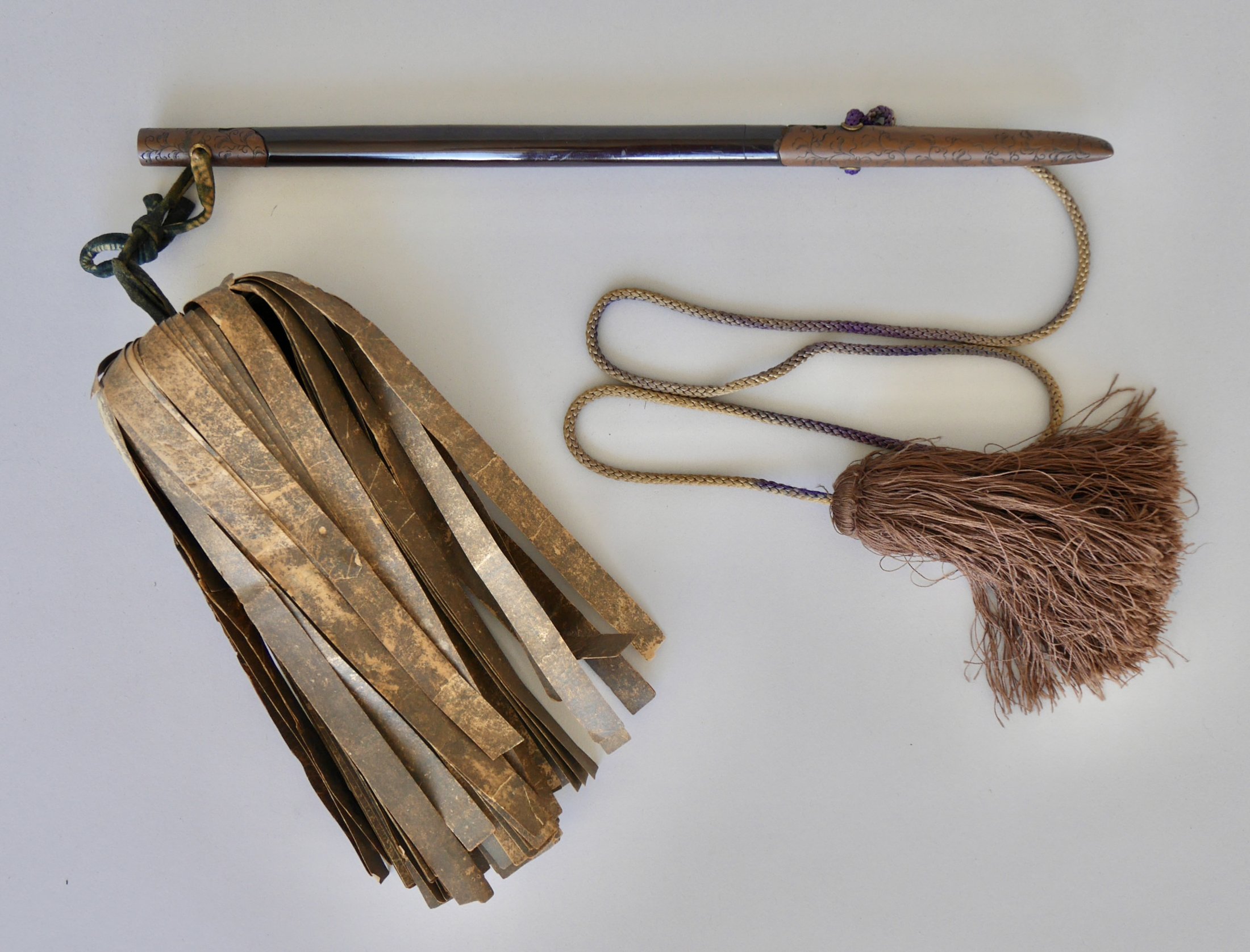
The accompanying saihai (commander’s baton) has a handle finished in roiro. Its fittings at the top and bottom are of copper, decorated in katakiri-bori (engraving with angled chisel cuts) with an arabesque design. The paper strips are covered with silver leaf and secured at the base with indigo-dyed leather. Particularly noteworthy is the survival of the original tenuki-o (wrist cord).
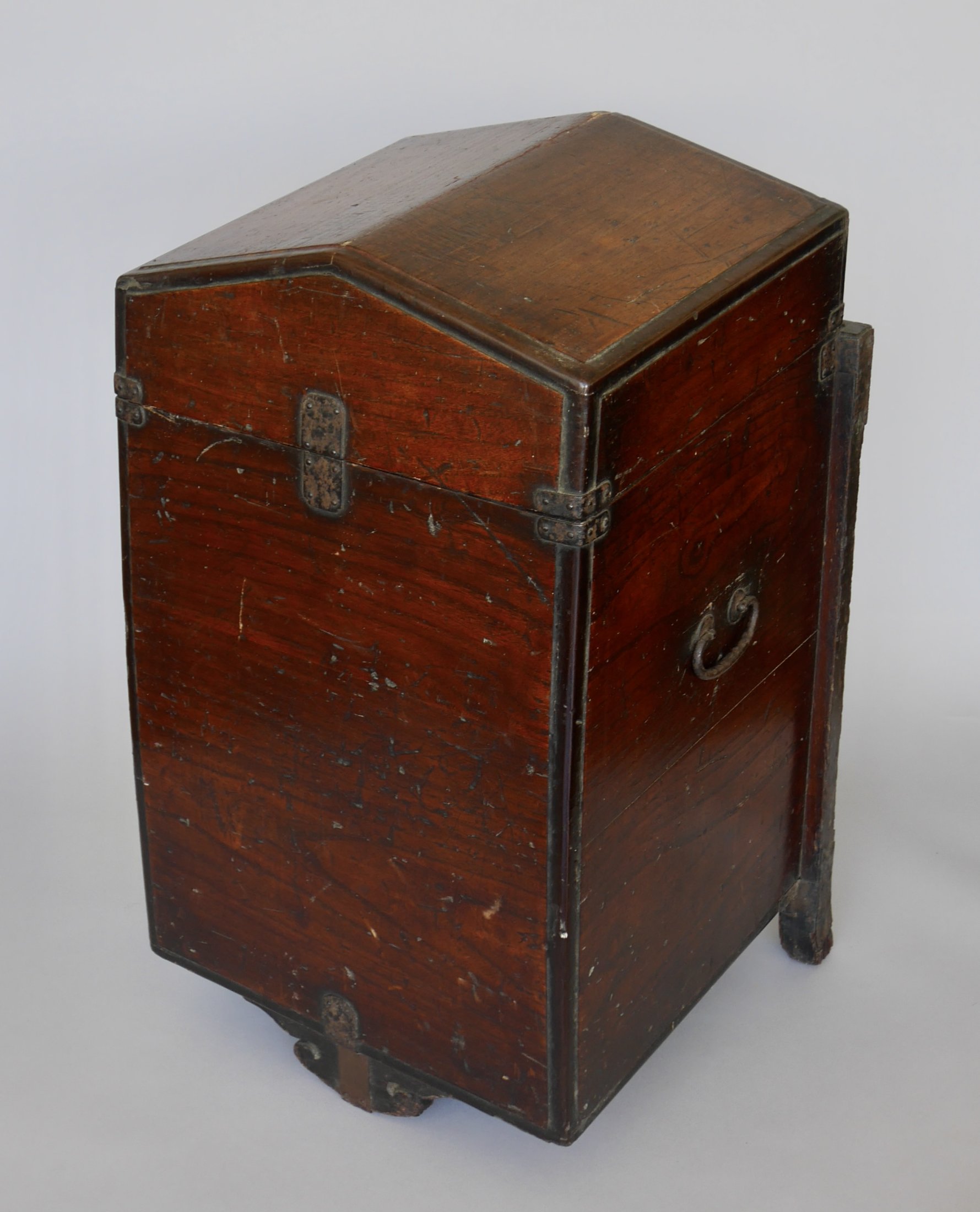
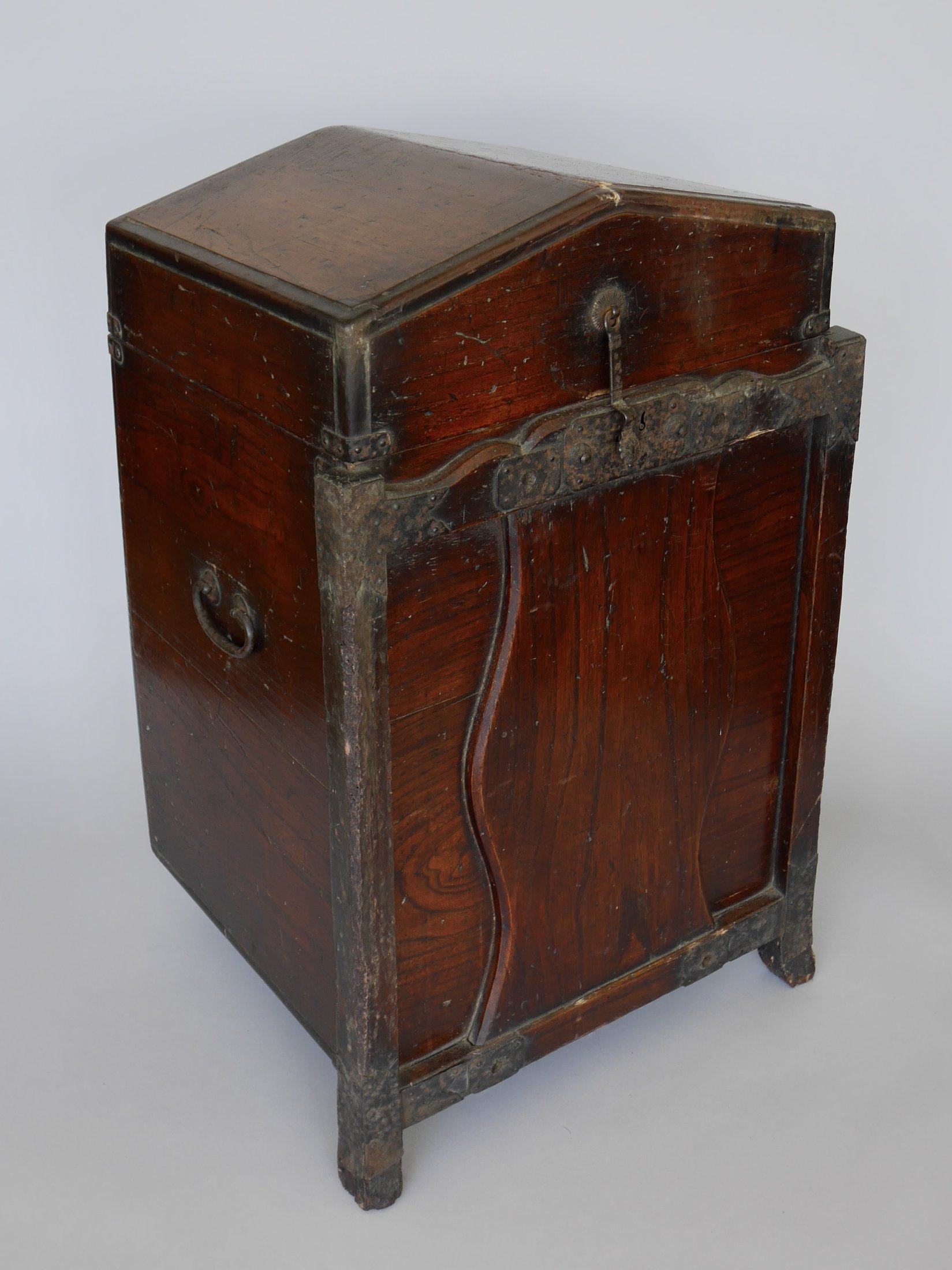
The armor chest is also unusual, taking the form of an oi-bitsu, a footed carrying chest resembling the packs traditionally carried on the backs of yamabushi (mountain ascetics).
The armor is exceptionally well preserved, and the russet-iron retains an excellent color and character. Combining practical construction intended for actual combat with a refined and dignified appearance, this is a highly distinguished suit of armor.