Design of a Plum Tree
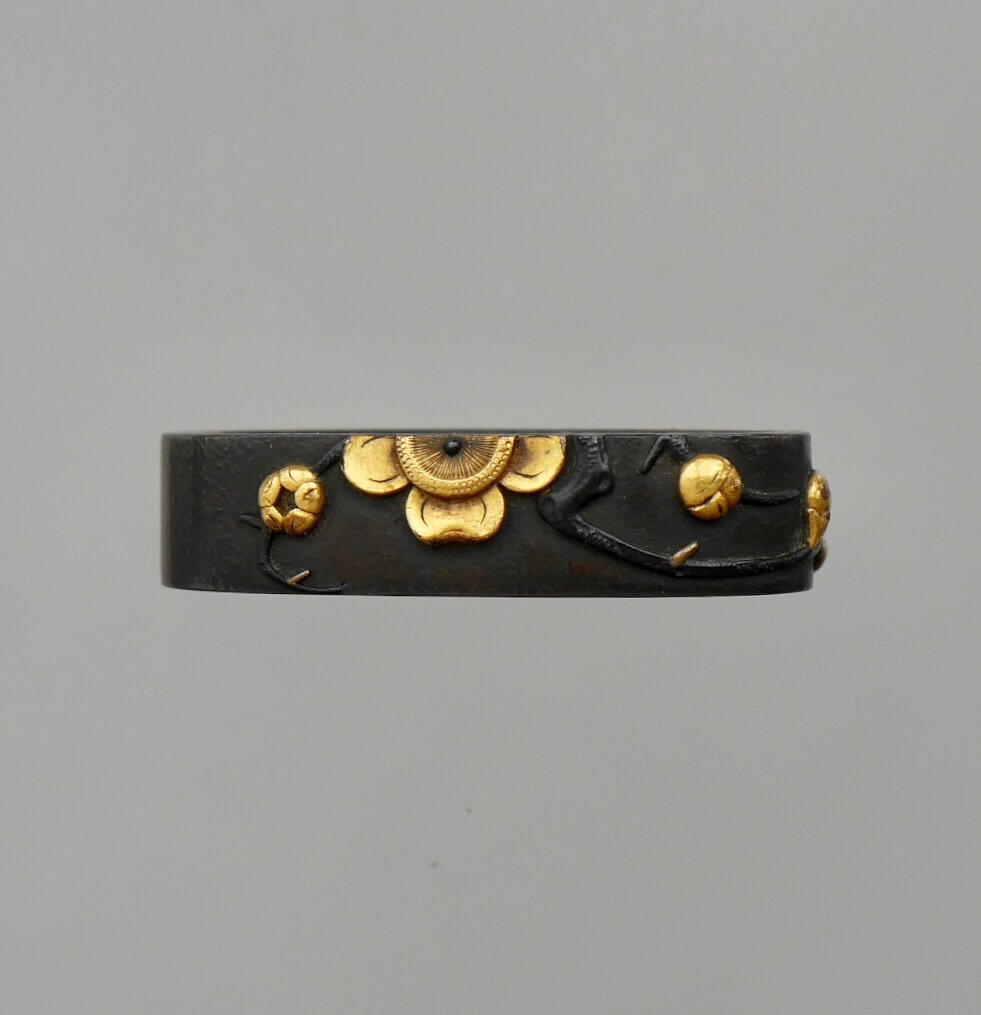
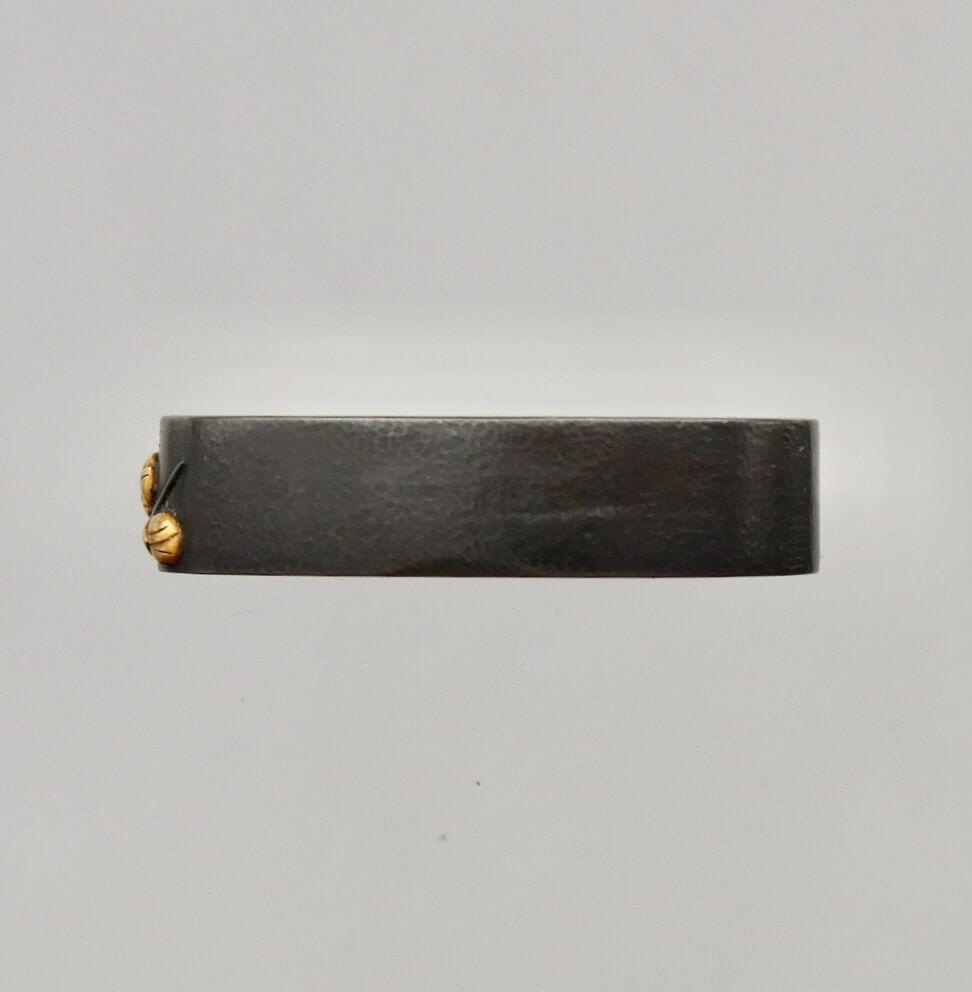
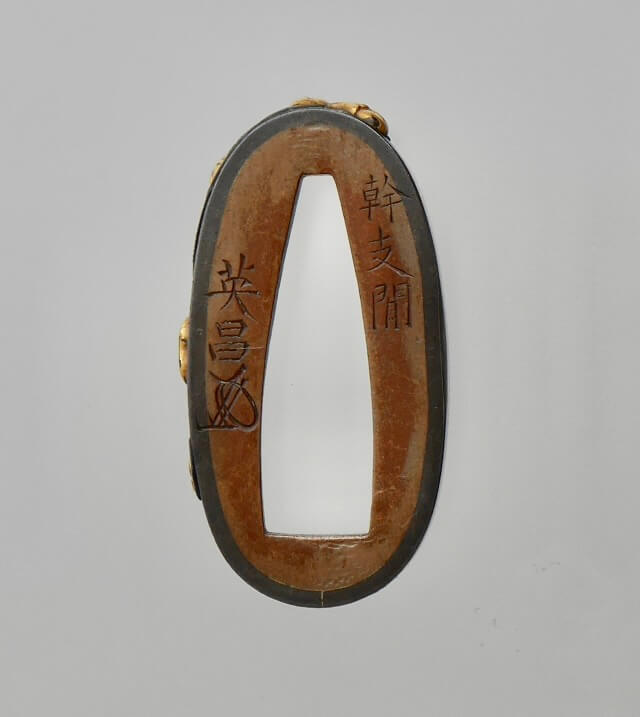
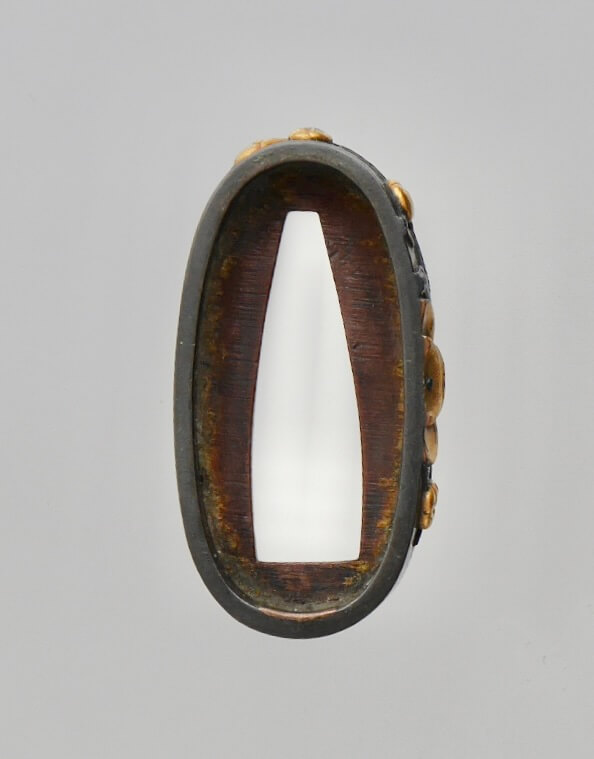
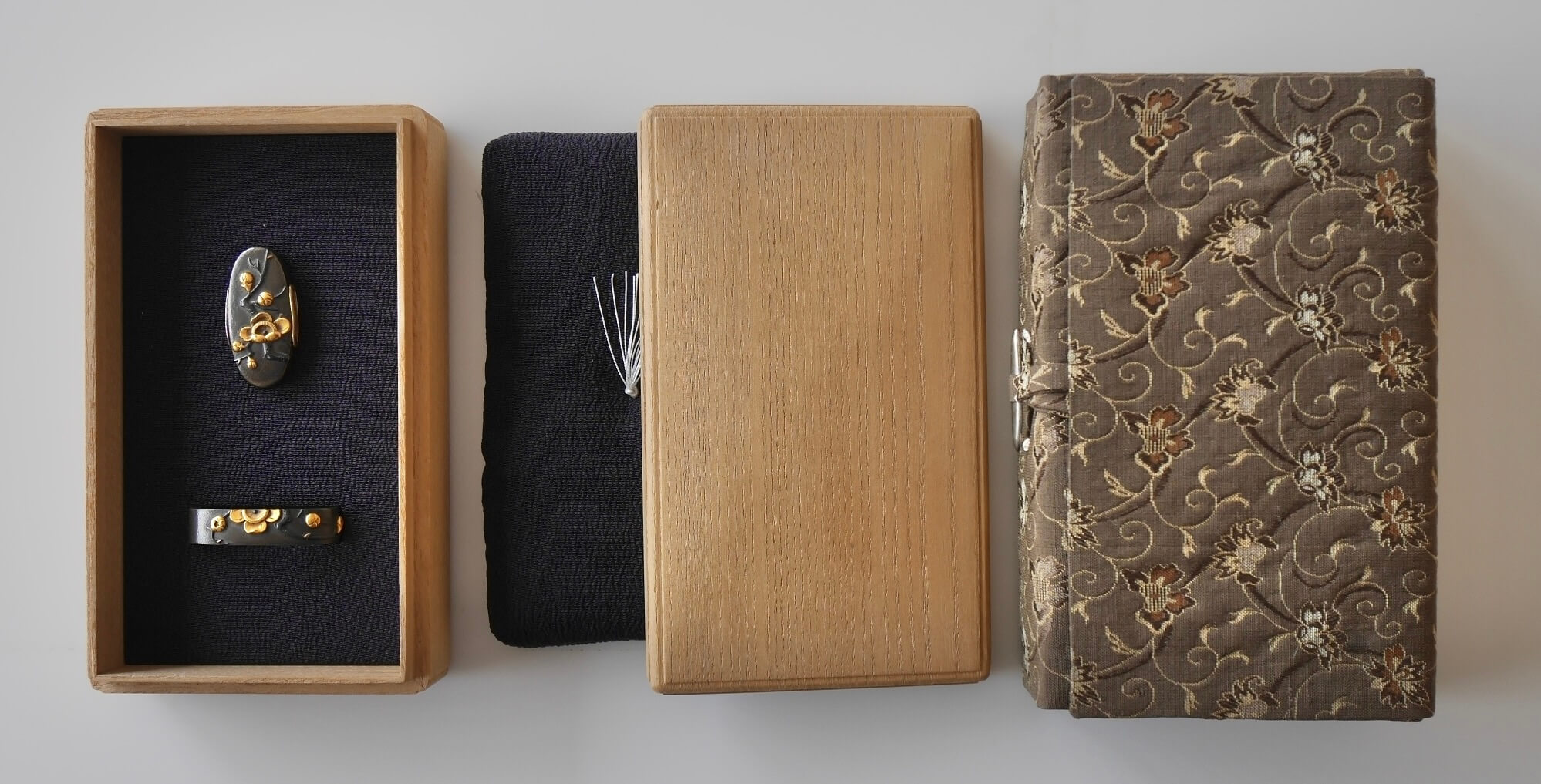
The Ōmori school of metal artisans, together with the Yanagawa and Ishiguro schools, was one of the major schools descended from the Yokoya tradition. Although Shigemitsu is traditionally regarded as the founder of the Ōmori family, no works that can be confidently attributed to him have been identified, and it appears that the school was in fact established by Terumasa, a student of Yokoya Sōmin. Terumasa was born in Edo in Hōei 2 (1705). By the time of Sōmin’s death in Kyōhō 18 (1733), he was twenty-nine years old and had already established himself independently. Terumasa died in Meiwa 9 (1772). The Ōmori school subsequently continued through Teruhide and Terumitsu, attracting numerous students and developing into an important branch of the machibori tradition.
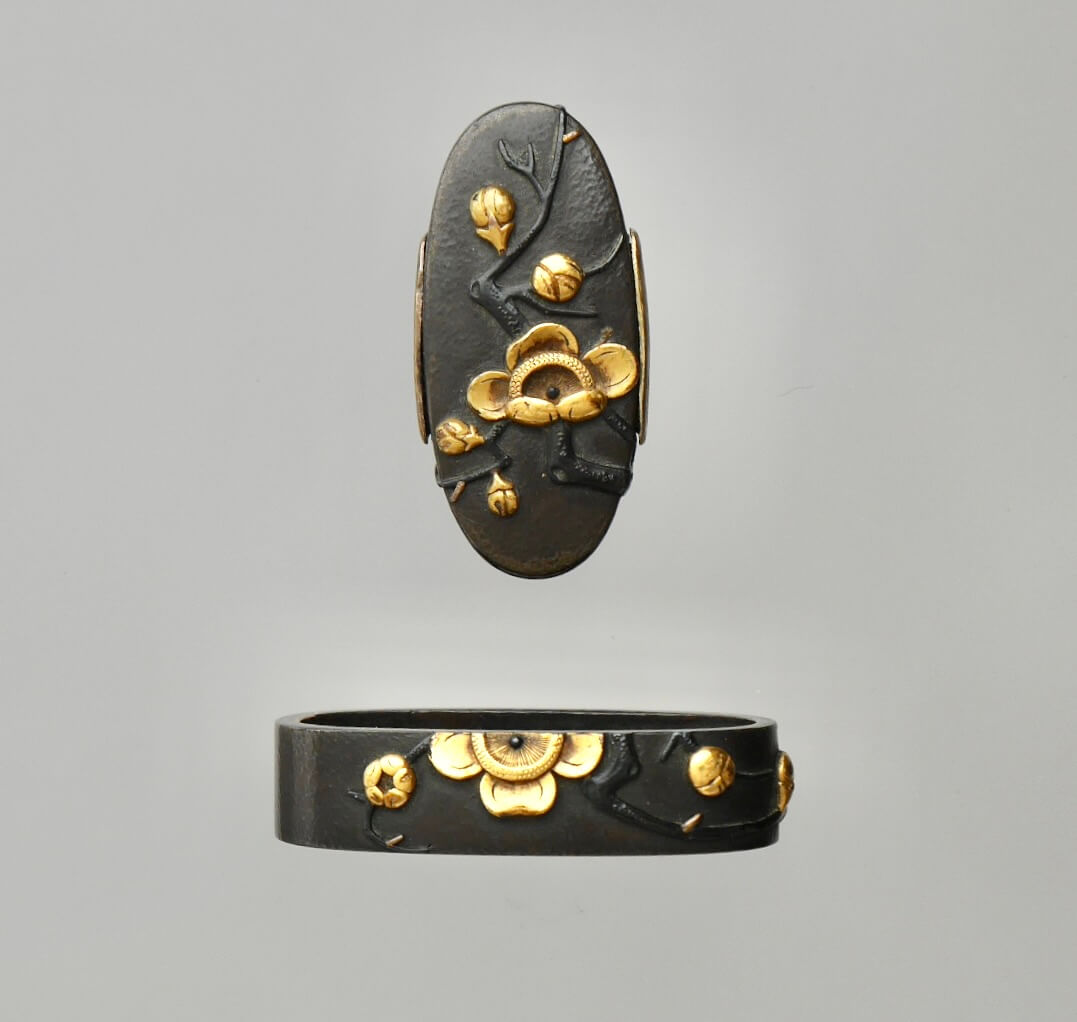
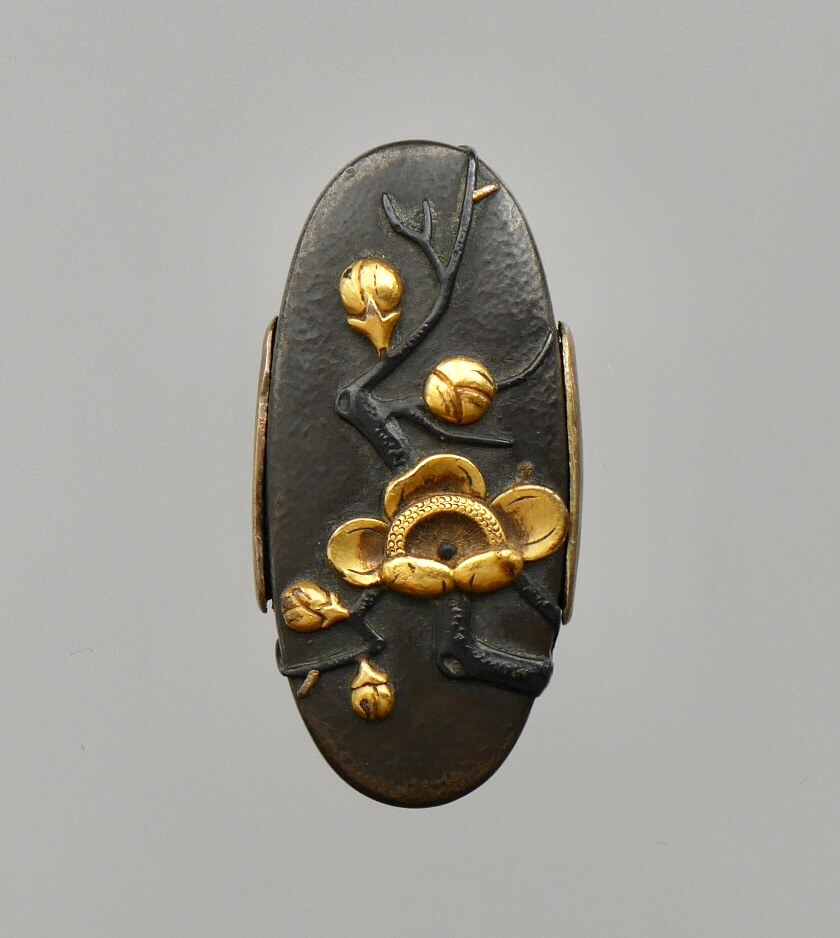
On this fuchigashira, stylized branches of plum blossoms are carved in high relief against a shibuichi ishime ground (textured to resemble the marks made by a stonemason’s hammer). The branches are rendered in shakudō, while thickly applied iroe is used for the blossoms and buds. Among the blossoms, only a single flower is shown fully open. This kind of symbolic treatment reflects an artistic sensibility inherited from Sōmin.
The fuchi is deliberately fashioned with a low profile, with relatively little height when viewed from the side. This was a characteristic style from around the Genroku to Kyōhō eras and can also be seen in works by the three great Nara masters. Richly decorative and visually striking, this is a distinguished work worthy of being treasured.