Design of Cranes with the Rising Sun and Pine
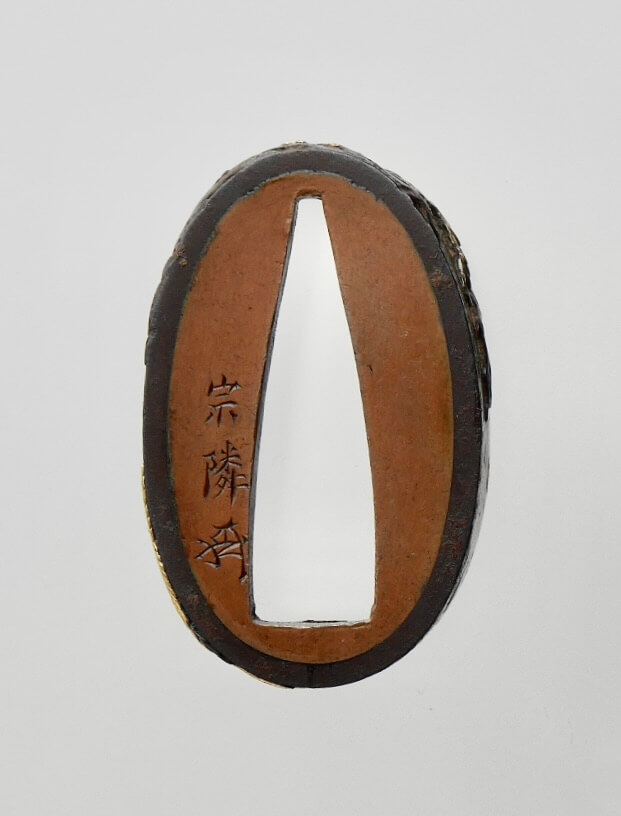
Egawa Sōrin was born in Mito in An’ei 3 (1774) and studied under Yokoya Eisei in Edo. His talent was recognized, and he was adopted by Katsura Eijū and became a retained metal artisan of the Arima family, lords of the Kurume domain. He initially used the name Toshimasa and, after taking Buddhist vows and shaving his head, adopted the name Sōrin. Works dated Ansei 2 (1855), when he was eighty-one years old, are known, attesting to his longevity.
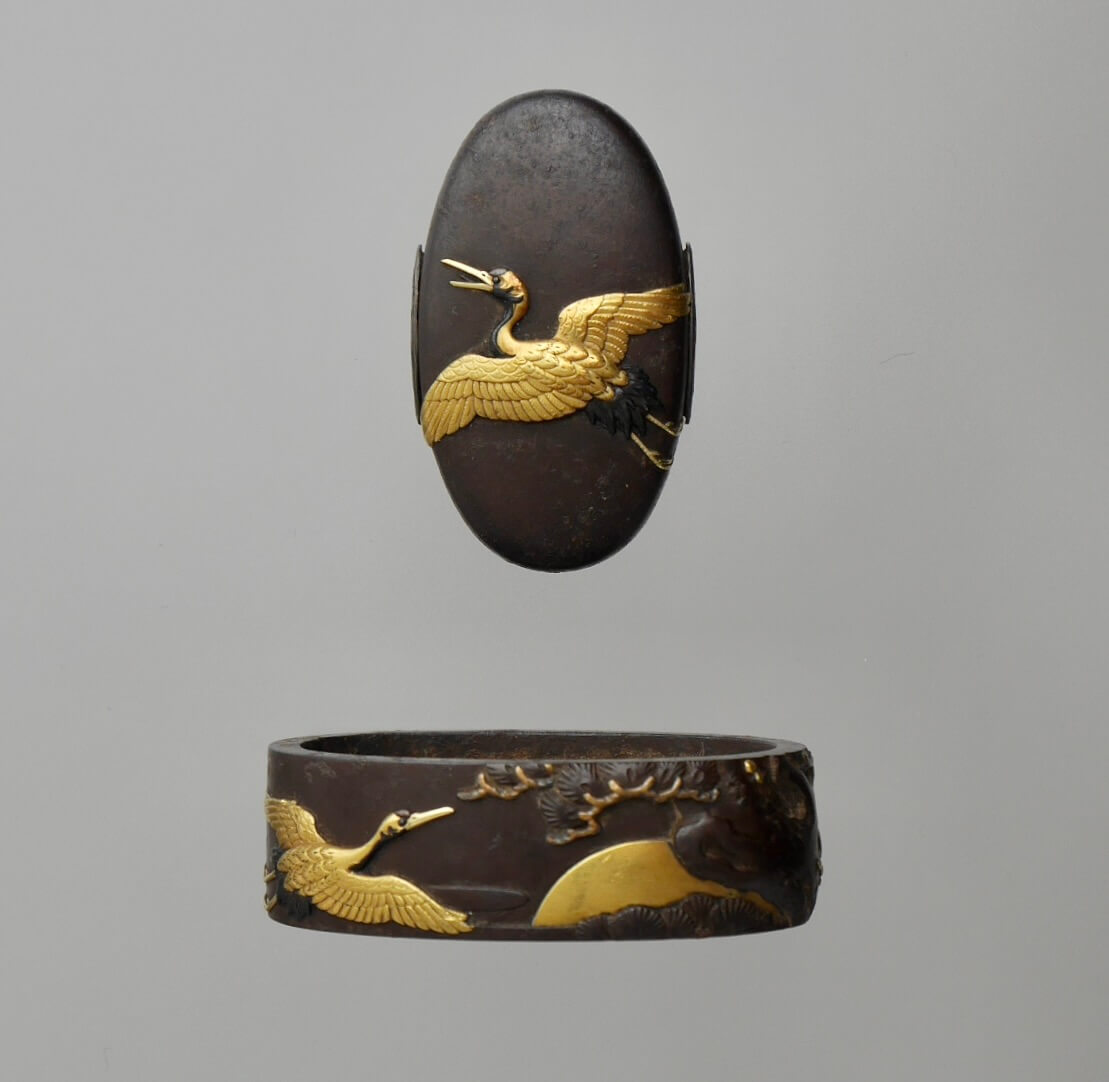
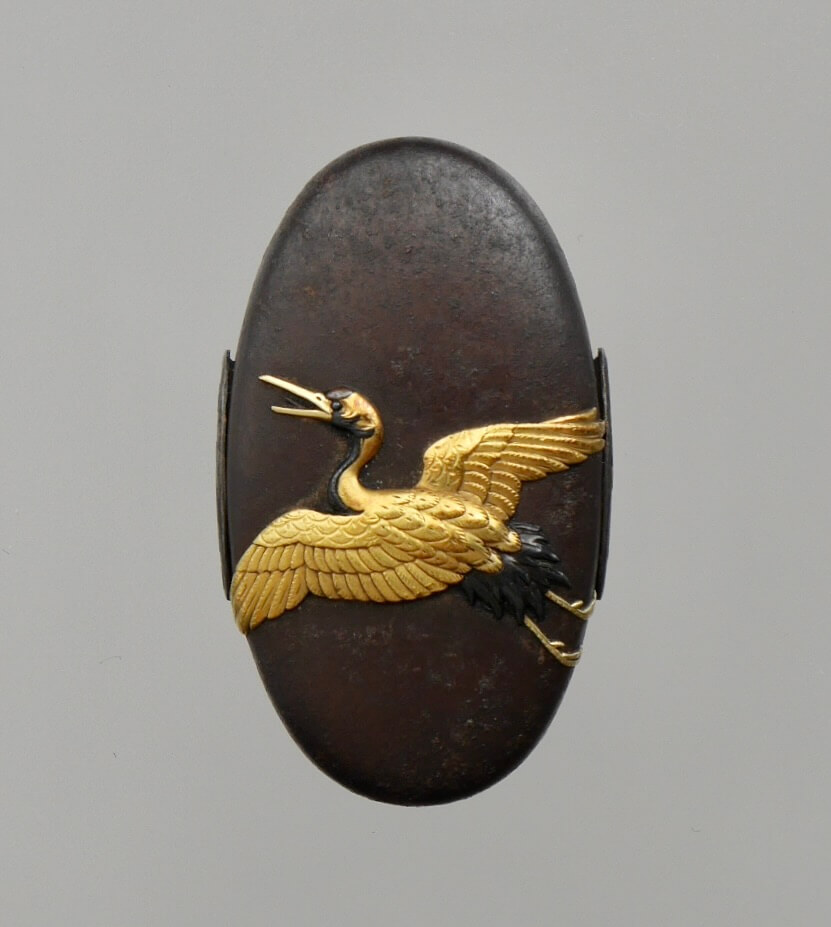
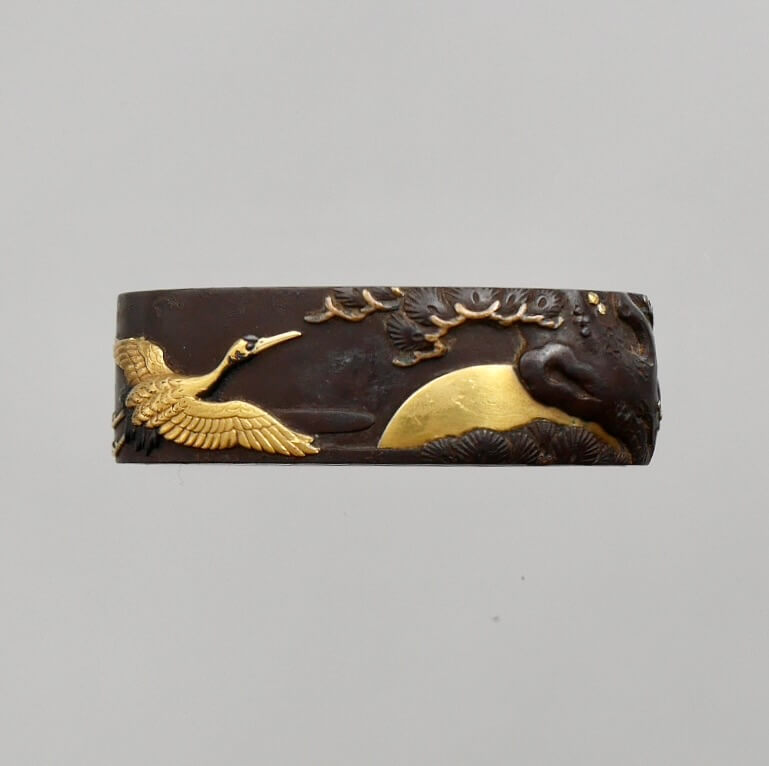
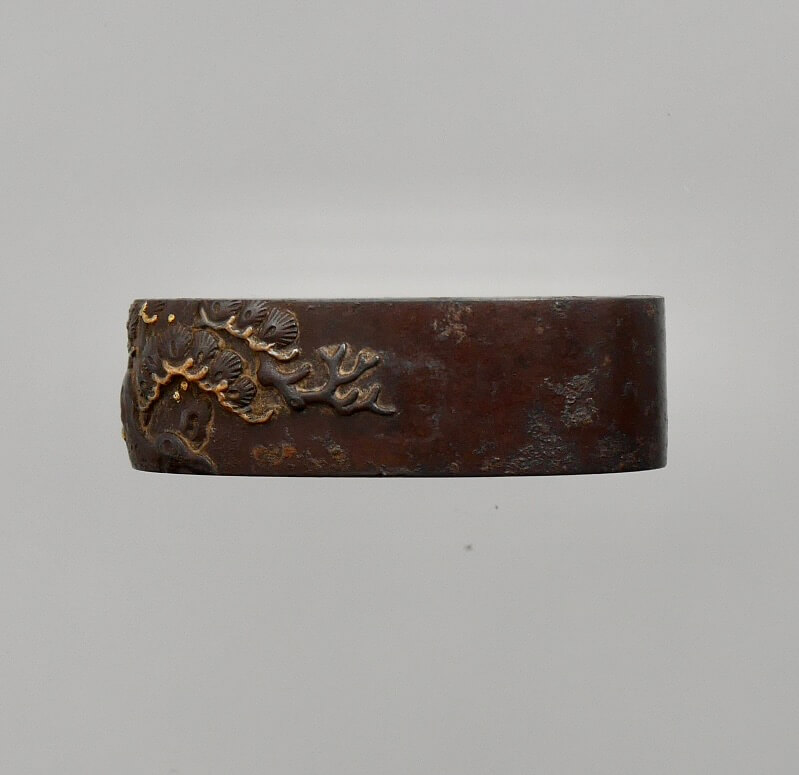
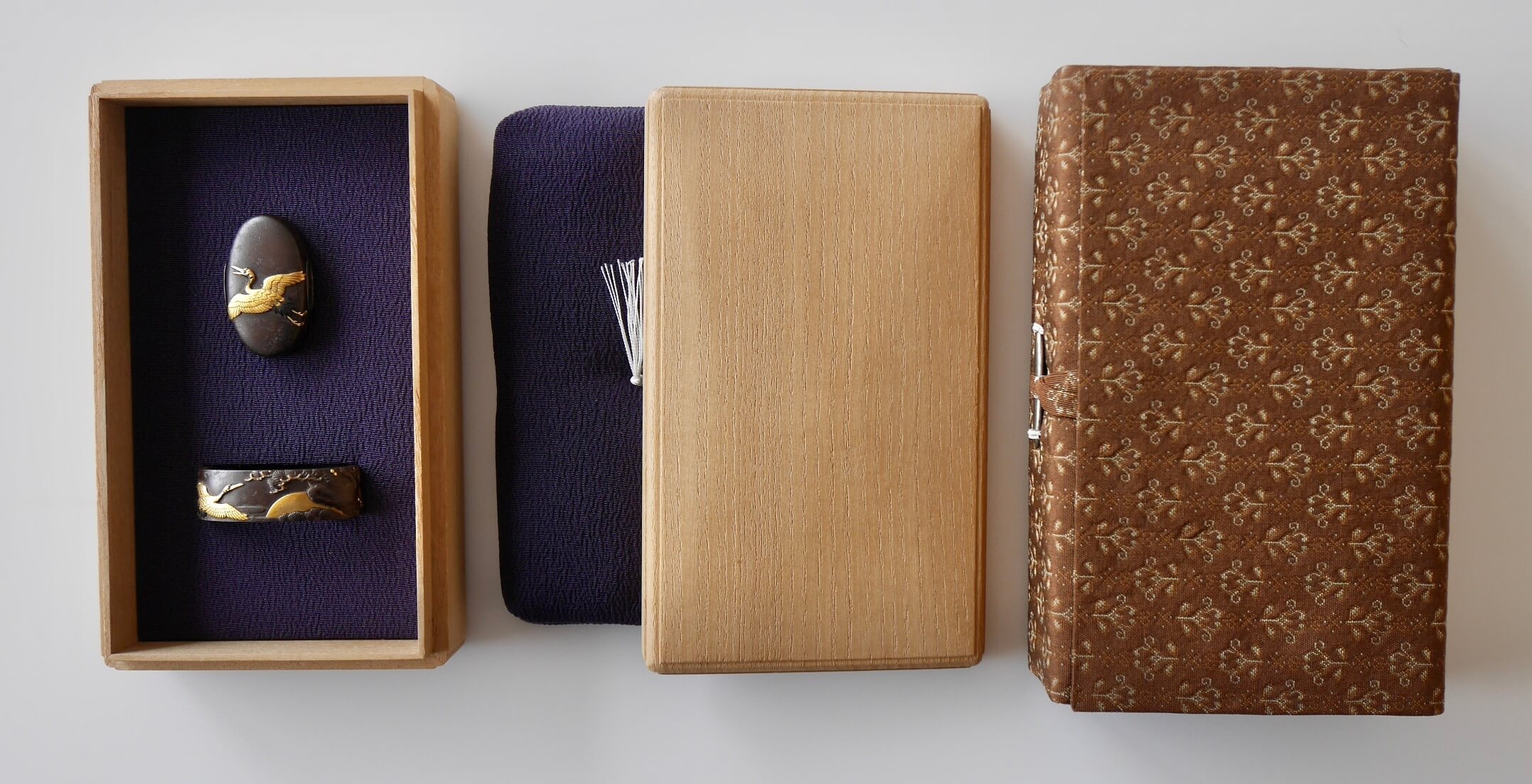
On this fuchigashira, two cranes are depicted in high relief and iroe on an iron ground with a subdued sheen. Pine and the rising sun form the background. This is an auspicious composition: the rising sun, with its sense of energy and renewal, signifies new beginnings and prosperity; the evergreen pine represents enduring vitality; and the cranes symbolize longevity.
Two different tones of gold are used for the cranes, while shakudō is used for the throats and tail feathers, suaka (copper) for the crowns, and shakudō inlay for the eyes, giving the birds a vivid sense of life and vitality. The carving of the pine recalls the work of Shōzui and also incorporates carving techniques of the Nara school. This outstanding work reveals Sōrin’s tireless spirit of artistic exploration.