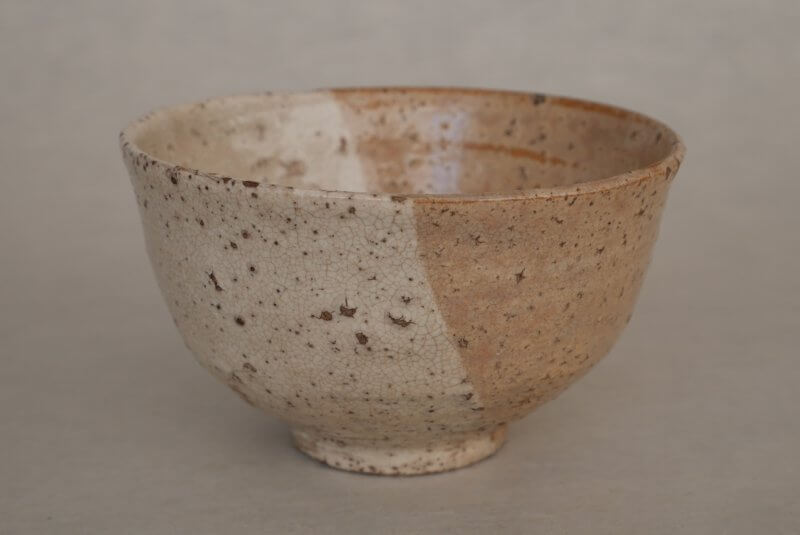
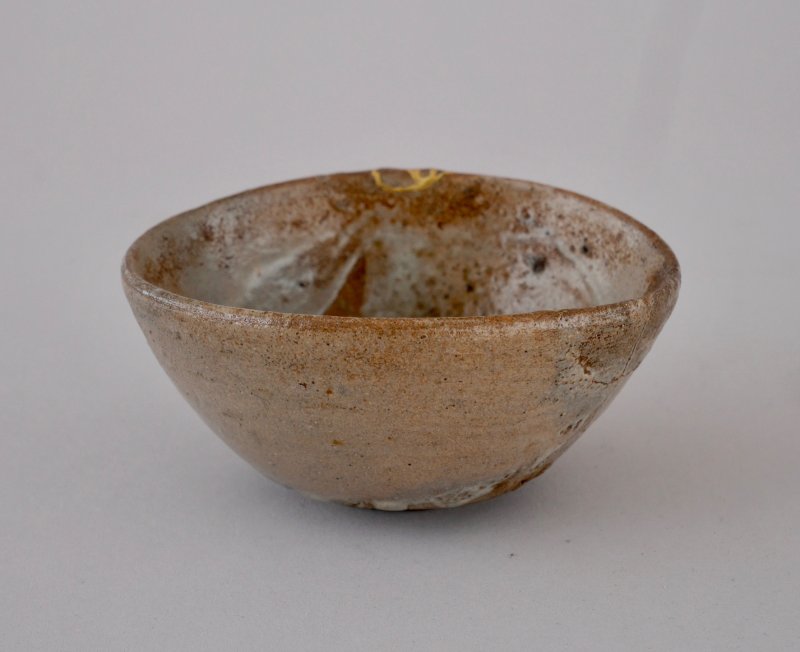
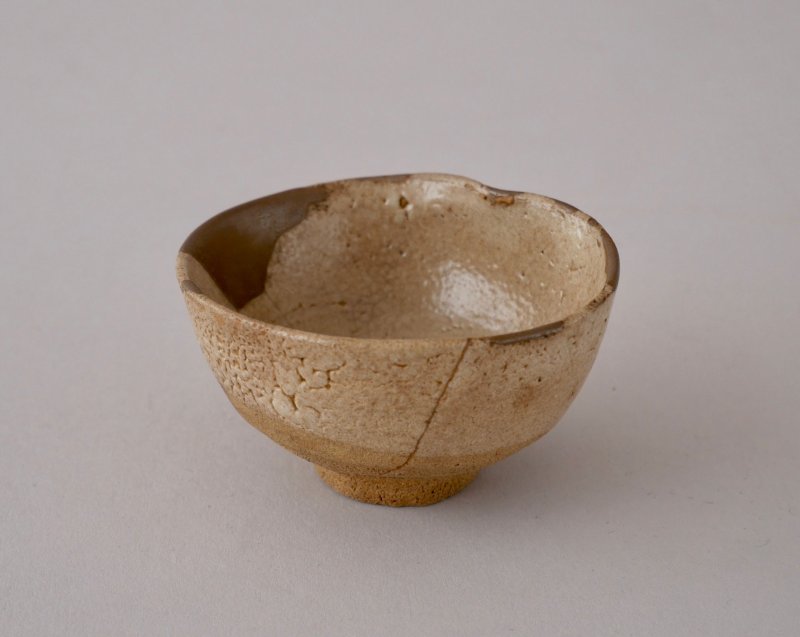
Egaratsu Teabowl
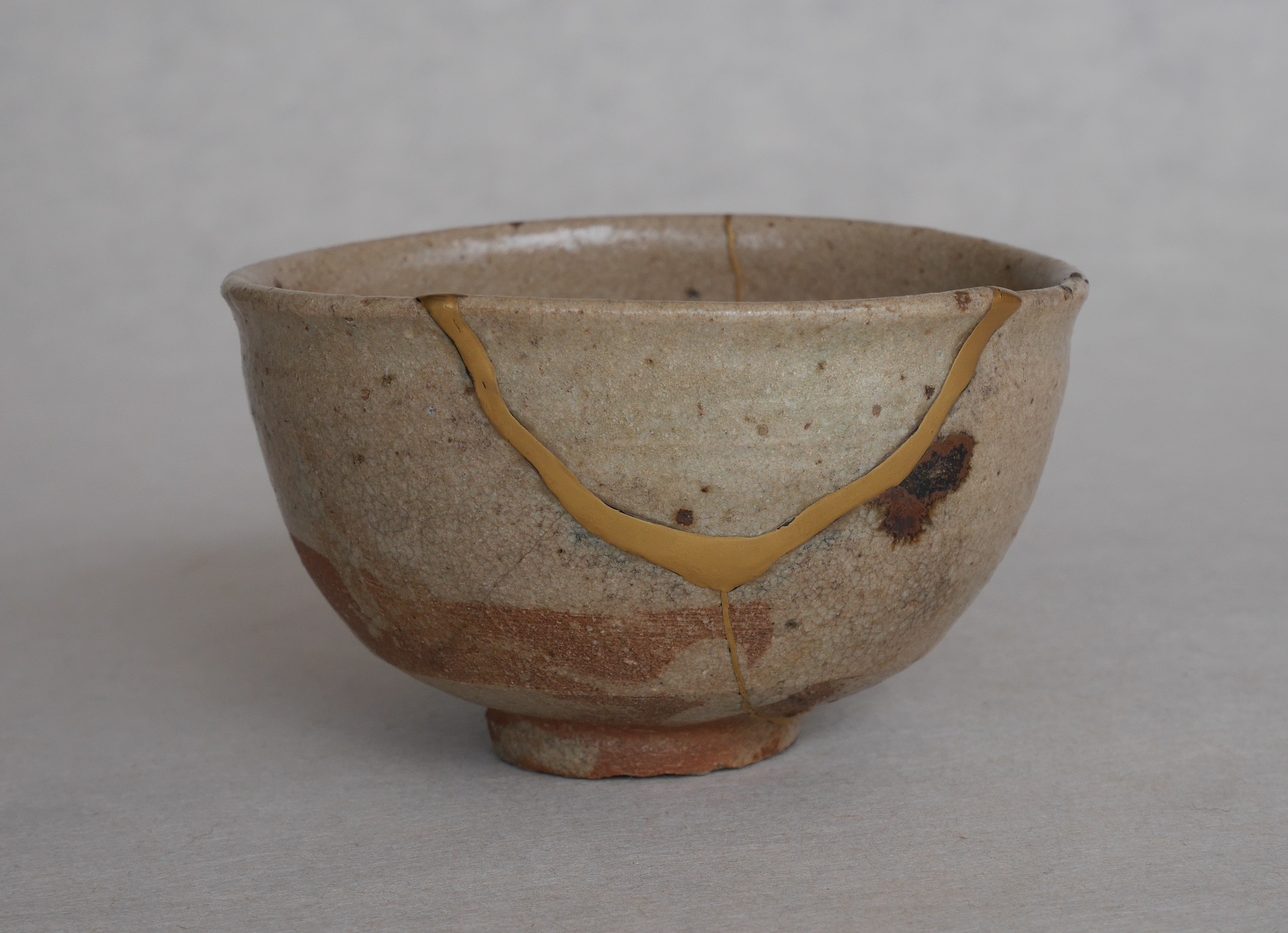
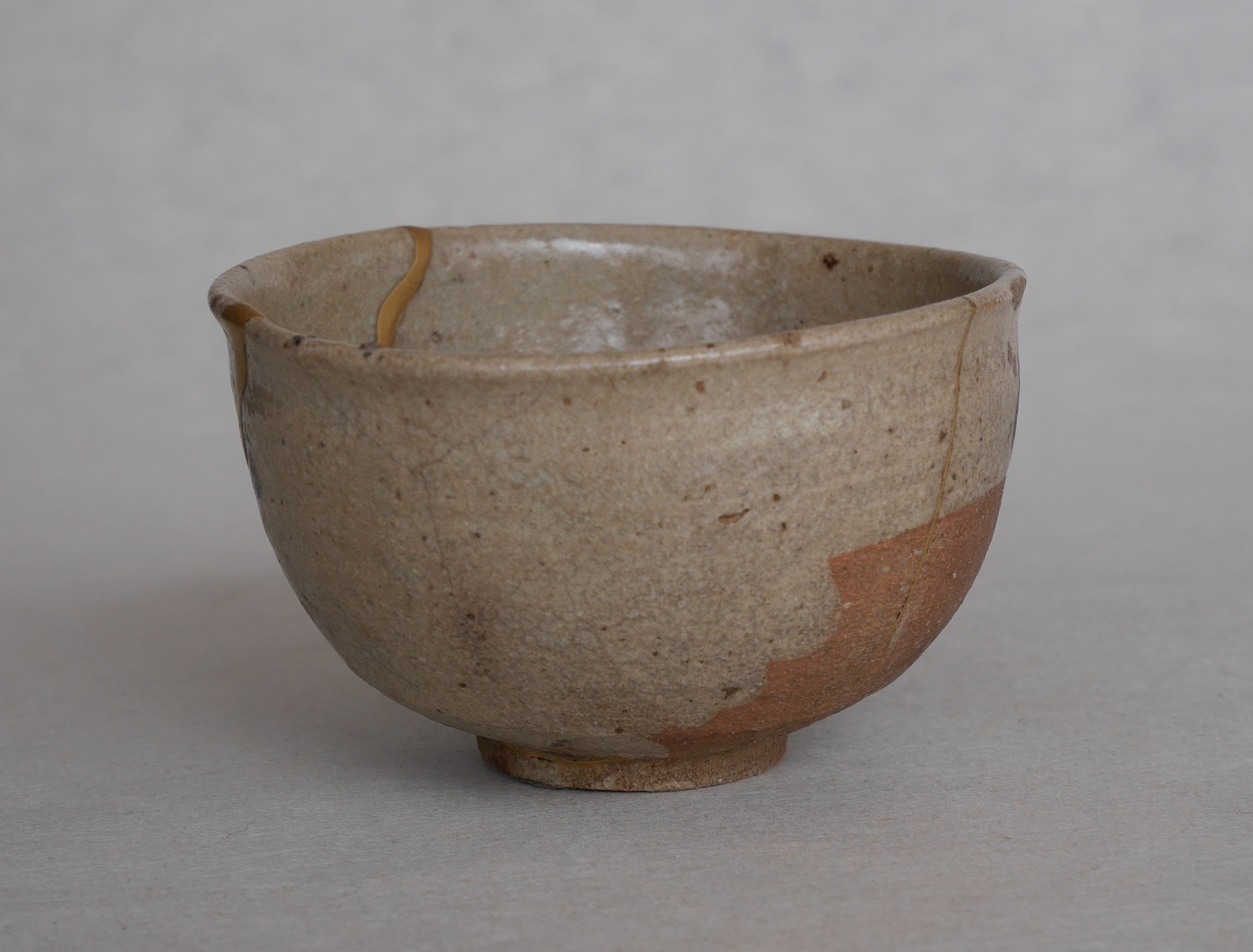
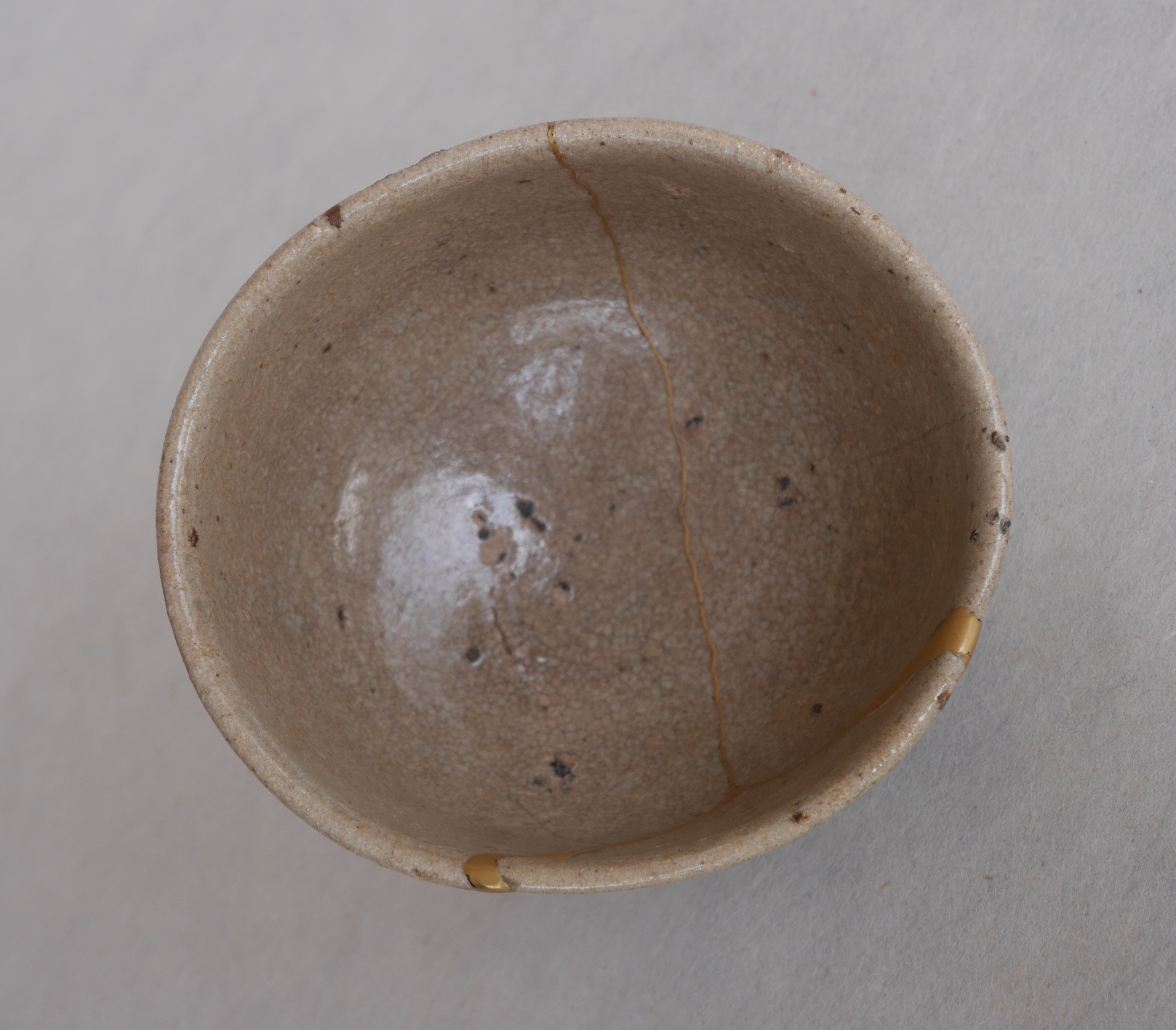
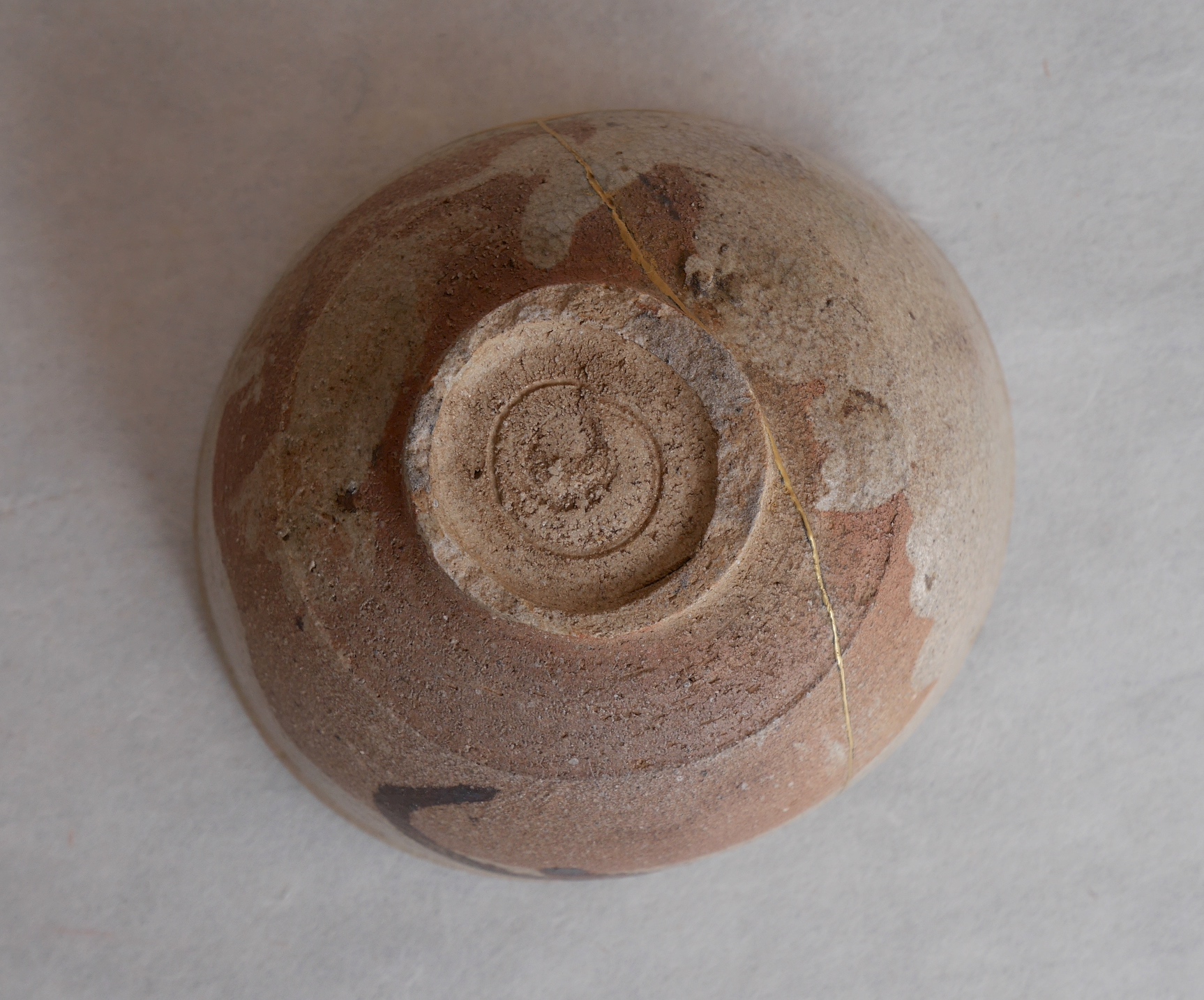
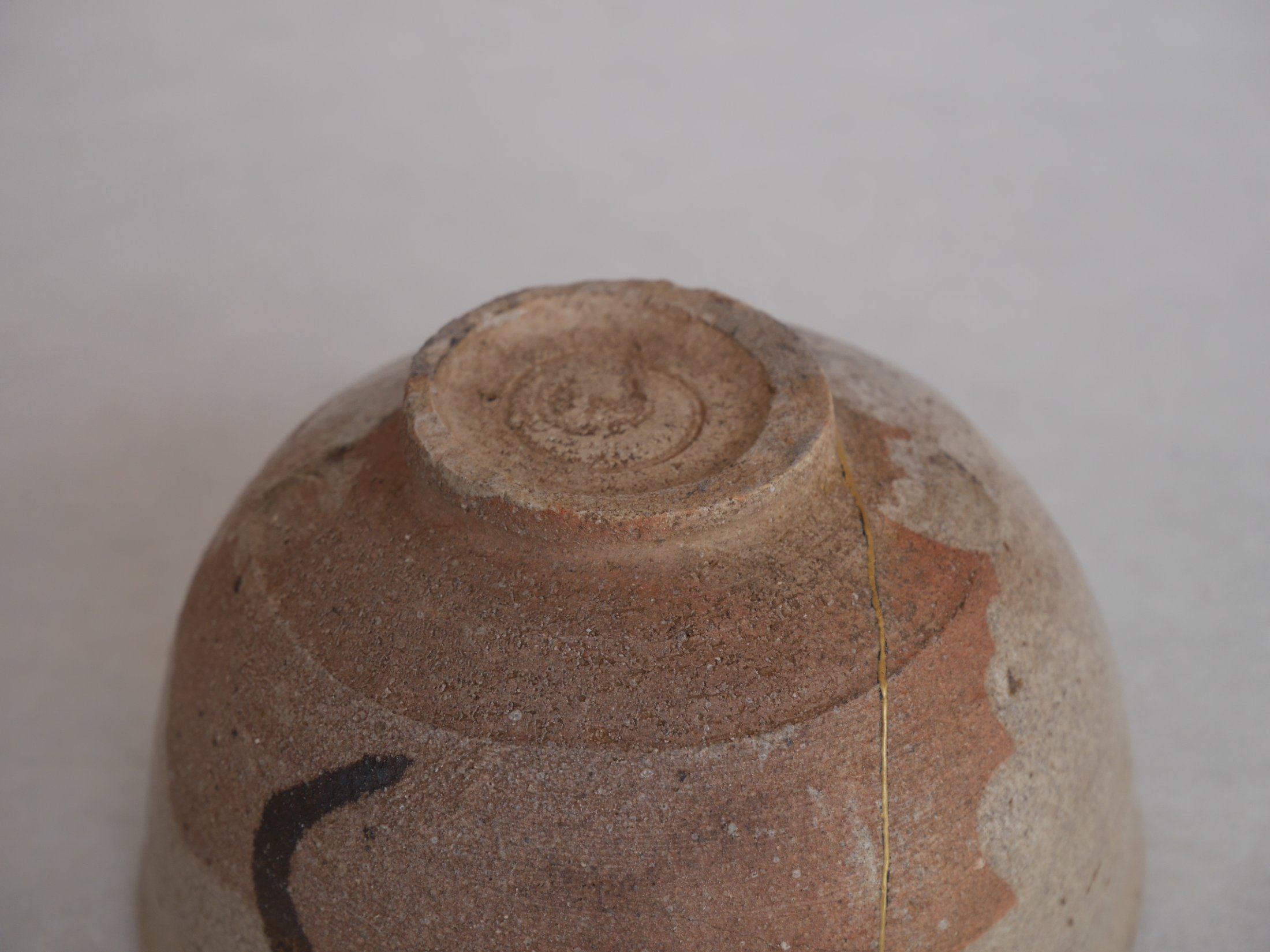
Karatsu ware originated when Korean potters, brought to Japan during Toyotomi Hideyoshi’s Bunroku and Keichō campaigns in Korea, began producing ceramics in the Karatsu region of Hizen province. It was vigorously produced during the relatively brief period of roughly thirty years before porcelain production commenced in Imari, and individual kilns developed their own distinctive characteristics in clay body, glaze, and decoration.
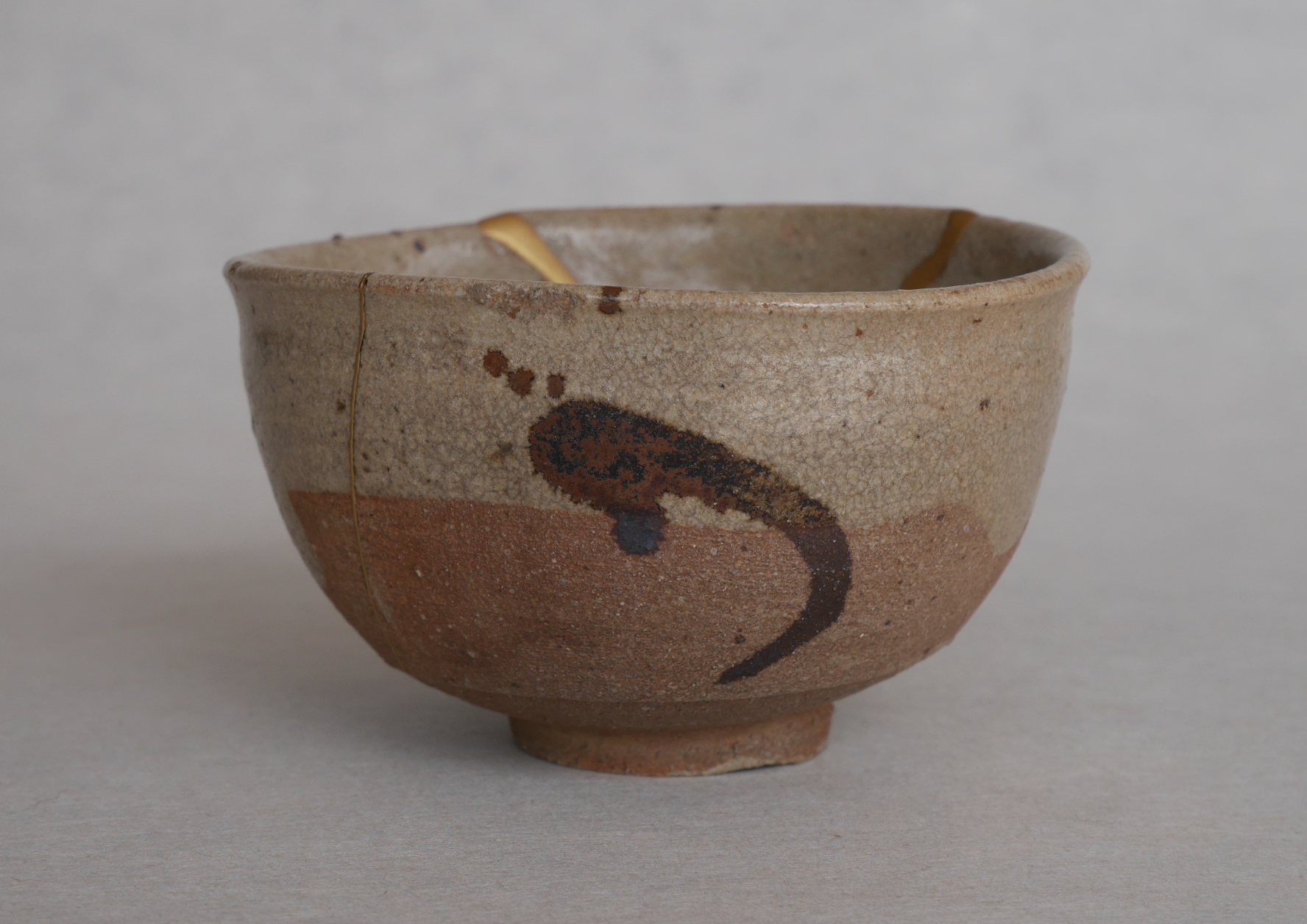
This bowl is decorated with a simple design painted in oni-ita (iron-rich slip). Judging from its relatively light brown clay body containing traces of iron and its characteristic glaze, it is thought to be a product of the Abondani kiln. The bowl was likely originally made as a rice bowl rather than for tea use. The naturally formed shape, created as potters worked with complete absorption while producing hundreds of bowls in a single day, together with the lively and spontaneous brushwork of the painted decoration, embodies an aesthetic of effortless simplicity. It is precisely this absence of conscious artifice that gives the bowl much of its appeal.
Having been excavated and handed down through generations, the bowl has undergone a partial yobitsugi (a traditional repair using a fragment from another vessel). Even so, it remains a work overflowing with the distinctive charm of ko-garatsu ware.