Design of Suhama, Tomoe, and Water Drops
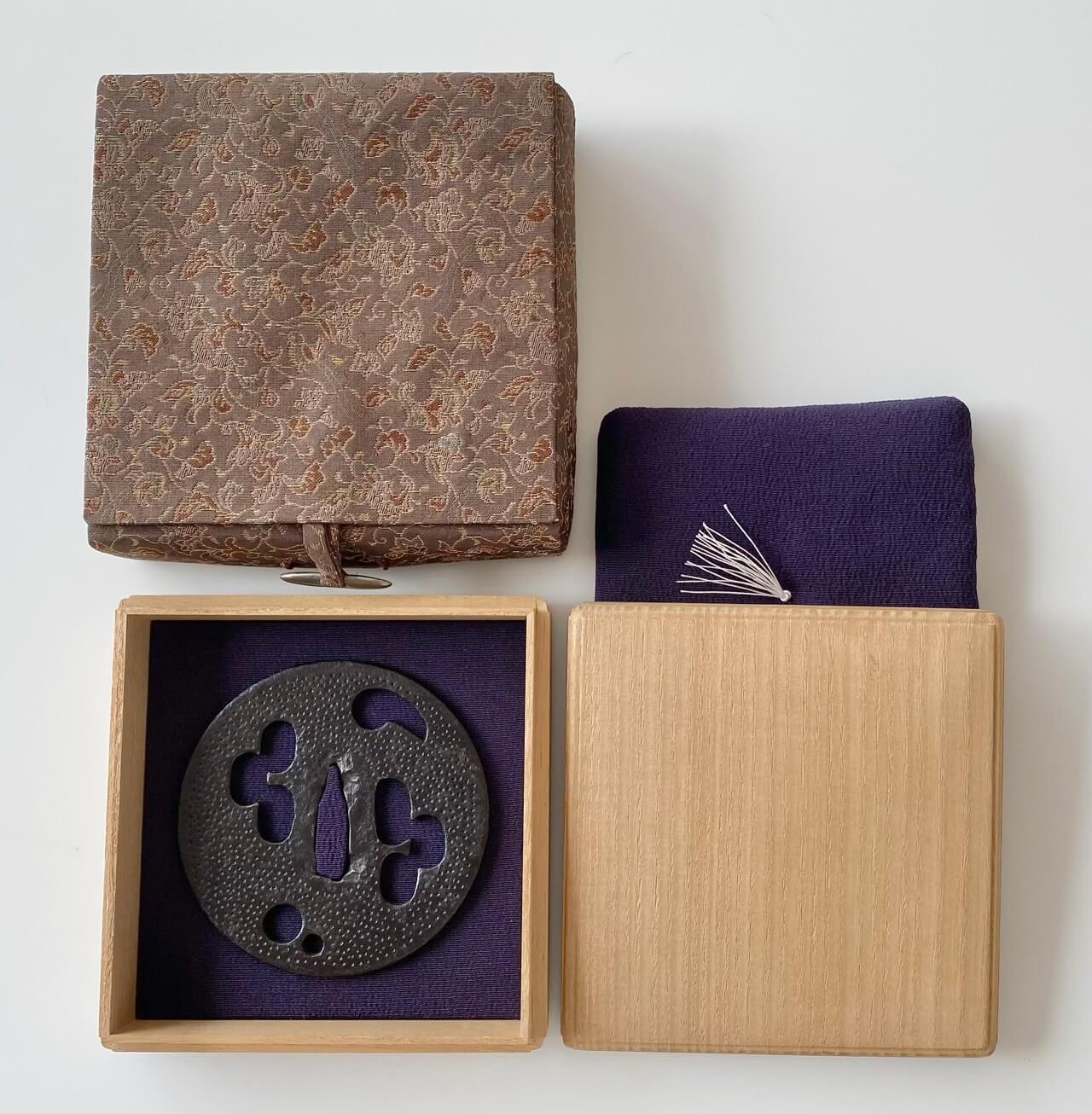
Tōshō tsuba are said to have originated as guards made by swordsmiths themselves to accompany a blade they had forged, from which the name derives. In the past, Akiyama Kyūsaku Ou suggested that some examples might date back as much as six hundred years; more recently, however, they have generally been considered works of the mid-Muromachi period. Subsequently, Sasano Masayuki, in his work “The Origins of Sword Fittings”, redefined their origin as dating back to the Kamakura period, based on a depiction in “the Ban Dainagon Ekotoba”(handscroll painting), in which a servant is shown wearing an uchigatana fitted with such a tsuba.
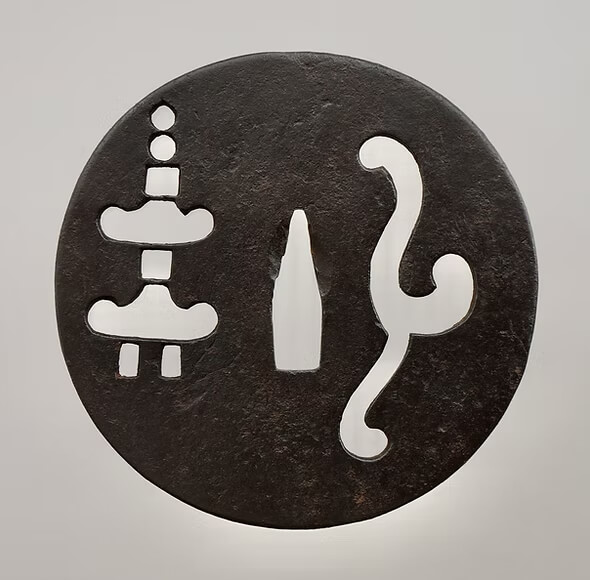
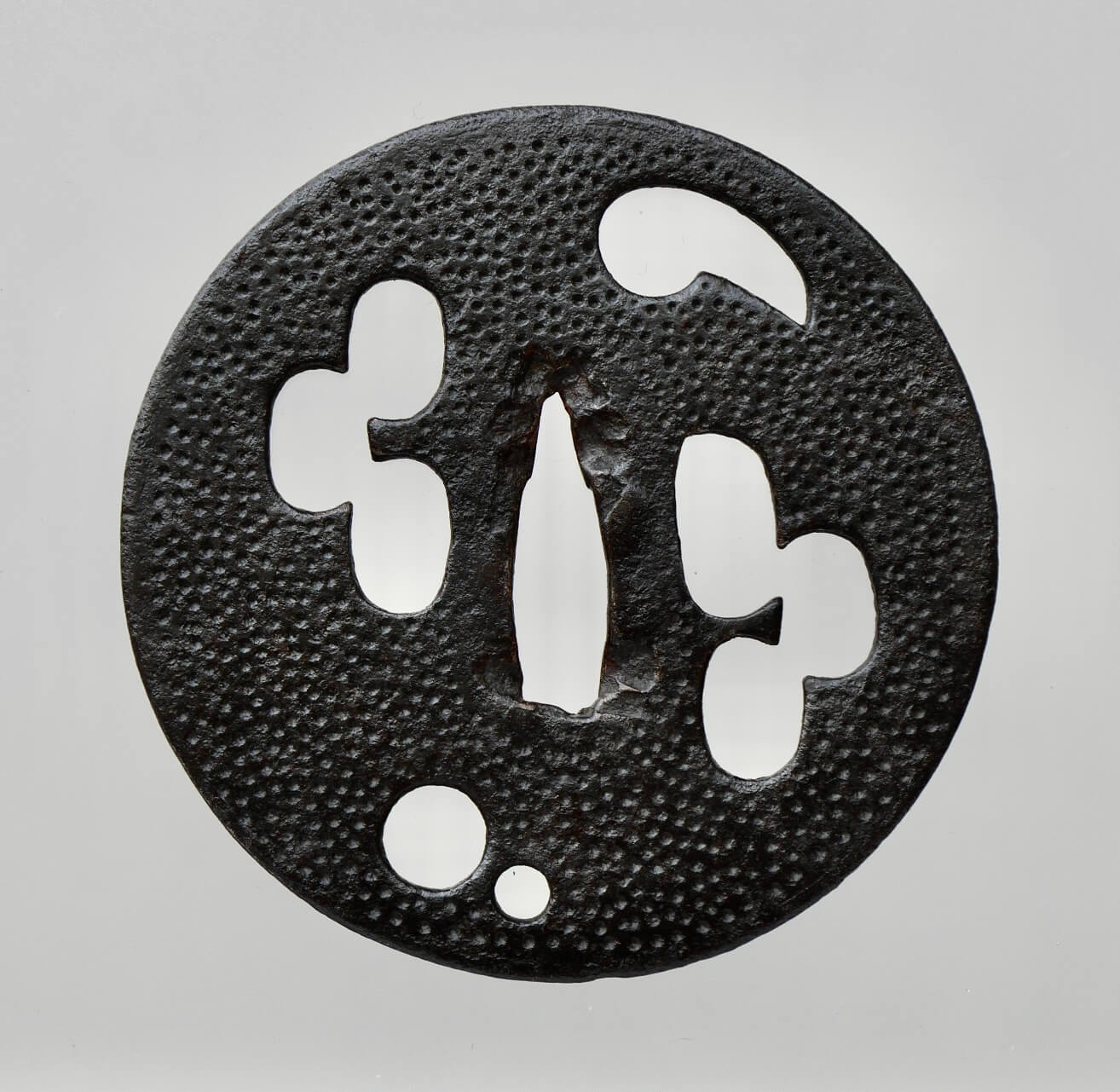
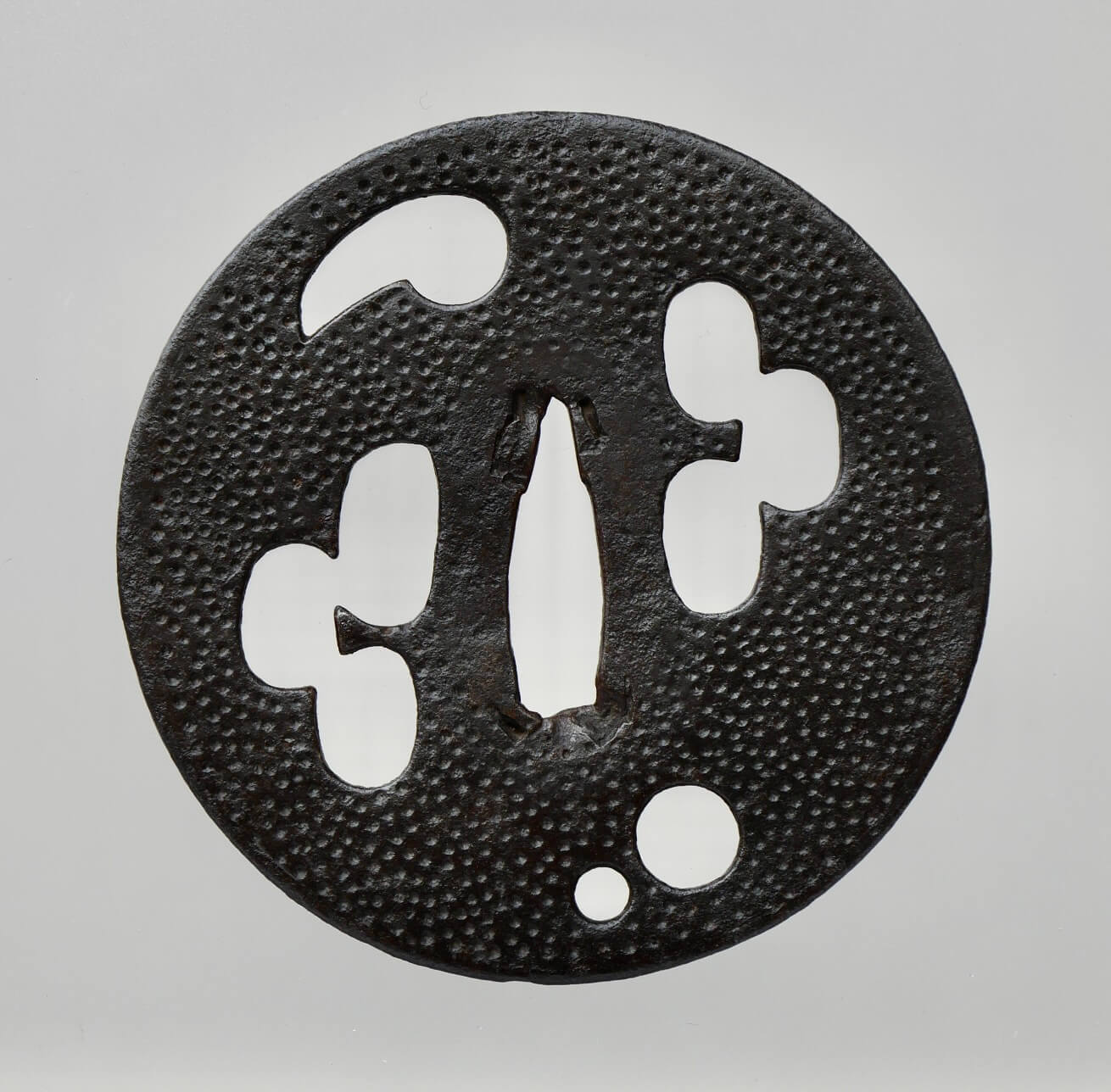
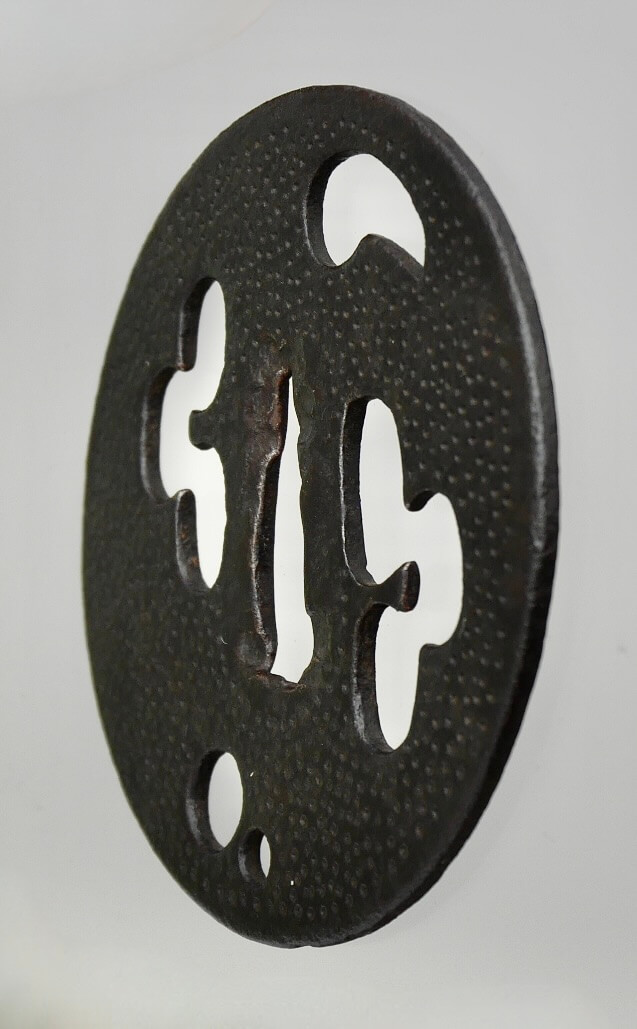
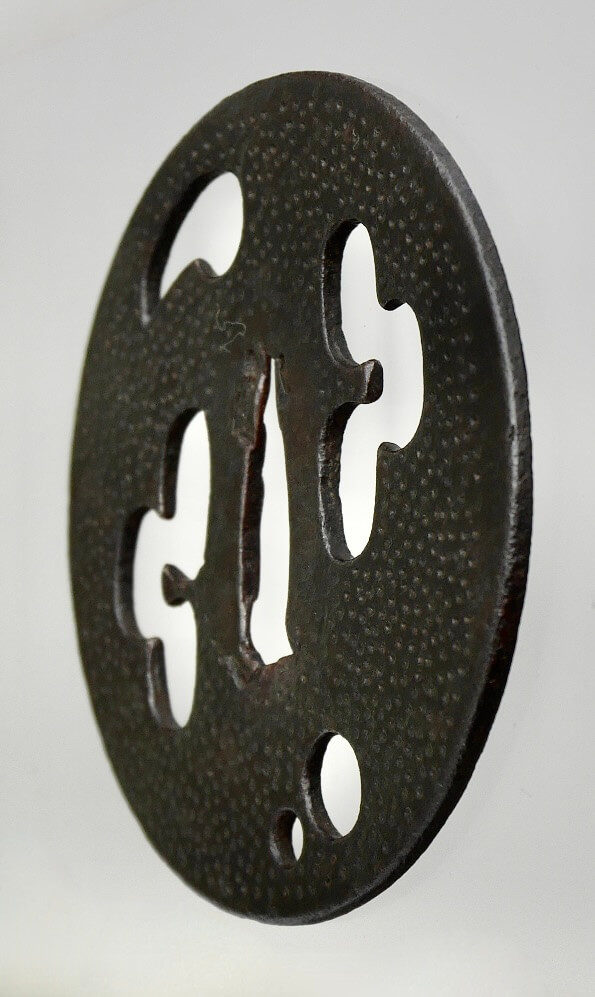
This tsuba is decorated across the entire surface with minute punched dots reminiscent of nanako, over which suhama, tomoe, and water droplets are rendered in openwork. The composition is organic and full of movement, and even the circular outline displays subtle variation and character, resulting in a highly appealing work.
The iron exhibits a moist, lustrous patina, and the condition is excellent, conveying a strong sense of age, suggesting a date no later than the early Muromachi period. The absence of hitsu-ana is also desirable, making this a rare and outstanding example of Ko-tōshō tsuba.
It should be noted that tsuba with a ground decorated with punched dots are classified by the NBTHK as “Ko-katchūshi,” whereas Sasano Masayuki categorized examples without a defined mimi (rim) as “Ko-tōshō.”