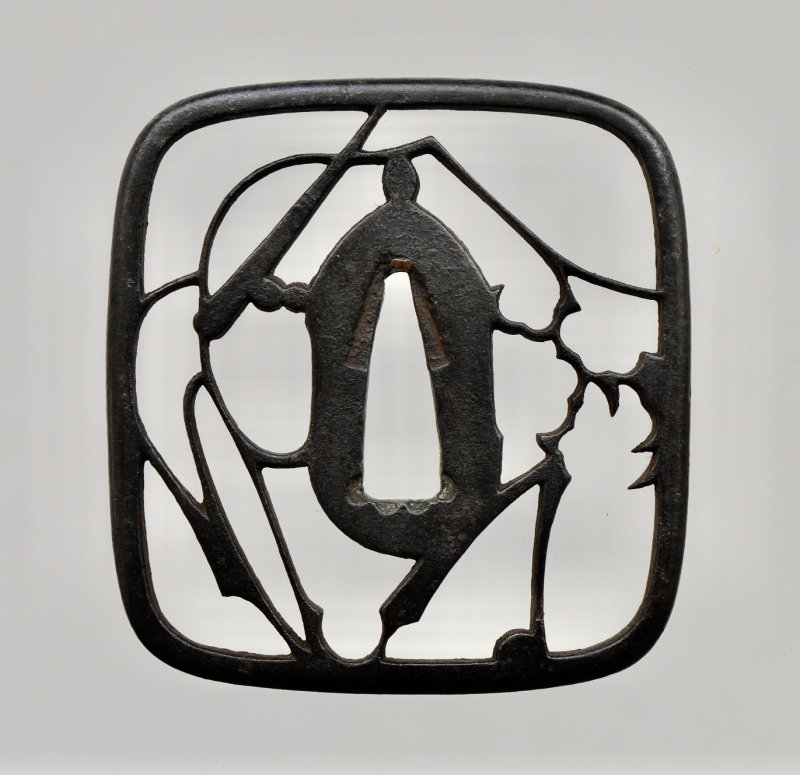
Design of Young leaves and Gorintō
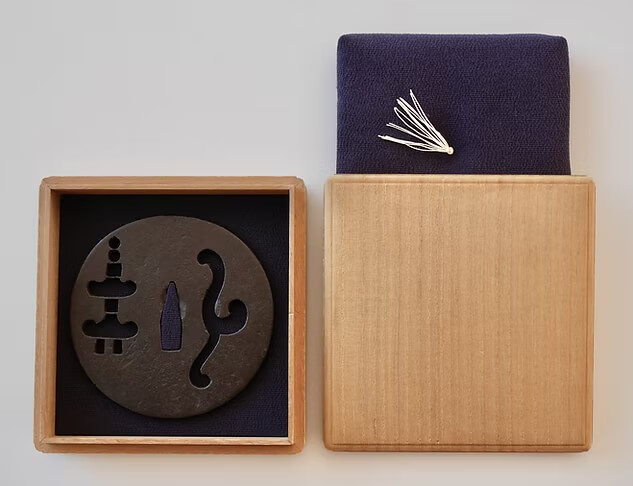
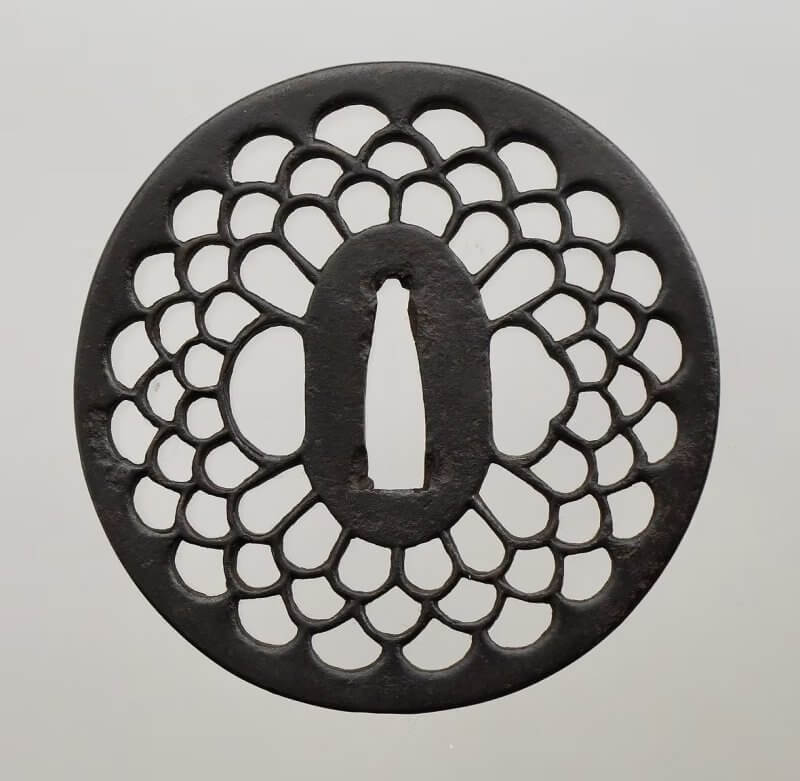
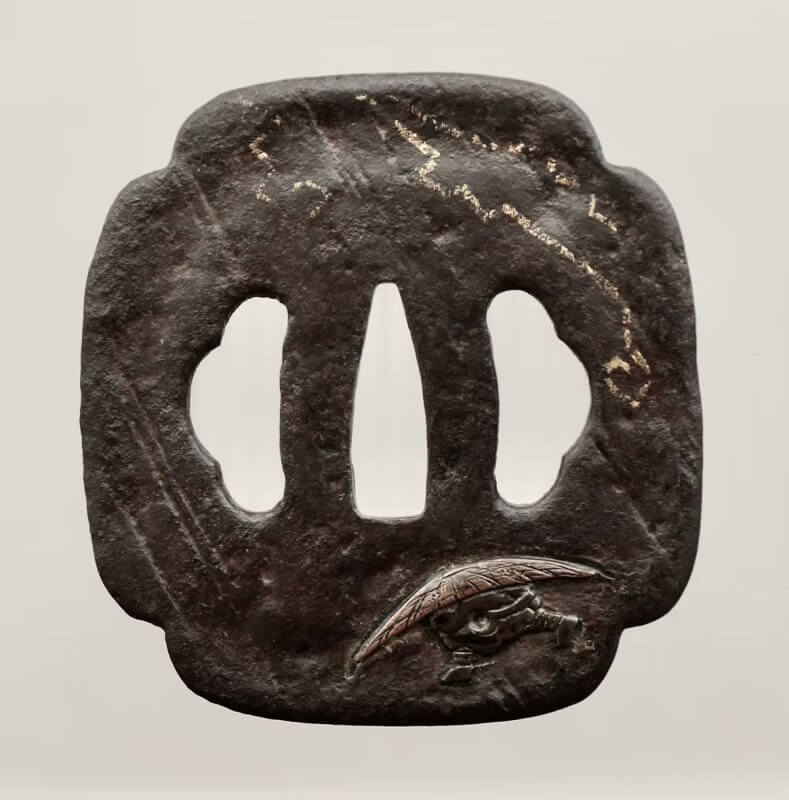
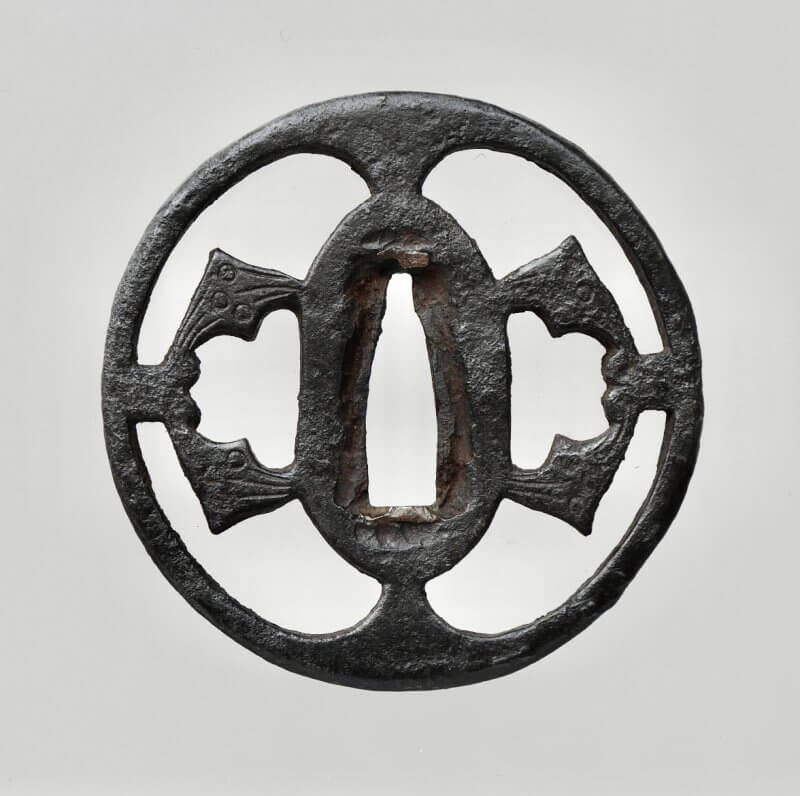
Tōshō tsuba are said to have originated as tsuba made by swordsmiths themselves to accompany a sword they had forged, from which the name derives. In the past, Akiyama Kyūsaku Ou suggested that some examples might date back as much as six hundred years; more recently, however, they have generally been considered tsuba of the mid-Muromachi period. Subsequently, Sasano Masayuki, in his work “The Origins of Sword Fittings”, proposed that their origin may be traced back to the late Heian period, based on a depiction in “the Ban Dainagon Ekotoba”, in which a servant is shown wearing an uchigatana fitted with such a tsuba.
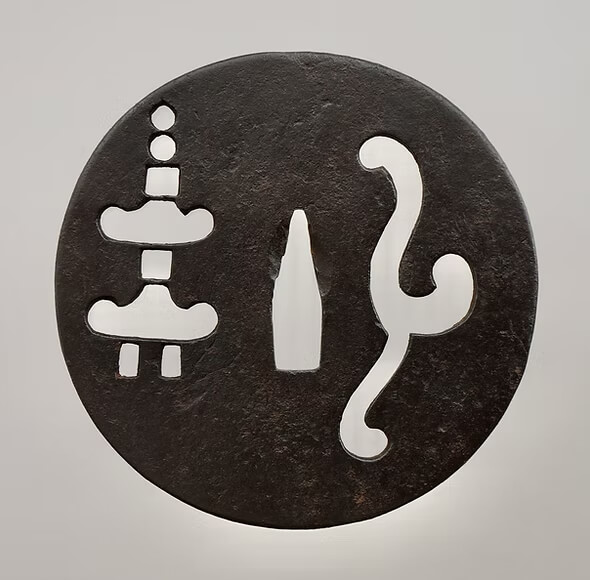
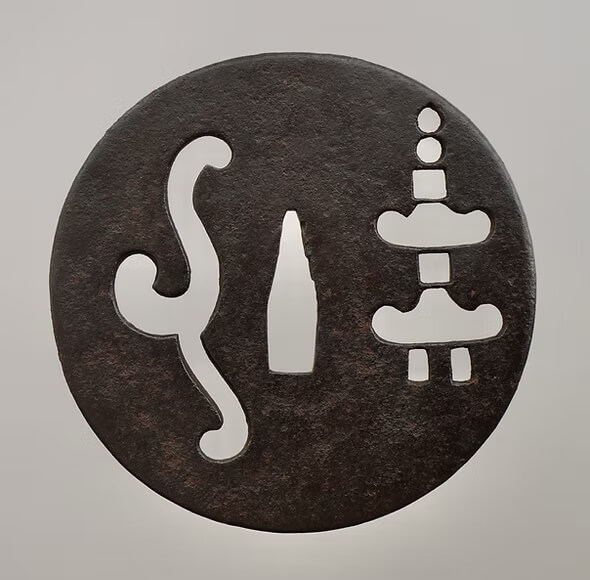
This tsuba features openwork of young leaves on the right and a gorintō (five-element pagoda) on the left. The young leaves symbolize new life, while the gorintō, as a funerary monument, represents death; together, they express the Buddhist view of life and death as a cycle of rebirth (rinne tenshō). It is a theme particularly suited to the accoutrements of the warrior.
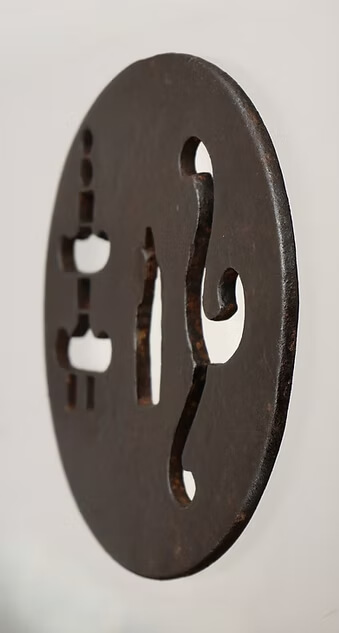
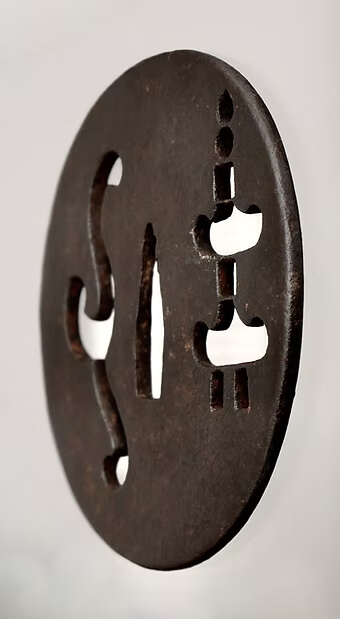
The sukashi is not only bold but also elegant in form, with a distinct sense of tension. The iron displays a moist, lustrous patina, and although somewhat thick, it conveys a strong sense of age, suggesting a date no later than the early Muromachi period. The absence of hitsu-ana further enhances its appeal, making this a rare and highly desirable masterpiece.
It should also be noted that the terms “Ko-tōshō tsuba” and “tōshō tsuba” were originally introduced by Sasano Masayuki to distinguish early tōshō tsuba, regarded as the origin of sukashi tsuba, from later Edo-period works—particularly late Edo pieces in the style of Nobuie made by swordsmiths such as Naotane and Jirōtarō Naokatsu. However, the NBTHK now appears to apply the designation “tōshō” to examples of Ko-tōshō that are slightly thicker or in great condition.