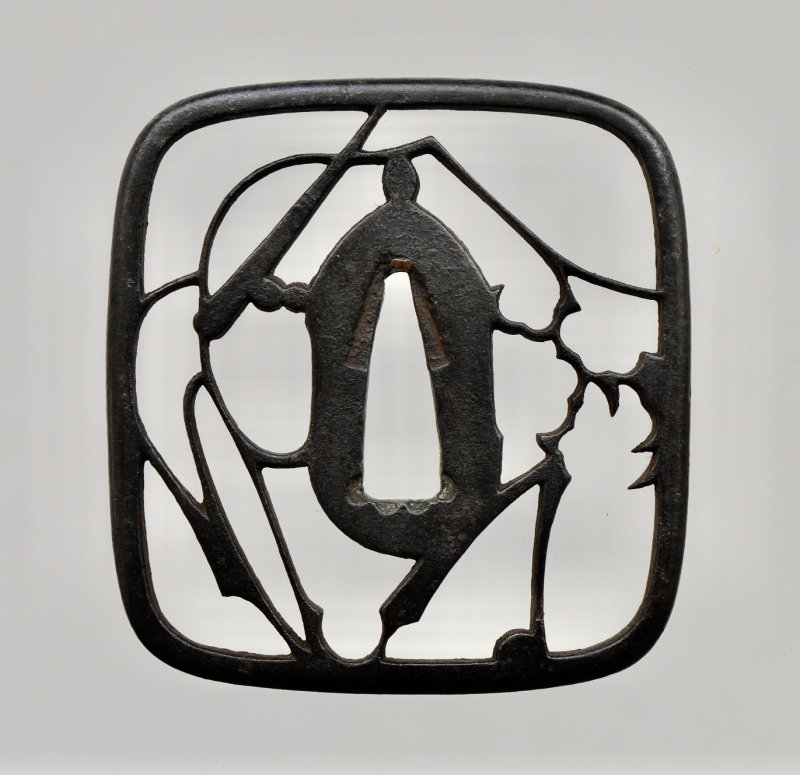
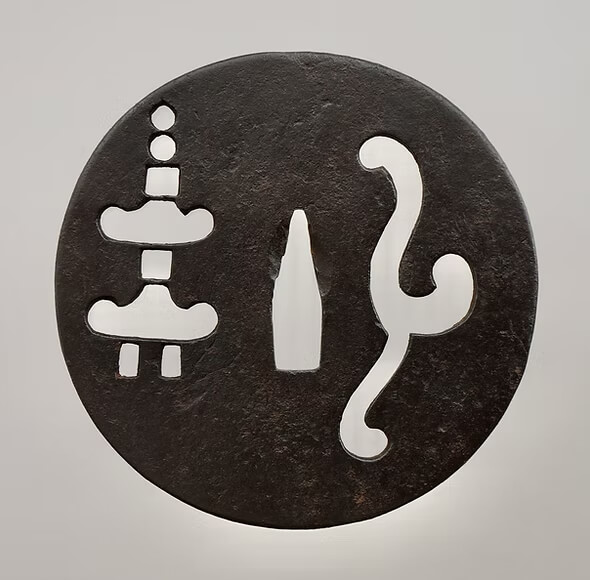
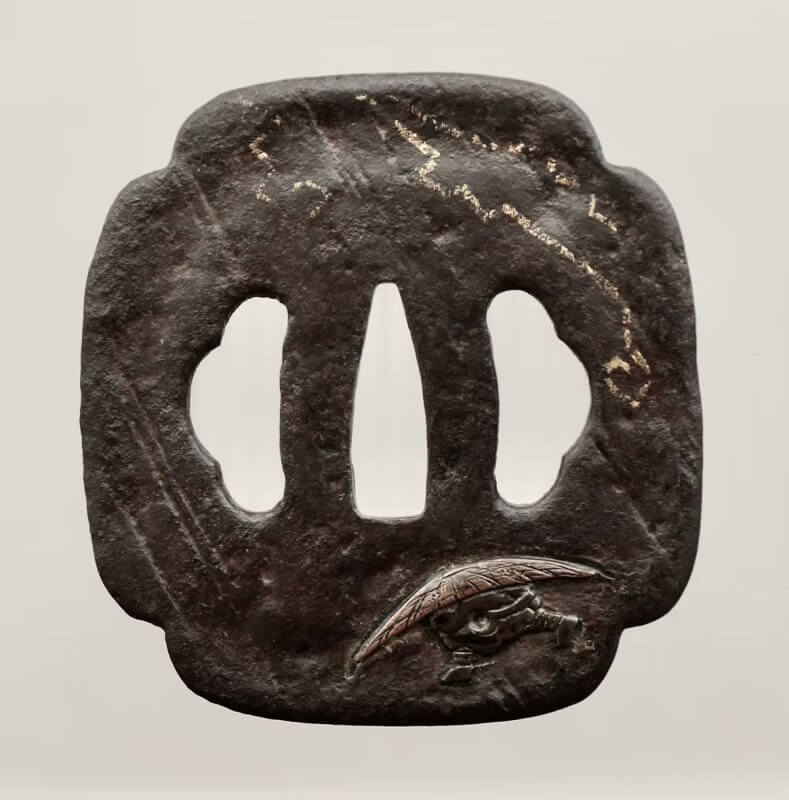
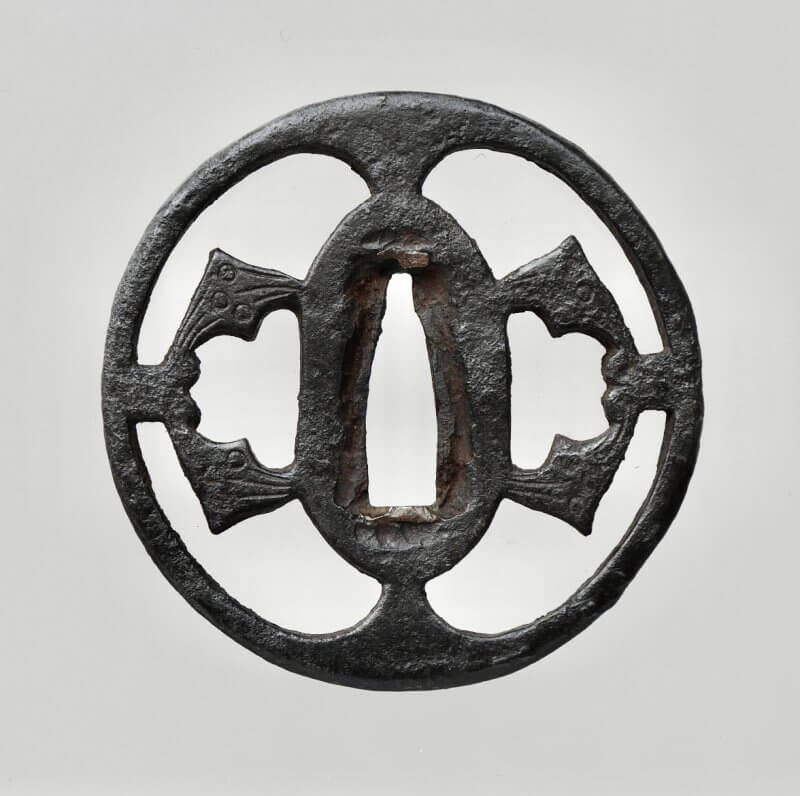
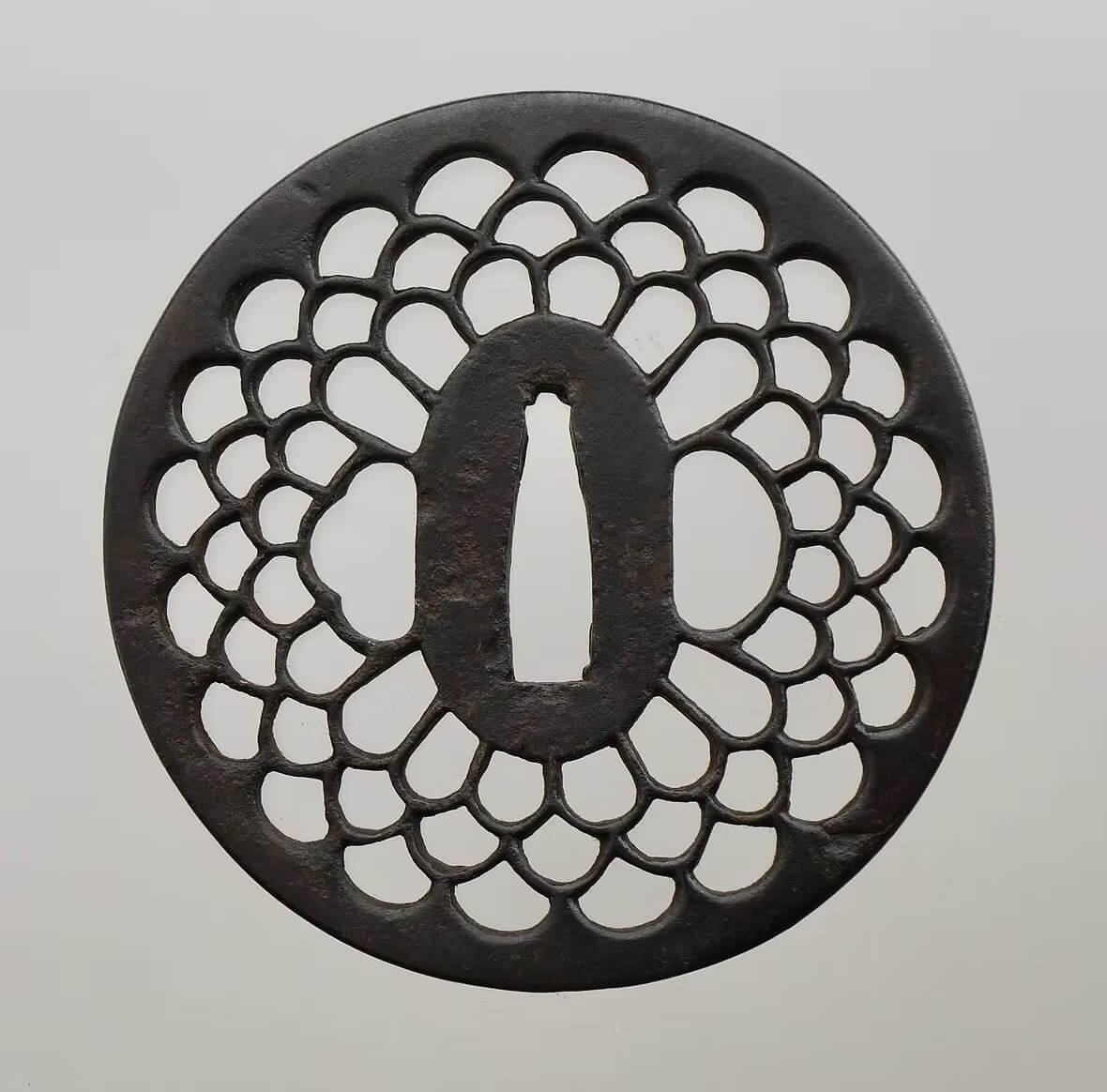
Design of chrysanthemum.
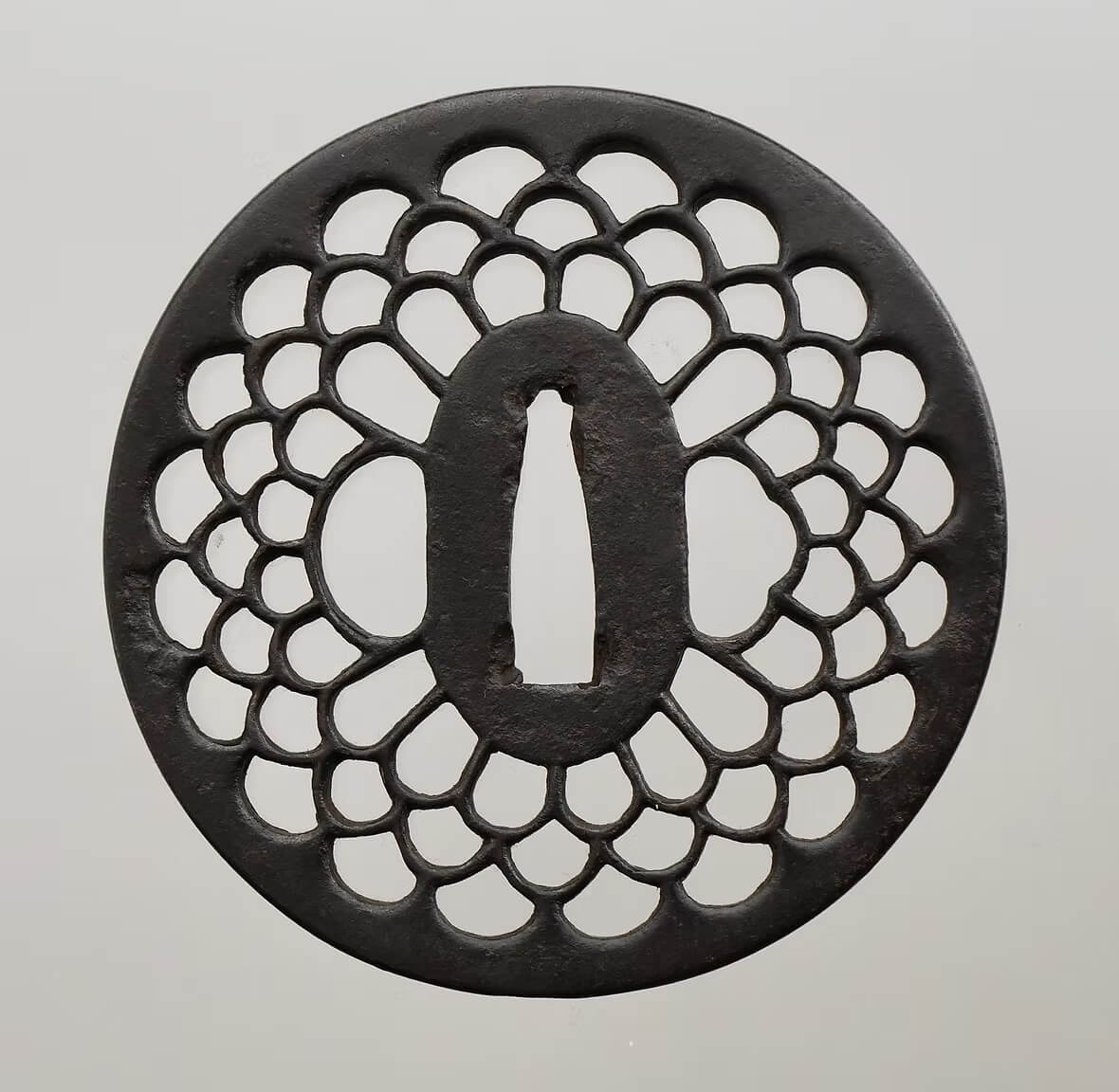
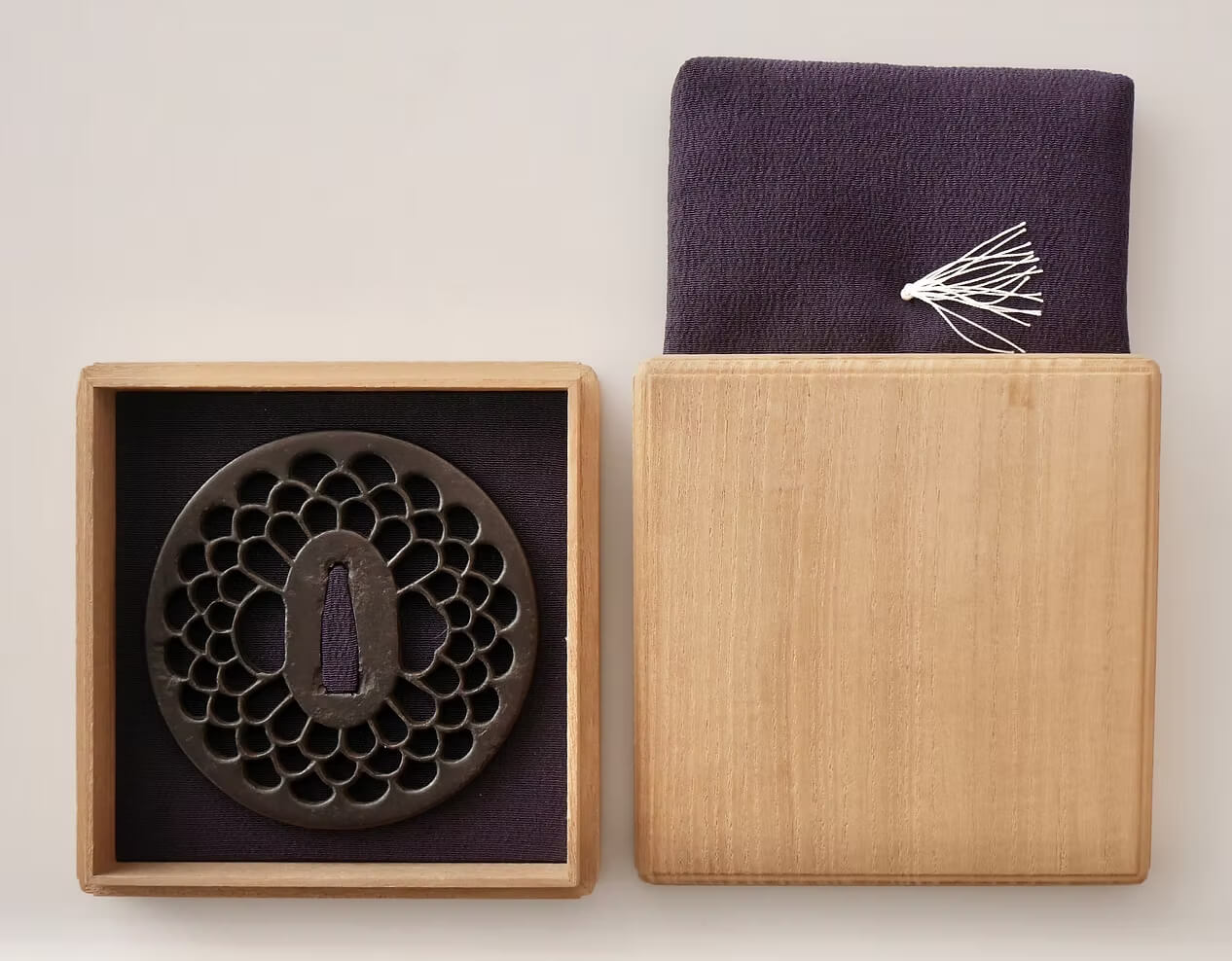
The term Owari sukashi was not used in earlier periods; it was coined in the modern era by Akiyama Kyūsaku when he organized and classified sukashi tsuba. Although it is uncertain whether these works were actually produced in Owari, their yakite technique and the presence of tekkotsu resemble those seen in the works of Owari masters such as Yamakichibei, Hōan, and Sadahiro, and they are therefore considered to represent their antecedents.
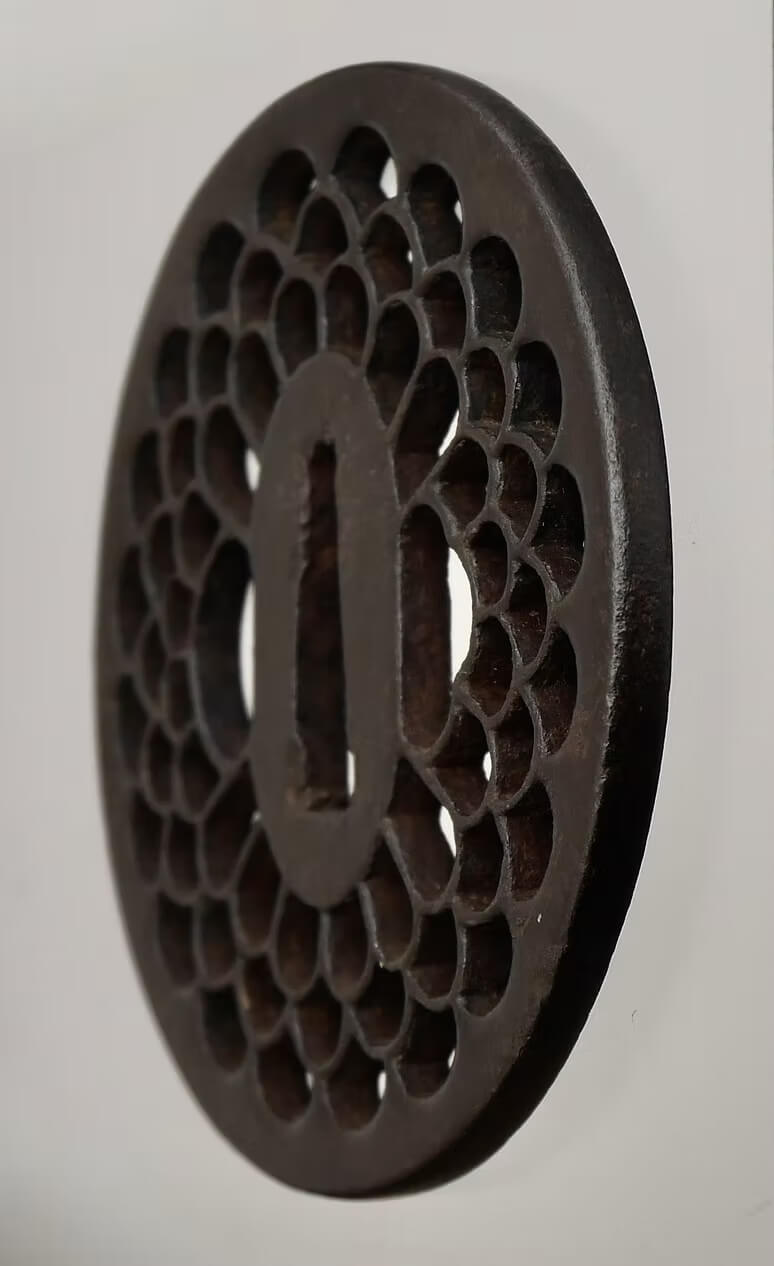
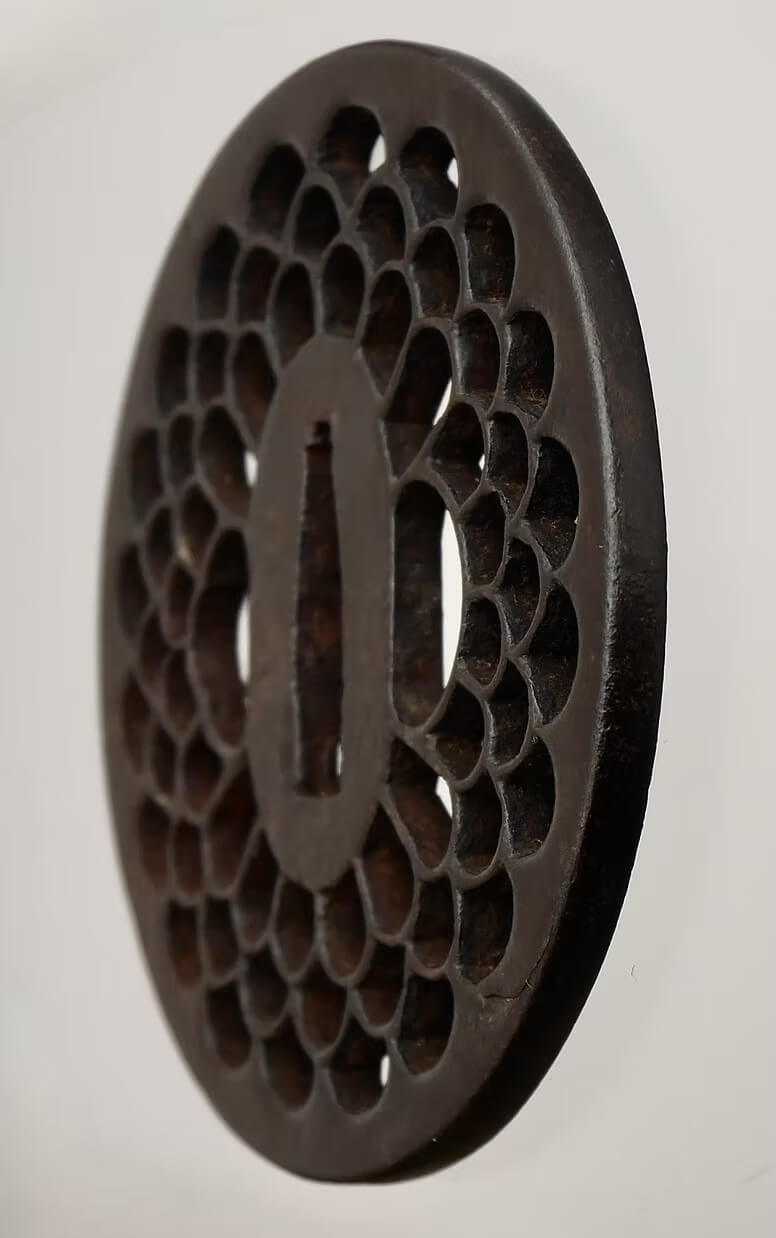
Typical Owari sukashi tsuba of the Muromachi period are characterized by a round iron plate with a slightly concave center, a kaku-mimi ko-niku rim (intermediate between square and rounded), and bold, symmetrical openwork designs, often finished with a hammered surface incorporating visible tekkotsu.
While this tsuba conveys such Owari traditions, the openwork design of layered chrysanthemums (yae-giku) is executed with particular care and refinement. The tsuchime is subdued, creating a surface that at first glance appears almost polished (migaki-ji). Furthermore, the neatly shaped hitsu-ana on both sides suggest a somewhat later date, and the piece is thought to belong to the Momoyama period.
This motif is more commonly encountered in Kyō sukashi and was likely a popular design at the time. However, it is relatively rare among Owari sukashi examples, and the larger size of this piece, together with its deep, rich patina and the carefully executed, spirited openwork, make it especially appealing.
Evoking the free-spirited aesthetic of the Momoyama period, works such as this—combining exceptional design sensibility with high technical skill—are rare, and this piece may be regarded as a representative example of Owari sukashi.