Design of Myōga, Karigane, and Snowflakes
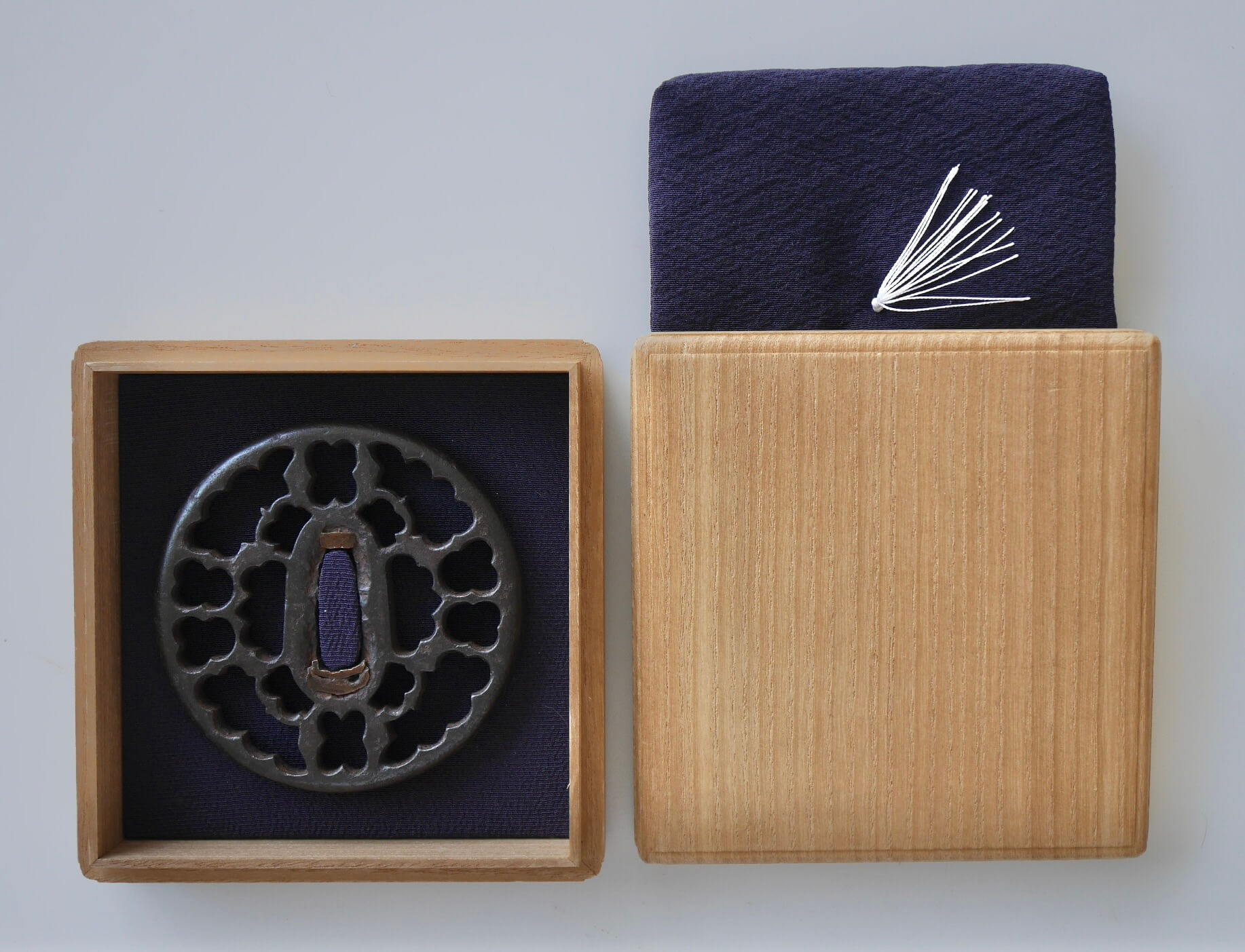
Various theories exist regarding the origins of Akasaka tsuba. One account holds that Kariganeya Hikobei, a fittings dealer from Kyō, brought the tsuba craftsman brothers Shōzaemon to Edo and had them produce tsuba based on his own designs. However, the official document “Akasaka Tsuba Yuisho-gaki” contains no mention of Kariganeya Hikobei, and instead records that the first generation began producing tsuba in Akasaka during the Kan’ei era and died in Meireki 3 (1657).
Early Akasaka tsuba are often characterized by symmetrical compositions in an Owari style, with prominent tsuchime and visible tekkotsu, leading to the suggestion that Tadamasa may have originated from Owari.
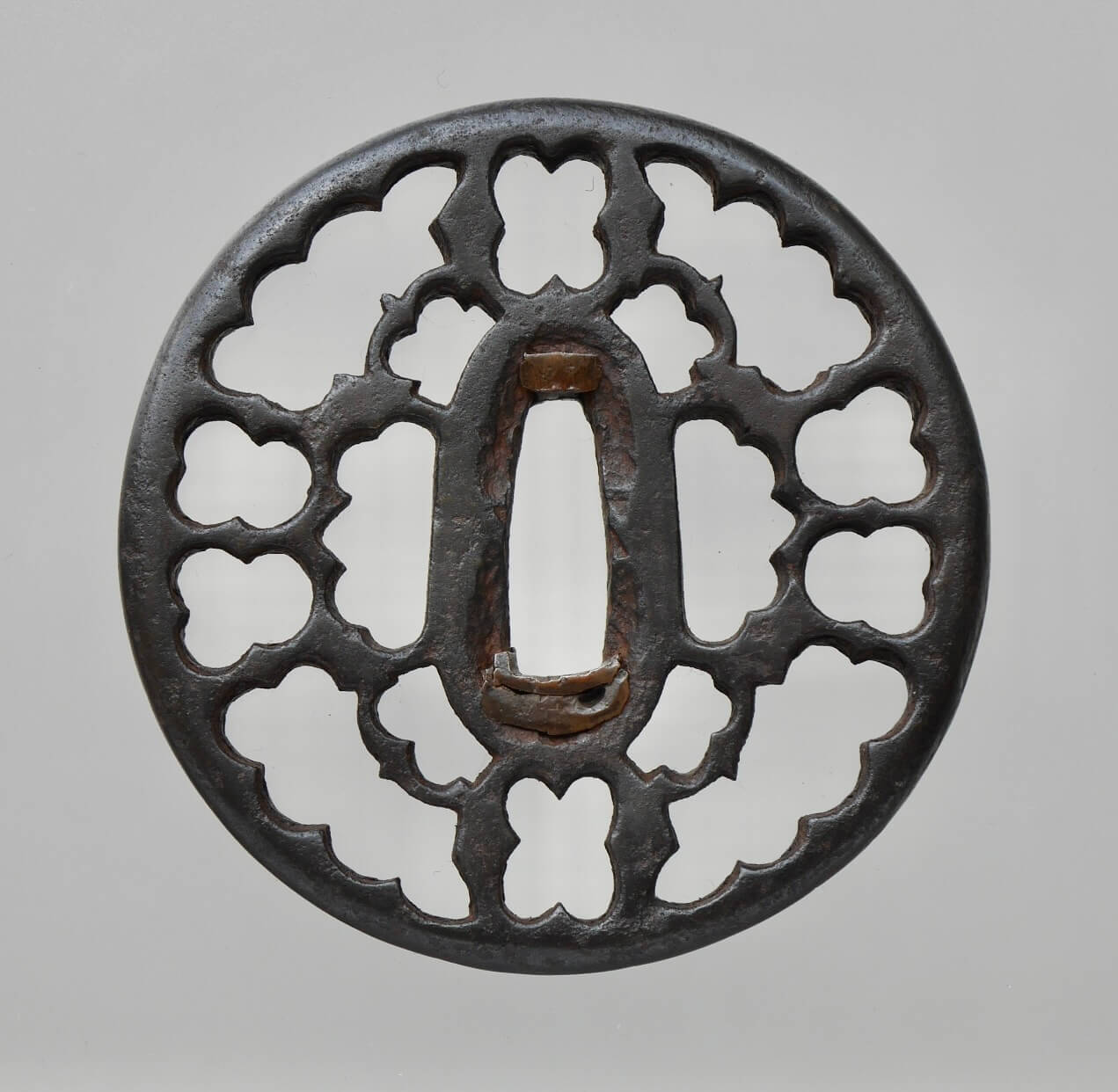
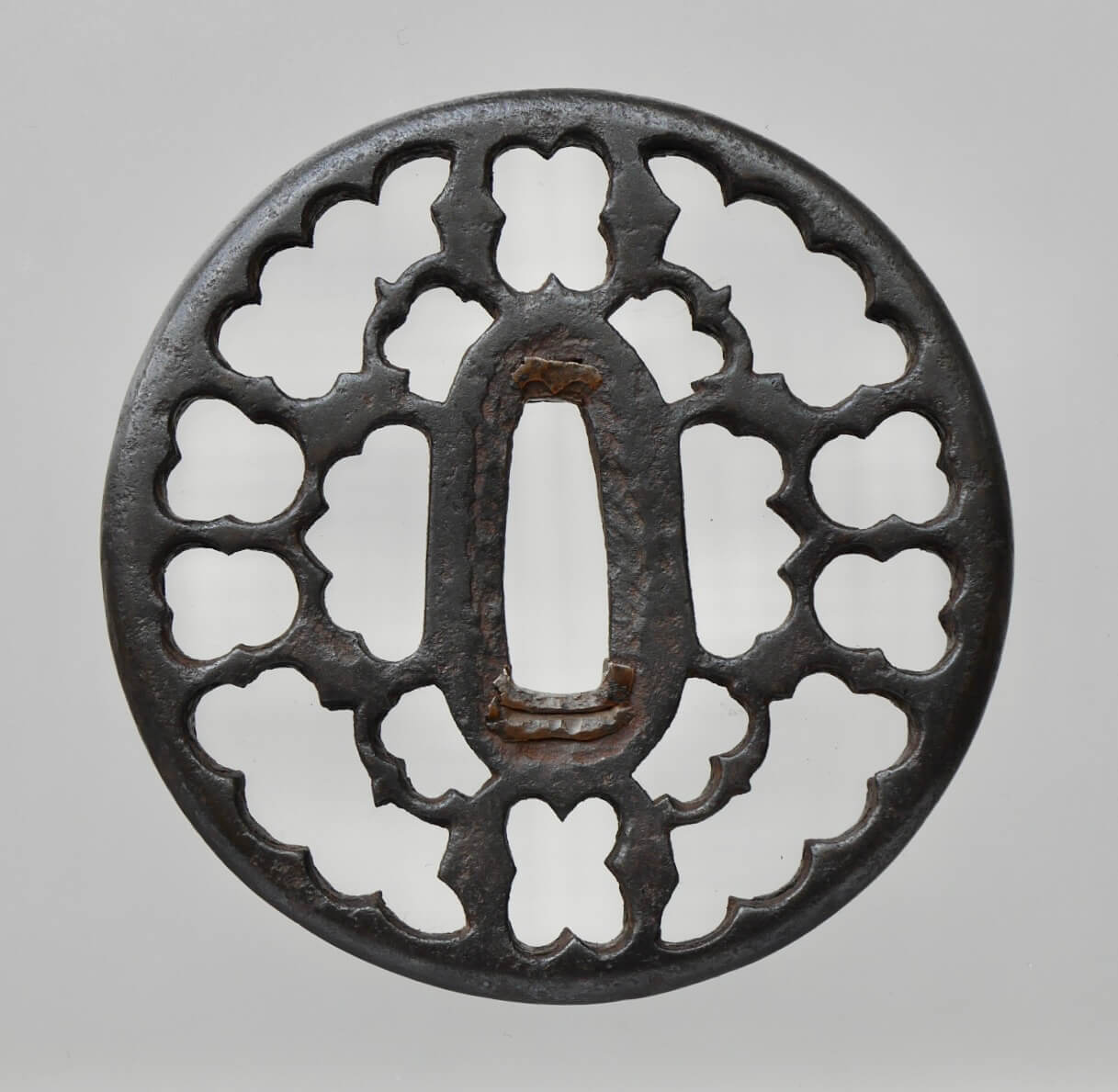
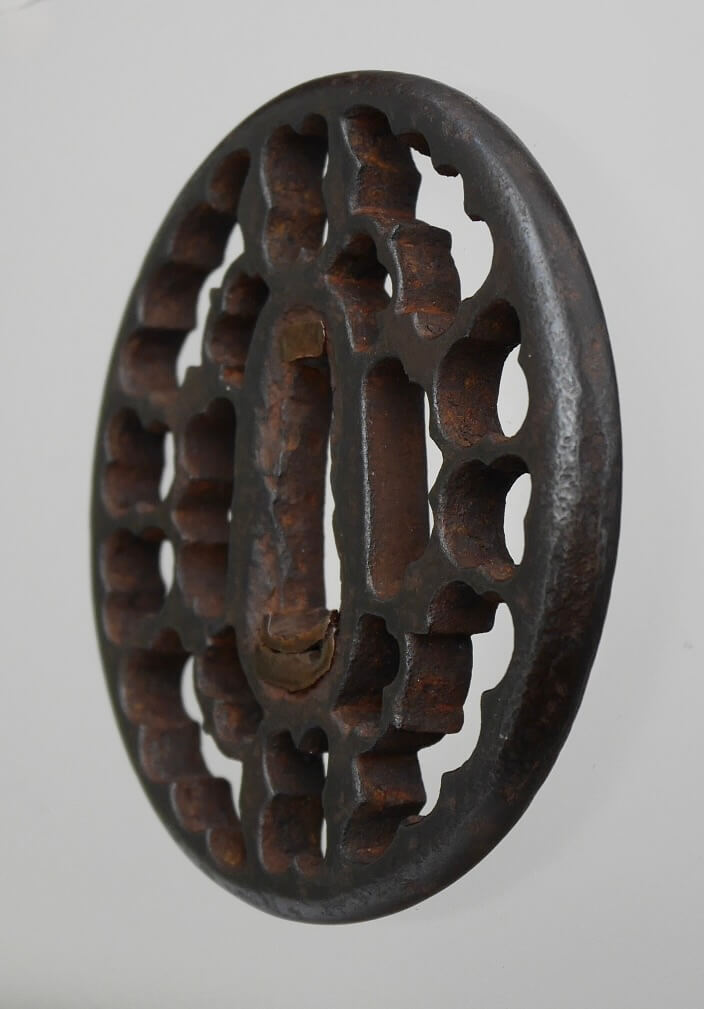
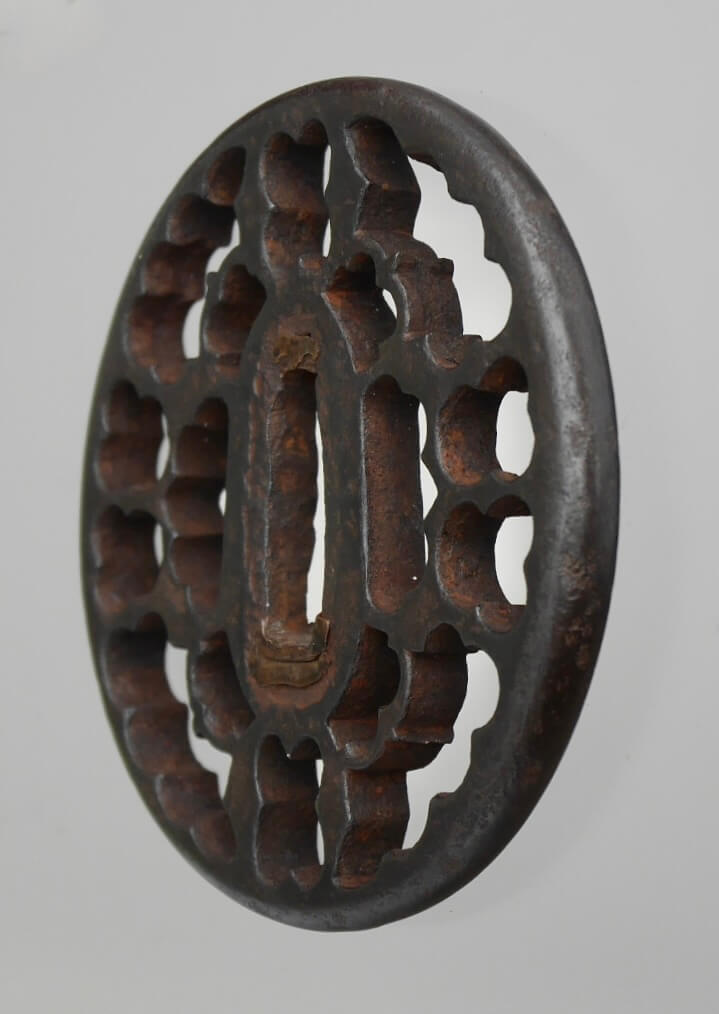
This tsuba is of round form and relatively thick construction, with myōga, karigane (wild geese), and yukiwa (snowflake motifs) arranged in symmetrical sukashi. Among Akasaka tsuba, a well-known design attributed to the first generation is the myōga-karigane sukashi, and this piece corresponds precisely to that composition.
The seppa-dai is elongated with a slightly pointed upper end, a characteristic feature of the first generation. Linear tekkotsu can be observed along the rim, and the edges of the openwork reveal a straight-grain (masame) forging structure. The substantial thickness gives the piece a strong sense of volume and presence, while the iron displays a deep, lustrous black tone. Altogether, this is a fine example of first generation Akasaka Tadamasa work.