Design of Paulownia
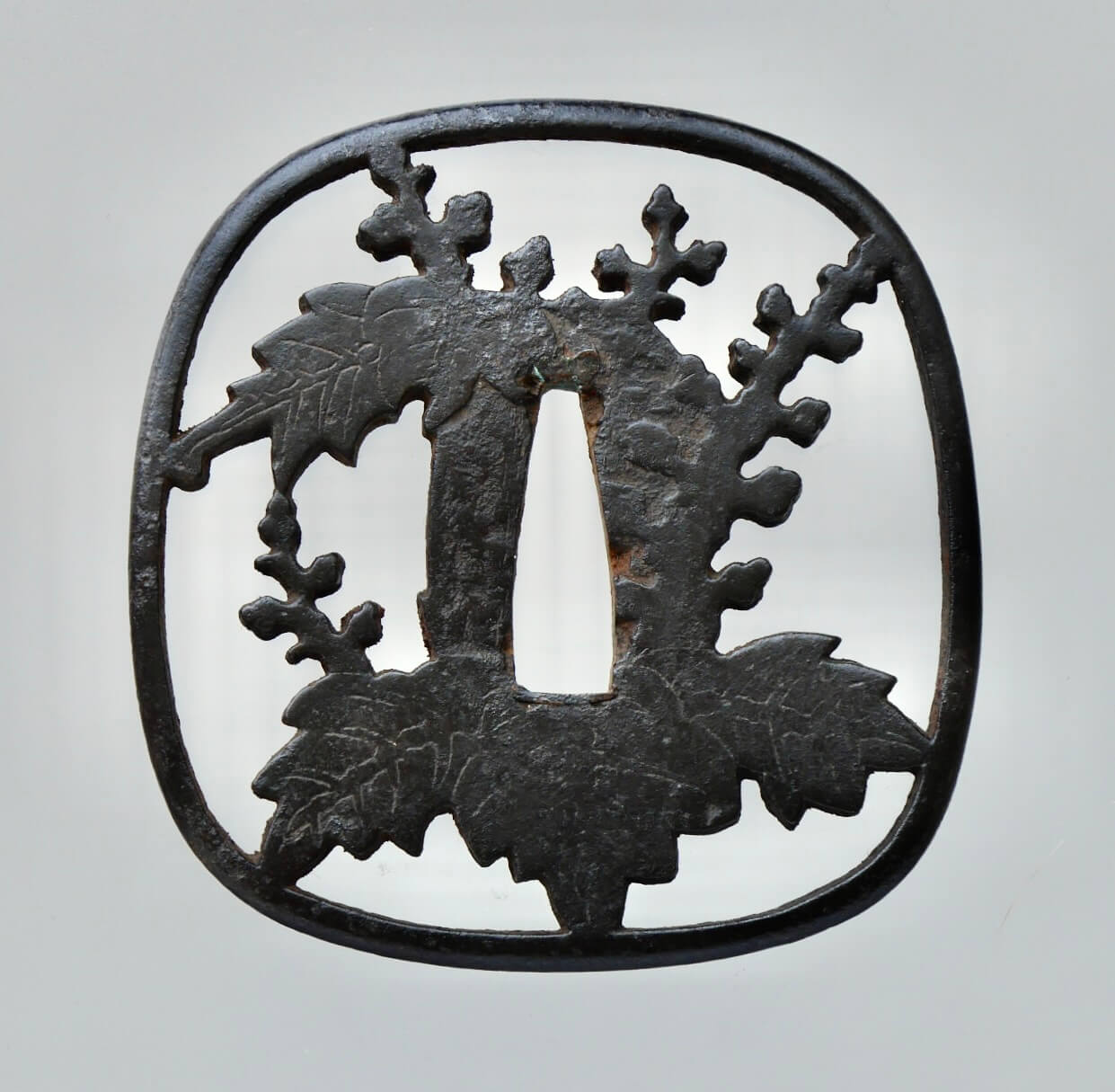
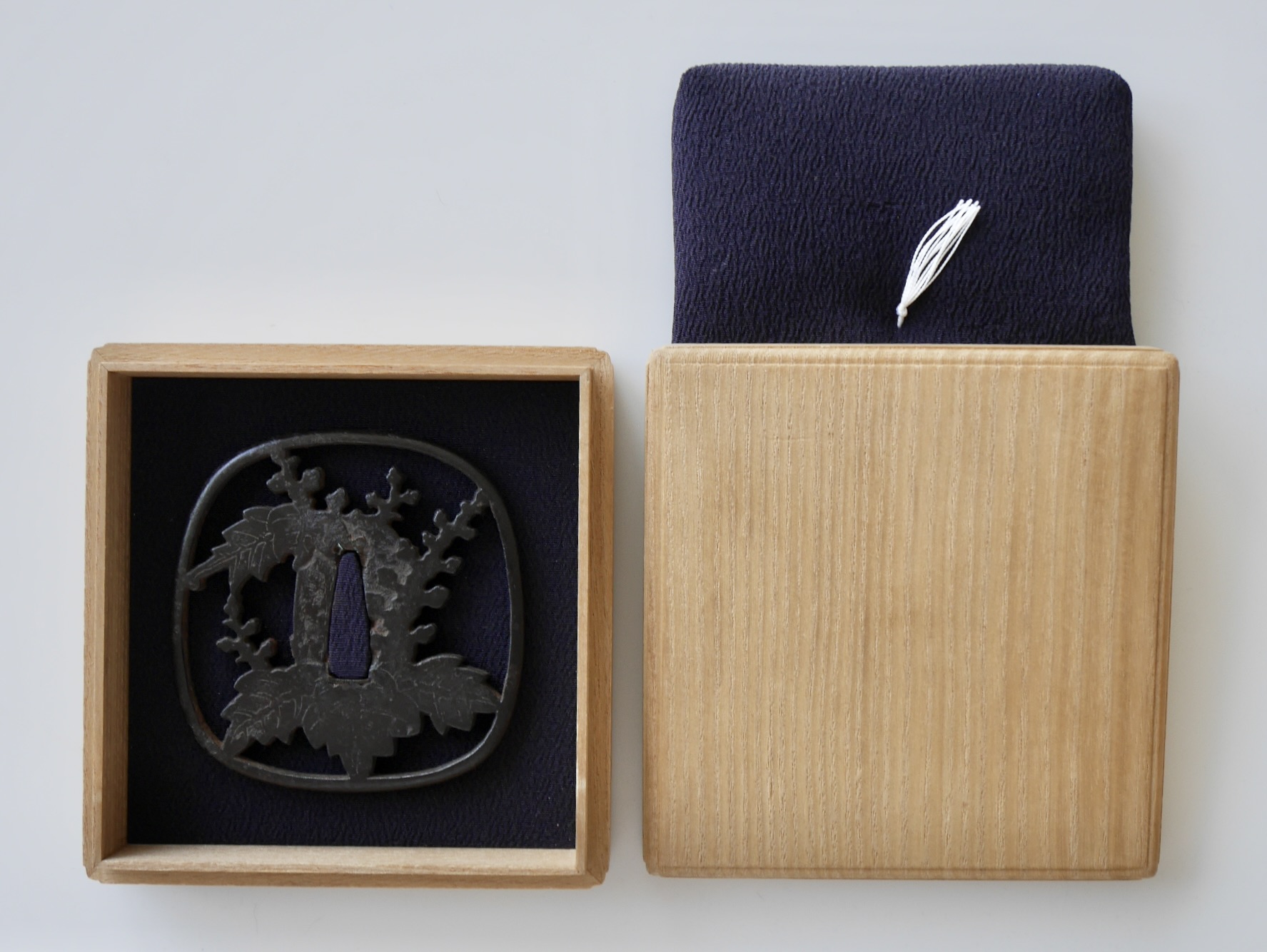
The first generation Kanshirō was the younger brother of a Shinto priest of the Naikū and Gekū shrines in Futamata village, Tango Province. During the Hosokawa family’s residence in Kokura, Buzen Province, he became a pupil of Hirata Hikozō. When the Hosokawa clan was transferred to Kumamoto, he accompanied Hosokawa Sansai and settled in Yatsushiro, Higo Province; after Sansai’s death, he moved to Kumamoto, where he was granted a stipend of twelve persons’ rations by the Hosokawa family. He was born in Keichō 18 (1613) and died in Genroku 6 at the age of eighty-one.
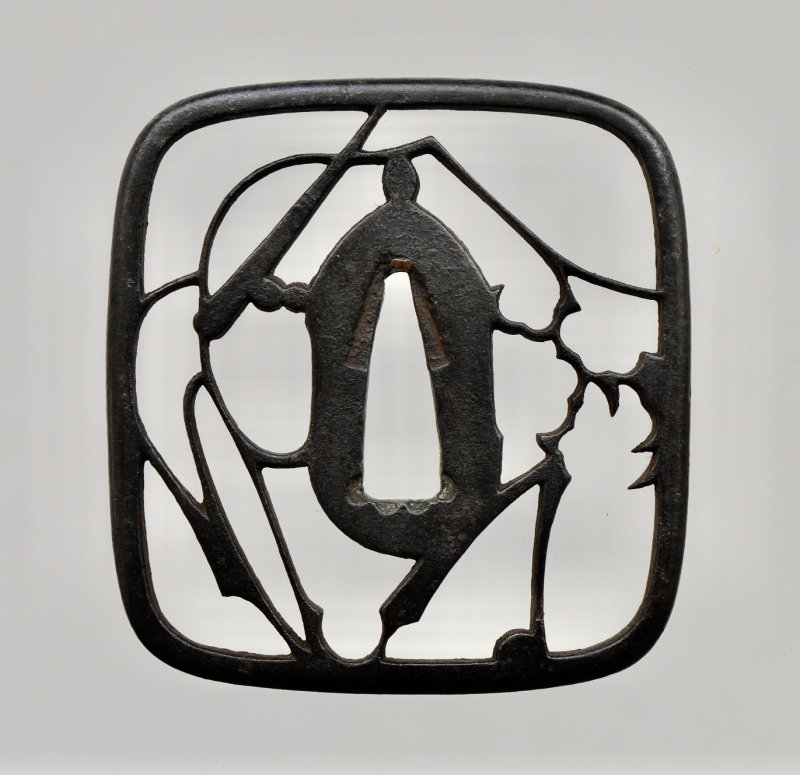
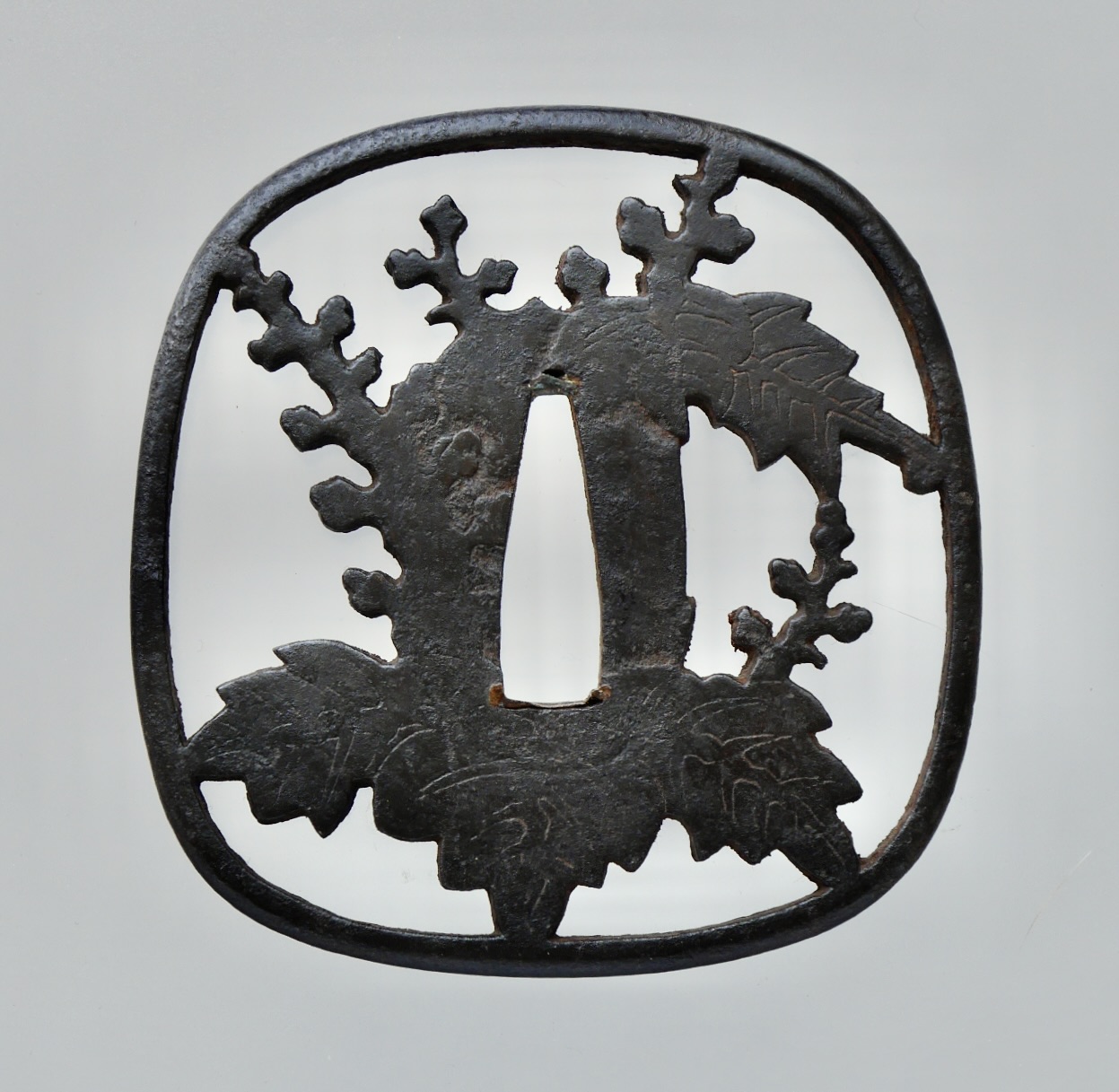
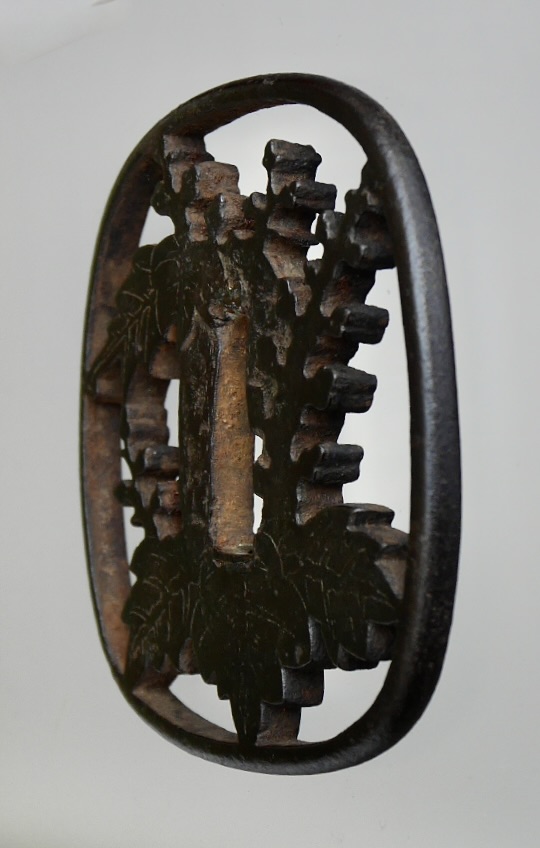
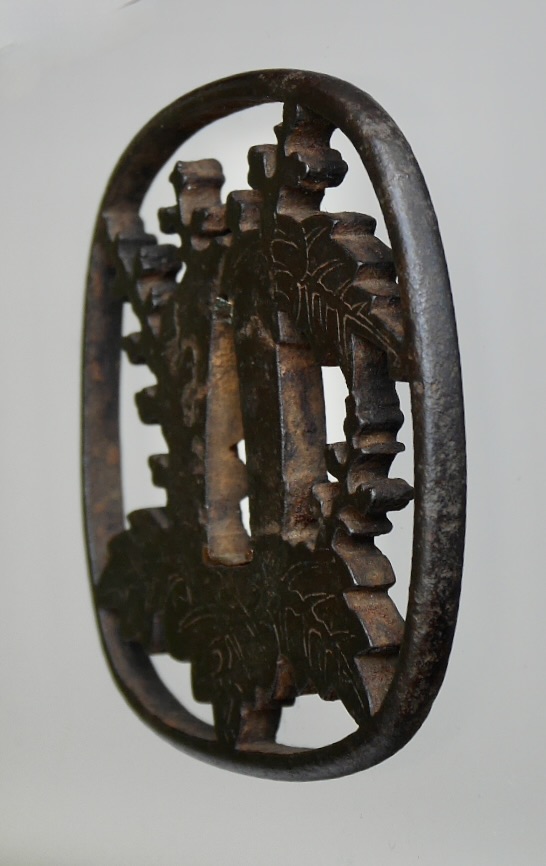
All of his works are unsigned, and he produced tsuba and fuchigashira in iron and various soft metals. This tsuba, in both its form and design, exemplifies the characteristic style of the first-generation Kanshirō. The plate takes a slightly irregular aori-gata (saddle-flap shape), with freely rendered paulownia blossoms executed in openwork.
The iron has a somewhat dark, subdued sheen, and the expressive kebori carving is also noteworthy. Rich in individuality, this is a highly appealing tsuba that vividly expresses the distinctive style of the first generation Kanshirō.