Design of Butterfly
Hayashi Shigemitsu was born in Kanbun 7 (1667) as the son of the master artisan Matashichi, and died in Enkyō 1 (1744). His period of activity spans from the Genroku to Kyōhō eras (1688-1736), coinciding with the flourishing of Edo culture.
According to “Higo Kinkōroku”, “Although he generally adhered to the principles of the first generation, his work possesses a refined elegance; consequently, highly meticulous works are rather few.” Distinct from Matashichi and Tōhachi, he produced works of subtle irregularity and full of character.
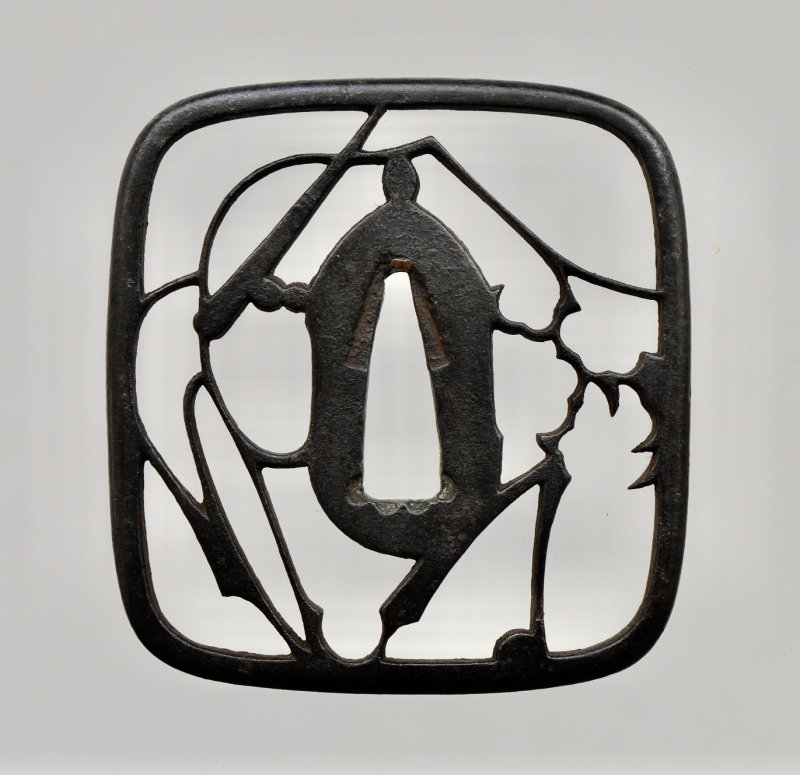
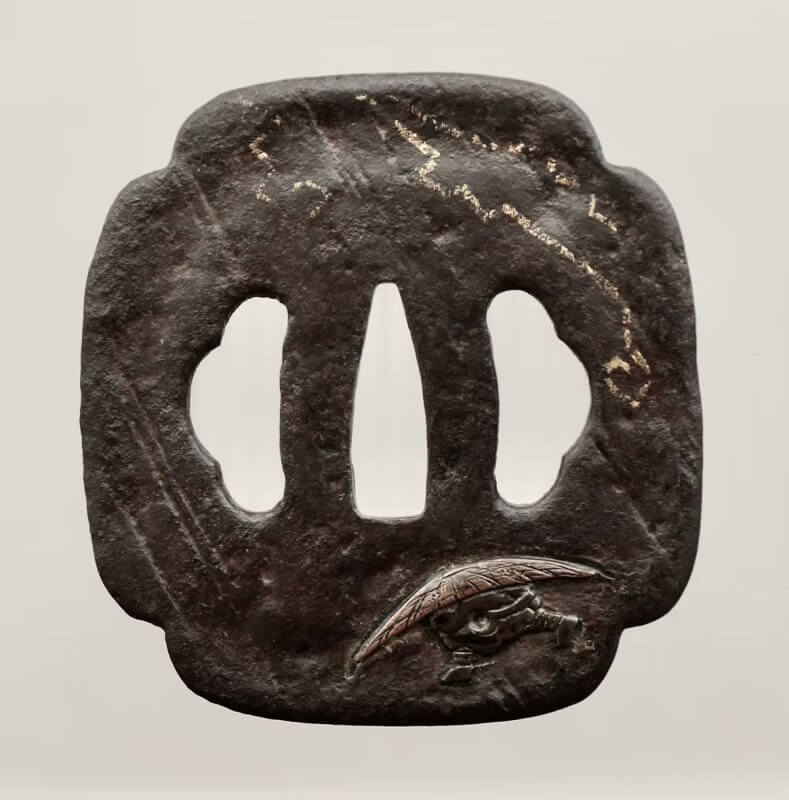
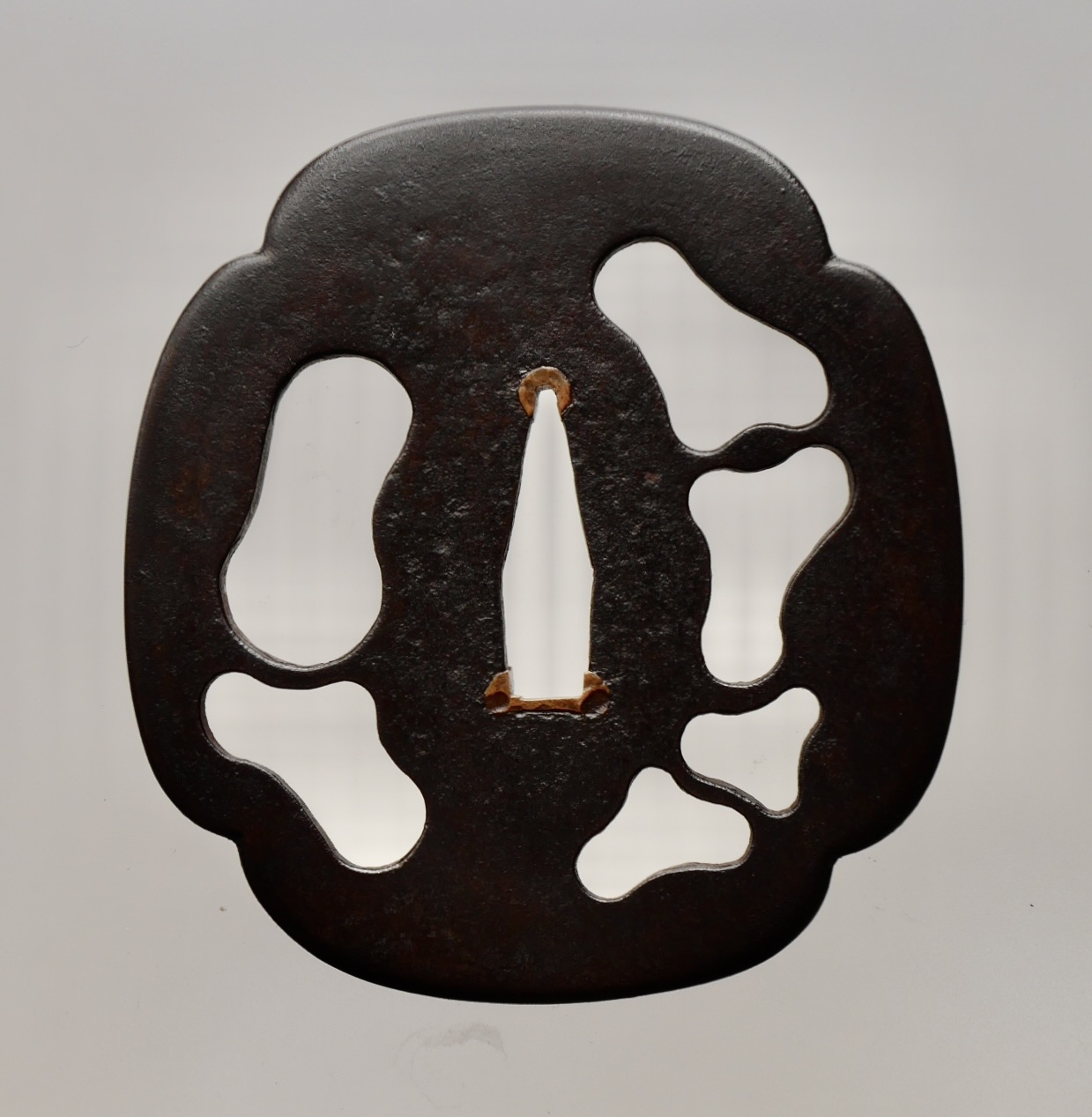
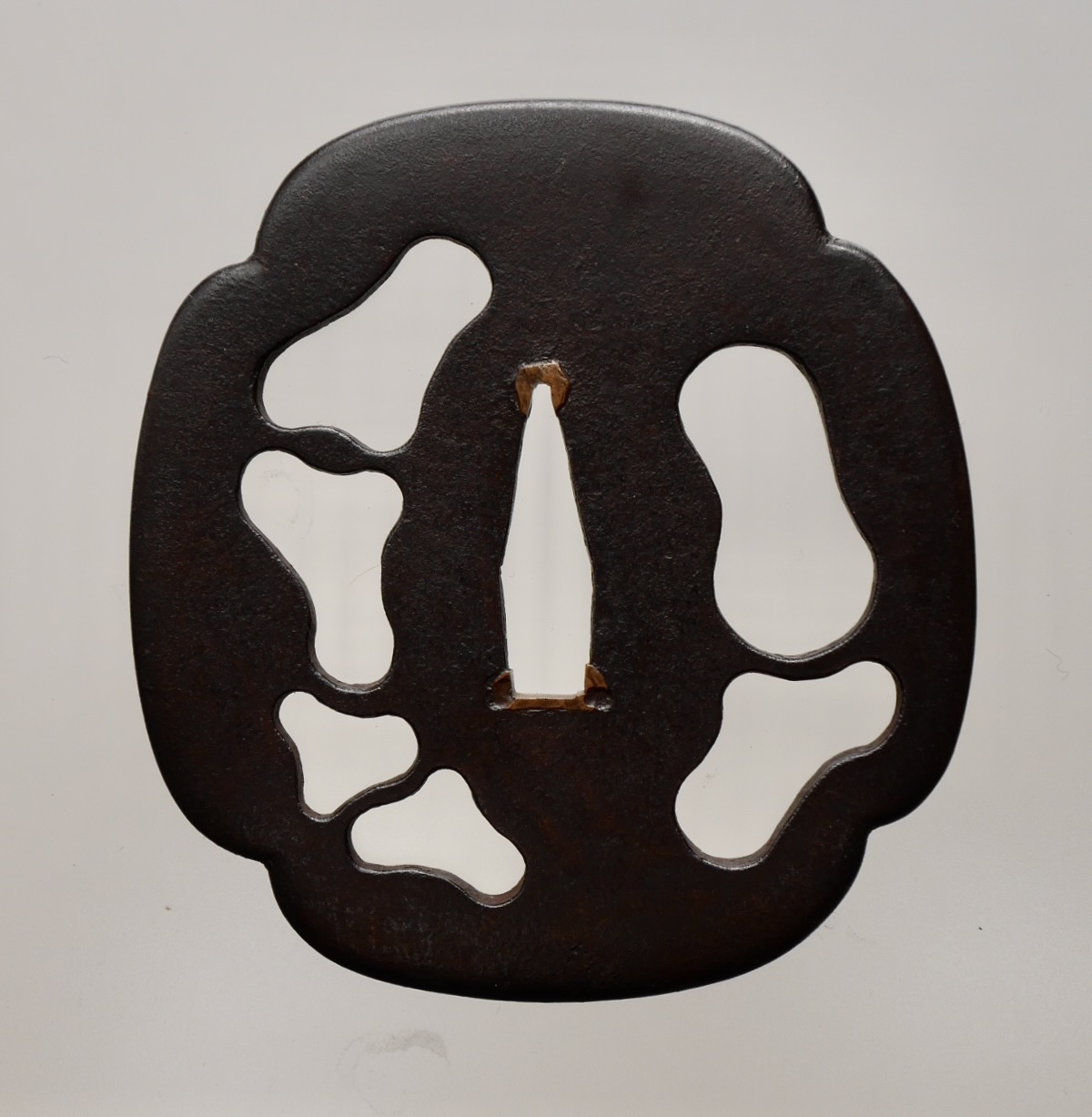
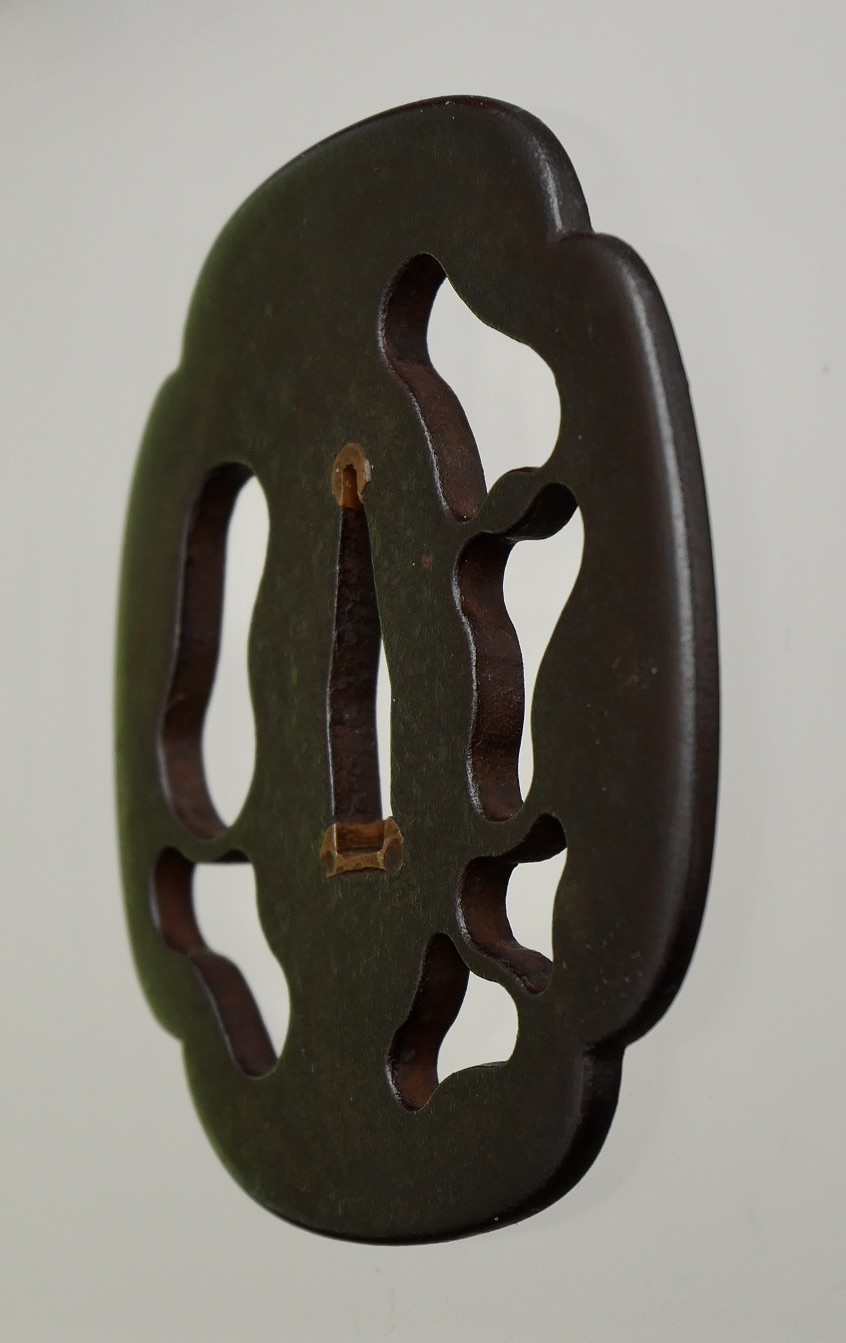
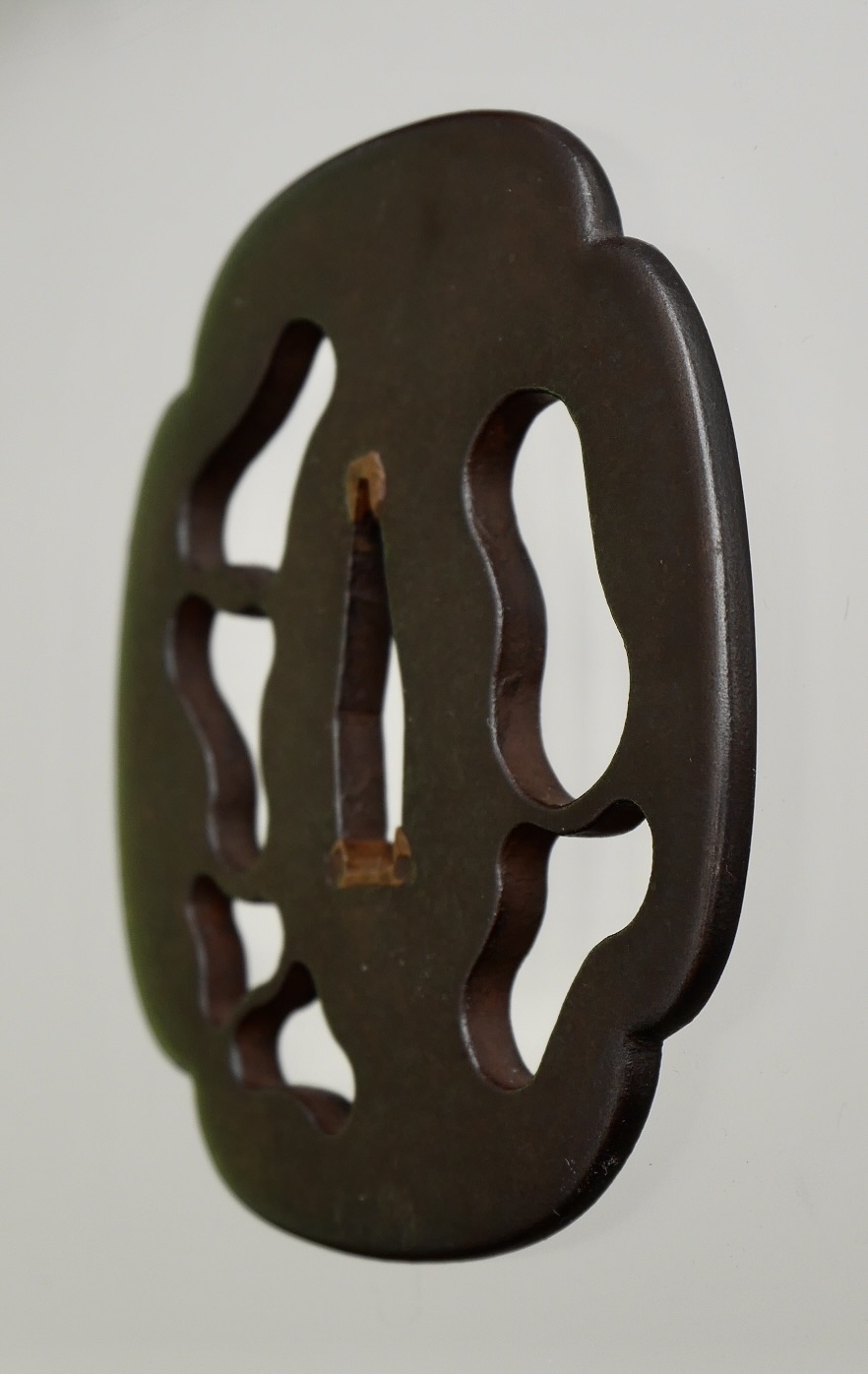
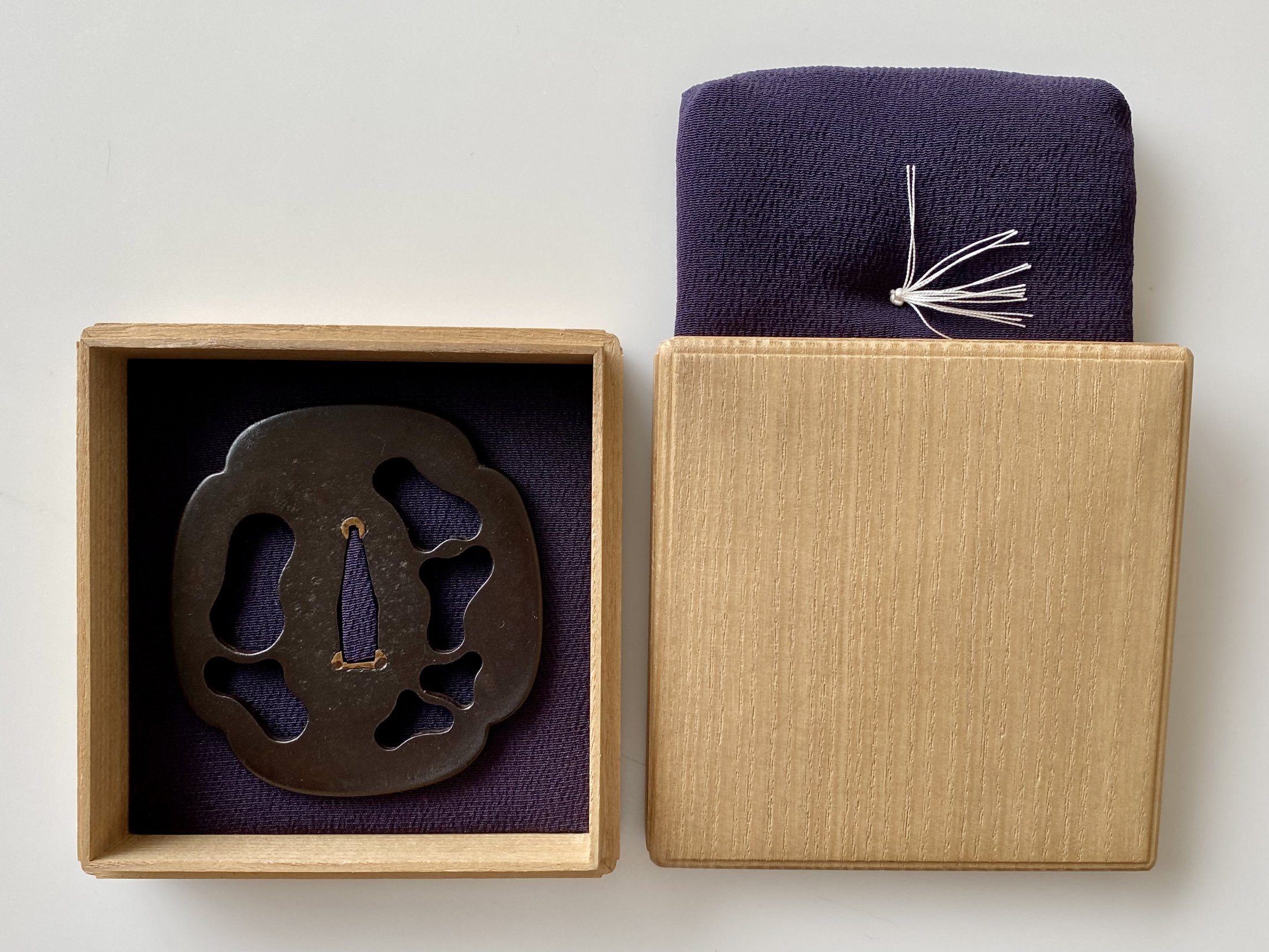
This tsuba is of mokko-gata, with three butterflies rendered in kage-sukashi (openwork forming the design). While both the form and the design are uncommon, the lustrous, yōkan (Japanese beans cake)-like iron tone is characteristic of the Hayashi school, and the sense of movement in the composition suggests the work of Shigemitsu.
Of relatively large size and in excellent condition, this piece is a fine example that demonstrates Shigemitsu’s high level of skill.