Design of Eight Hanabishi
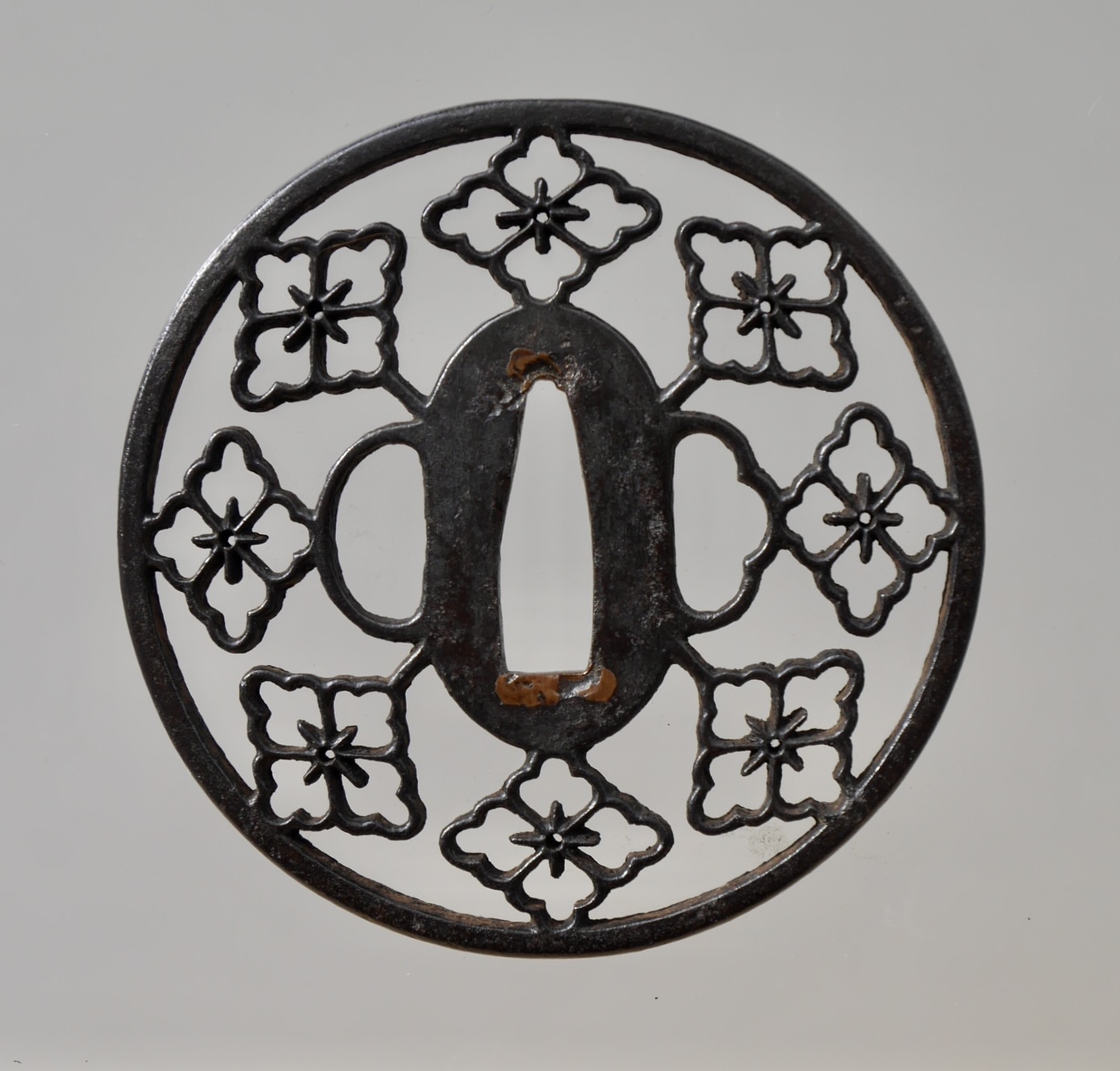
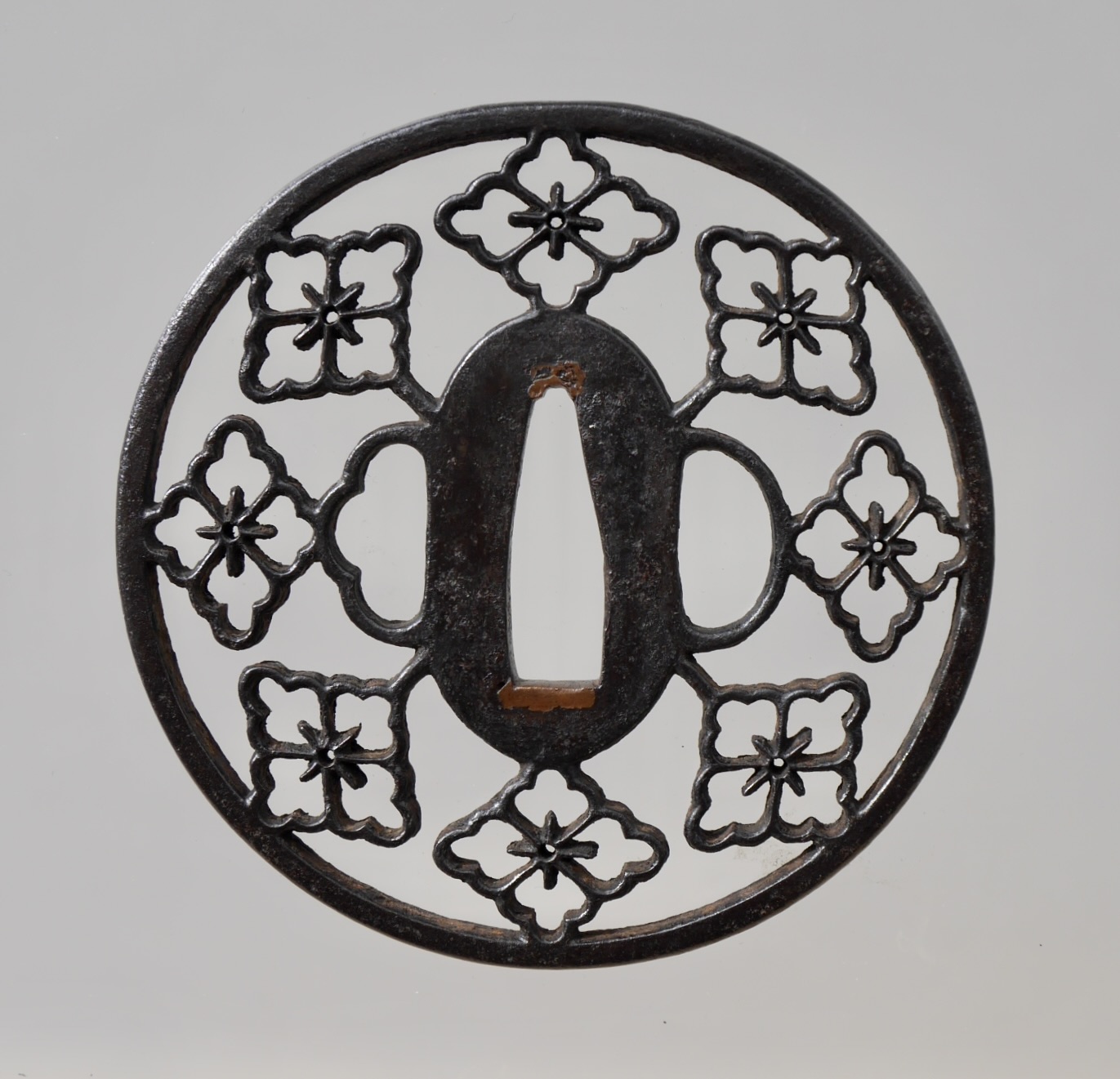
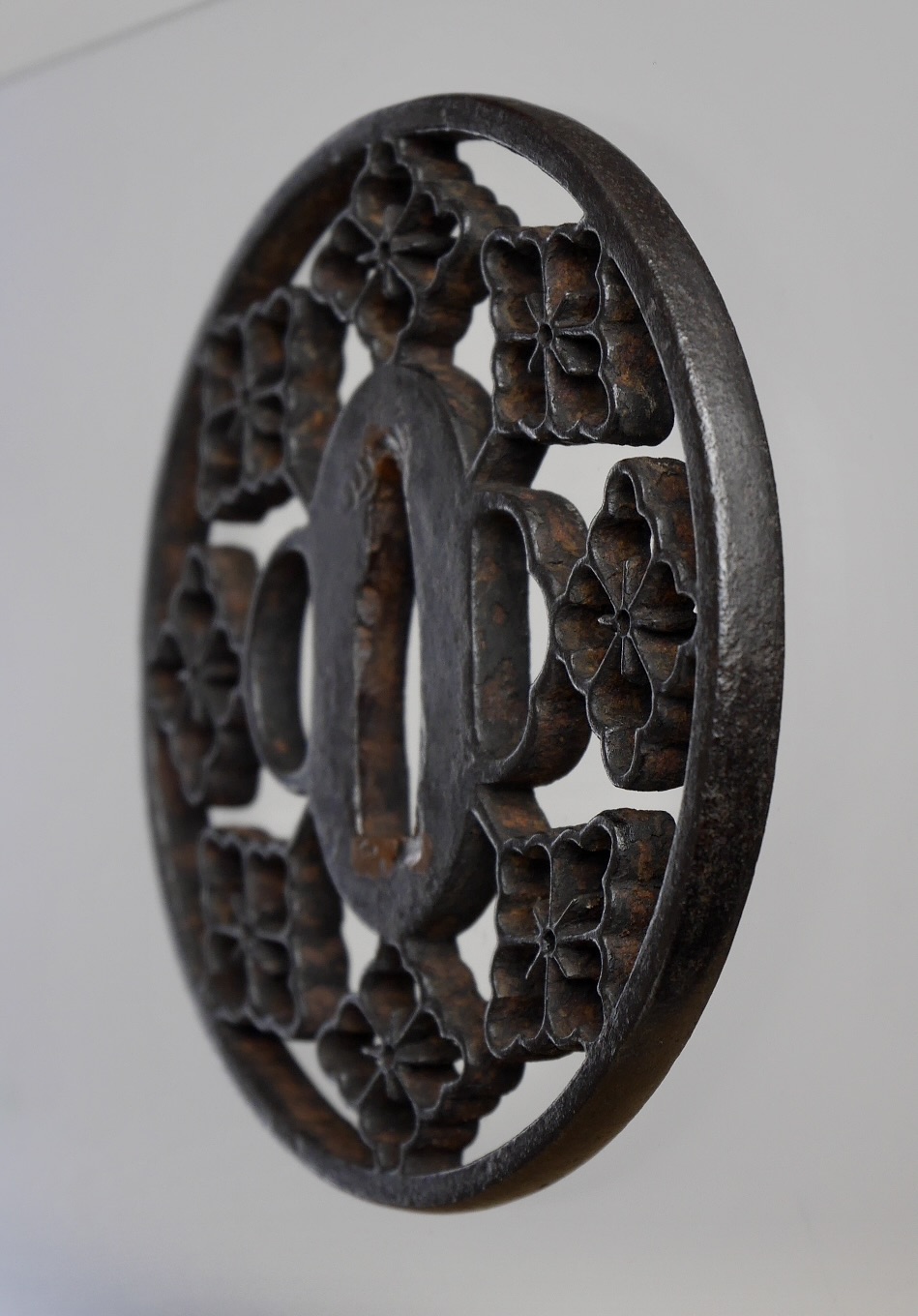
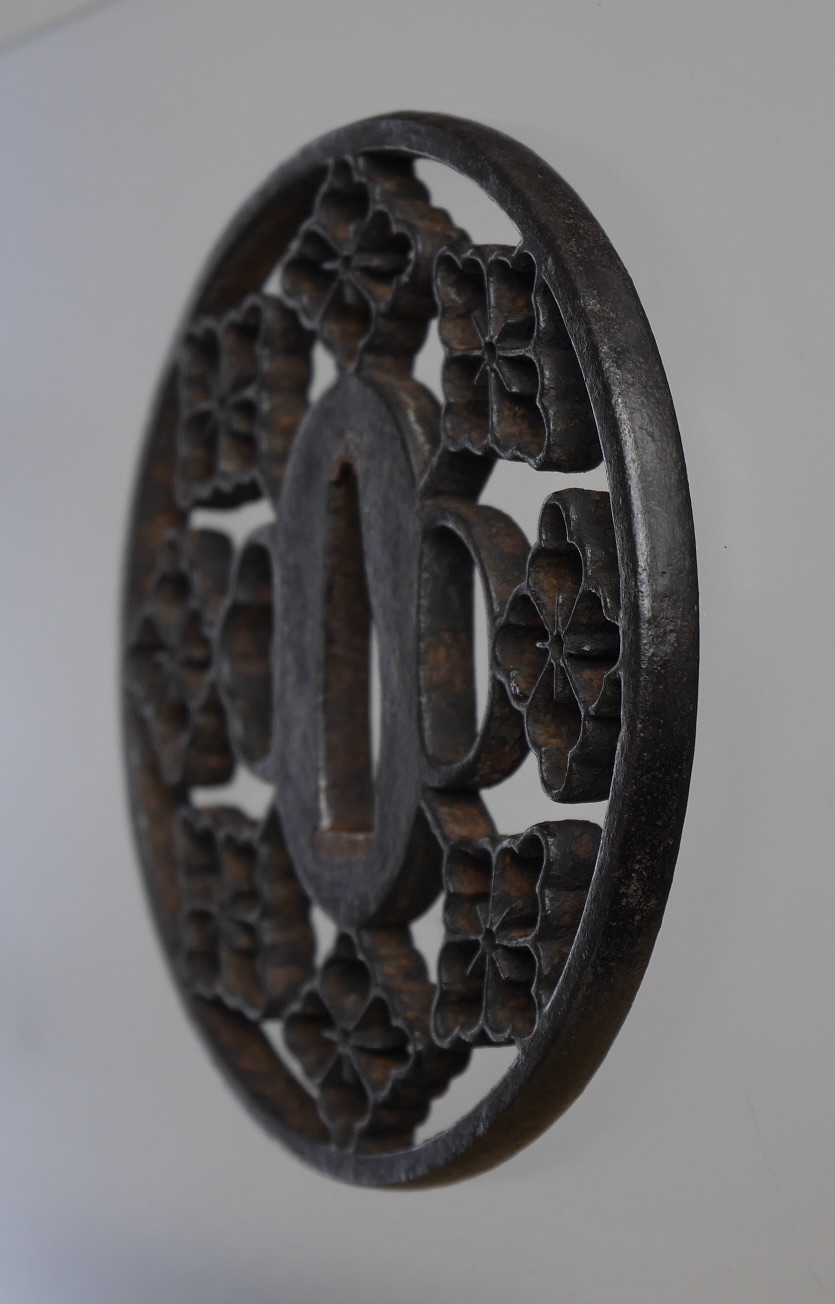
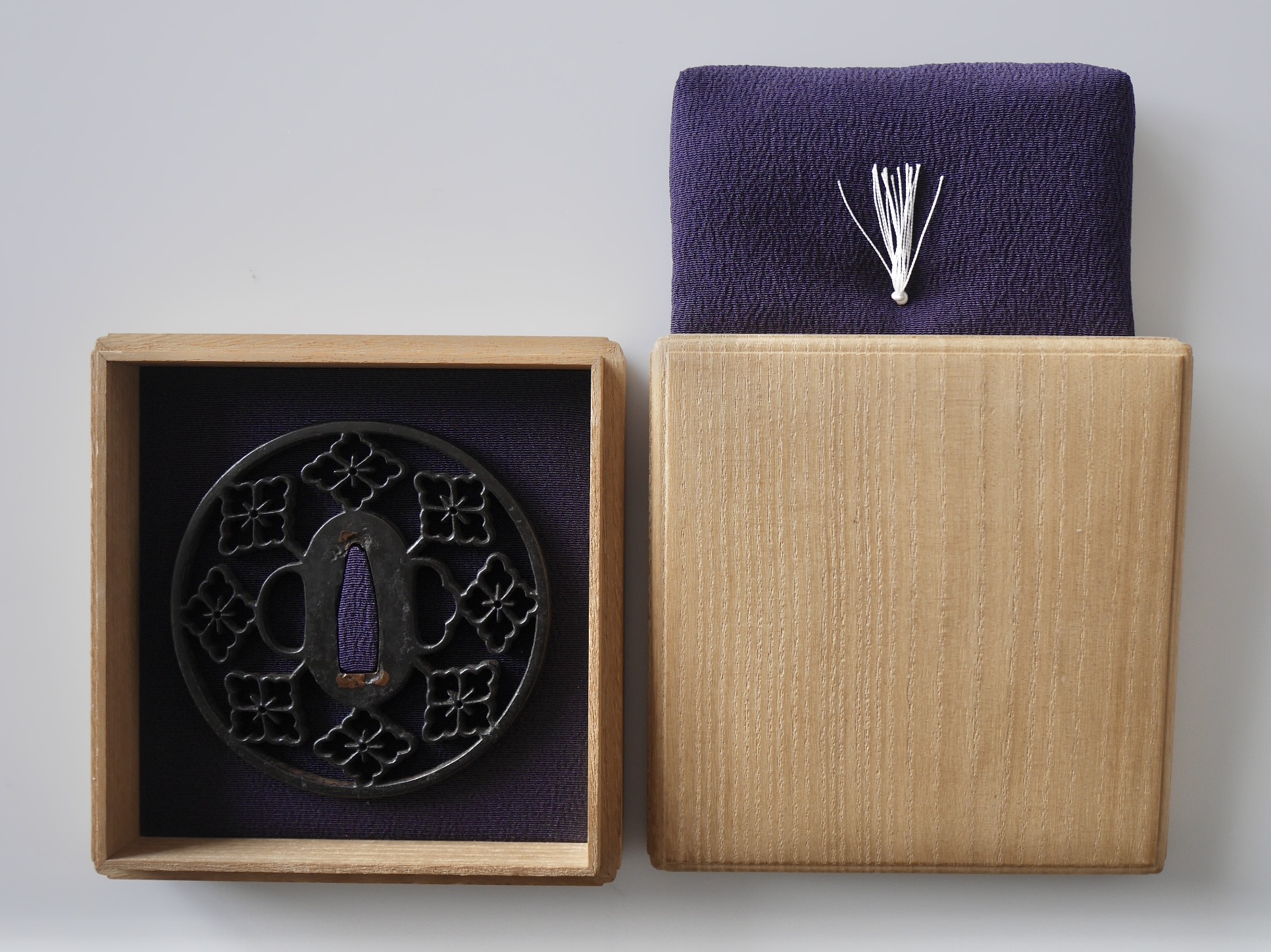
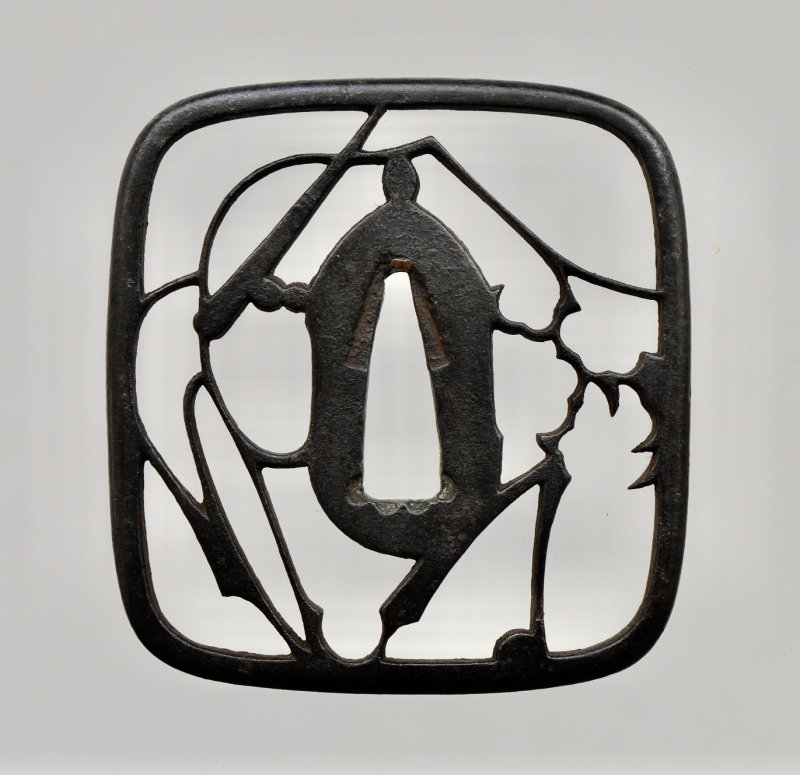
Kyō sukashi is recorded in “Honpō Tōkenkō” (Kansei 7, 1795) as already existing by the time of the sixth shogun, Ashikaga Yoshimasa. When one thinks of Kyō sukashi, refined and courtly designs such as iris-and-eight bridges, shōgun grass (Sagittaria trifolia), or plum trees typically come to mind. The earliest examples, however, are characterized by features similar to Owari tsuba—largely symmetrical compositions, of relatively thin construction, and narrow, crescent-shaped hitsu-ana.
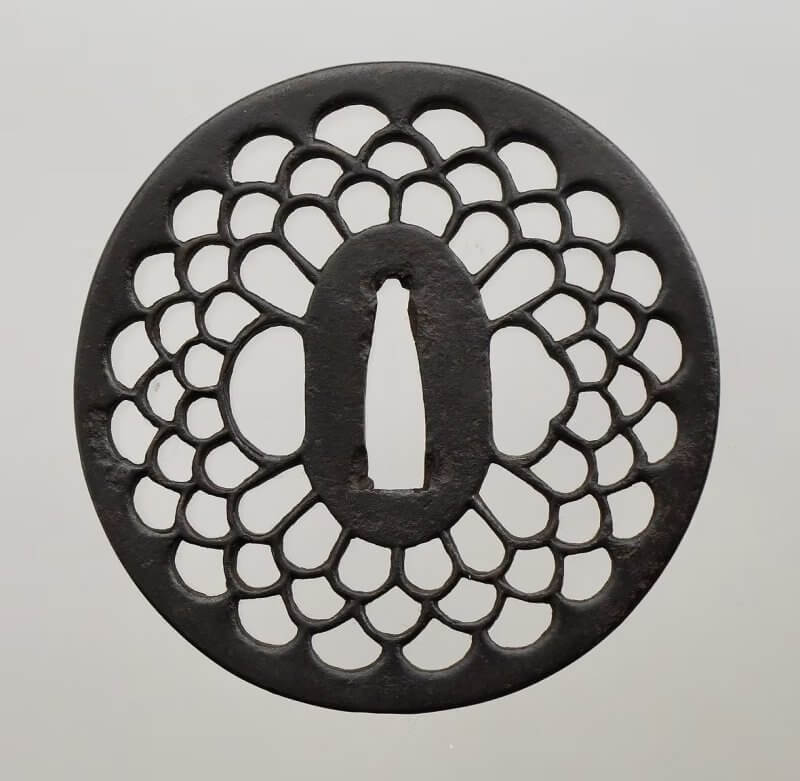
Such designs continued alongside more pictorial styles and were gradually refined into works possessing a distinctly Kyoto-like delicacy and aristocratic elegance. This tsuba retains the symmetrical composition seen in the earliest phase; however, rather than the tsuchime (hammered) finish typical of early works, it is executed in a migaki-ji (polished surface), while still conveying a certain strength reminiscent of Owari tsuba.
Works of this type are sometimes referred to as “Daigorō,” though that term more properly applies to Kyō sukashi produced in the Bunka–Bunsei period (1804-1831) of the late Edo period. This piece appears to be earlier, likely dating to the early Edo period, when improvements in transportation facilitated the wider dissemination of regional styles and information.
The iron displays an excellent tone, and the piece is of relatively large size and well preserved. Sukashi possesses a refined atmosphere, making this an engaging work worthy of being cherished.