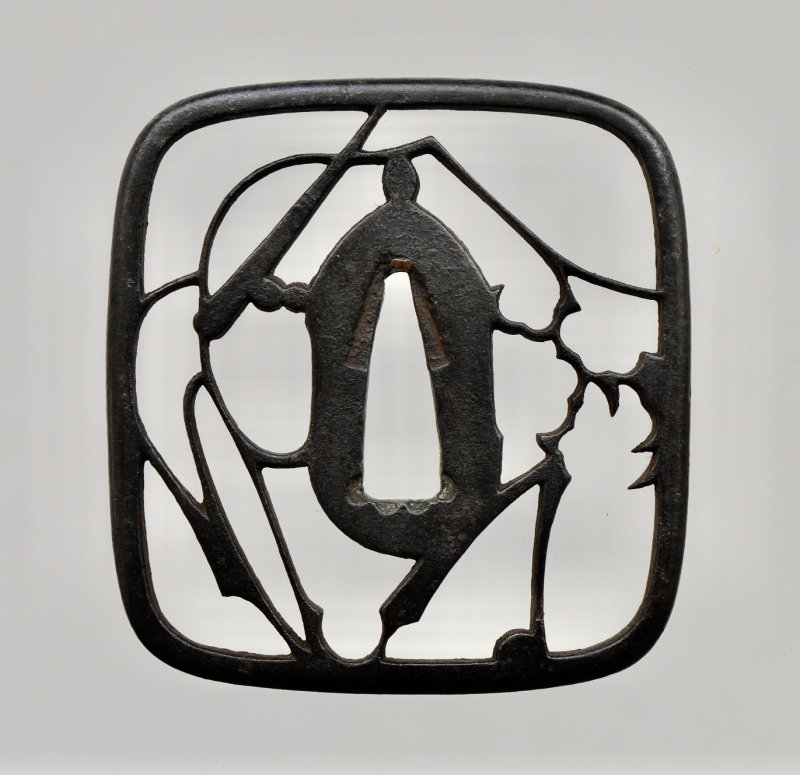
Design of Mt. Fuji with Snow
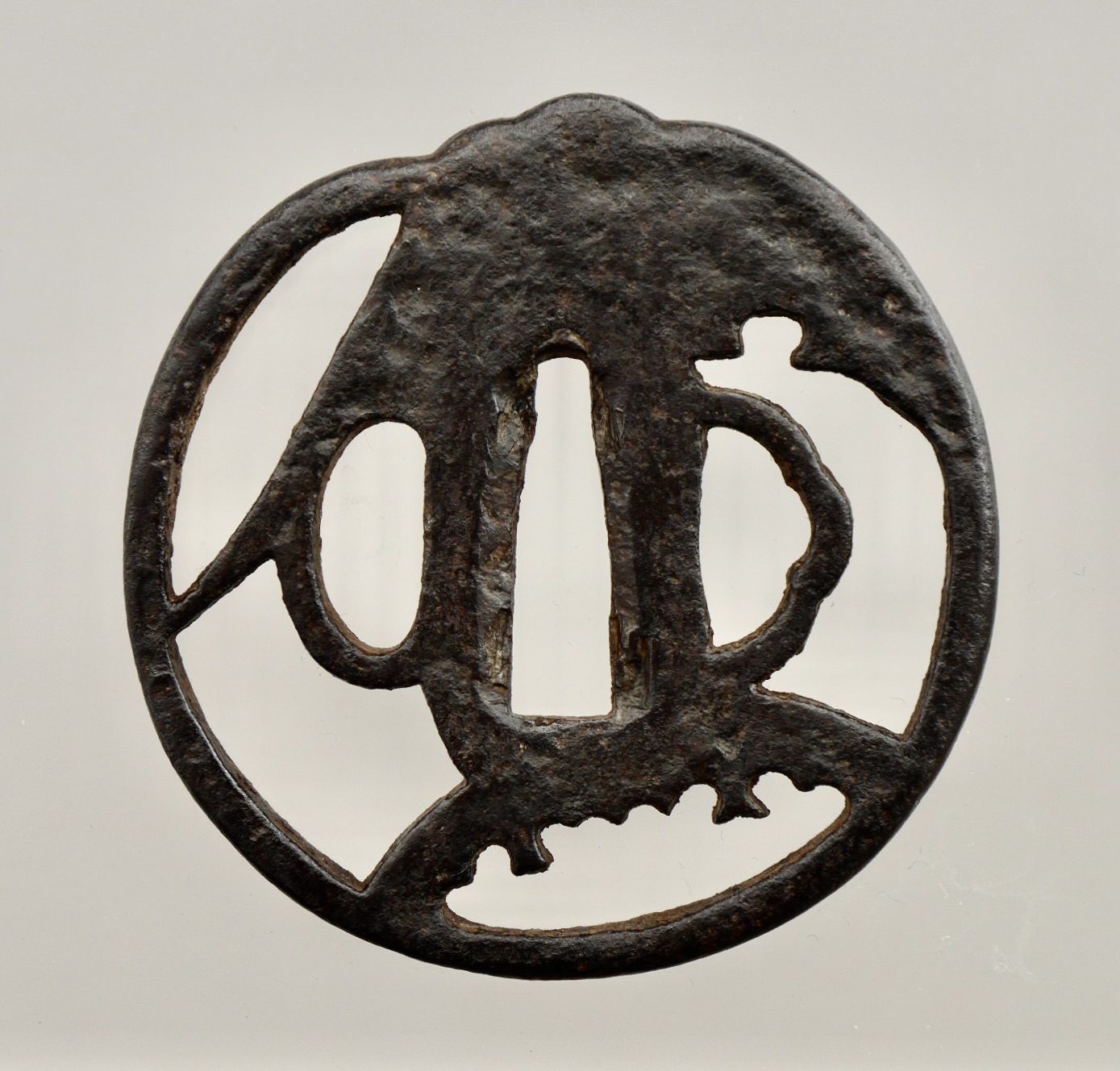
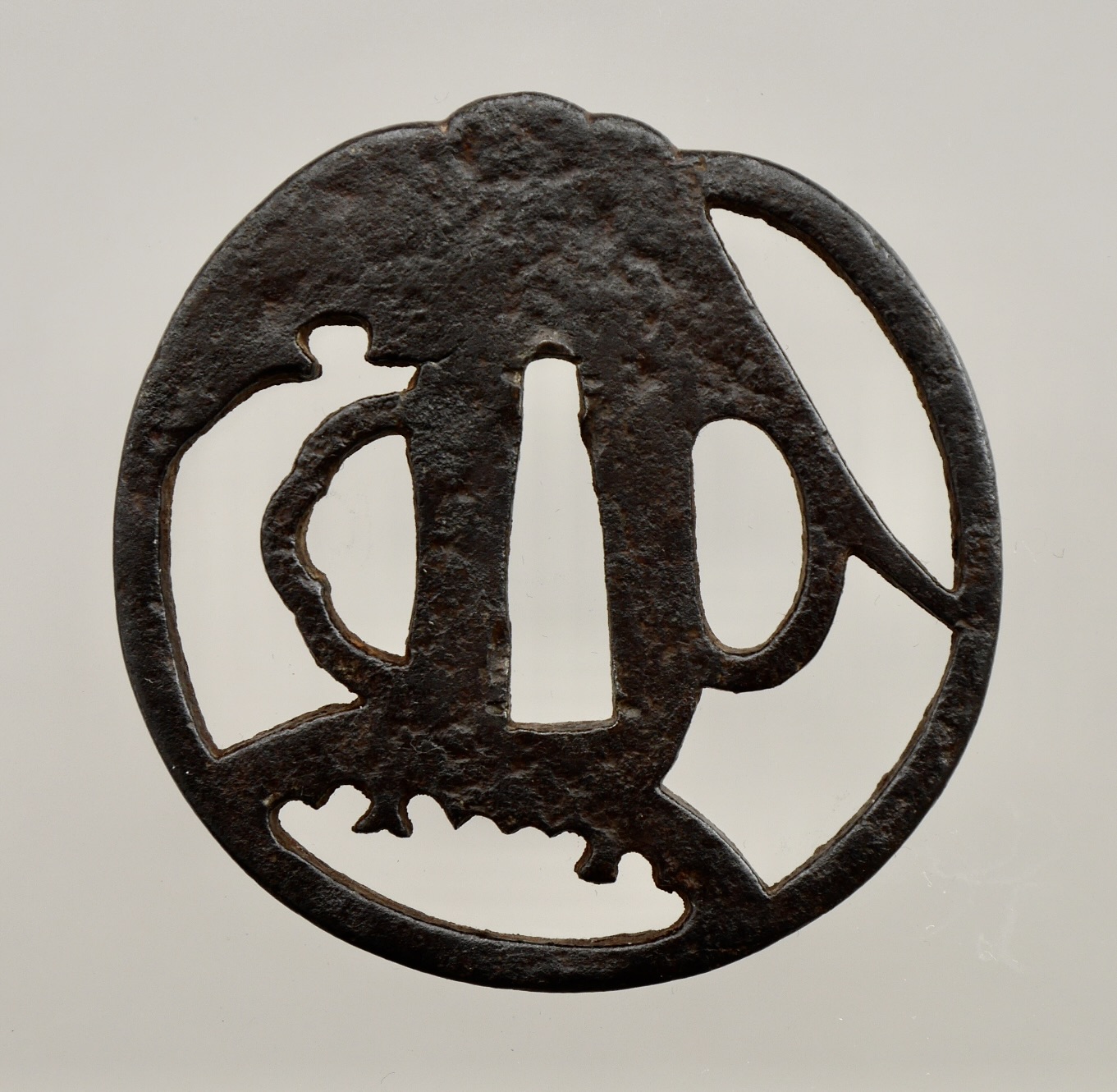
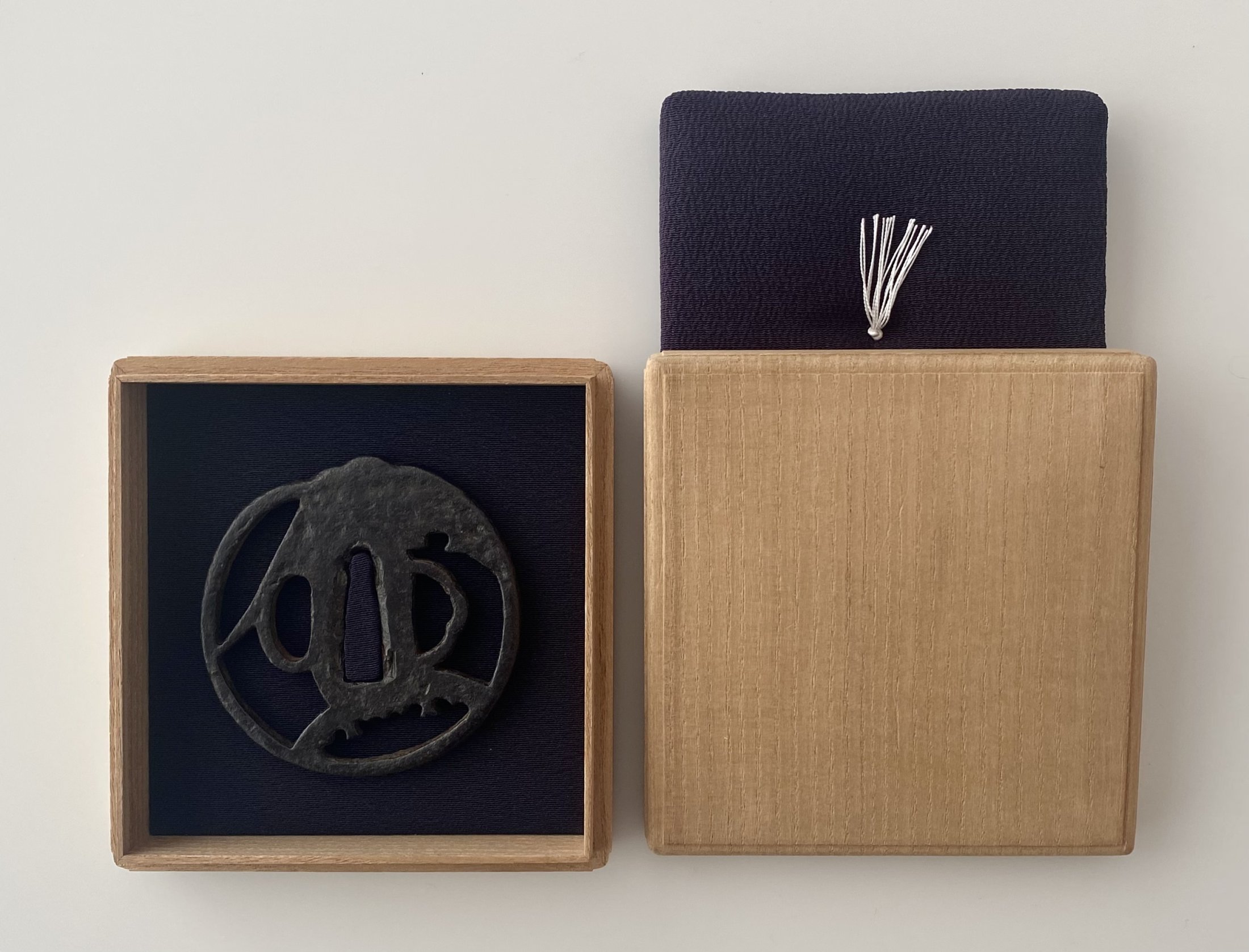
Kanayama tsuba are already recorded as a distinct category in the Edo-period text “Toban Shōkan Kōketsu” by Matsumiya Kanzan. They are thought to have originated in the Kanayama area of Ōno-noshō in Owari Province, which was governed by the Saji clan, around the mid-Muromachi period. The Kanayama tradition appears to have come to an end in the Momoyama period, and it is believed that in the Edo period such works came to be known as Ōno tsuba.
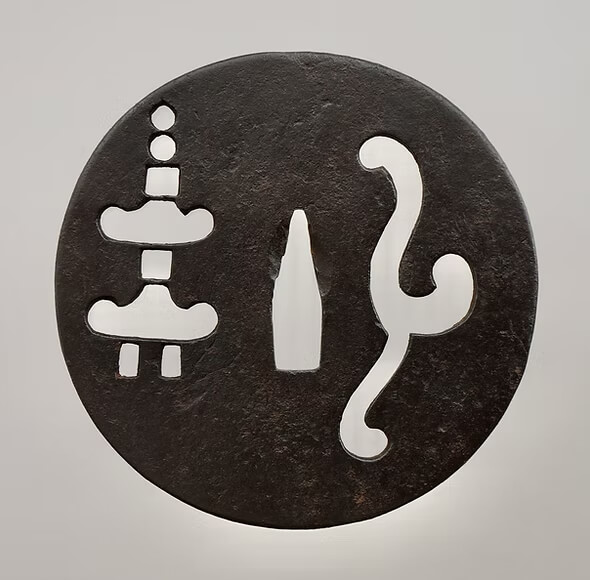
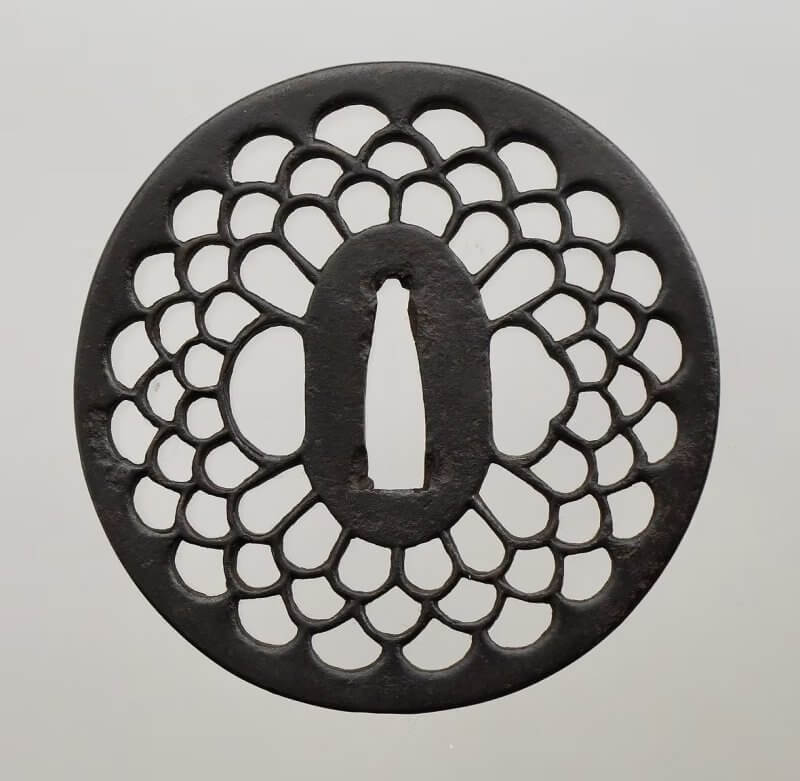
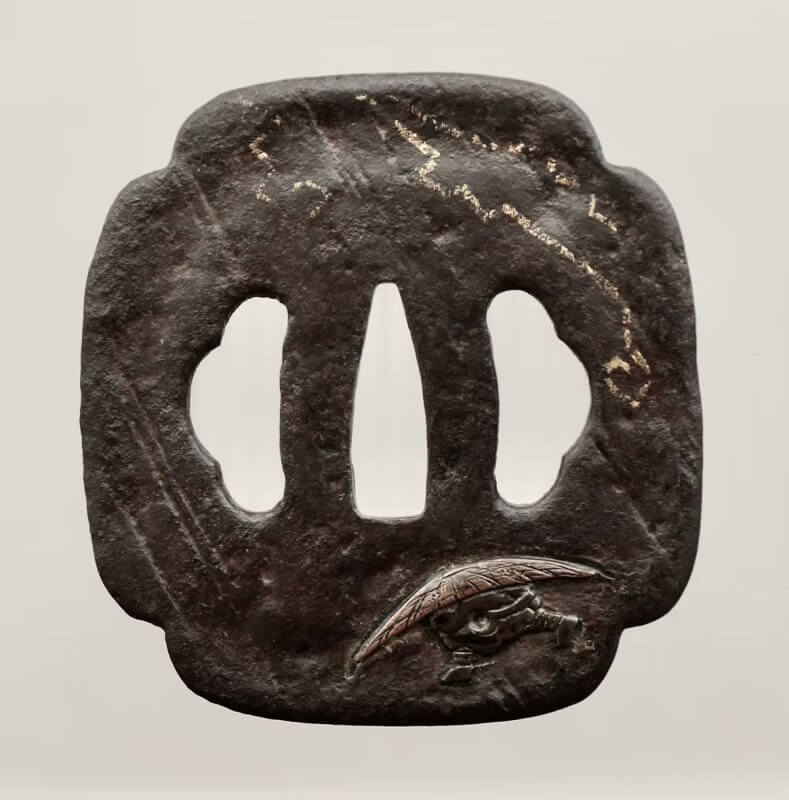
Kanayama tsuba are characterized by geometric designs and by the abundant presence of dark, granular tekkotsu along the mimi; most examples are relatively small, measuring around 7 cm. Muromachi-period Kanayama tsuba typically display bold, clear, and symmetrical compositions; as time progressed, the designs became somewhat more pictorial, and by the Edo period carving in relief was introduced, with the works thereafter referred to as Ōno, after the region to which the craftsmen had relocated.
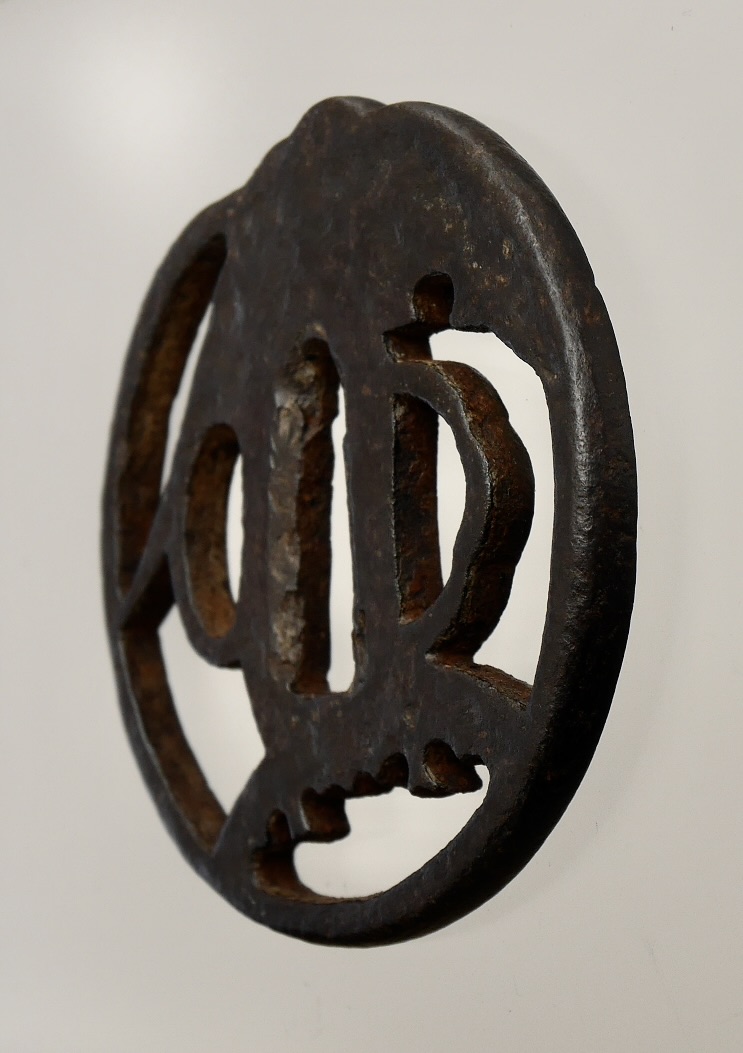
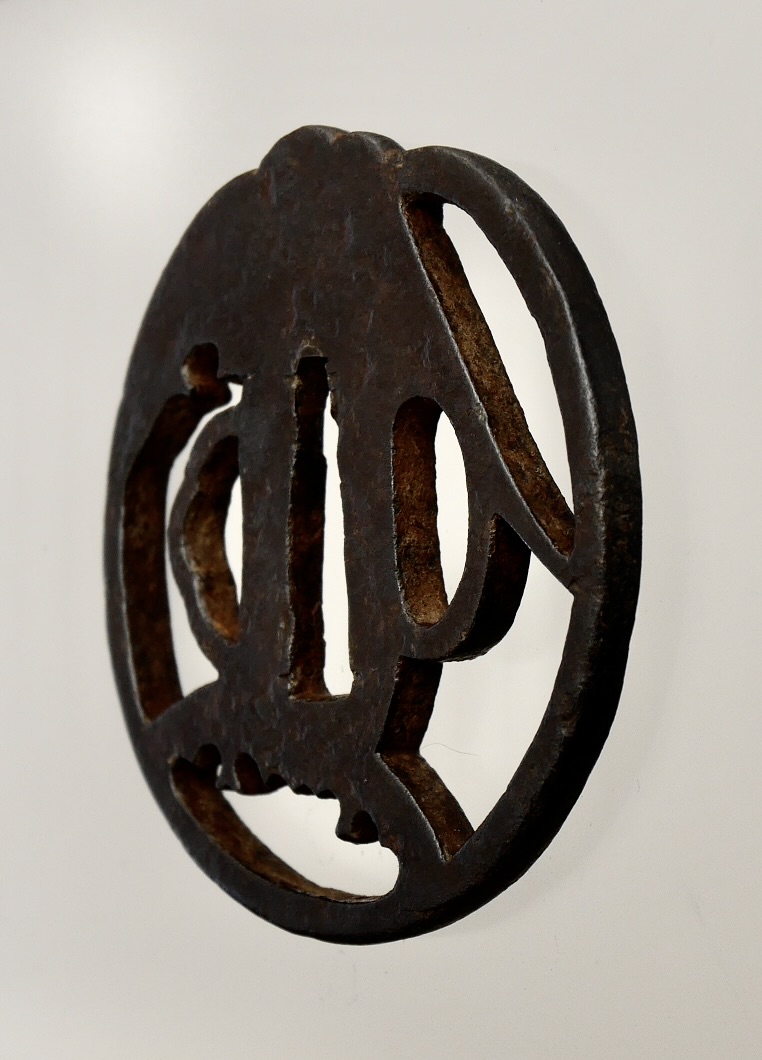
This tsuba represents an intermediate stage between Kanayama and Ōno. Although its design shows a more pictorial tendency, it does not yet incorporate relief carving, and is therefore considered a Kanayama tsuba of the Momoyama period.
The iron is dark and lustrous, with visible tekkotsu along the mimi, and the strong, masculine character conveys the distinctive presence unique to Kanayama work, making this an engaging piece to appreciate.