Design of Reeds and Geese
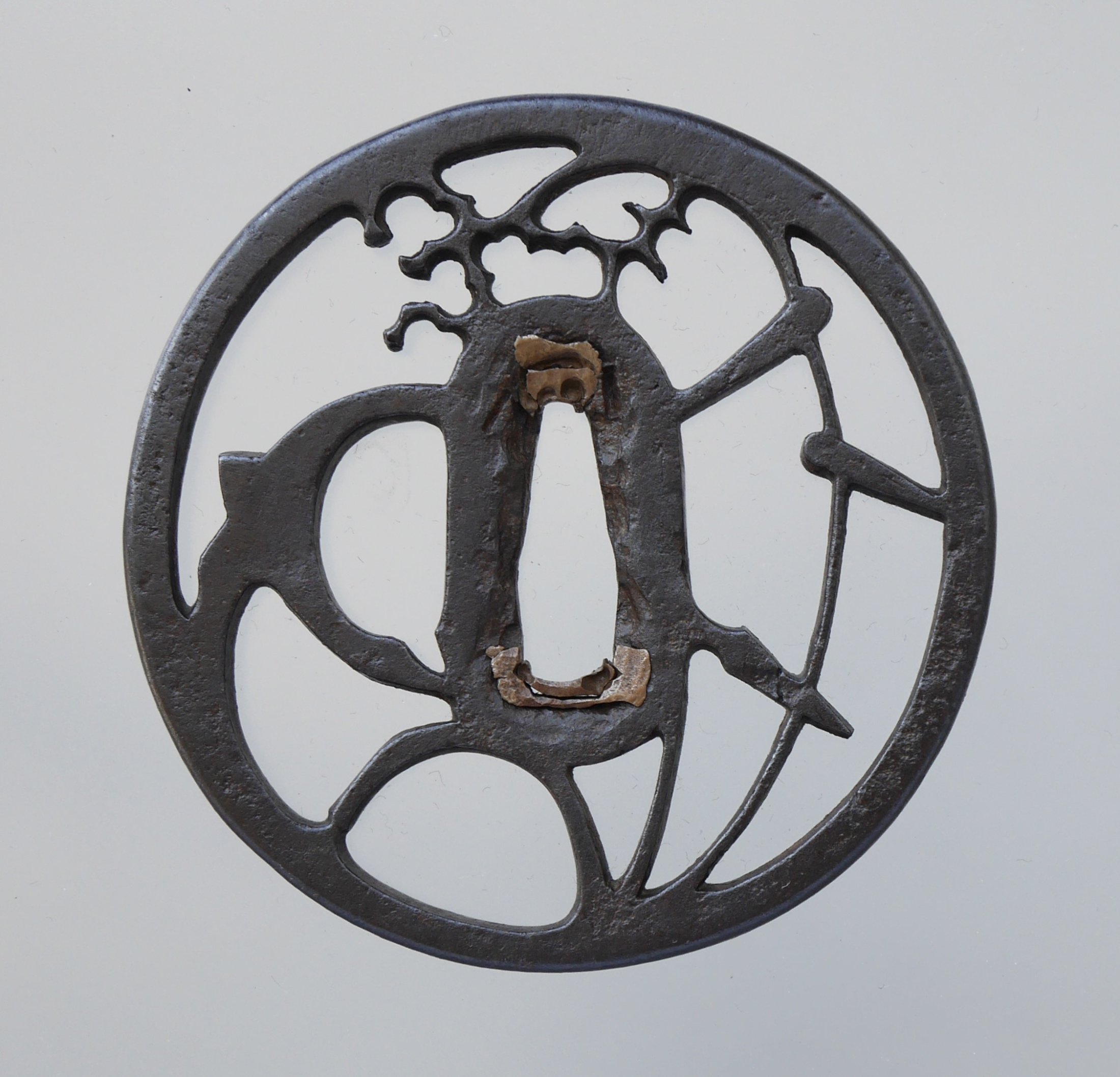
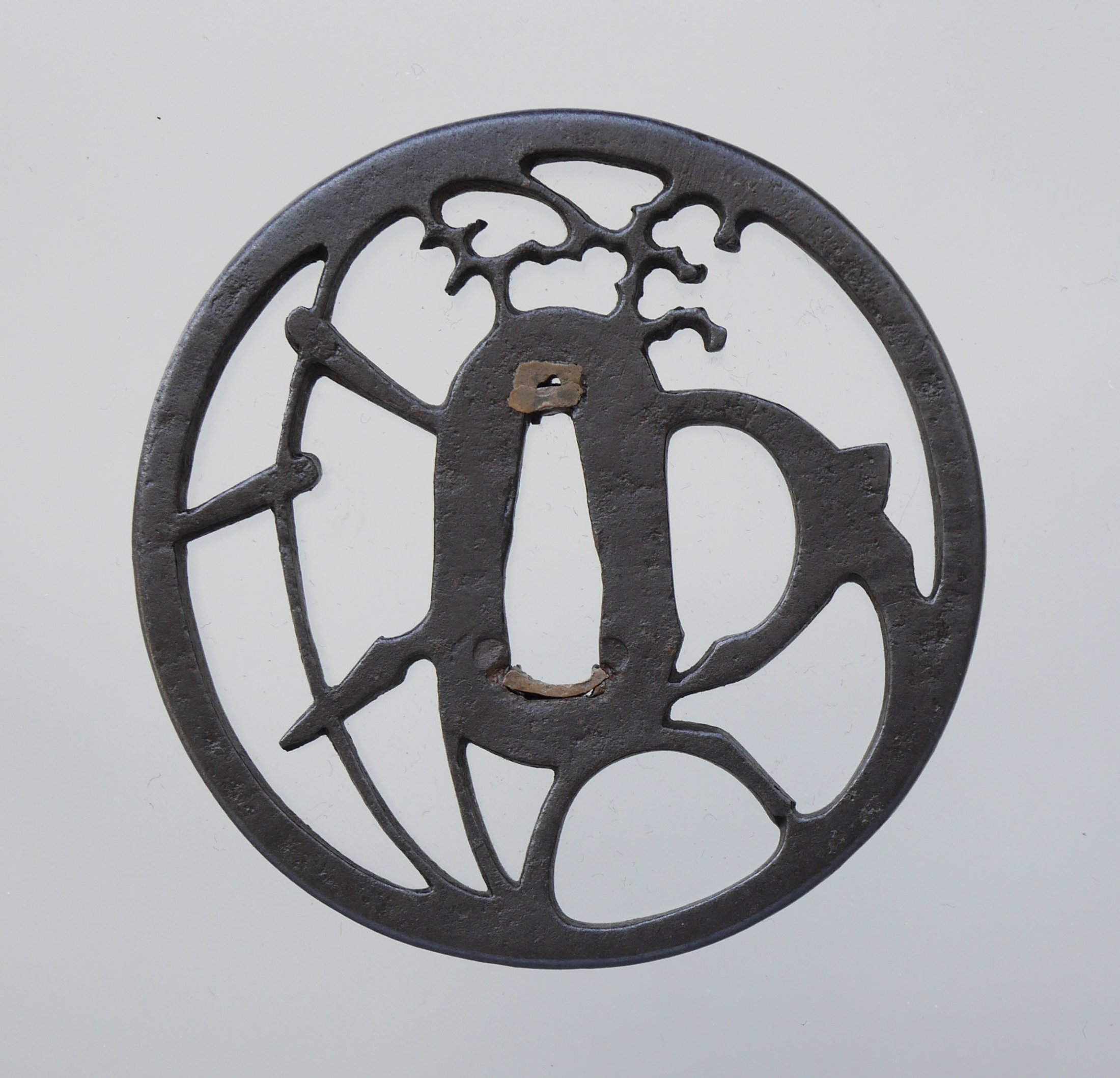
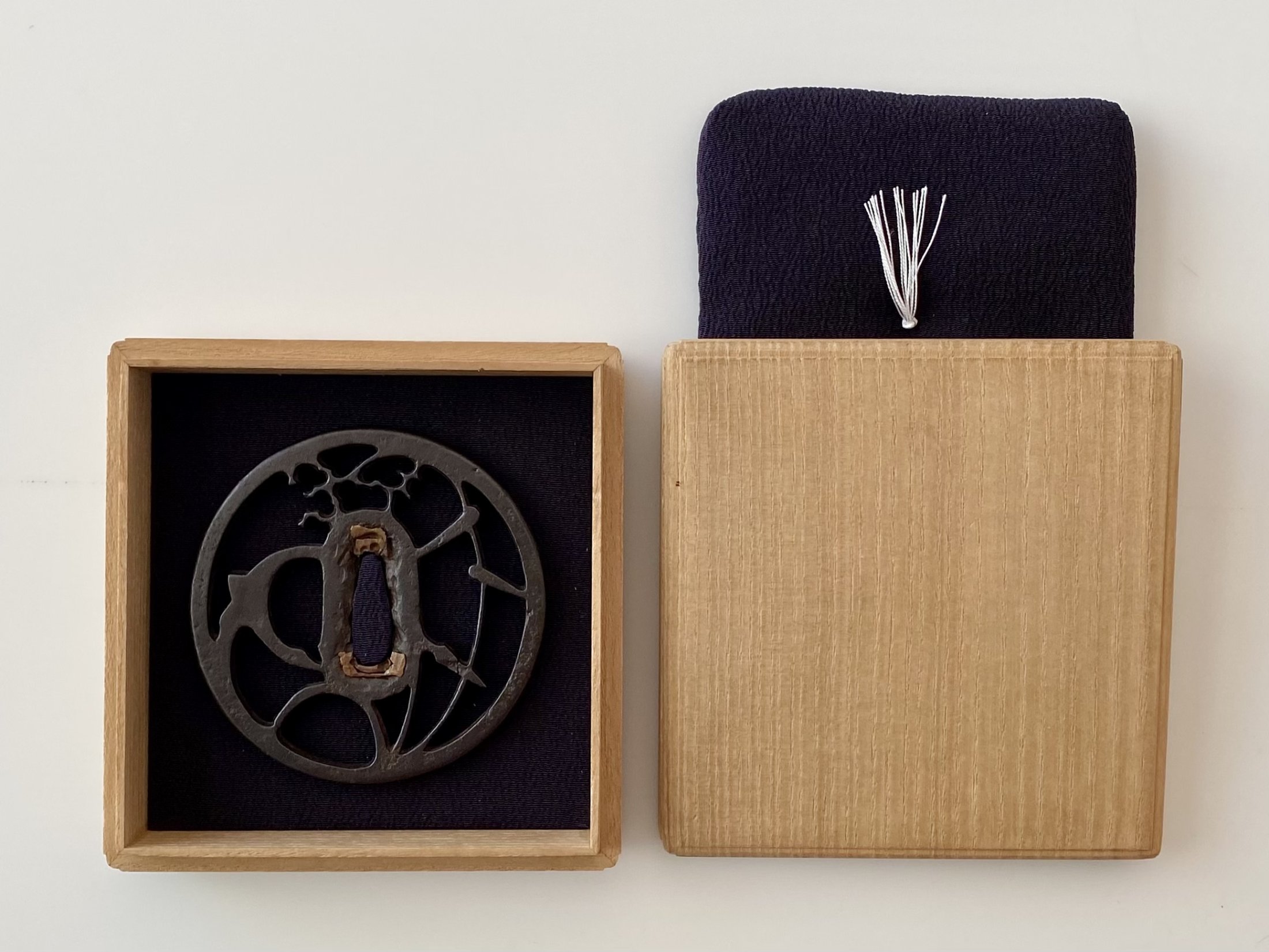
The term Owari sukashi was not used in earlier periods, but was introduced in the early modern era when Akiyama Kyūsaku Ou undertook the classification and organization of sukashi tsuba. Although it remains uncertain whether these works were actually produced in Owari, the yakite technique and the presence of tekkotsu closely resemble those found in the works of Owari-associated masters such as Yamakichibei, Hōan, and Sadahiro. For this reason, Owari tsuba have been regarded as their predecessors.
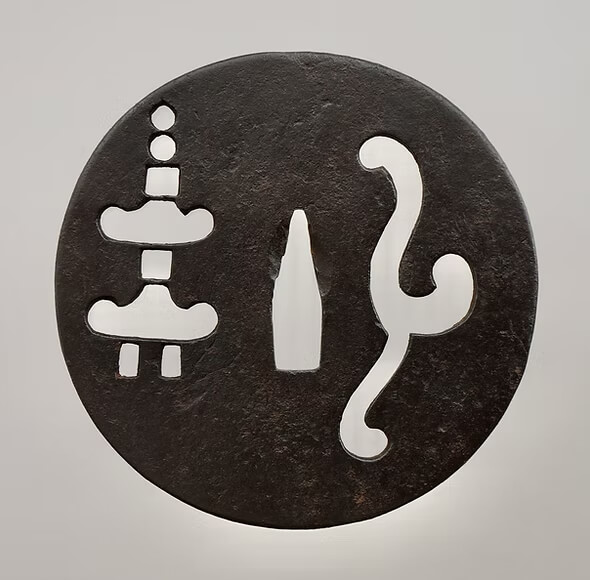
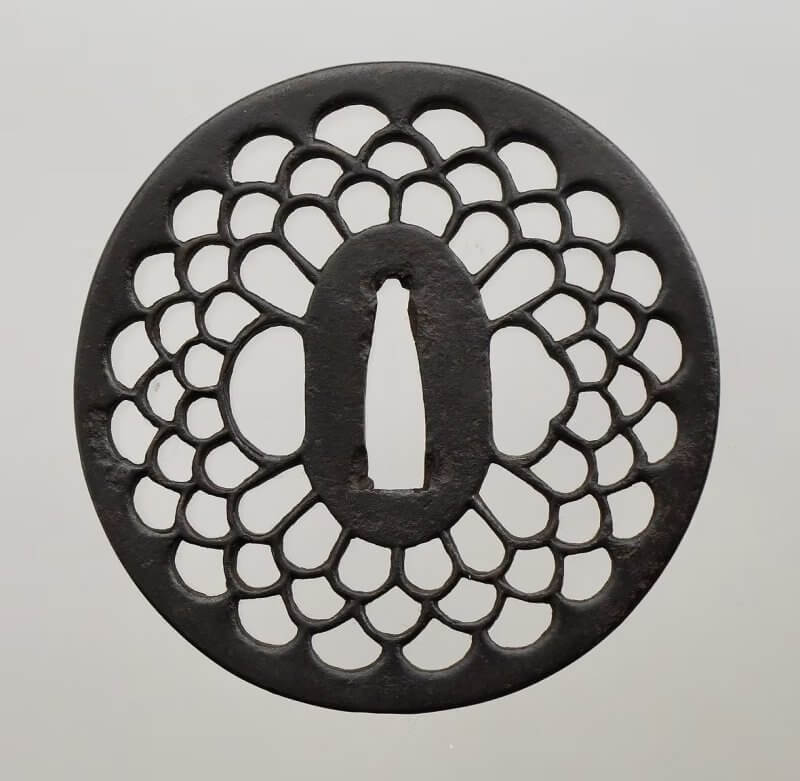
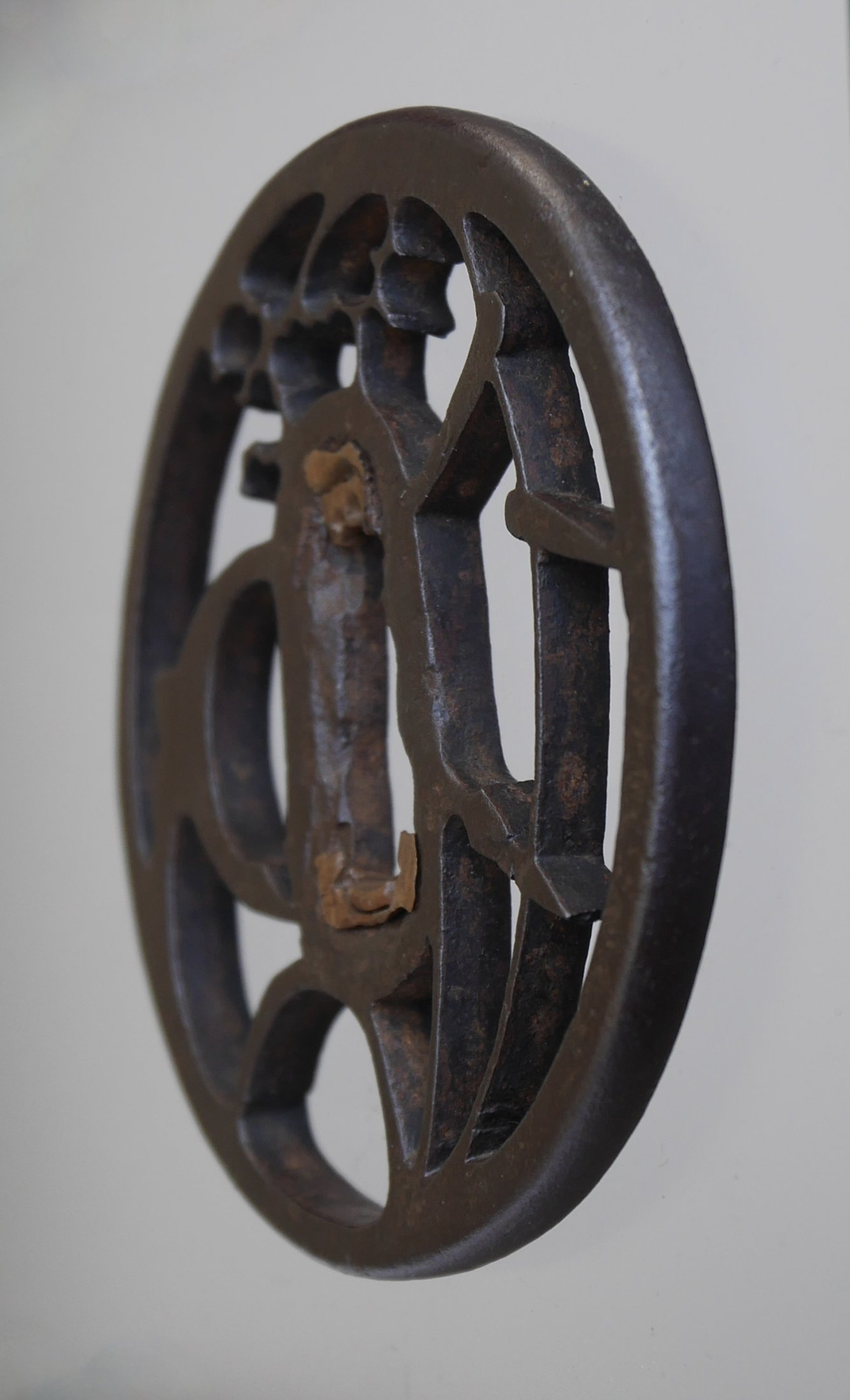
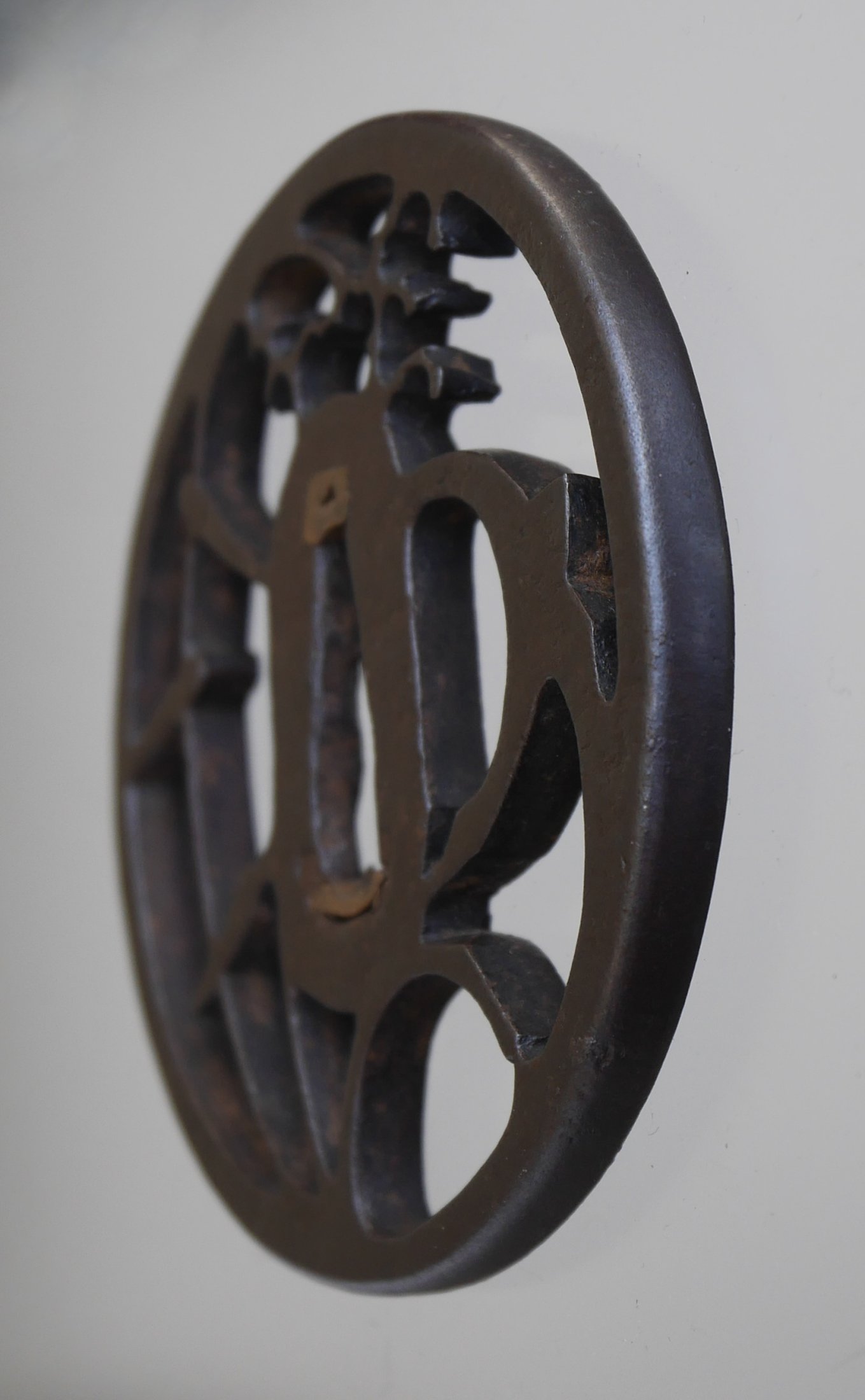
Owari sukashi tsuba of the Muromachi period are typically characterized by an iron maru-gata (round form) with a slightly concave center, kaku-mimi ko-niku (in between square and around-rim), and bold, largely symmetrical sukashi designs finished with tsuchime incorporating visible tekkotsu.
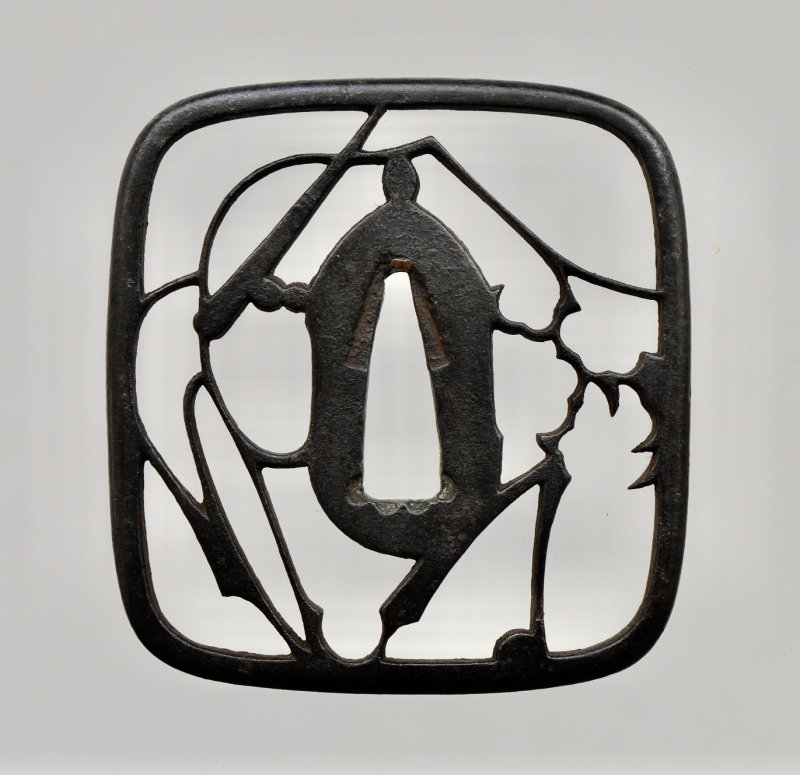
While this tsuba follows such Owari traditions in its slightly concave center, kaku-mimi ko-niku, and tsuchime finish, it also presents a new, more pictorial approach to design. This likely reflects the increasingly active cultural exchange between regions during the Momoyama period, through which the refined sensibilities of Kyō sukashi may have been transmitted.
Across the dark, lustrous iron surface, geese and reeds are rendered in a carefully executed and dynamic openwork composition. Numerous tsuchime and tekkotsu can be observed along the mimi and across the surface, contributing greatly to the character of the piece.
Compositions of this Musashino type can also be seen in later Akasaka tsuba; however, this work is considered an important precursor to those later developments, making it especially significant.