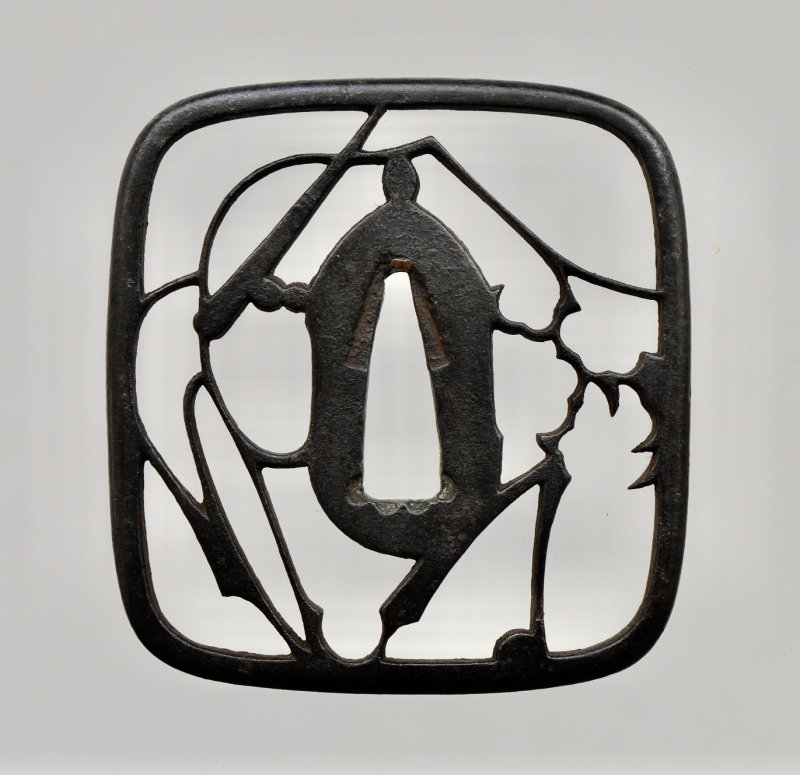
Design of Iris and Eight bridges
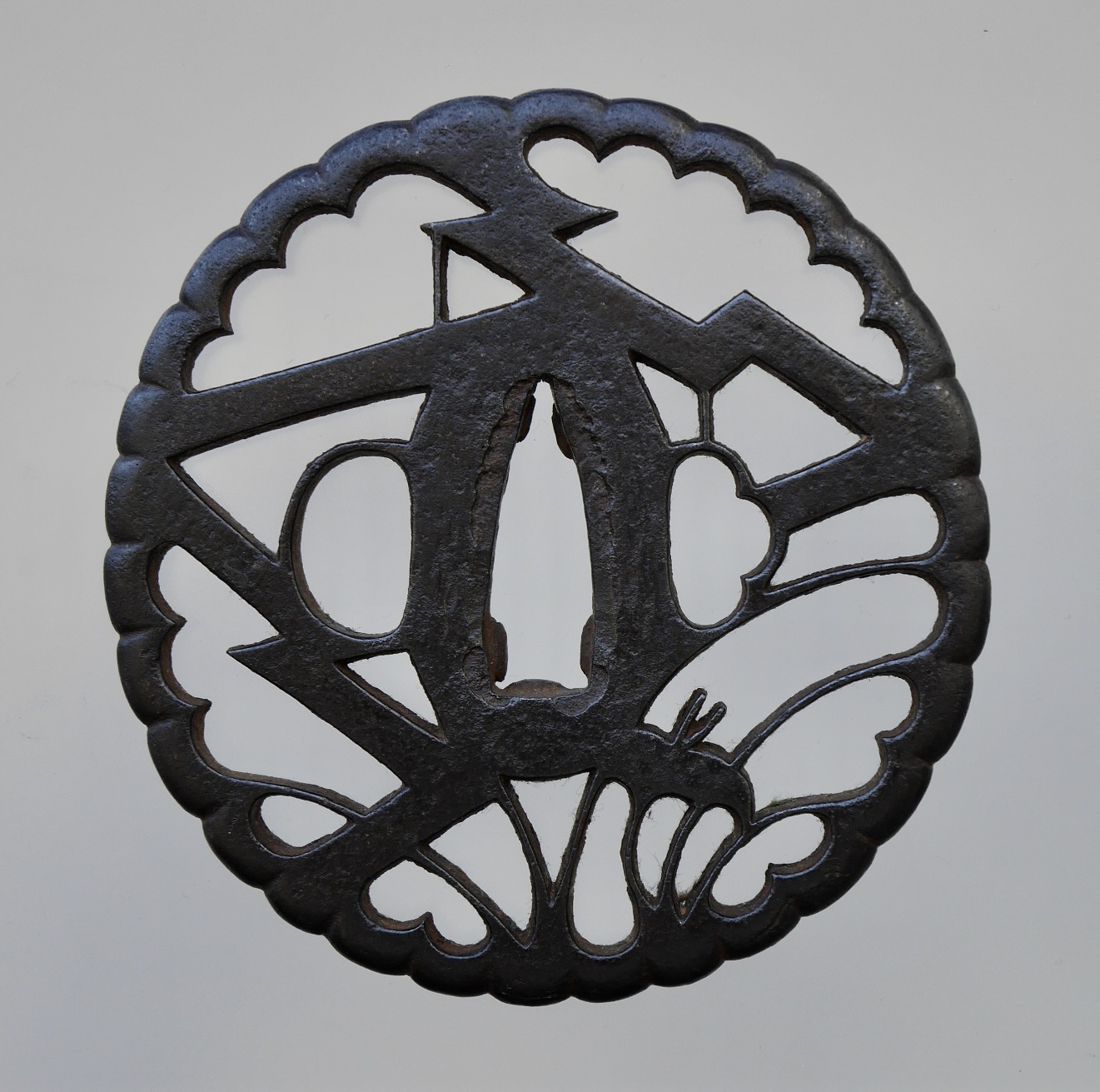
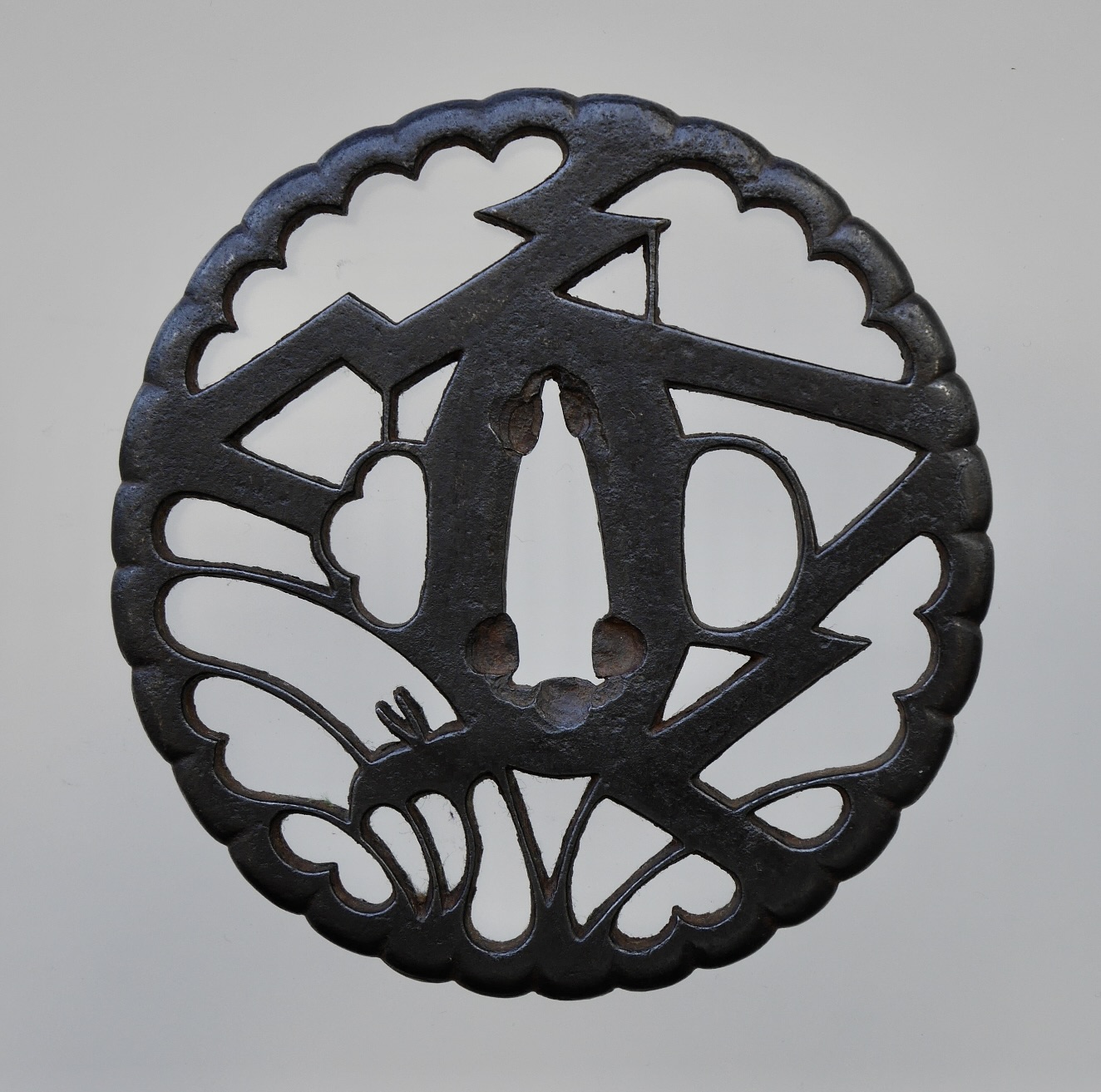
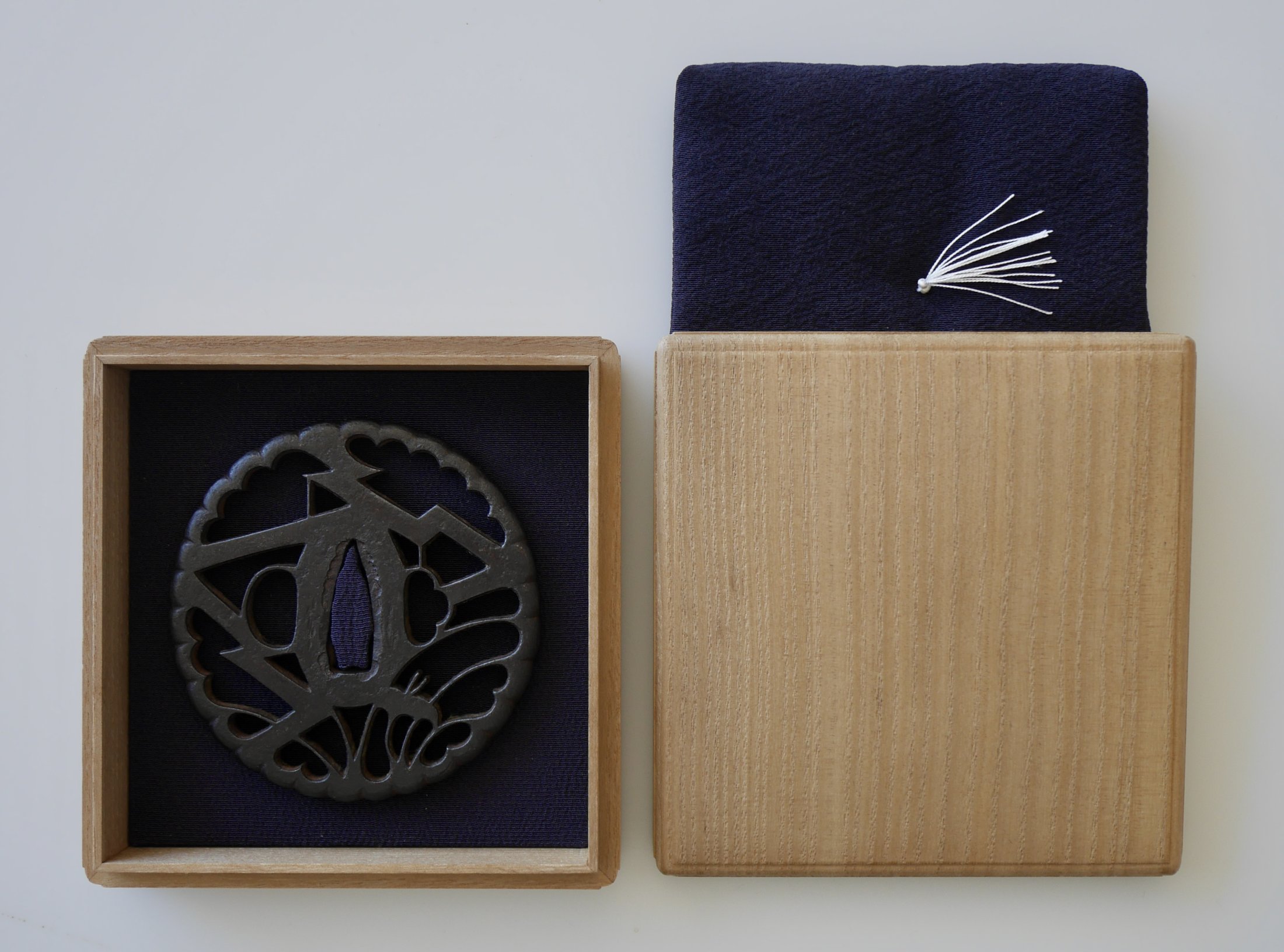
Akasaka tsuba were produced in Akasaka, Edo which was a rapidly developing new urban center—from the Kan’ei era (1624–1644) until Meiji 4 (1871), when the Haitōrei edict prohibiting the wearing of swords was enacted. The tradition began with the Tadamasa brothers, who are said to have originated either from Owari or Kyō. Their early works still retained the spirit of the Momoyama period, with bold and martial characteristics expressed through tsuchime finishes and yakite. From the time of the third-generation Tadatora in the Genroku era (1688-1704) onward, however, changing tastes led to the production of tsuba with migaki-ji (polished surfaces) and a gentler atmosphere.
Beginning with the fourth-generation Tadatoki, the Akasaka school also began producing works in the style of Higo tsuba, which at the time were regarded as innovative and highly admired.
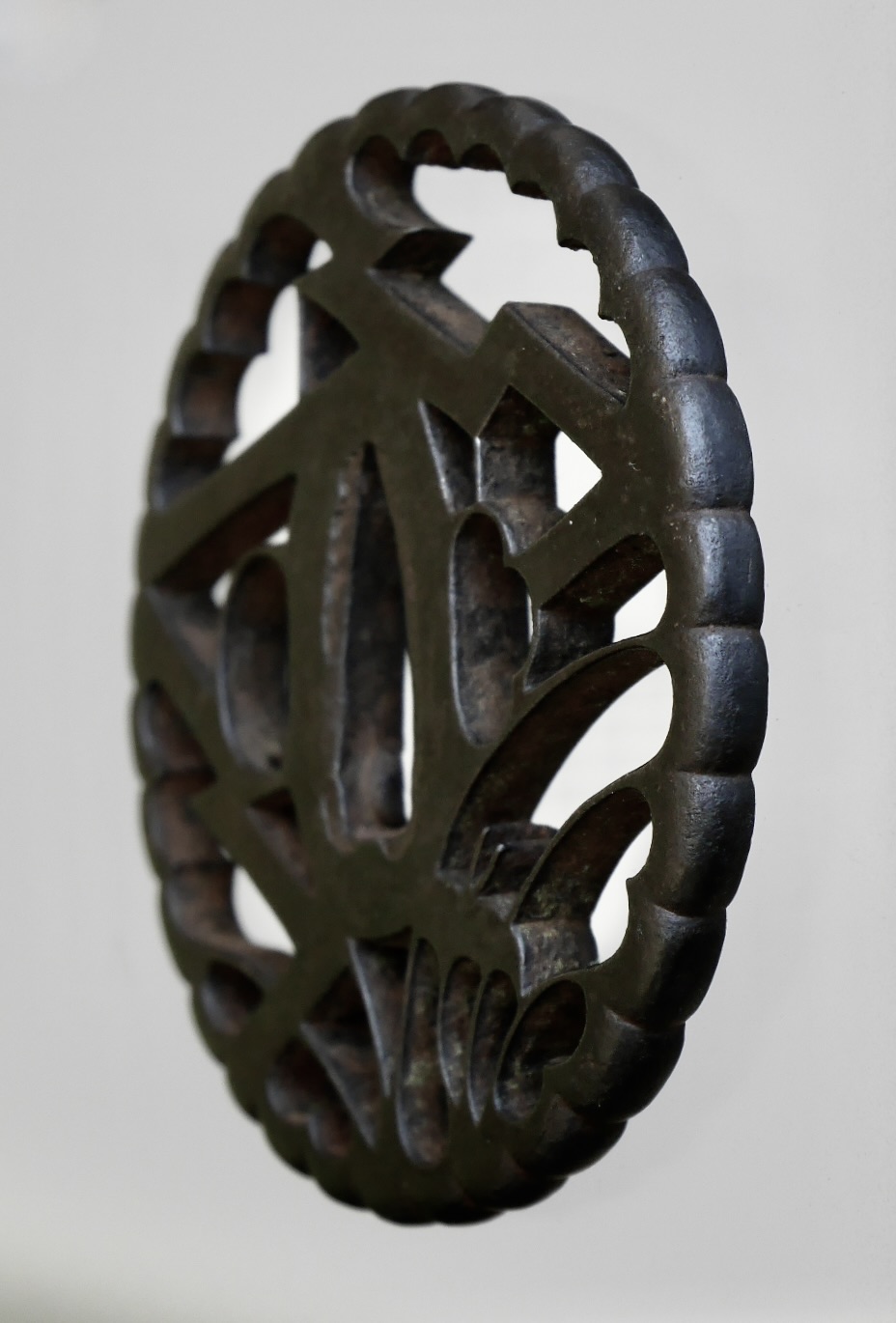
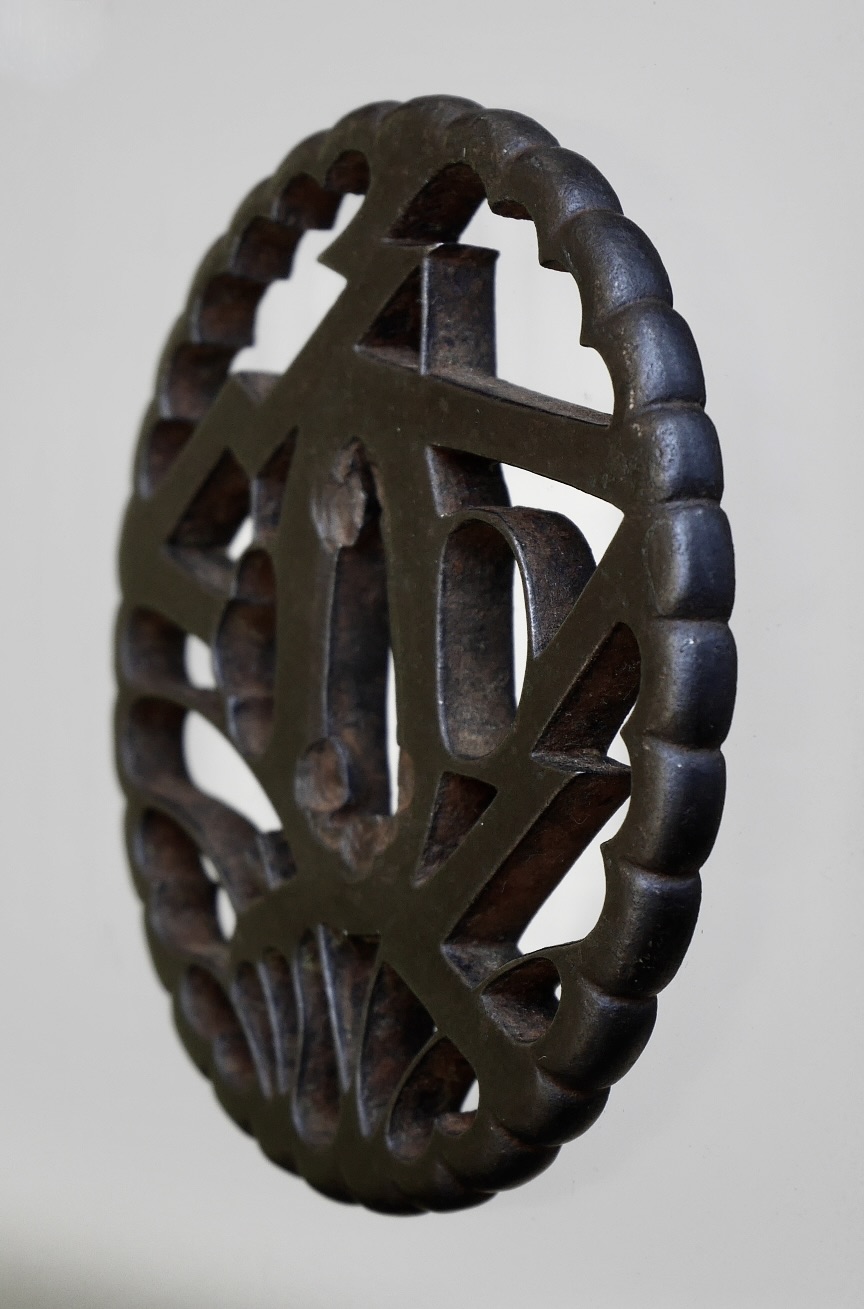
This tsuba is of kiku-gata (chrysanthemum form), with iris and eight bridges rendered in sukashi. While the design derives from the Hayashi school of Higo, the thicker construction and raised central profile are characteristic of Akasaka work, giving the piece a far more bold and imposing impression than its Higo counterparts.
From the third-generation Tadatora onward, Akasaka tsuba generally came to feature polished surfaces; however, this example displays yakite, and linear tekkotsu appear along the mimi. These are precisely the characteristics associated with Tadatoki’s individual style, and many signed works in this manner are known.
The sukashi is carefully executed, well balanced, and at the same time possesses a dignified strength. In every respect—the excellent iron quality, generous size, substantial thickness, and commanding presence—this is a masterwork of the fourth generation.