Design of Coiled Rope and Arabesque
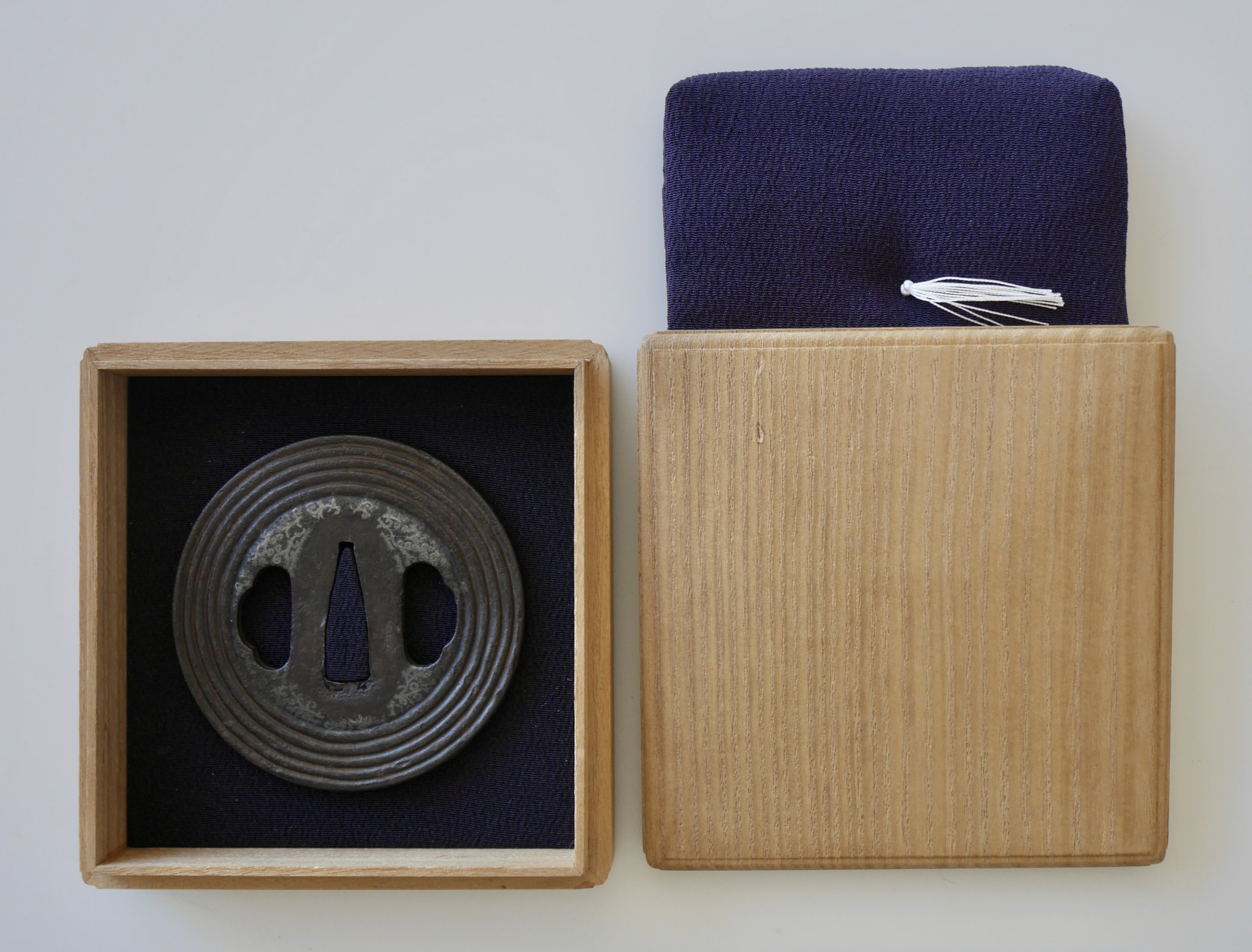
The first-generation Kanshirō was the younger brother of a Shinto priest serving at the inner and outer shrines in Futamata village, Tango Province. During the Hosokawa family’s time in Buzen Kokura, he became a disciple of Hirata Hikozō. When the Hosokawa clan was transferred to Kumamoto, he accompanied Hosokawa Sansai and settled in Yatsushiro, Higo Province. After Sansai’s death, he moved to Kumamoto, where he received a stipend of twelve persons’ allowance from the Hosokawa family.
Born in Keichō 18 (1613), he died in Genroku 6 (1693) at the age of eighty-one. All of his works are unsigned, and he produced tsuba and fuchigashira using both iron and soft-metal alloys.
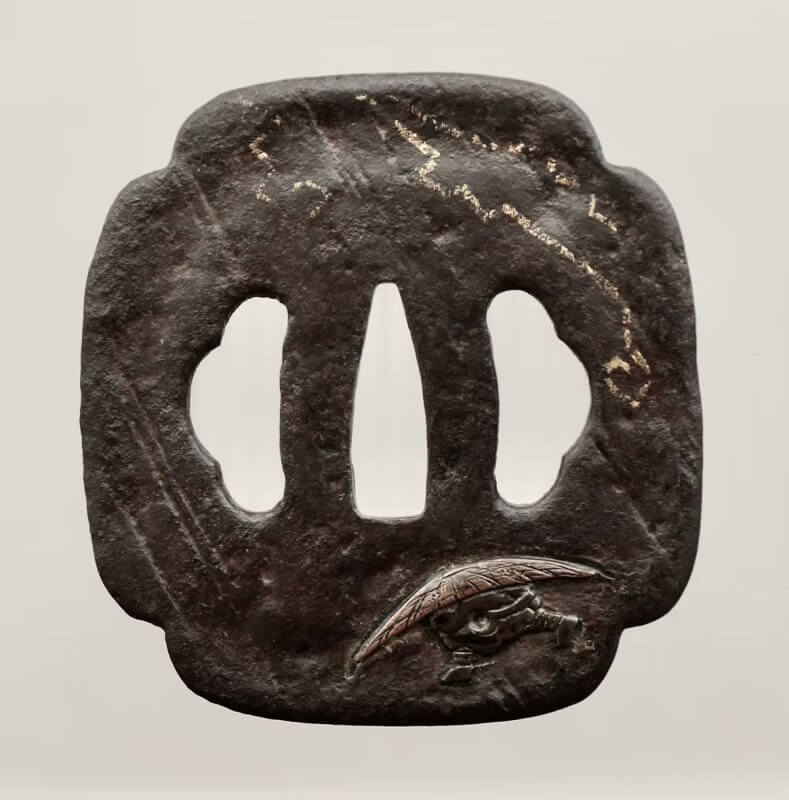
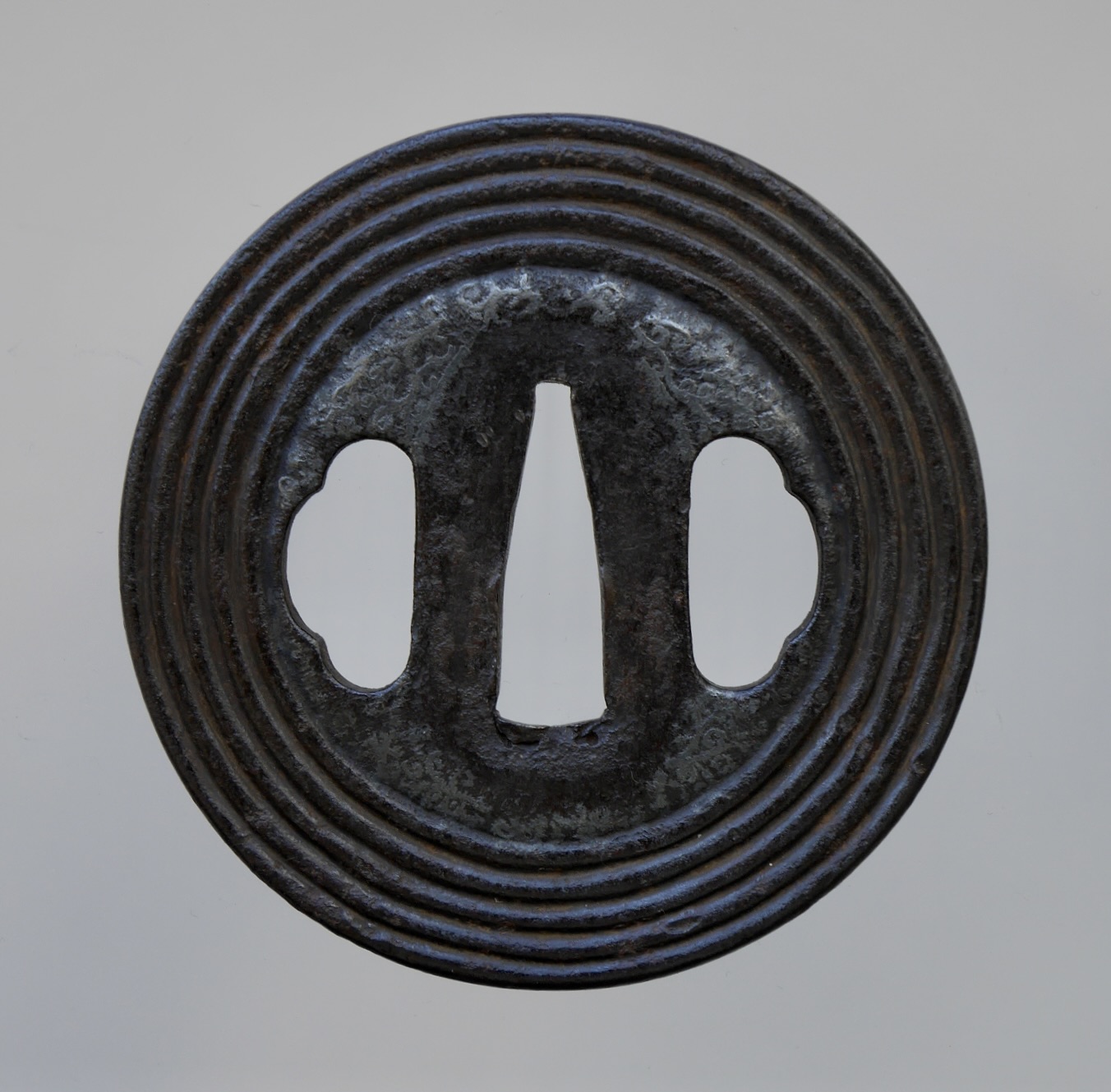
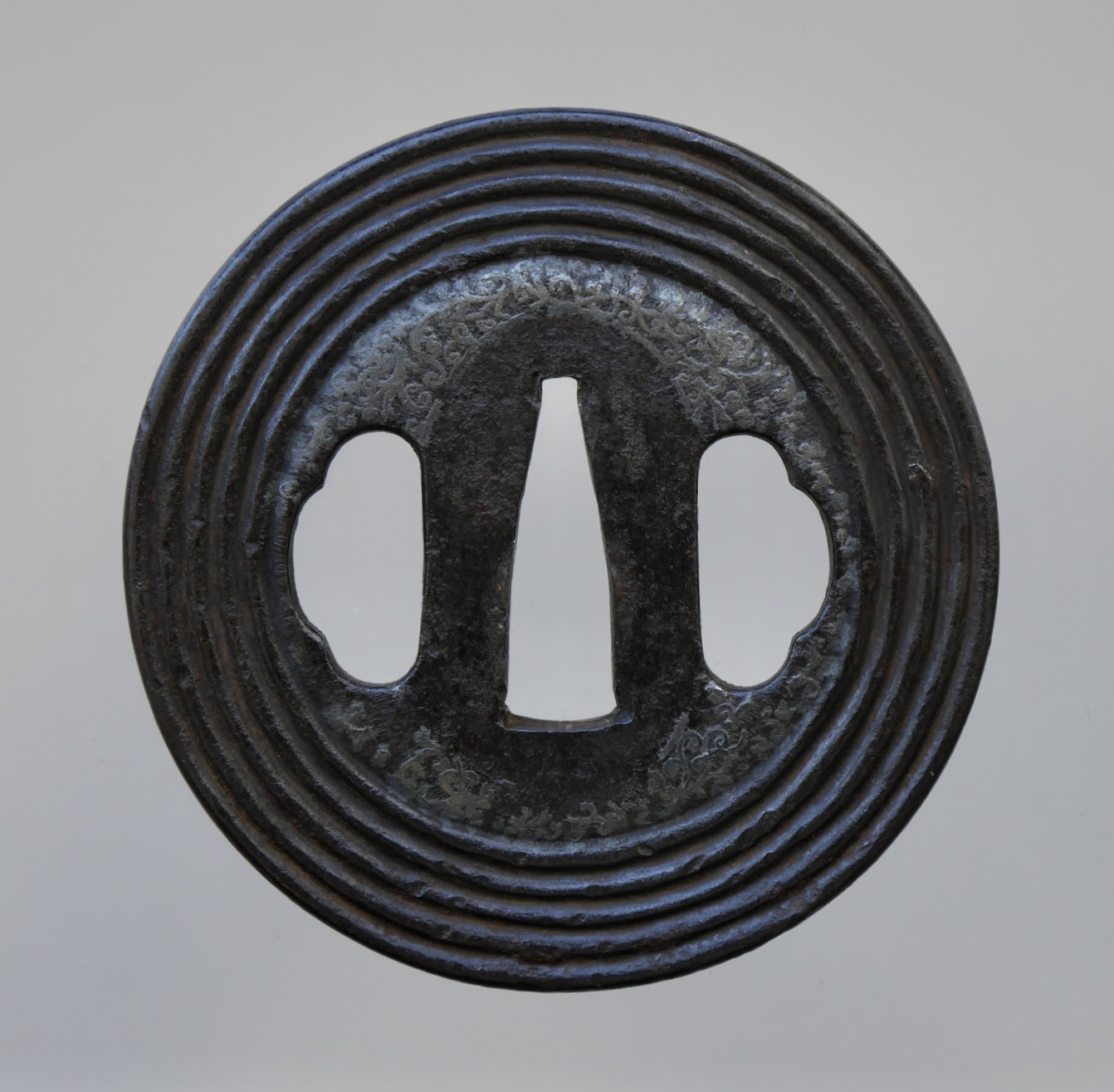
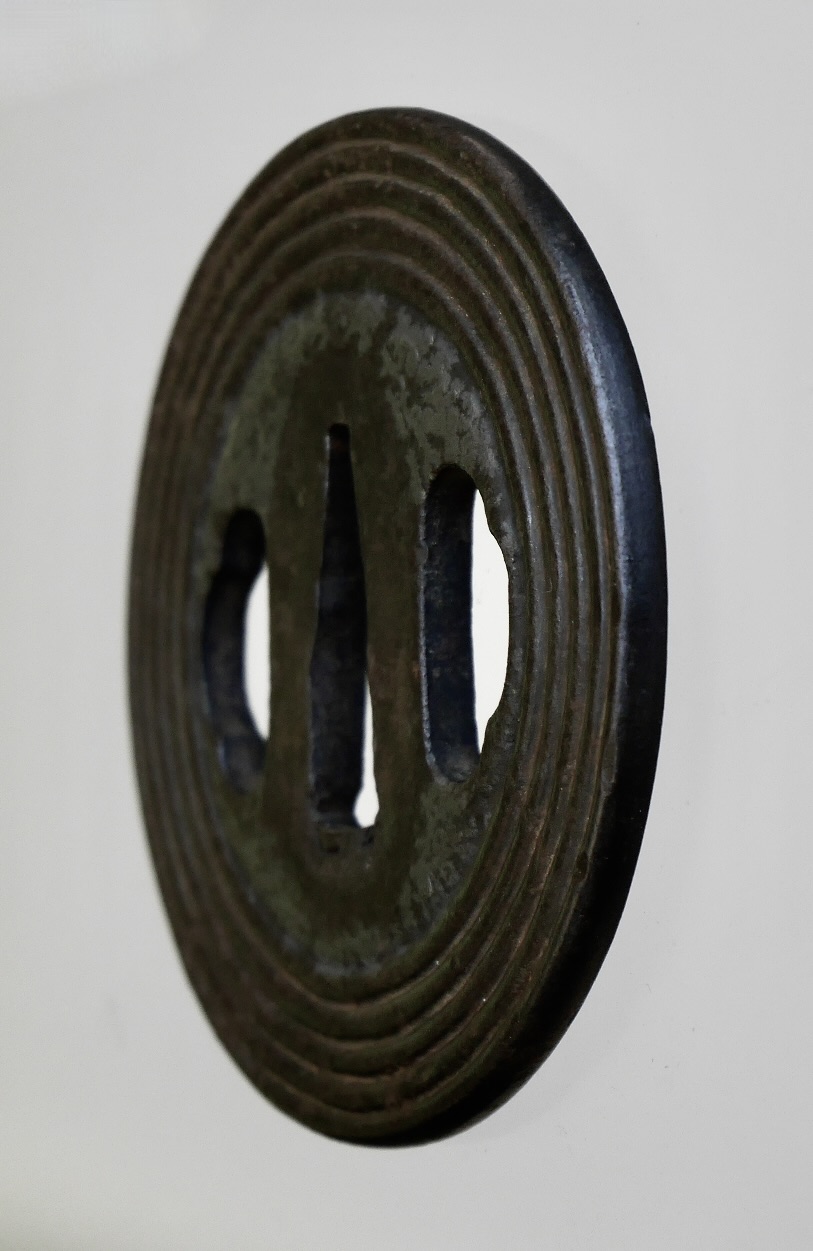
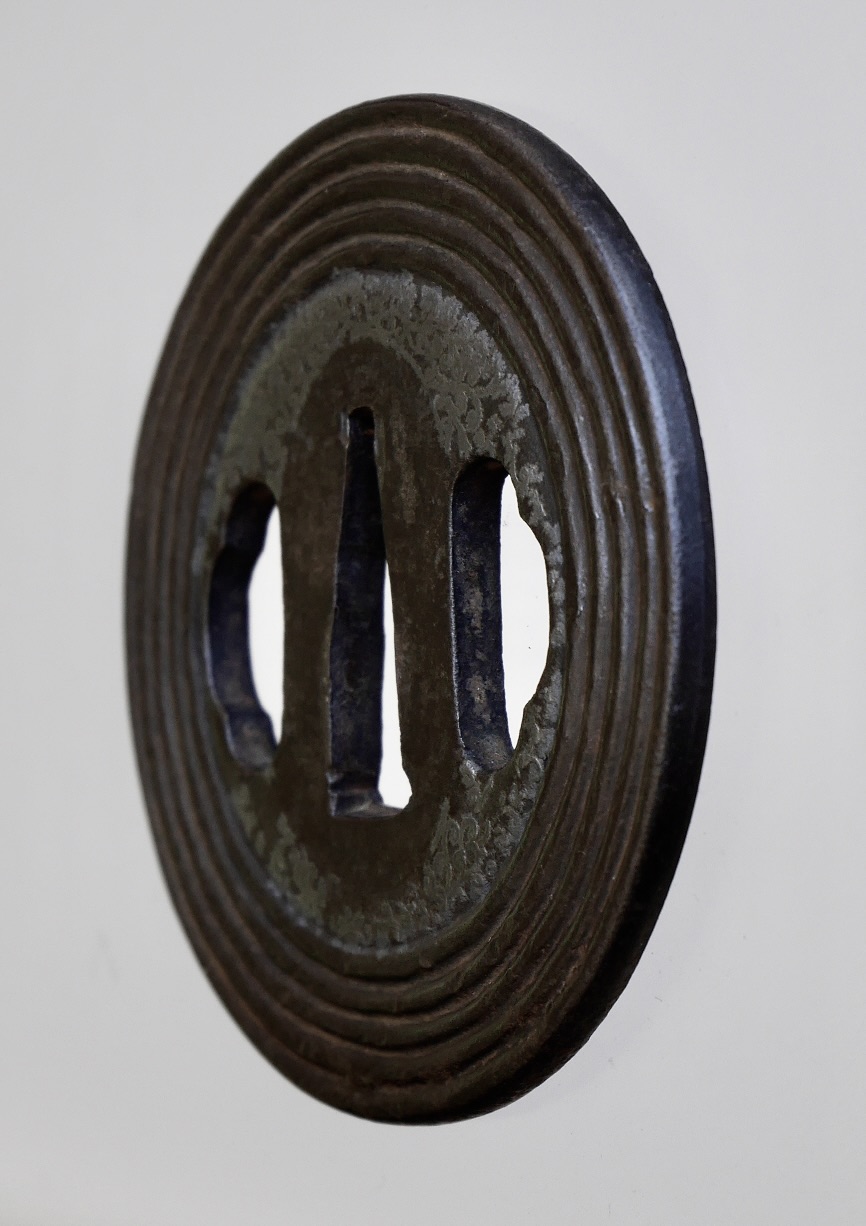
This tsuba represents one aspect of the first-generation Kanshirō’s style, employing a design in the manner of Hikozō, with arabesques rendered in silver nunome-zōgan across the surface. The hitsu-ana on both sides are also shaped in the suhama form, further revealing the influence of Hikozō.
In Higo, this type of orderly concentric composition is referred to as “okinawa” (coiled rope). The arabesques executed in silver inlay across the ground are single-lined and intermittently broken, a feature seen only in works by the first-generation Kanshirō.
The overall balance is exquisite, and within its refined composition there exists a subtle sense of movement and depth of character, resulting in a work that reveals increasing richness upon continued appreciation.