Design of Rulers and Weights
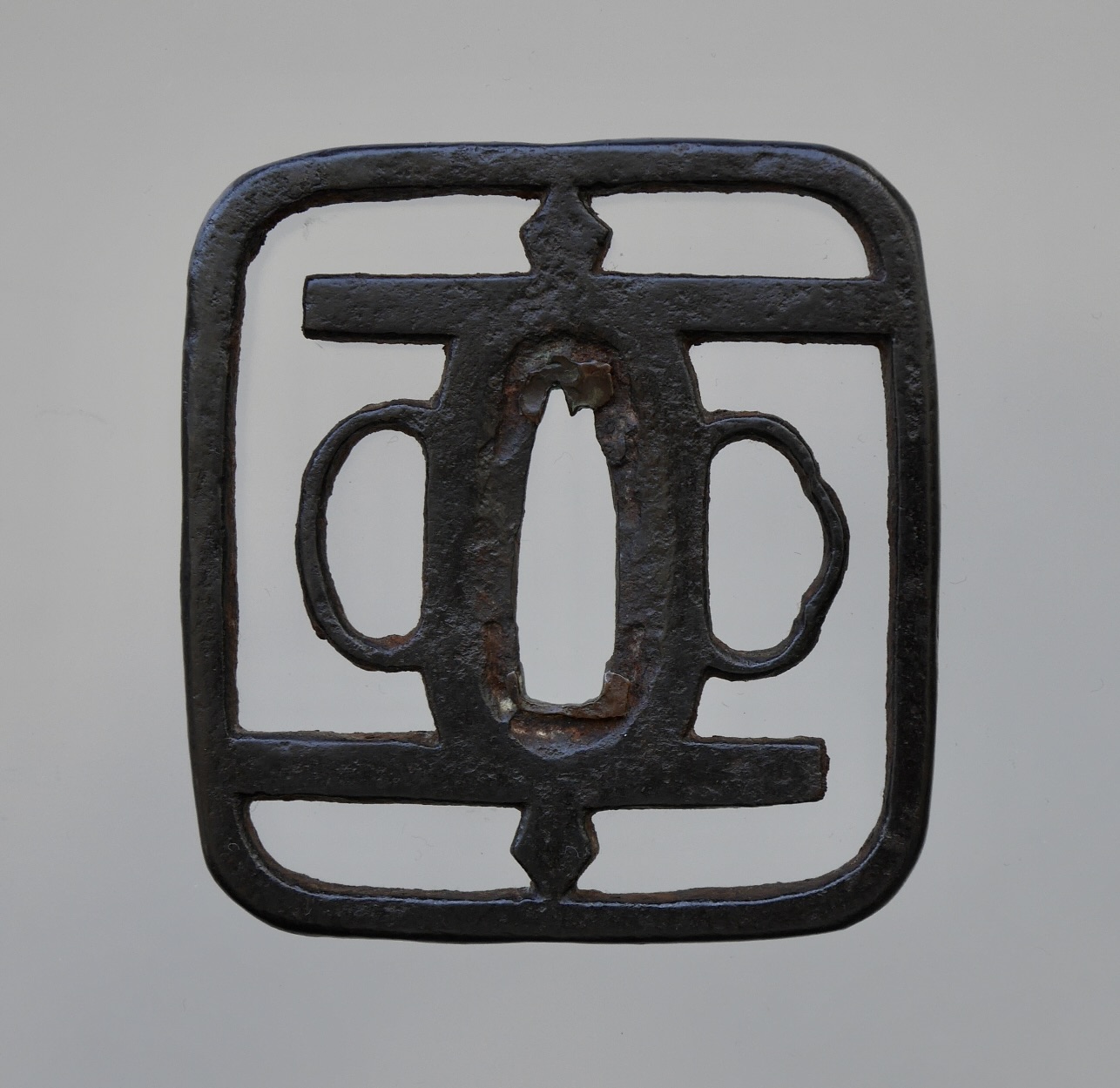
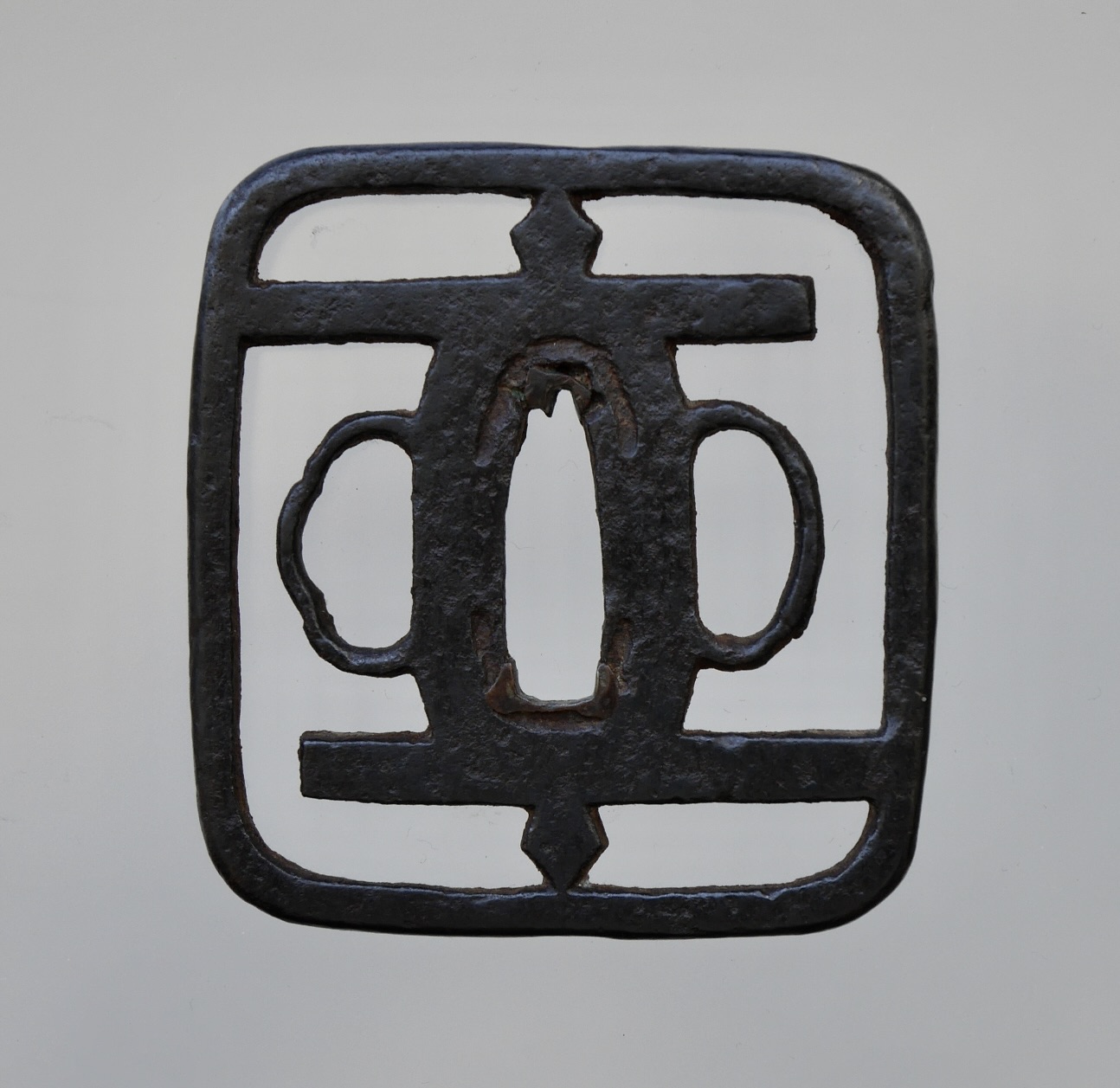
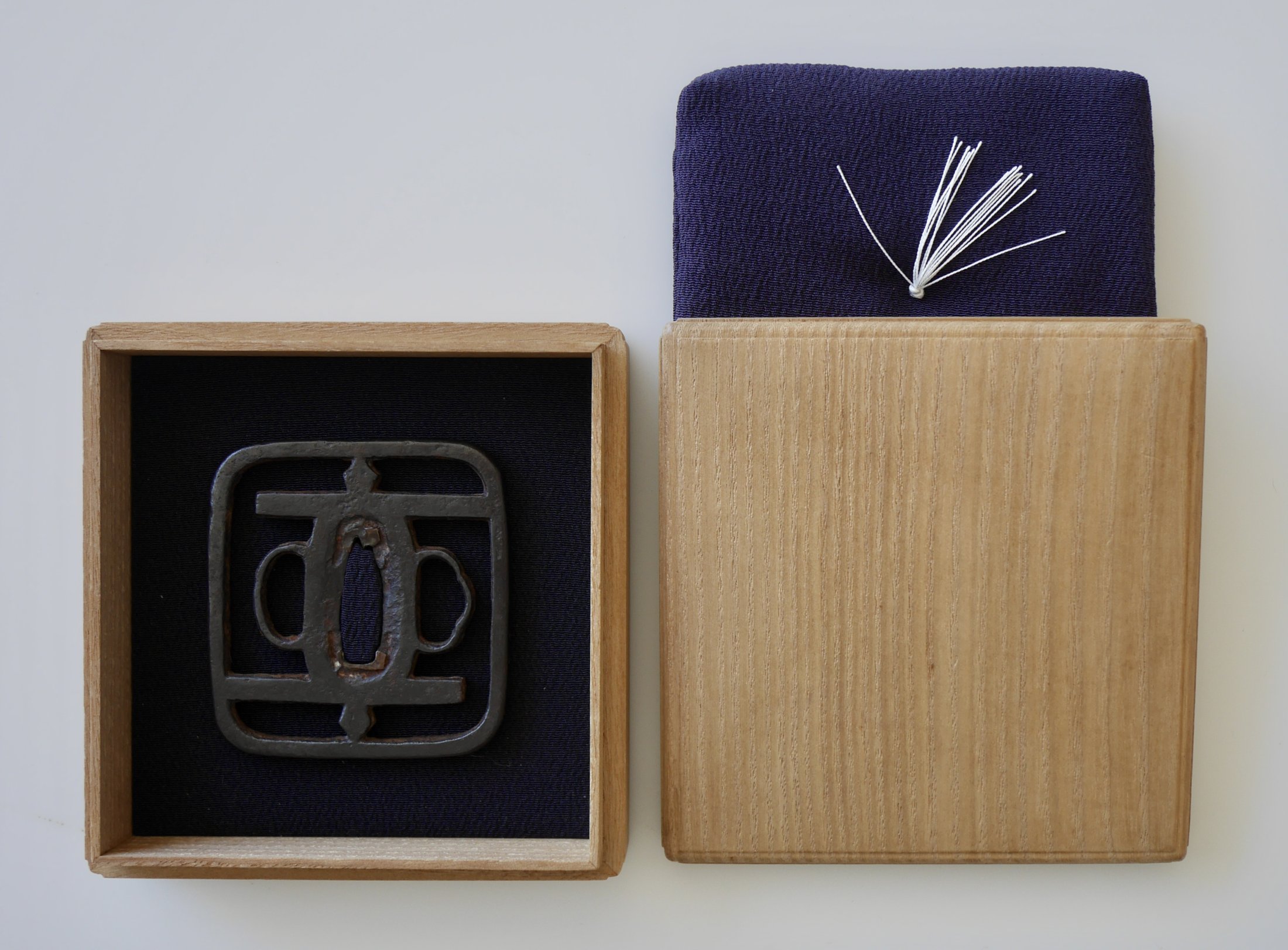
Kanayama tsuba are already recorded as a distinct category in the Edo-period text “Tōban Shōkan Kōketsu” by Matsumiya Kanzan. They are thought to have originated in the Kanayama area of Ōno no shō in Owari Province, an area then governed by the Saji clan, around the mid-Muromachi period. The Kanayama tradition is thought to have come to an end in the Momoyama period, and it is believed that in the Edo period such works came to be known as Ōno tsuba.
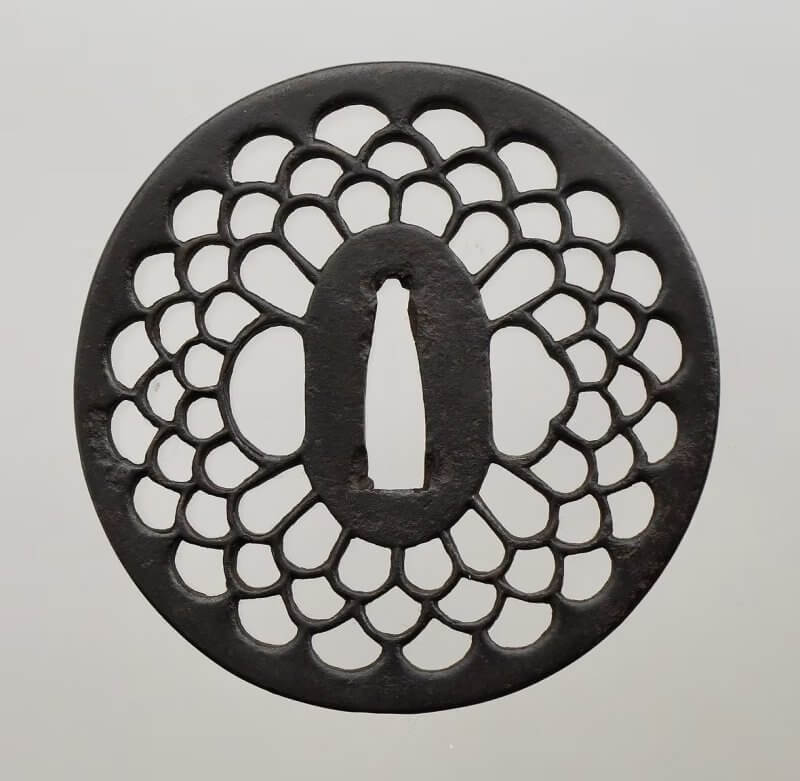
Kanayama tsuba are characterized by geometric designs and by the abundant presence of dark, granular tekkotsu along the mimi; most examples are relatively small, measuring around 7 cm.
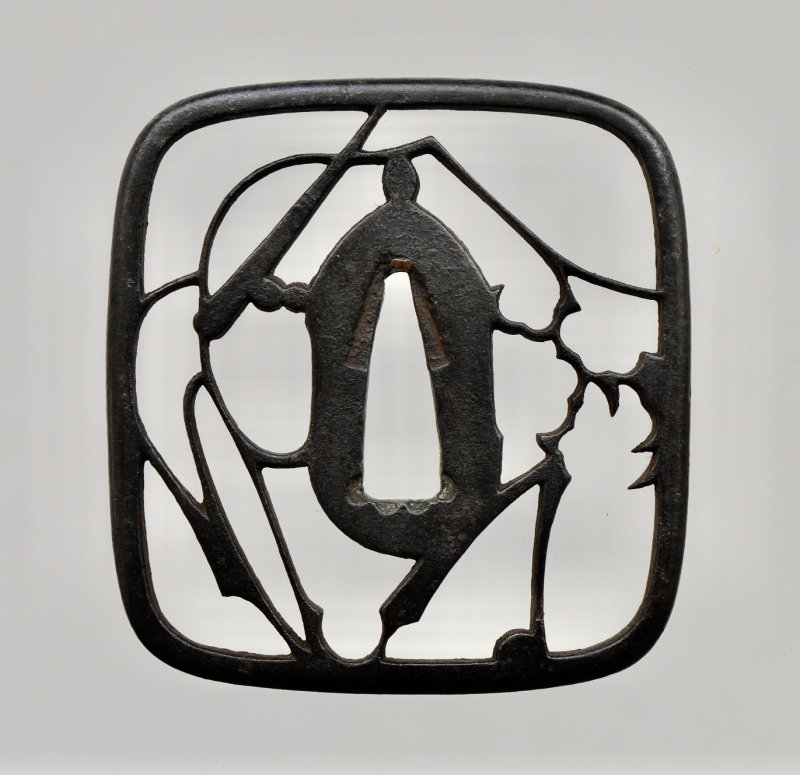
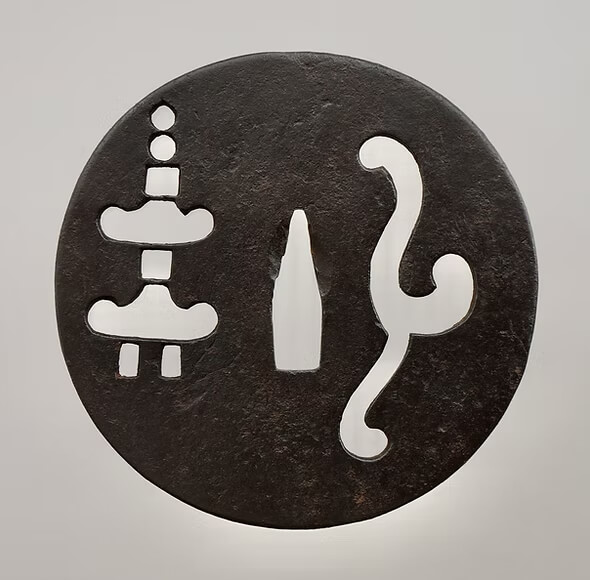
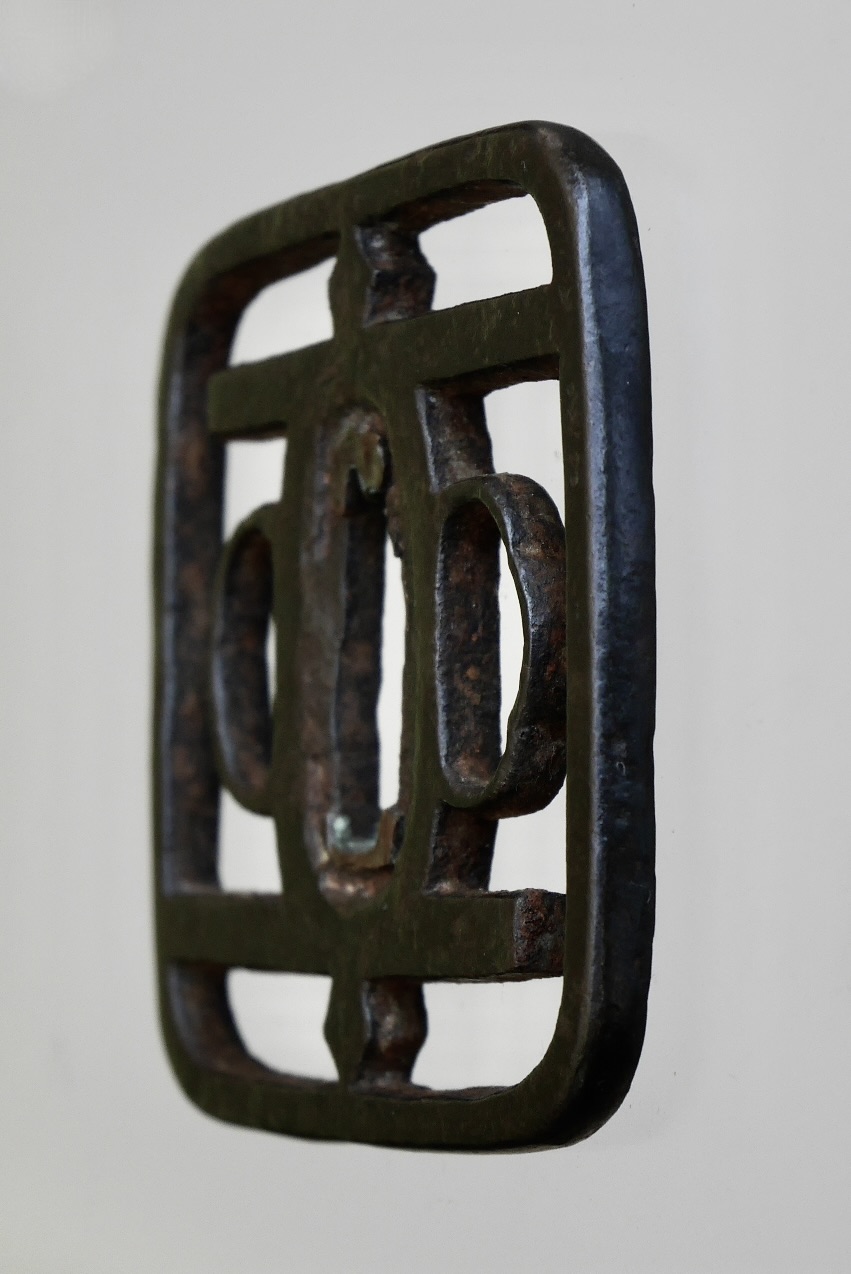
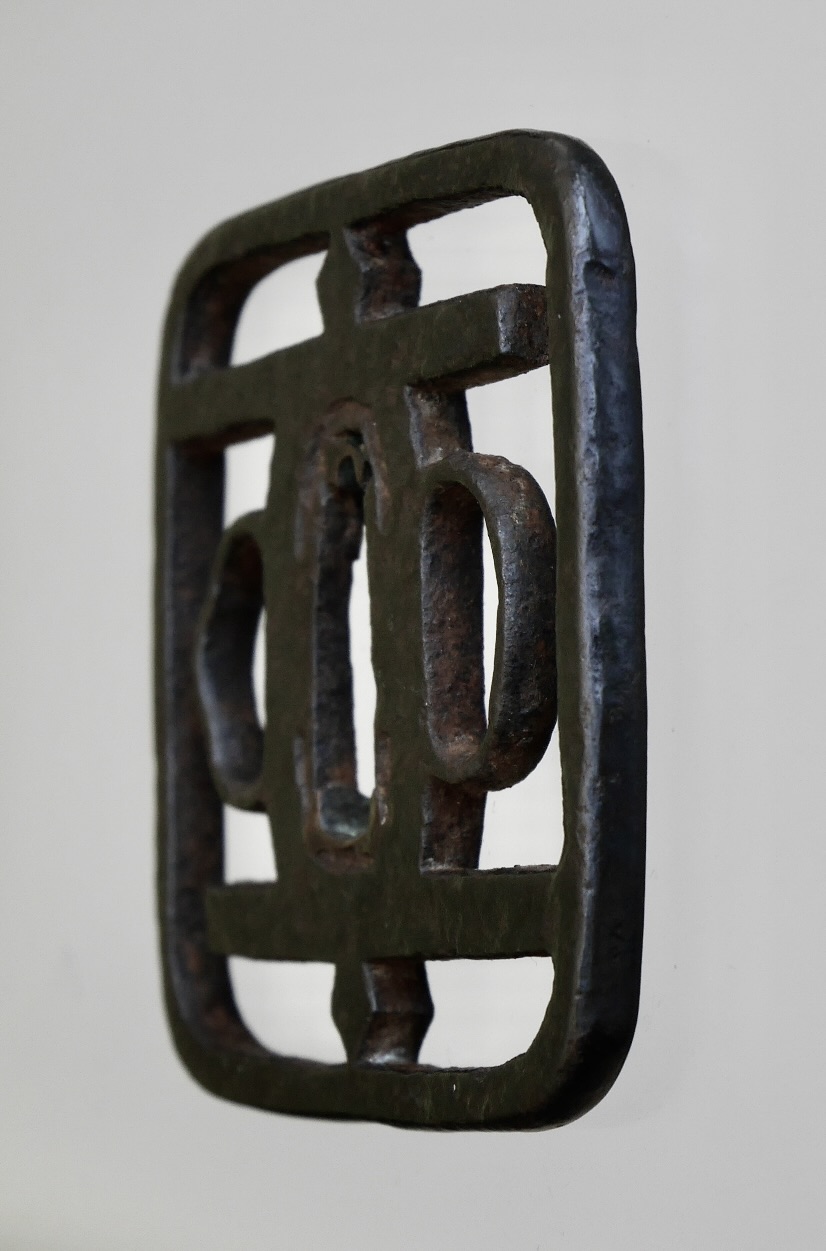
This tsuba is of nadekaku-gata (soft-cornered square form), with slightly rounded corners. Rulers are rendered in sukashi at the top and bottom, while weights are placed above and below them. Perhaps the design alludes to careful calculation and measured judgment.
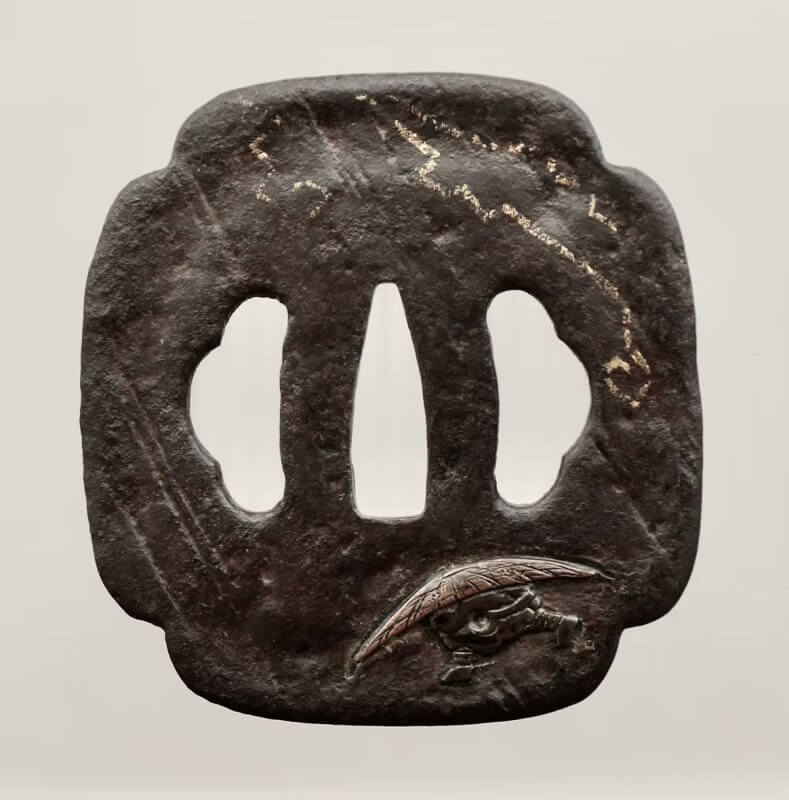
The composition is nearly symmetrical from left to right, representing a characteristic Kanayama arrangement. The iron displays rich activity through tsuchime (hammer marks) and yakite, while dense, dark tekkotsu can be observed along the mimi, resulting in an exceptional finish.
Though small in size, the piece possesses a distinctive presence and sits comfortably in the hand; one can easily lose track of time while appreciating it.