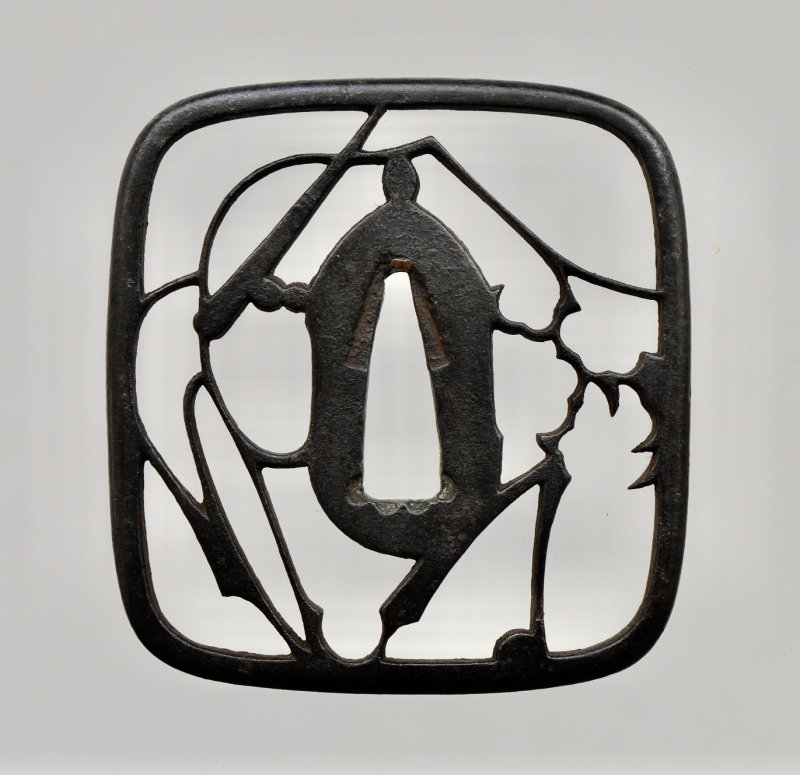
Design of Ivy Arabesque
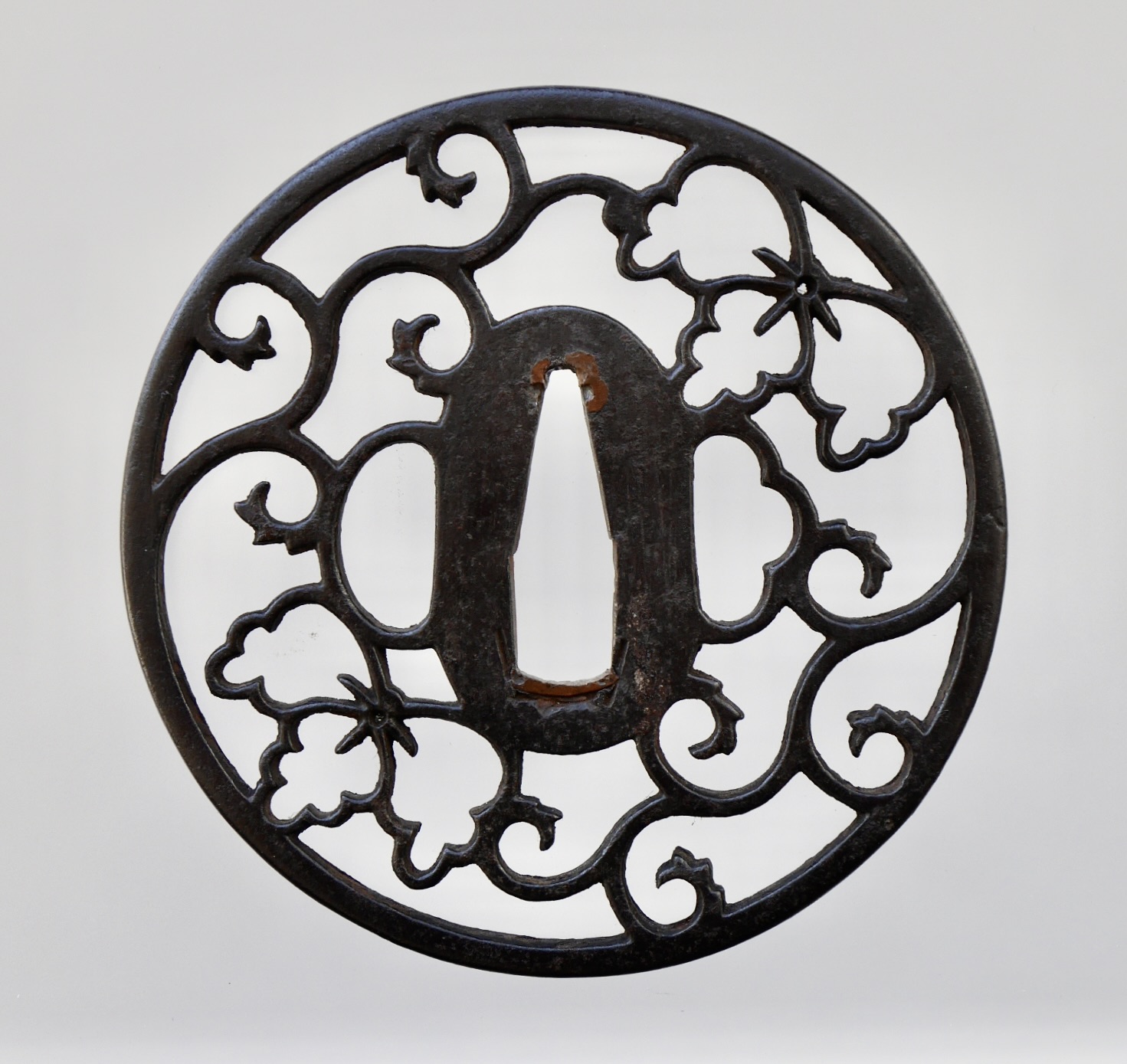
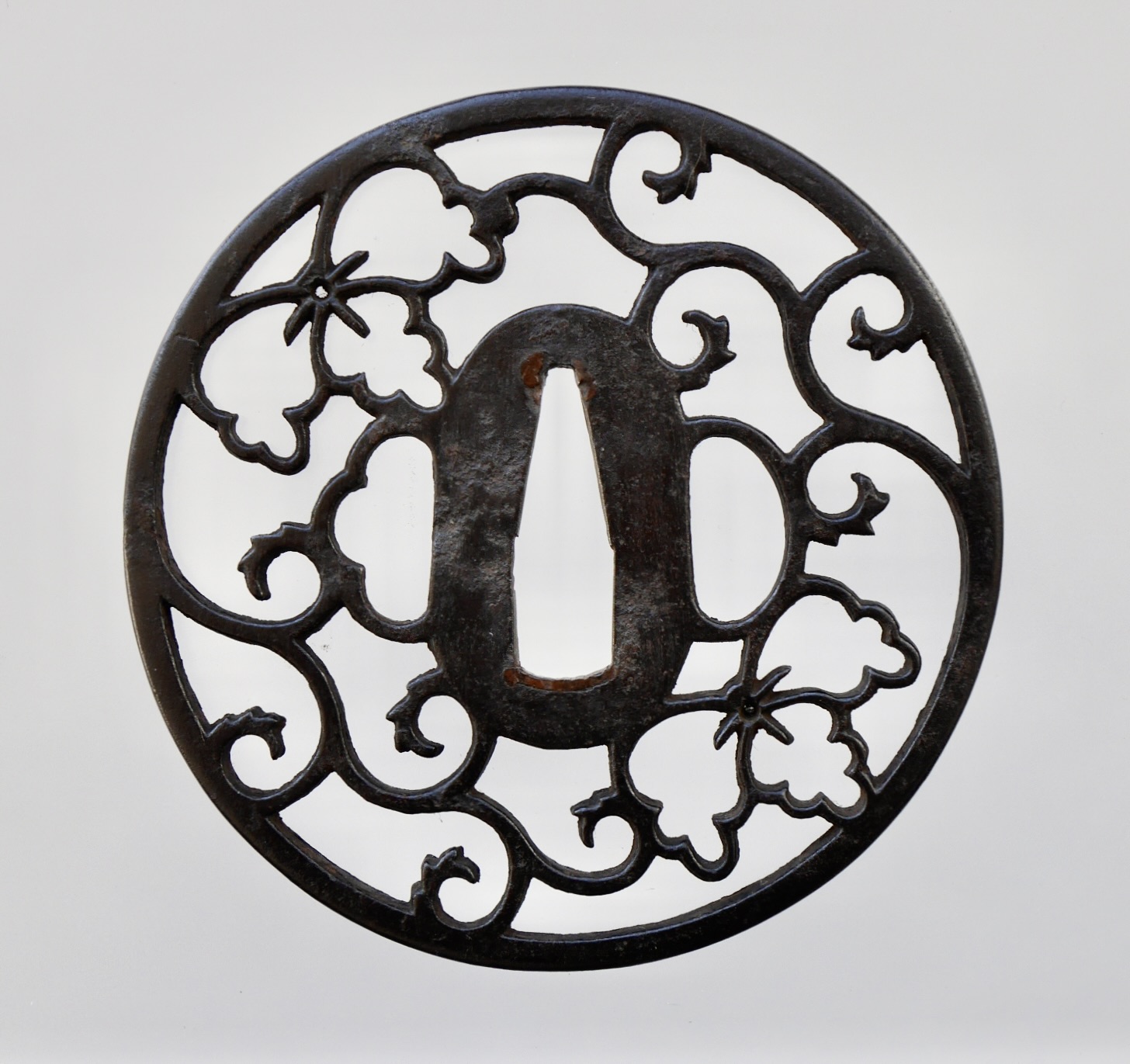
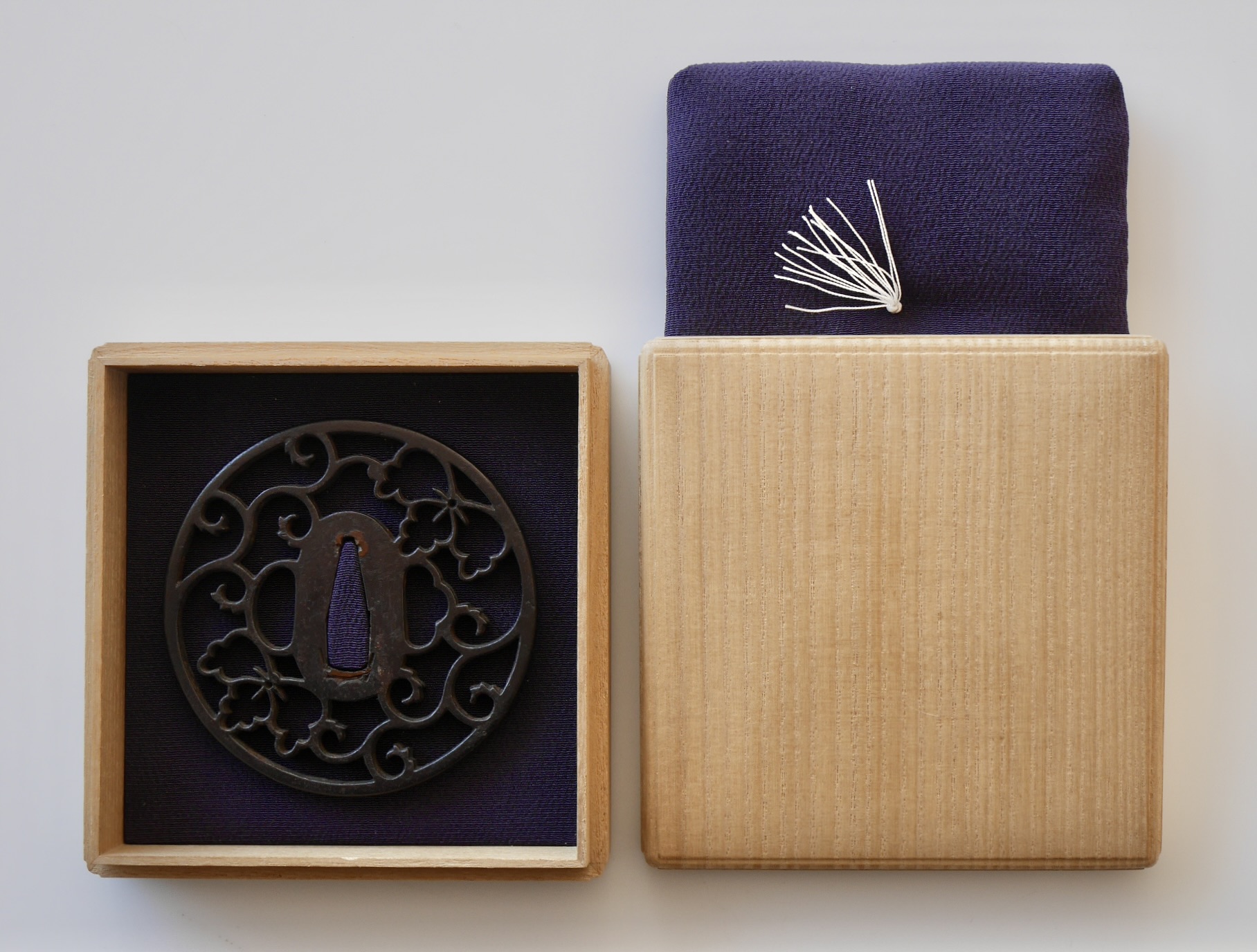
The term Owari sukashi was not used in earlier periods, but was introduced in the early modern era when Akiyama Kyūsaku Ou undertook the classification and organization of sukashi tsuba. Although it remains uncertain whether these works were actually produced in Owari, the yakite technique and the presence of tekkotsu closely resemble those found in the works of Owari-associated masters such as Yamakichibei, Hōan, and Sadahiro. For this reason, Owari tsuba have been regarded as their predecessors.
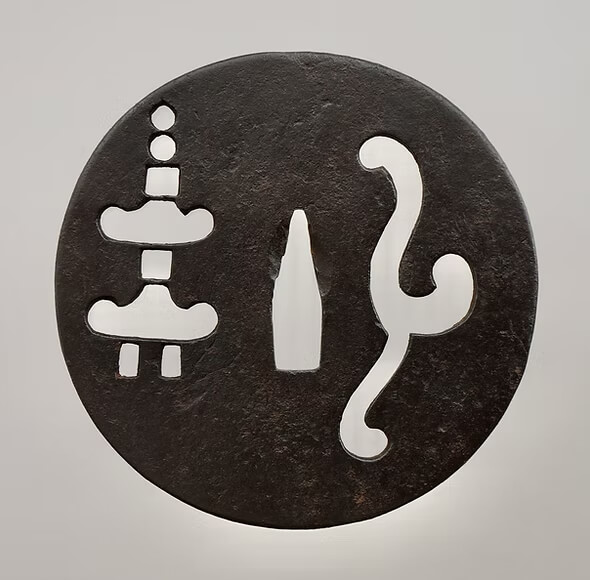
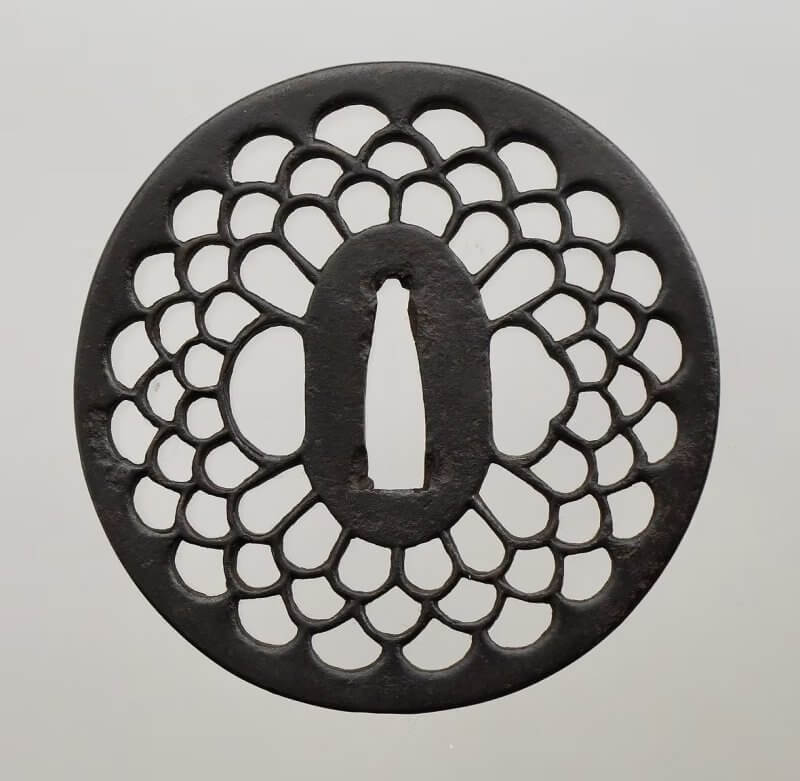
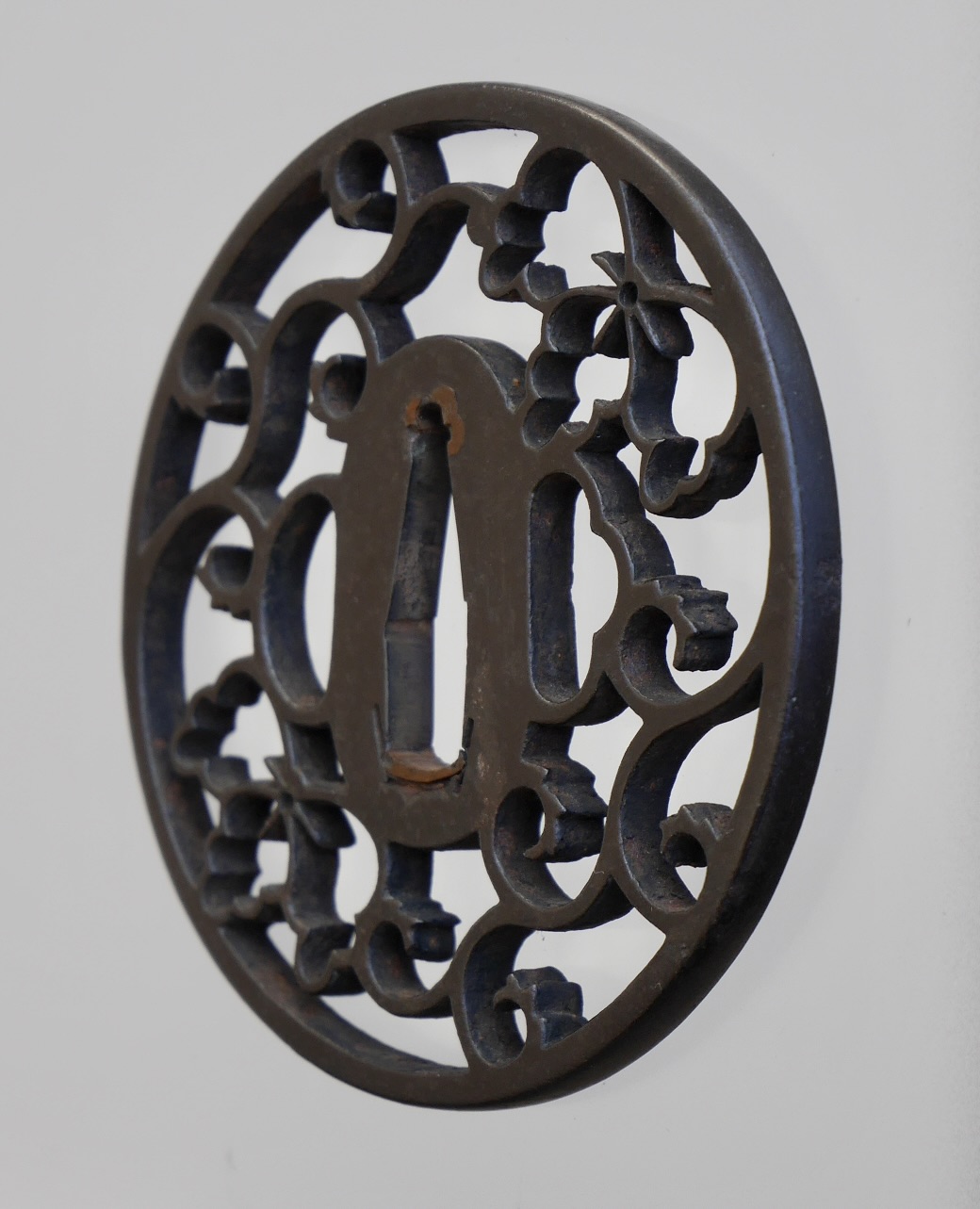
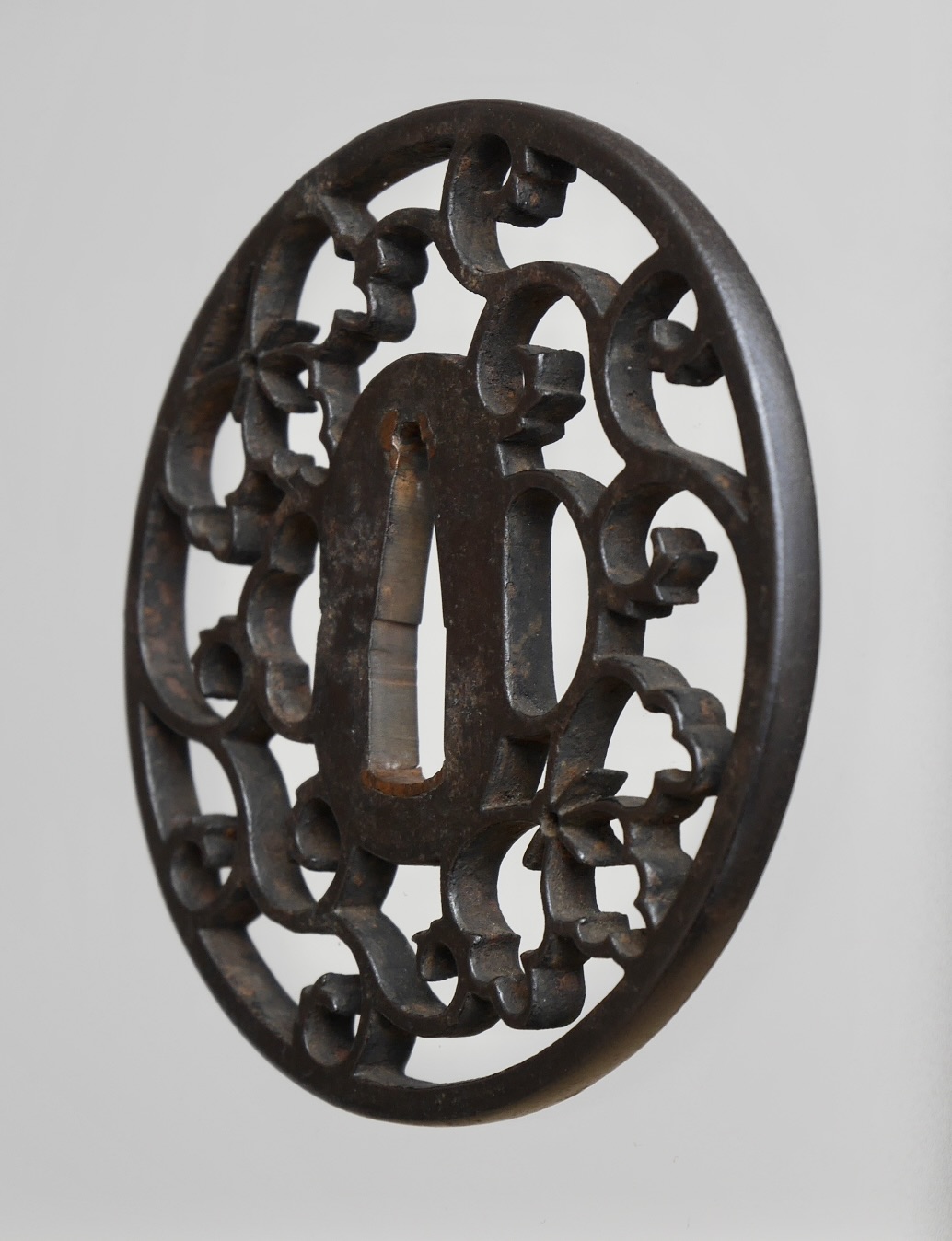
Owari sukashi tsuba of the Muromachi period are typically characterized by iron maru-gata (round form) with a slightly concave center, kaku-mimi ko-niku, and bold, largely symmetrical sukashi designs finished with tsuchime incorporating visible tekkotsu.
This tsuba does not follow the conventional Owari design tradition, but instead employs a motif more typical of Kyō sukashi, and at first glance could easily be mistaken for Kyō work. Upon closer observation, however, the sukashi is noticeably thicker, the mimi is almost angular in form, and small tekkotsu are interspersed throughout, all of which strongly convey the character of Owari sukashi.
From the Momoyama through the Edo period, transportation networks throughout the nation became increasingly active, and with them the exchange of artistic ideas and information also flourished. It is therefore thought that Owari sukashi makers incorporated the elegant and highly popular designs of Kyō into their own works.
Perhaps reflecting the period in which it was made, the surface is finished almost entirely in migaki-ji, while the mimi clearly reveals the use of yakite. The deep, lustrous black patina and the highly accomplished sukashi workmanship are exceptional, making this an outstanding example of Owari sukashi.