Design of Mist and Cuckoo
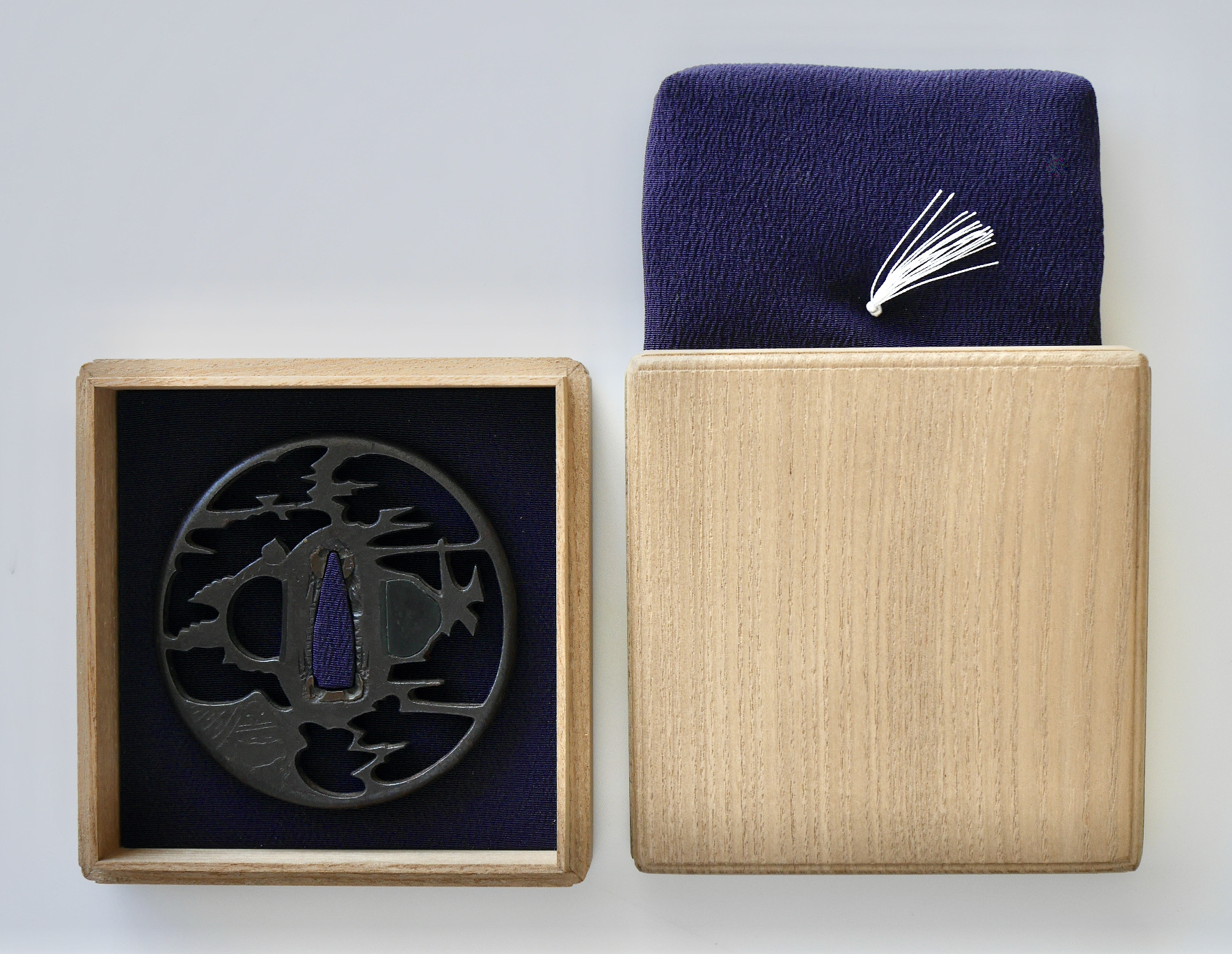
Akasaka tsuba originated in the rapidly developing city of Edo, when the Tadamasa brothers—said to have come either from Owari or Kyō—began their production there. During the time of the first and second generations of Tadamasa, the spirit of the Momoyama period still remained strong, and their works possessed a bold and martial character enhanced by yakite. From the Genroku era (1688-1704) onward, however, beginning with the third-generation Tadatora, the changing trends of the period led to the production of tsuba with migaki-ji (polished surface) and a gentler atmosphere. At the same time, pictorial compositions were further developed, capturing the heart of samurai who had come to Edo from various regions of the country.
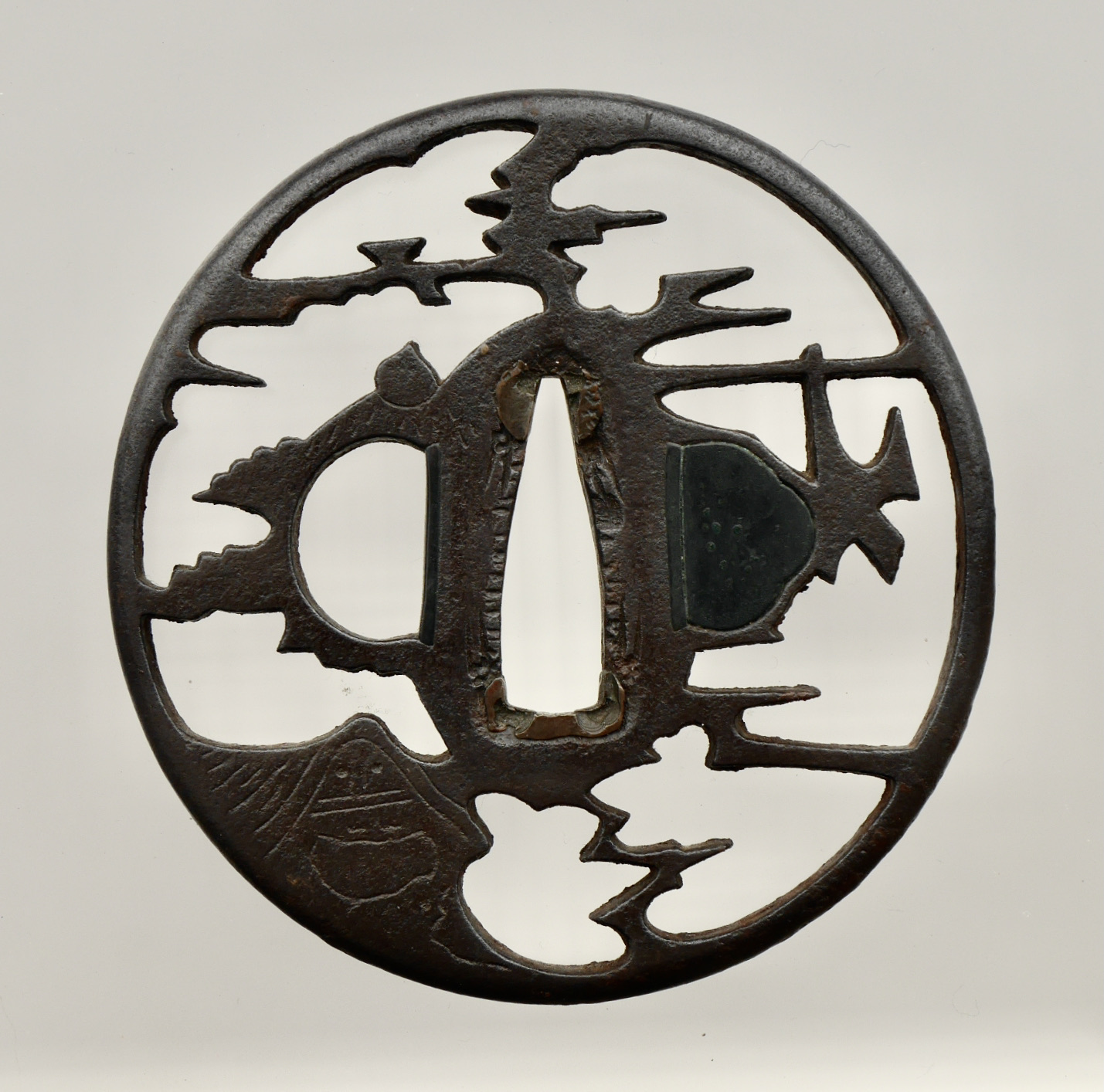
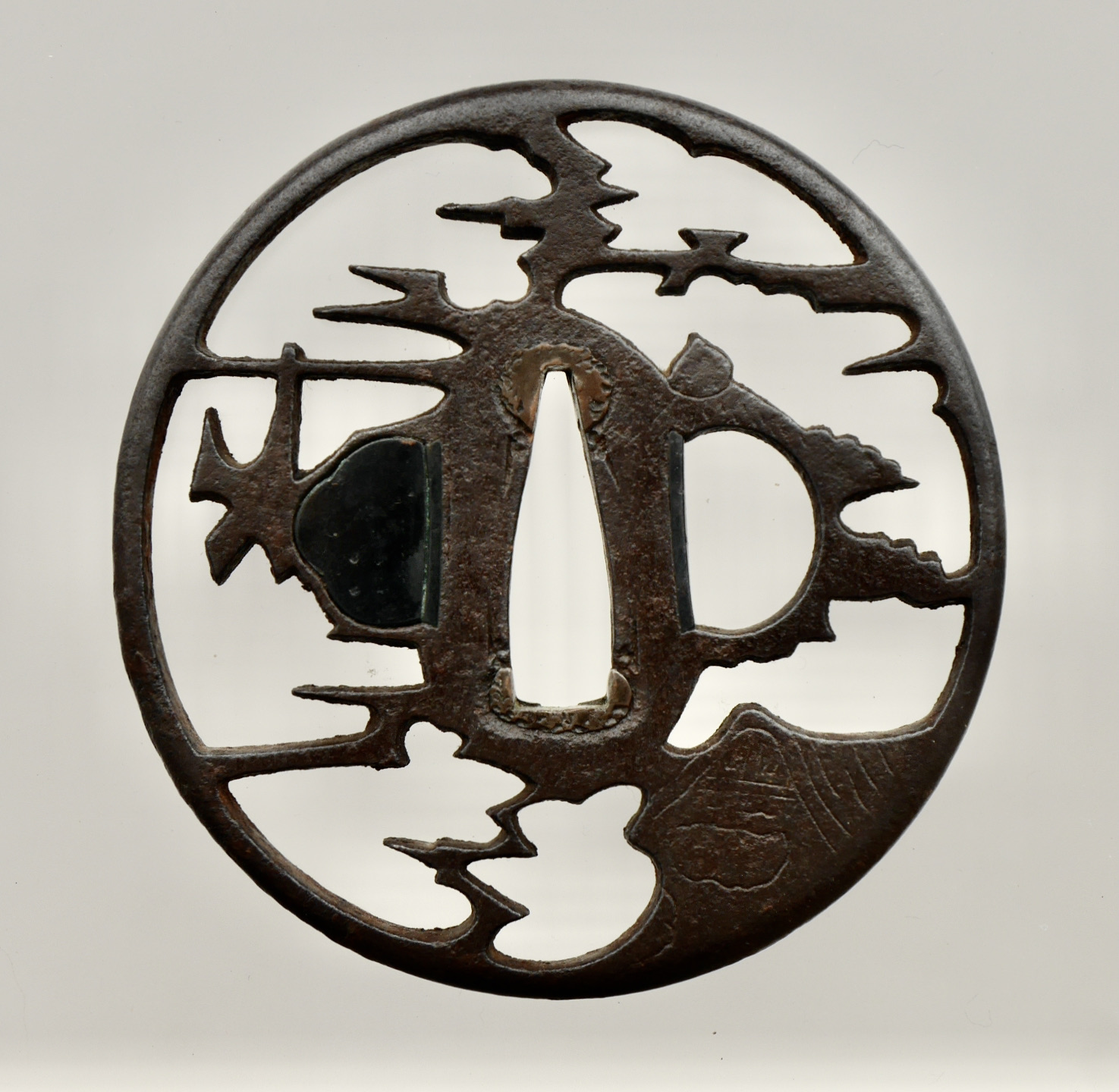
This tsuba depicts a rustic cottage, mist, and a cuckoo rendered pictorially in sukashi within a round form. Although pictorial in conception, the design is also carefully stylized, creating a composition with both movement and a relaxed, spacious atmosphere. Such compositions are frequently seen in the works of the third-generation Tadatora, expressing an expansive world within a remarkably small space and inviting prolonged appreciation.
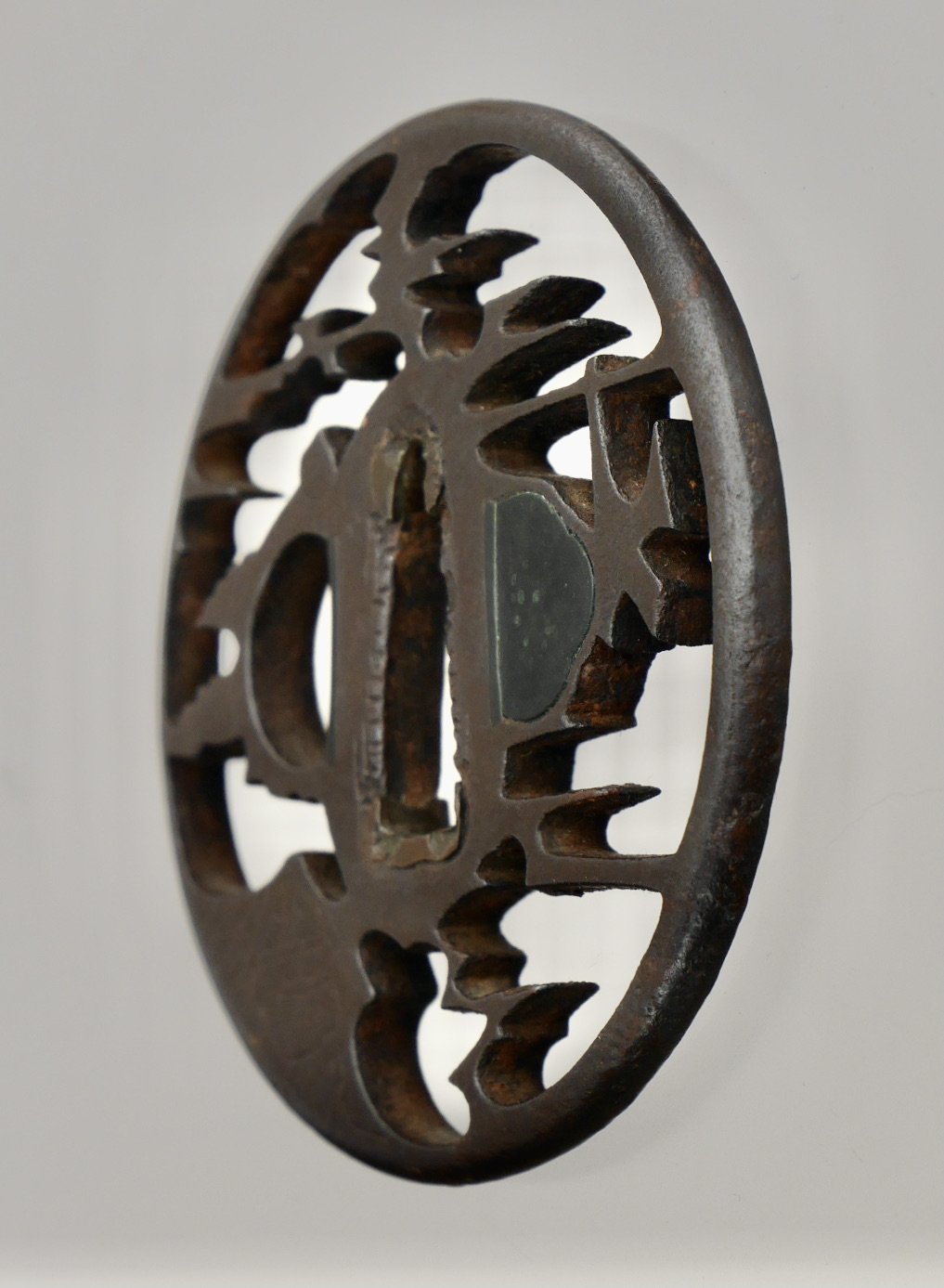
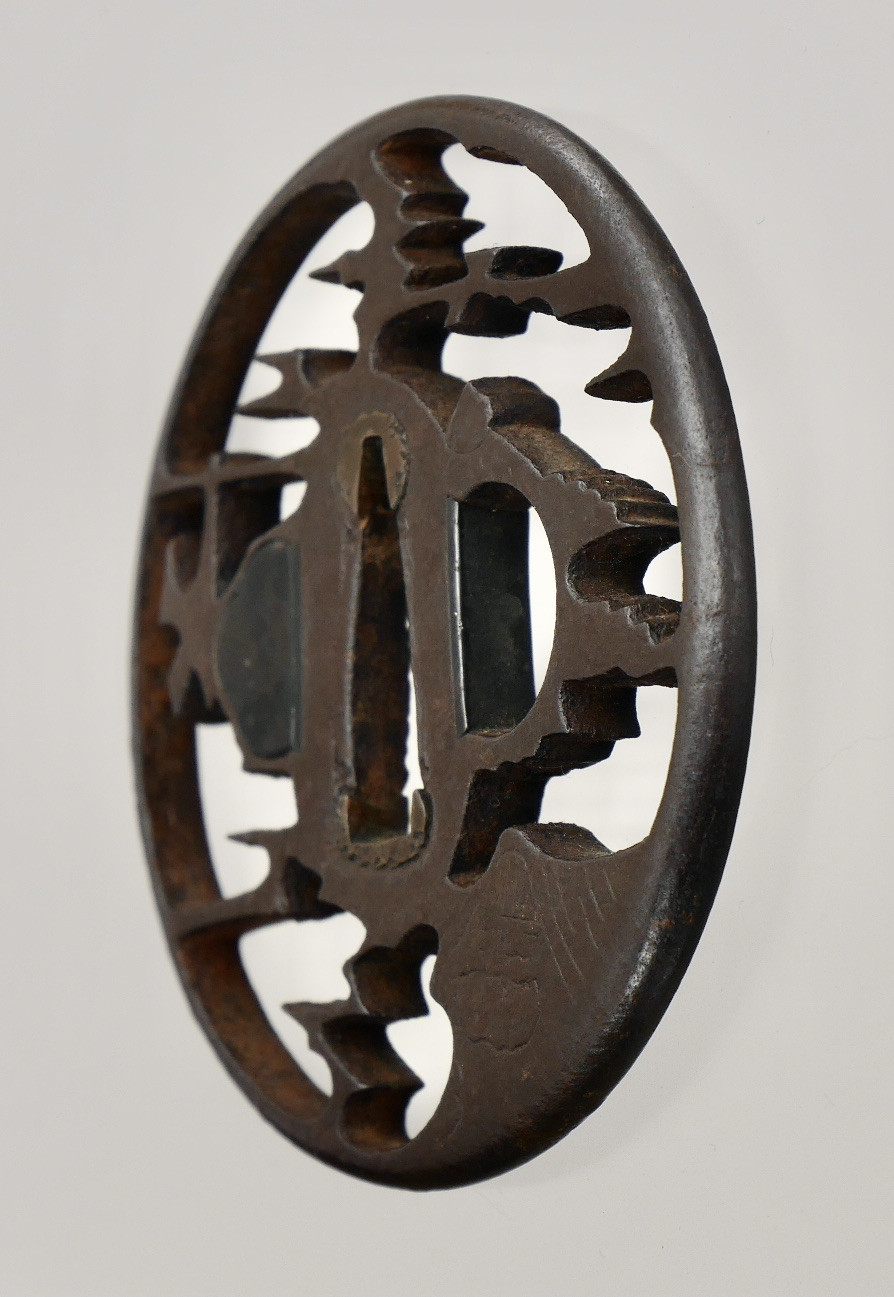
While the overall surface is finished in migaki-ji, linear tekkotsu appear along the mimi, and examination of the nakago-ana reveals the characteristic three-layer forging (sanmai-gitae) associated with Akasaka tsuba. The iron possesses a luminous, moist richness, and together with the excellent composition, the piece overflows with the distinctive charm of Akasaka work.