Design of Temari Balls
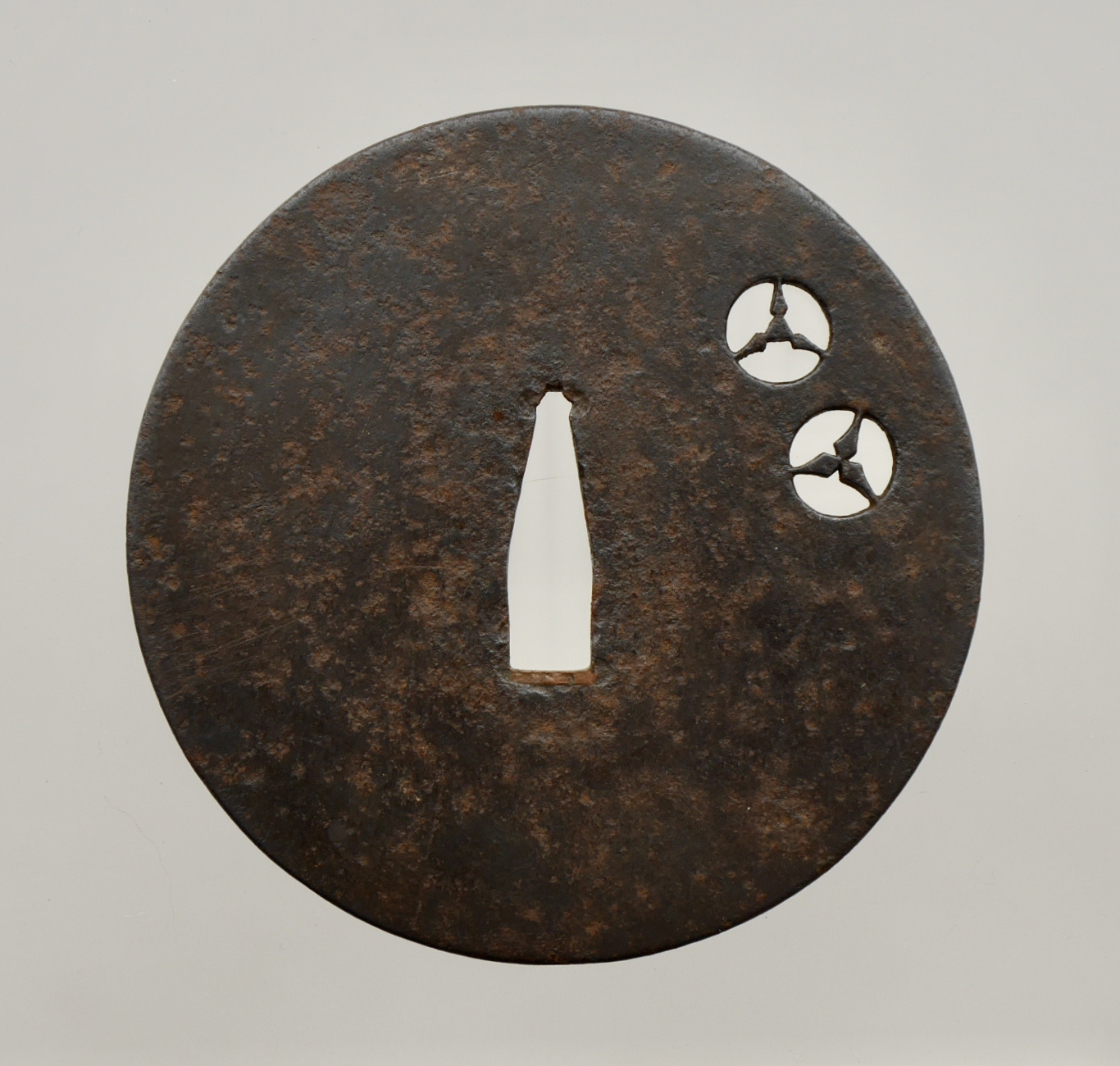
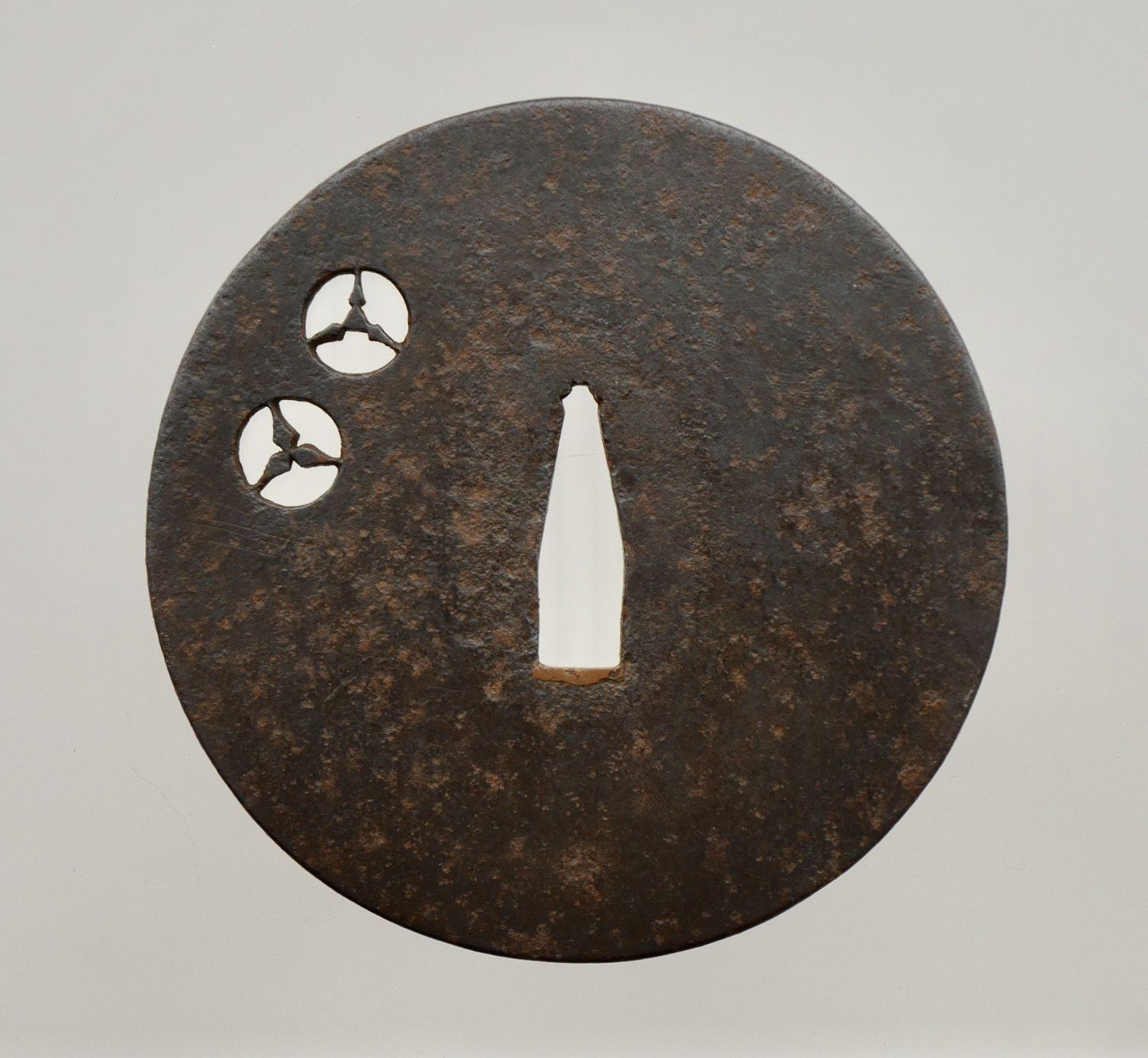
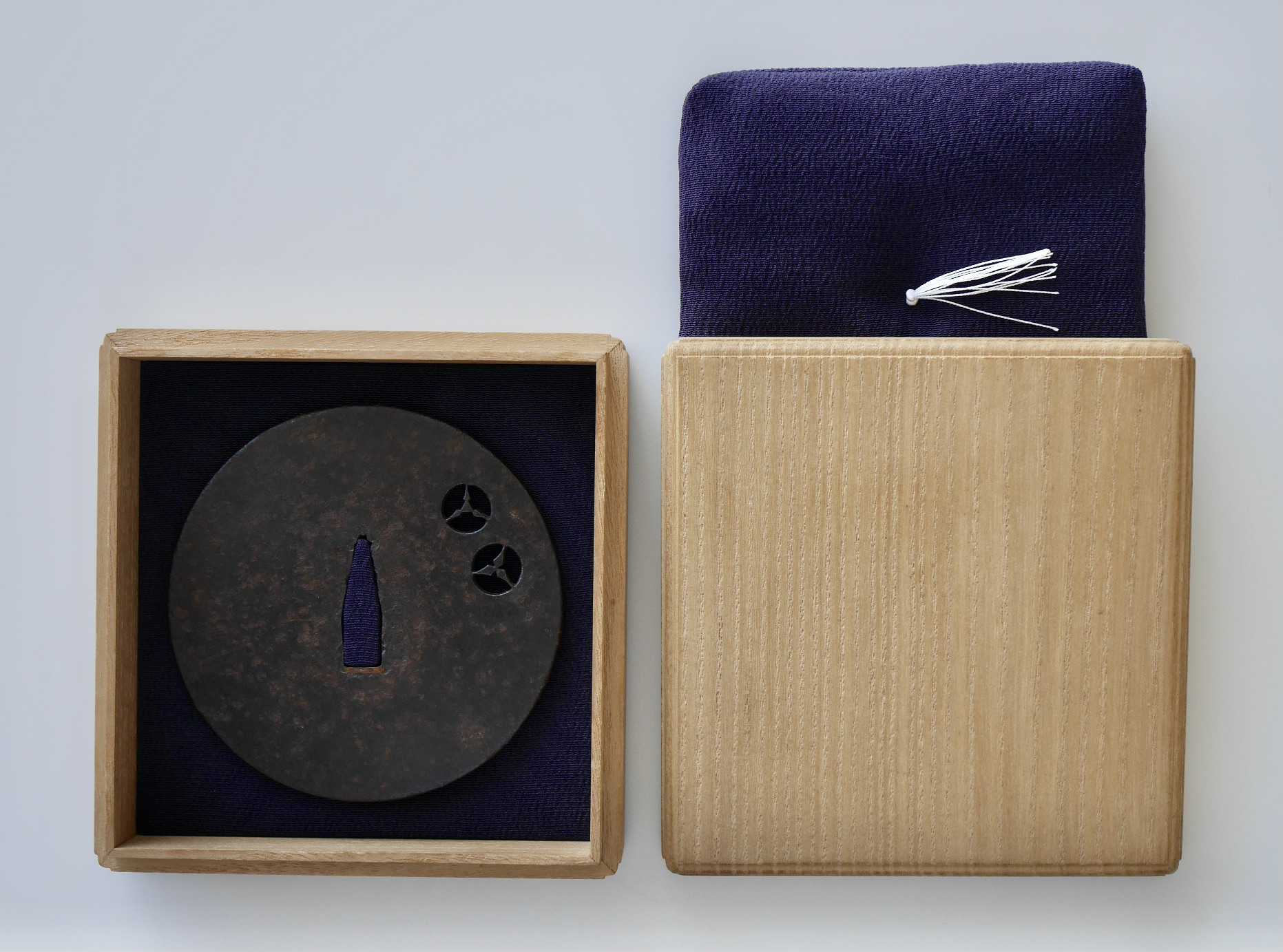
Ko-Tōshō tsuba are said to have originated as guards fashioned by swordsmiths in earlier times and fitted to the swords they forged, from which the name derives. In the past, Akiyama Kyūsaku Ou suggested that some examples might date back as far as six hundred years; more recently, however, they had generally been considered works of around the mid-Muromachi period. Sasano Masayuki, however, in “Tōsōgu no Kigen” (The Origins of Sword Fittings), identified such guards as those attached to the uchigatana worn by attendants depicted in the Ban Dainagon Emaki (a Heian-period picture scroll), thereby defining their origins as extending back to the Kamakura period.
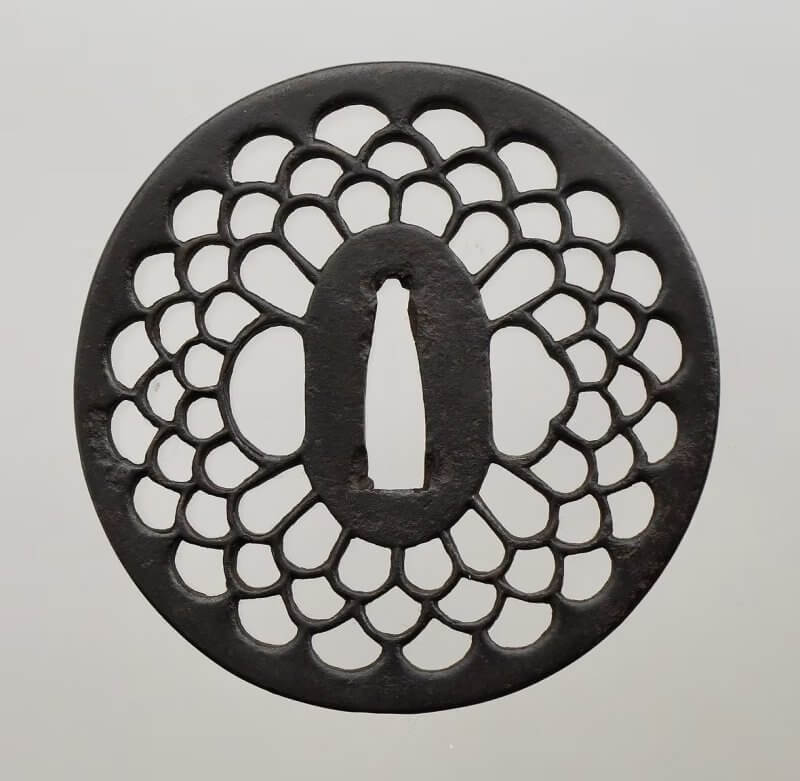
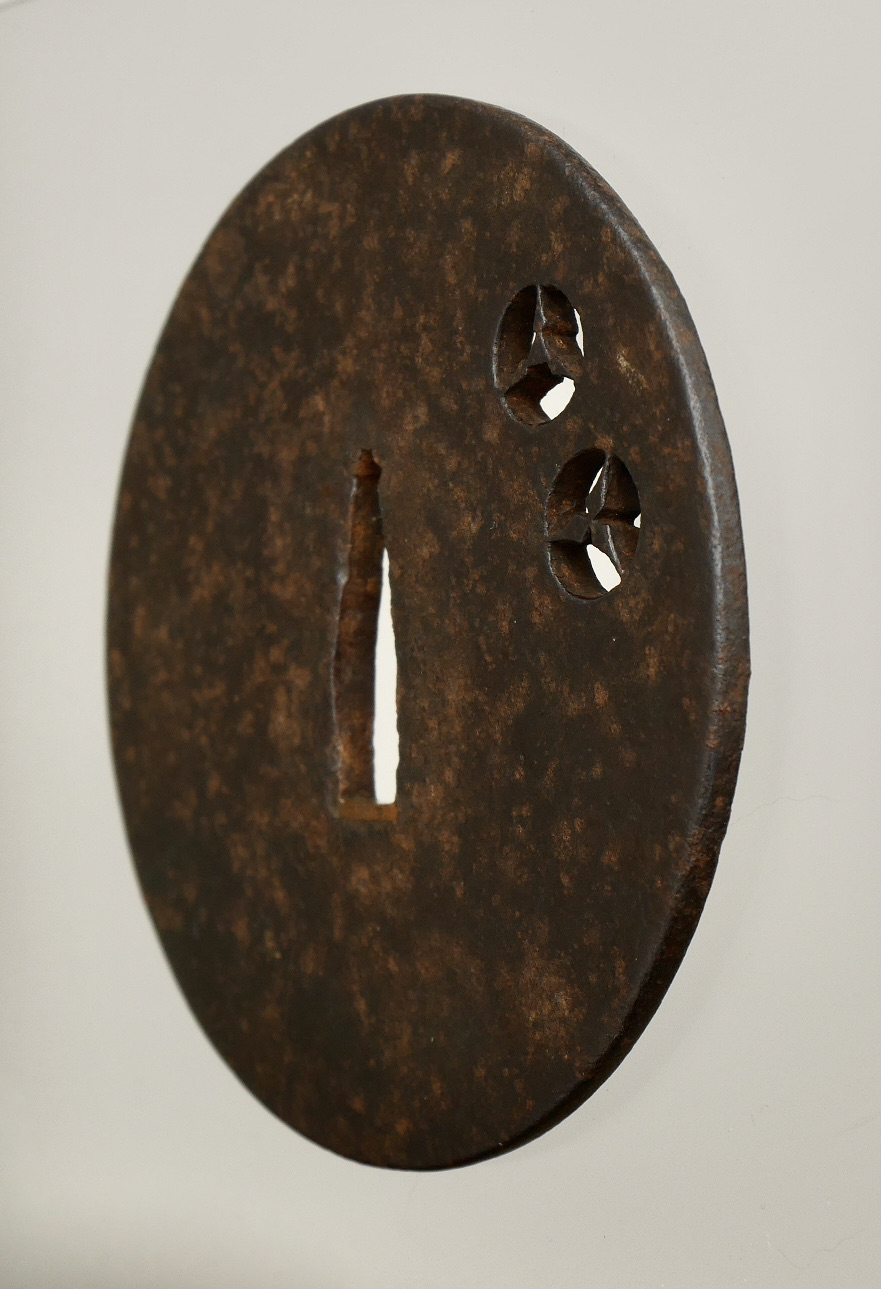
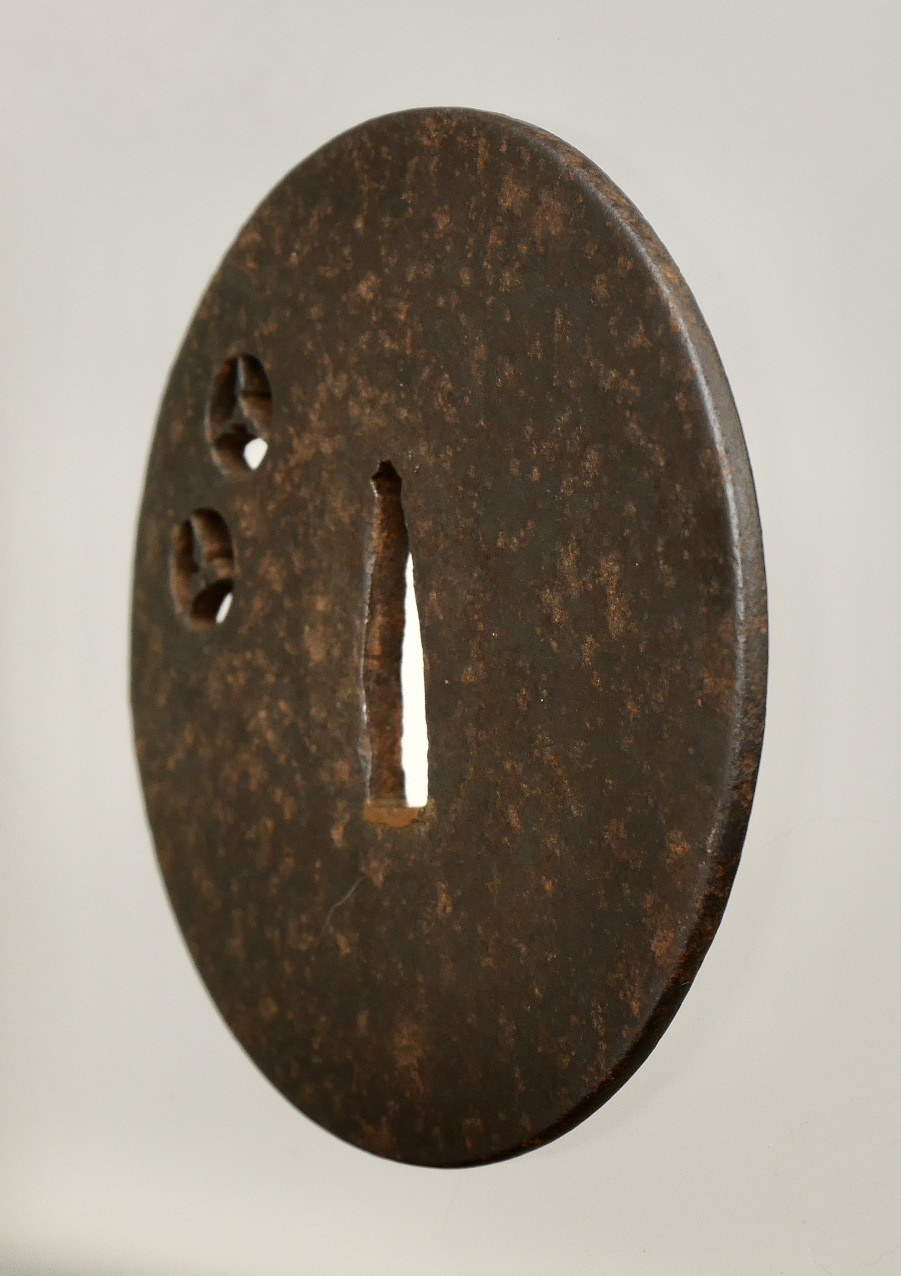
This tsuba features two temari balls rendered in sukashi at the upper right. The sukashi is delicate and elegant, and the slight variation in the orientation and internal patterns of the two balls creates a subtle sense of movement, revealing remarkable attention to detail.
The iron patina possesses a natural richness, with moisture and luminosity that give the piece a deeply appealing sense of age. Its somewhat thicker construction, the tsuchime surface approaching migaki-ji, and its nearly perfect circular form suggest a relatively late stage within the Ko-Tōshō tradition, evoking the Genki–Tenshō era (1570-1592) of the late Muromachi period.
The term “Ko-Tōshō tsuba” itself was introduced by Sasano Masayuki in order to distinguish the old “Tōshō tsuba,” regarded as the origin of sukashi tsuba, from the later “Tōkō tsuba” that became popular in the late Edo period, such as Nobuie-style works produced by swordsmiths including Naotane and Jirōtarō Naokatsu. It appears, however, that the NBTHK, perhaps unaware of this distinction, has issued certificates identifying somewhat thicker Ko-Tōshō examples simply under the designation “Tōshō.”