Design of Auspicious Motifs
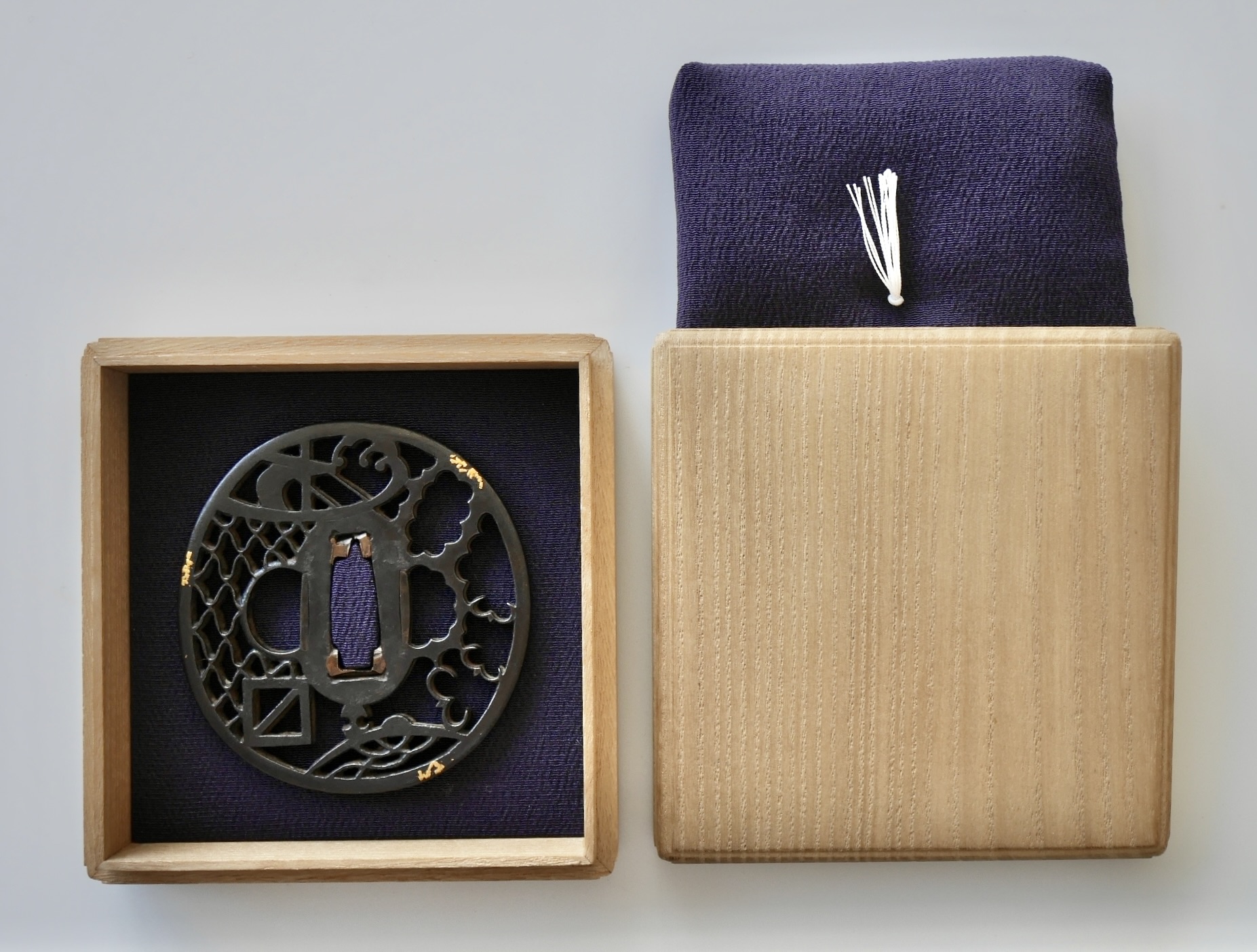
Hayashi Tōhachi was born in Kyōhō 8 (1723) as the grandson of the renowned first-generation Hayashi Matashichi, and died in Kansei 3 (1791) at the age of sixty-nine. Influenced by the style of Matashichi, Tōhachi produced many works of sincere and disciplined workmanship, and it has even been said that he was once held in higher esteem than his father, Shigemitsu.
Very few signed tsuba by Tōhachi survive. The only known example bearing the inscription “Hayashi Matashichi Sandai-me Hayashi Tōhachi saku” is a gomon sukashi depicting the Hosokawa mon, together with a small number of early works signed “Fusayoshi saku.”
His works are generally somewhat small in scale, yet all display careful and honest craftsmanship, and are characterized overall by a remarkably consistent level of quality.
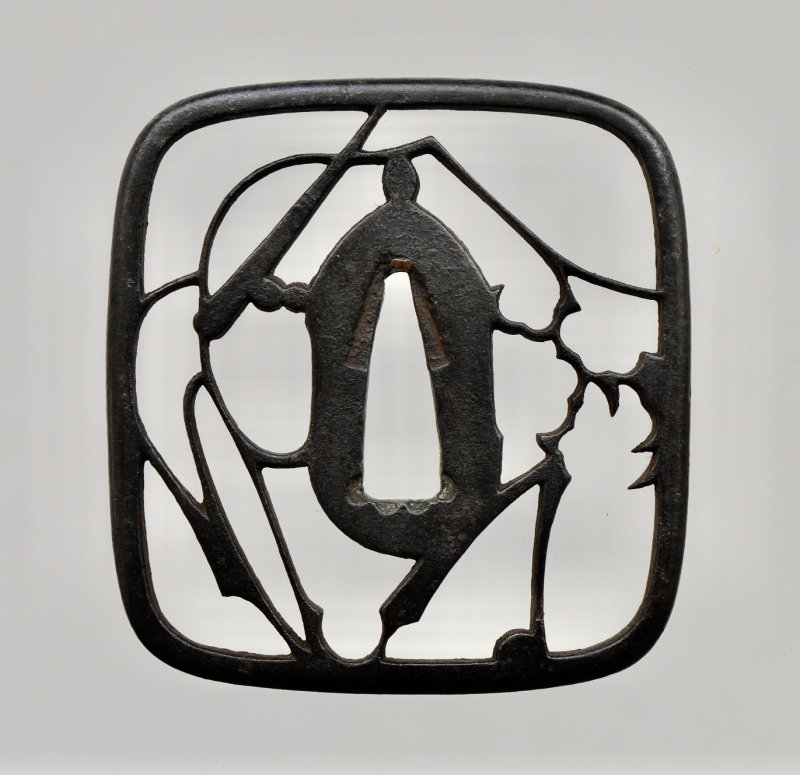
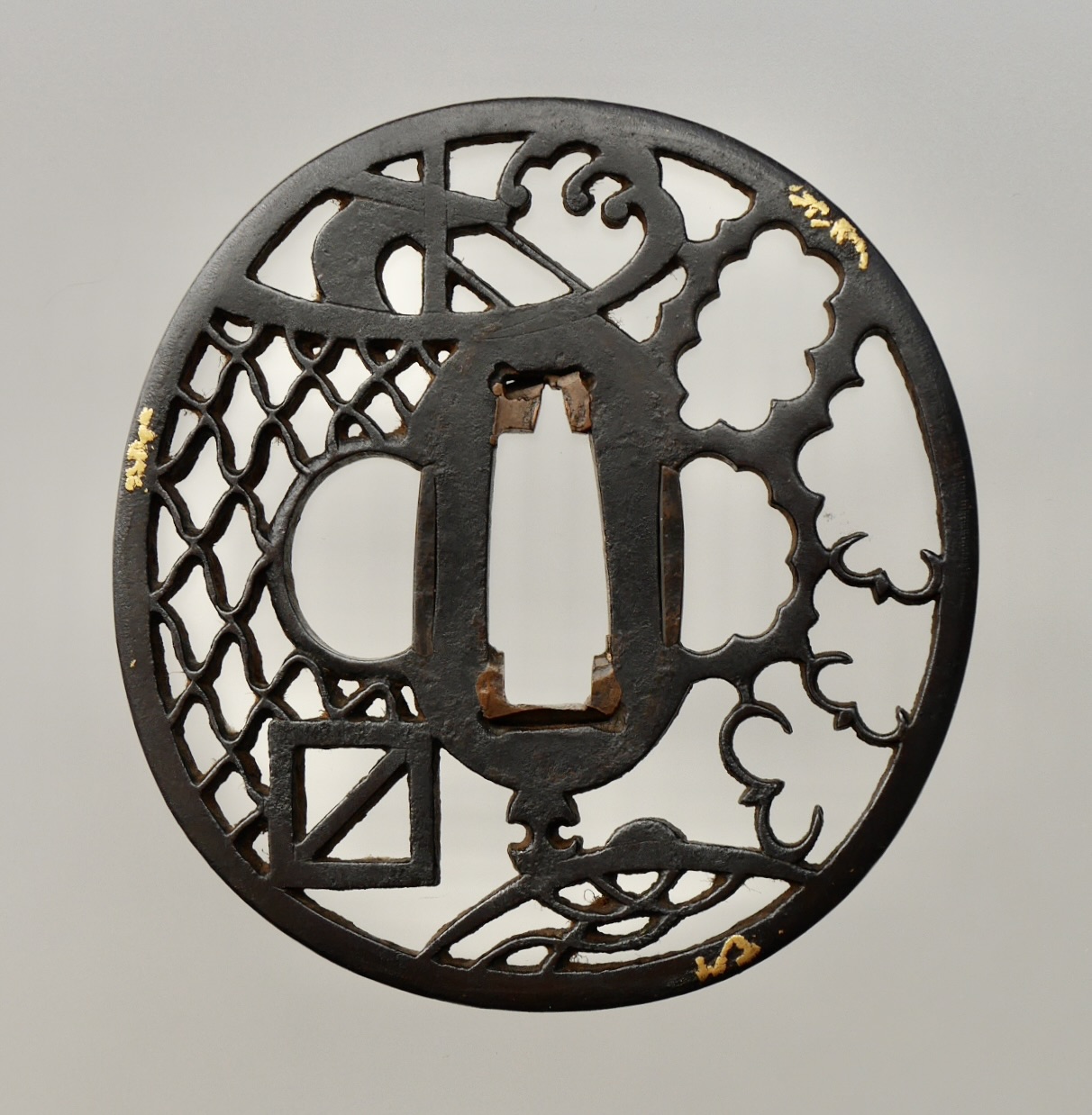
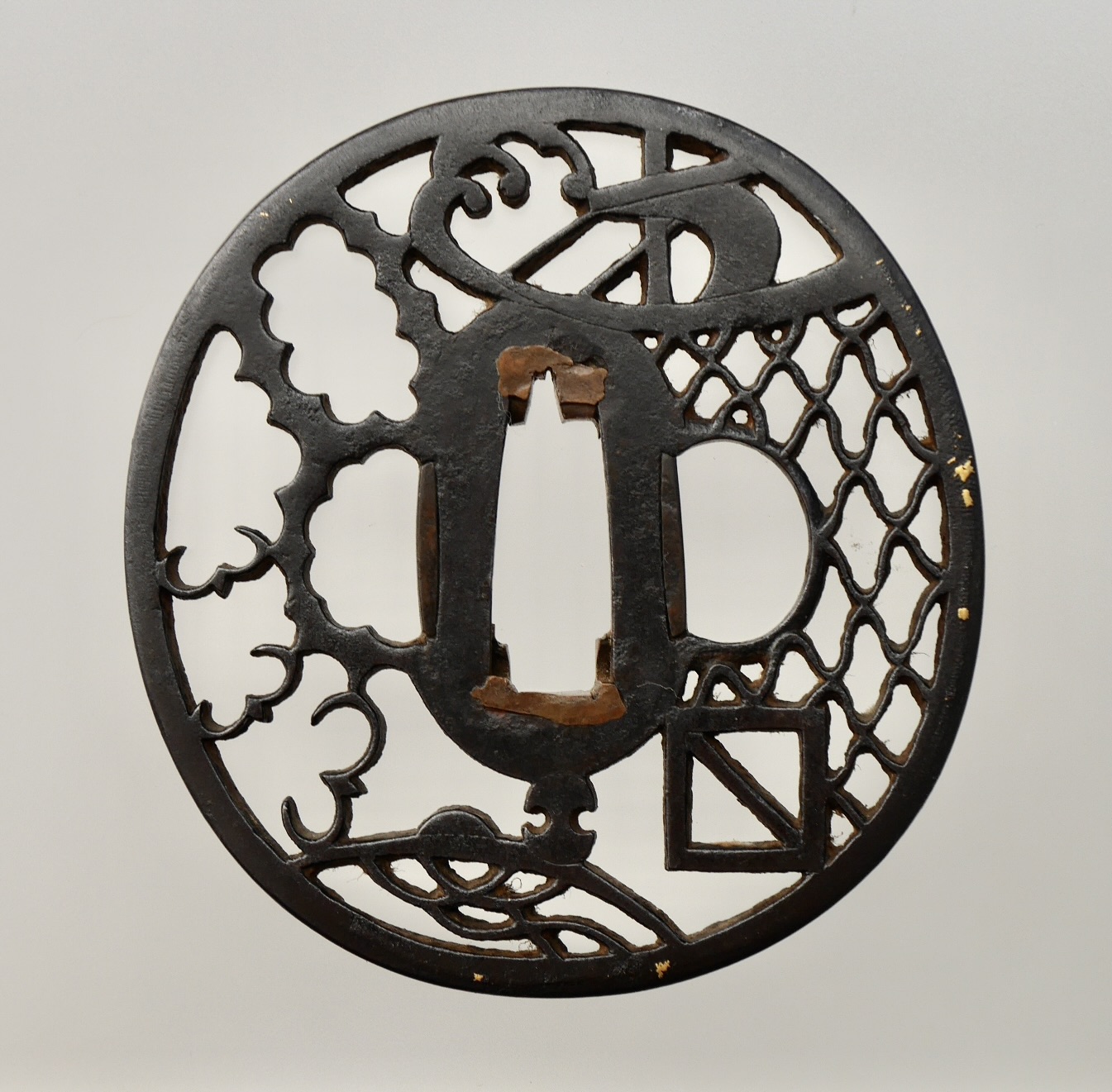
This tsuba displays the calm and gentle nagamaru-gata characteristic of Tōhachi. Across the surface are rendered in sukashi motifs including sailing ships, yukiwa (snowflake rings), karigane (wild geese), weights, hats, measuring boxes, and drying nets. Together, these likely form an auspicious composition.
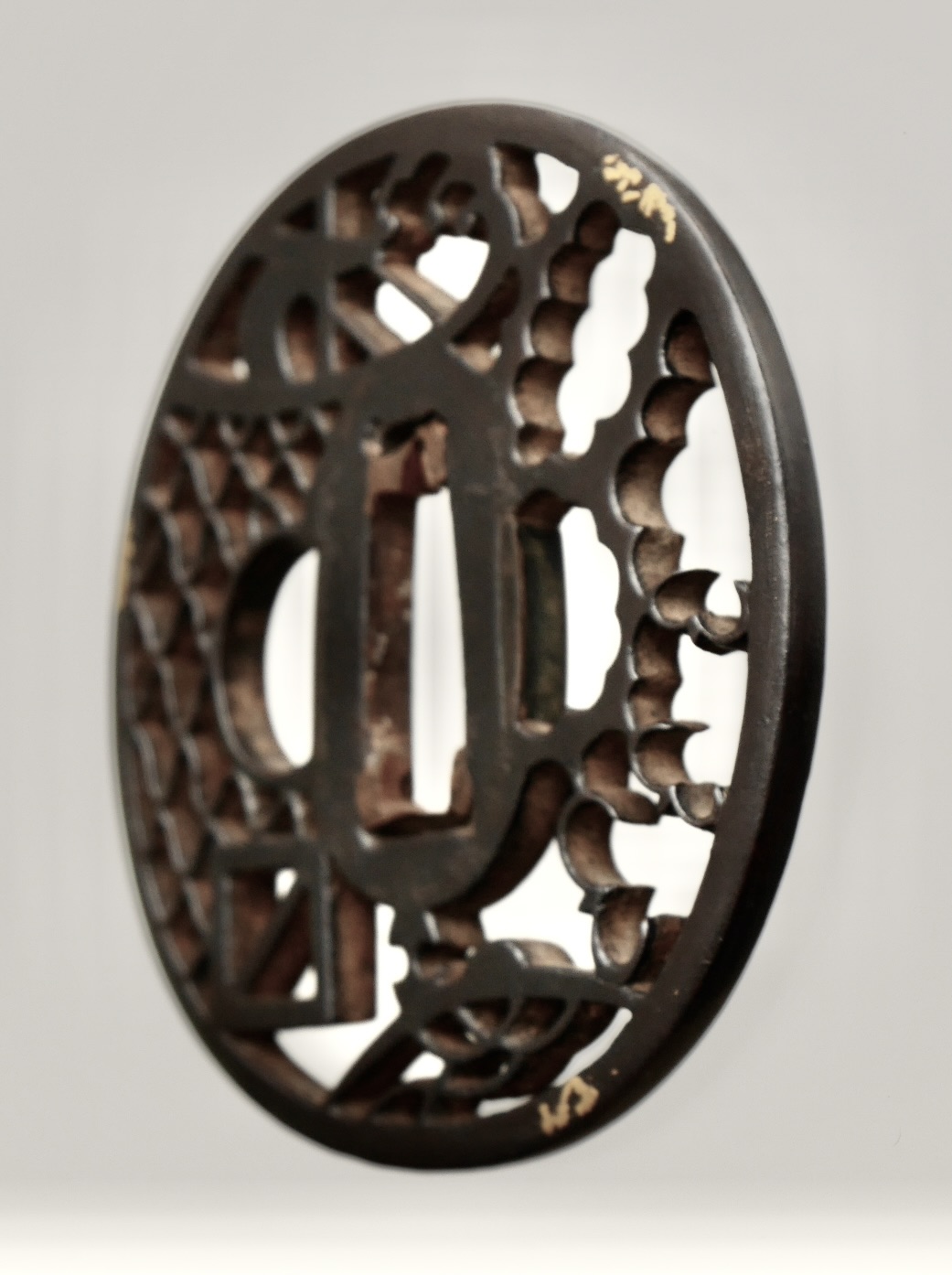
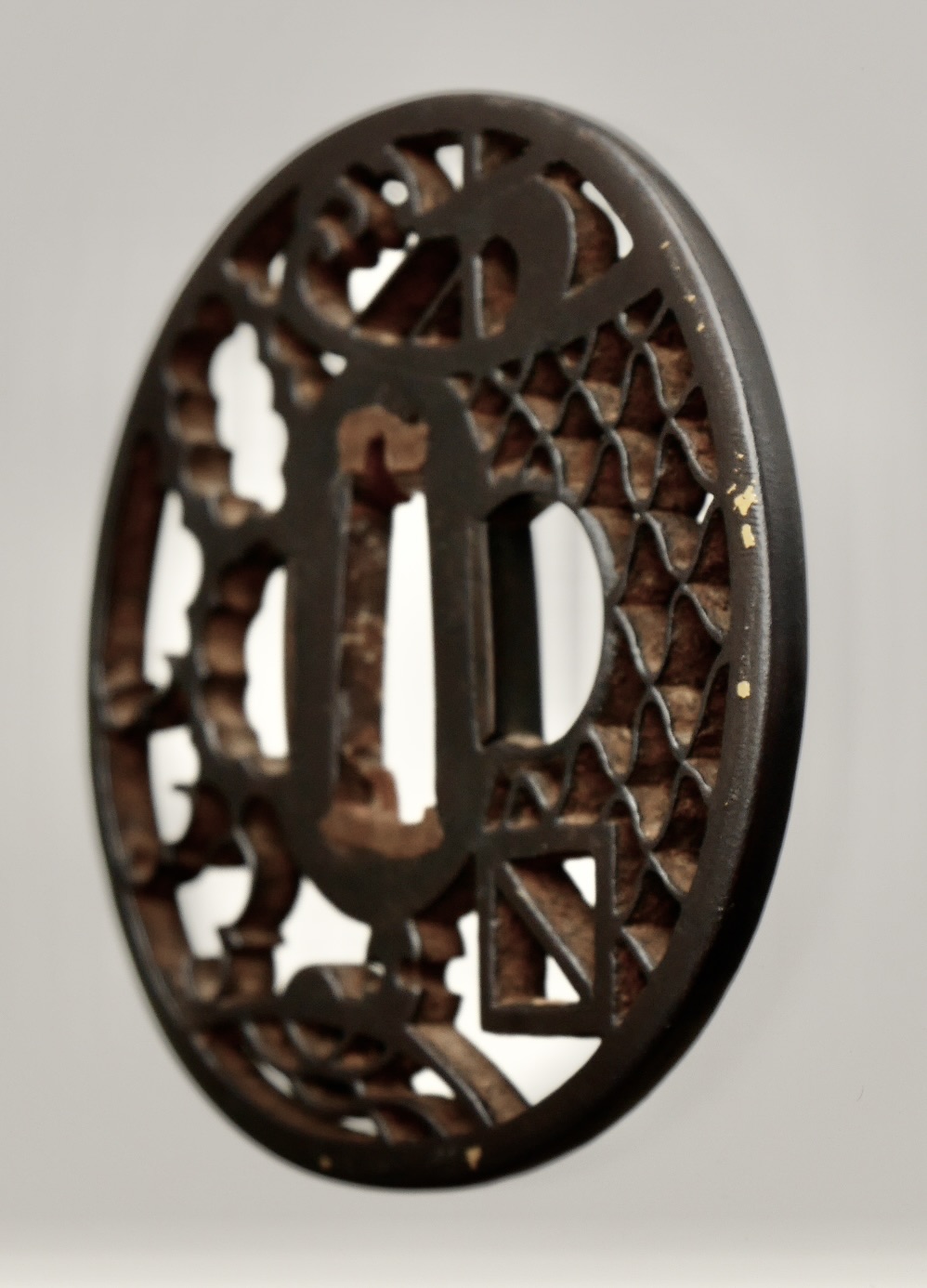
The surface variation is softly modeled, while the surface gently tapers toward the edge of mimi, where the sukashi is executed with meticulous precision and without the slightest hesitation.
The hiraniku (surface variation) is gently modeled, and the surface subtly lowers toward the mimi. Across this softly contoured surface, the sukashi is executed with flawless precision. The carefully shaped hitsu-ana, somewhat reminiscent of Matashichi’s style, are thoroughly characteristic of Tōhachi’s workmanship.
The iron color and state of preservation are exceptional, and the gold nunome-zōgan along the mimi effectively unifies the overall composition. Unusually for Tōhachi, the work makes extensive use of sharply vertical sukashi, revealing an ambitious approach and resulting in a work that may truly be considered one of his masterpieces.