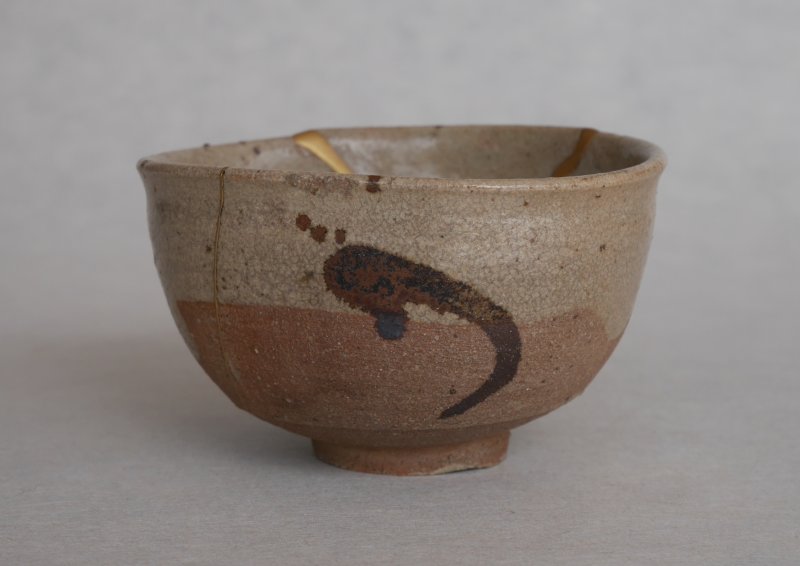
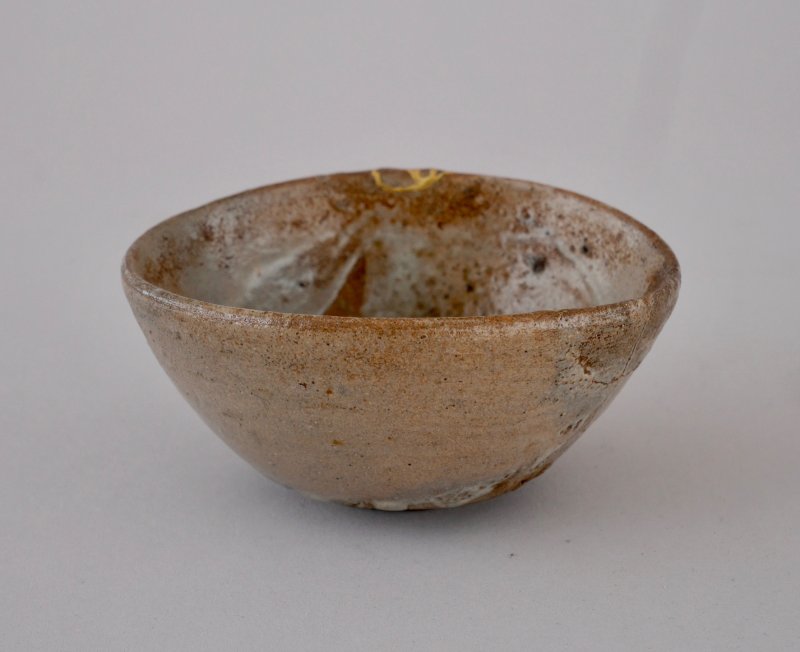
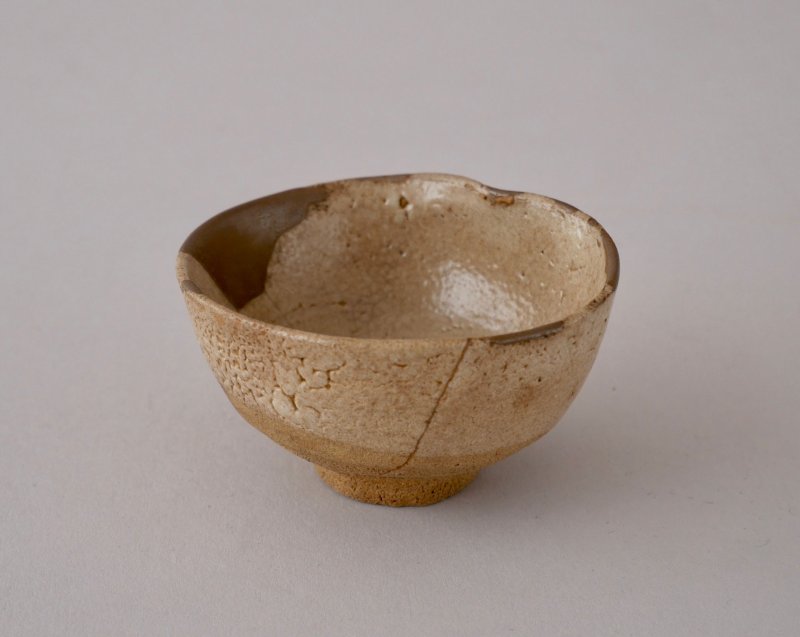
Hagi Katamigawari Teabowl
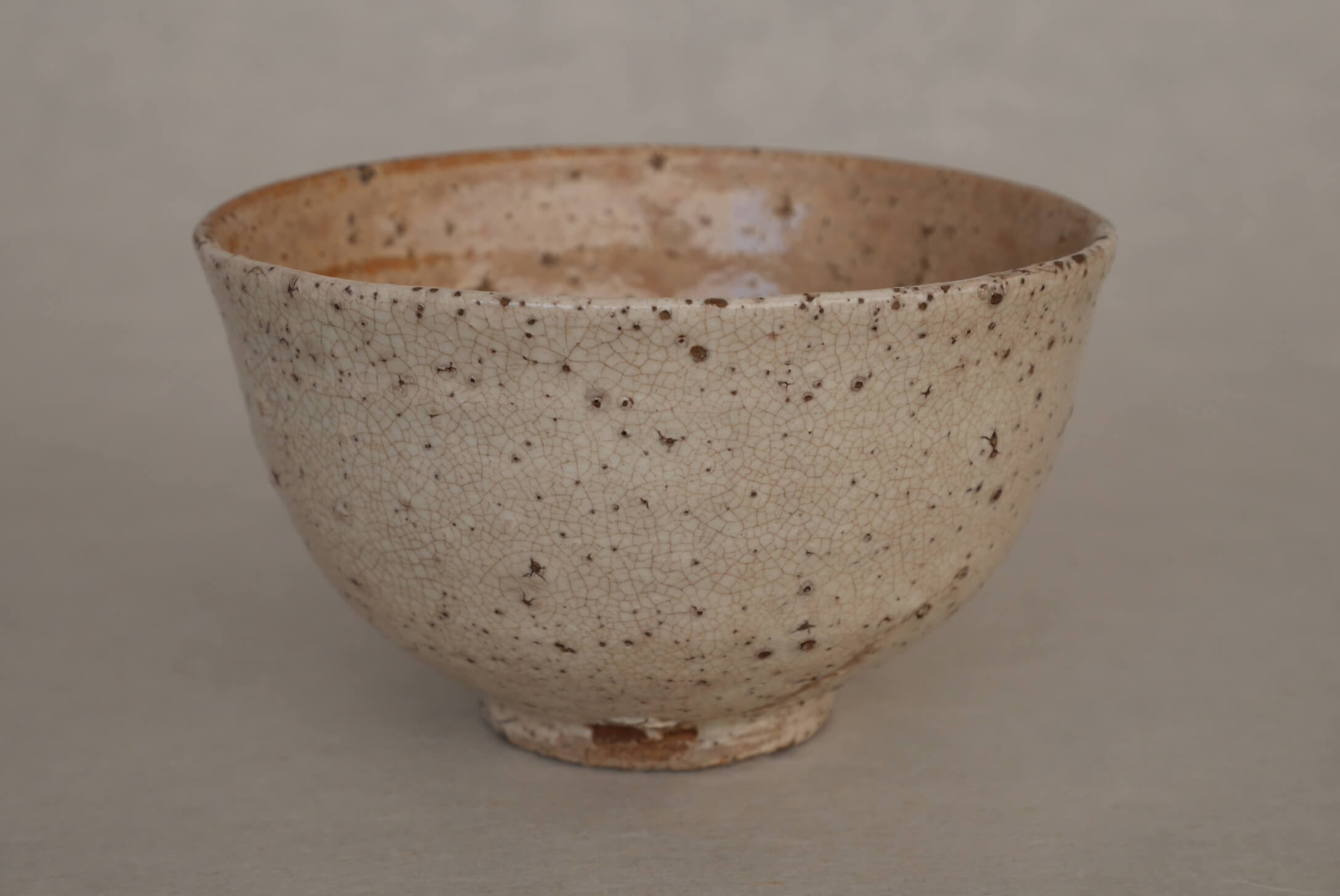
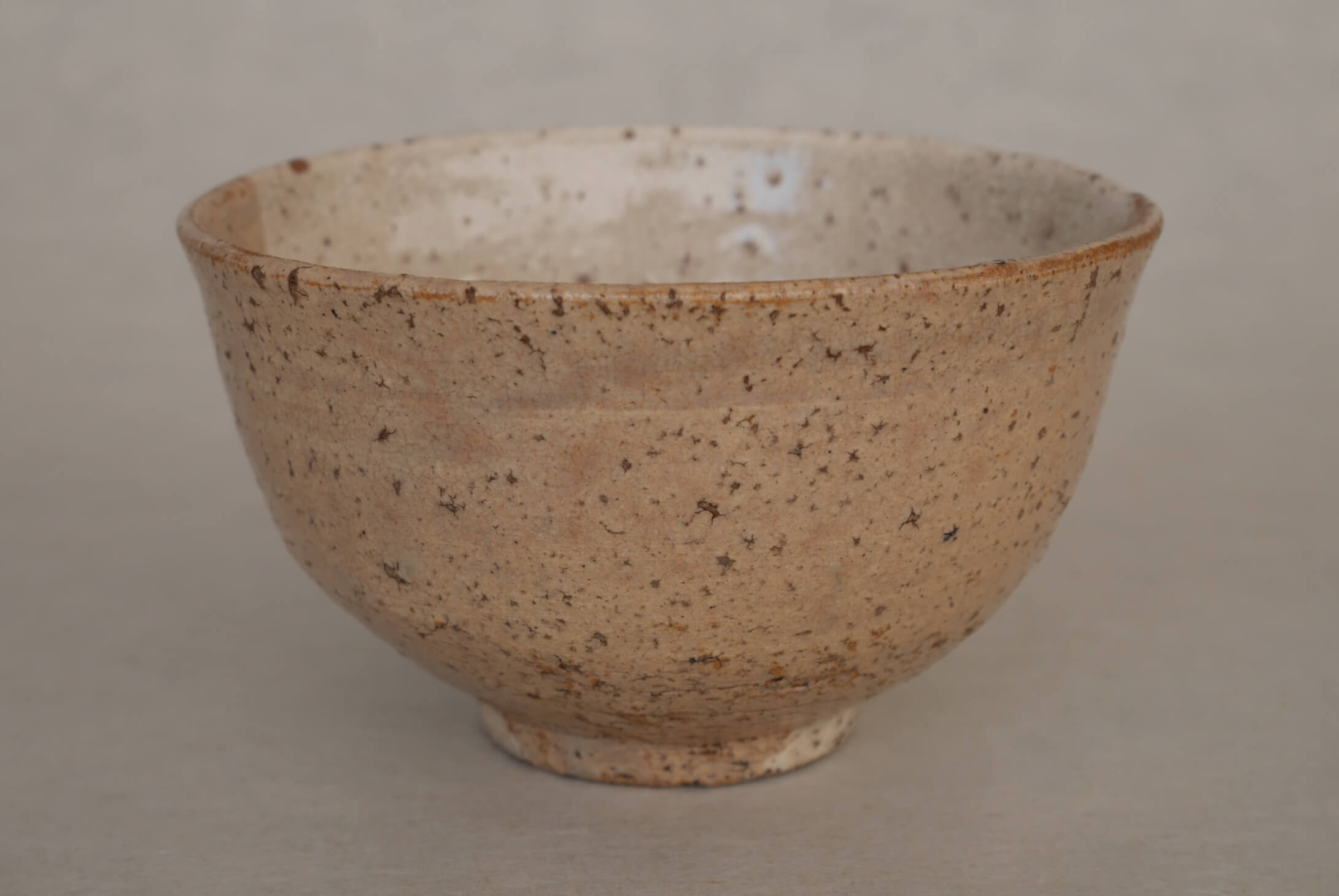
Hagi ware is said to have originated when Ri Shakkō, a Korean potter brought to Japan during the Bunroku campaign, was placed under the patronage of Mōri Terumoto and established a kiln in Hagi, in present-day Yamaguchi Prefecture.
At that time, the popularity of Sen no Rikyū’s wabicha had brought Korean tea bowls into the spotlight, and Korean-style domestic wares (kuniyaki) were produced by naturalized Korean potters in Karatsu, Satsuma, Agano, and Takatori as well. Among these, Hagi ware preserves perhaps the strongest connection to the traditions of Korean tea bowls.
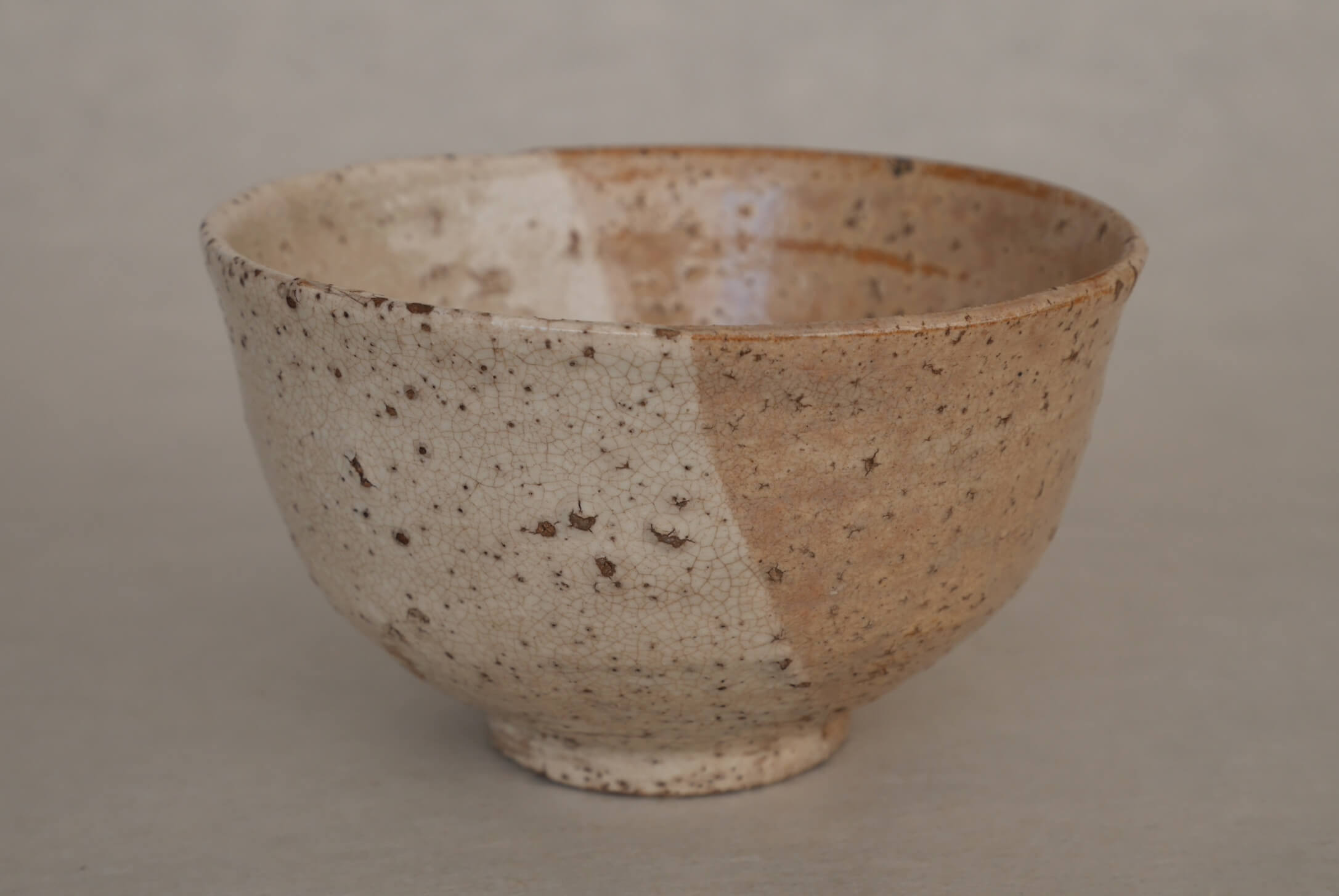
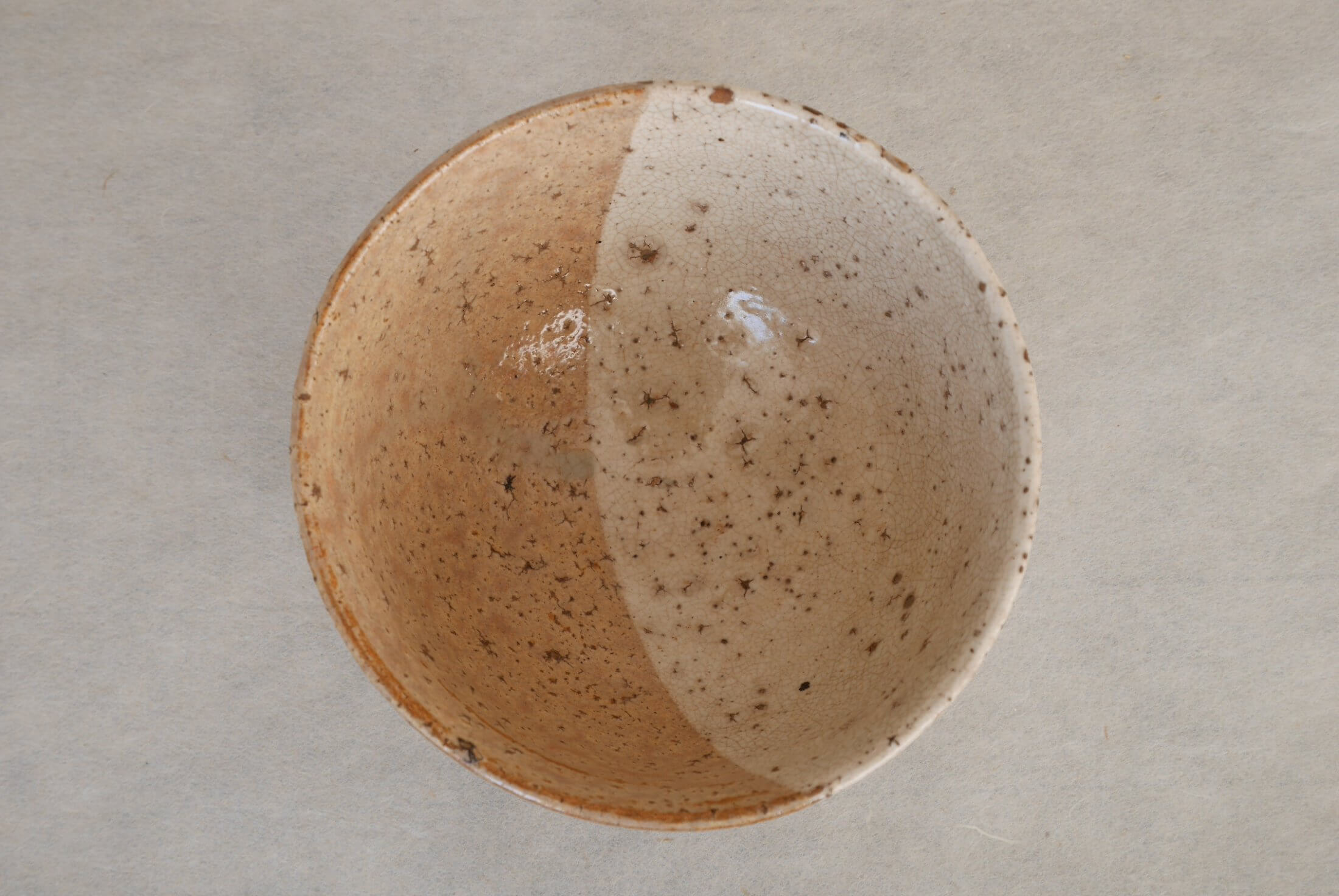
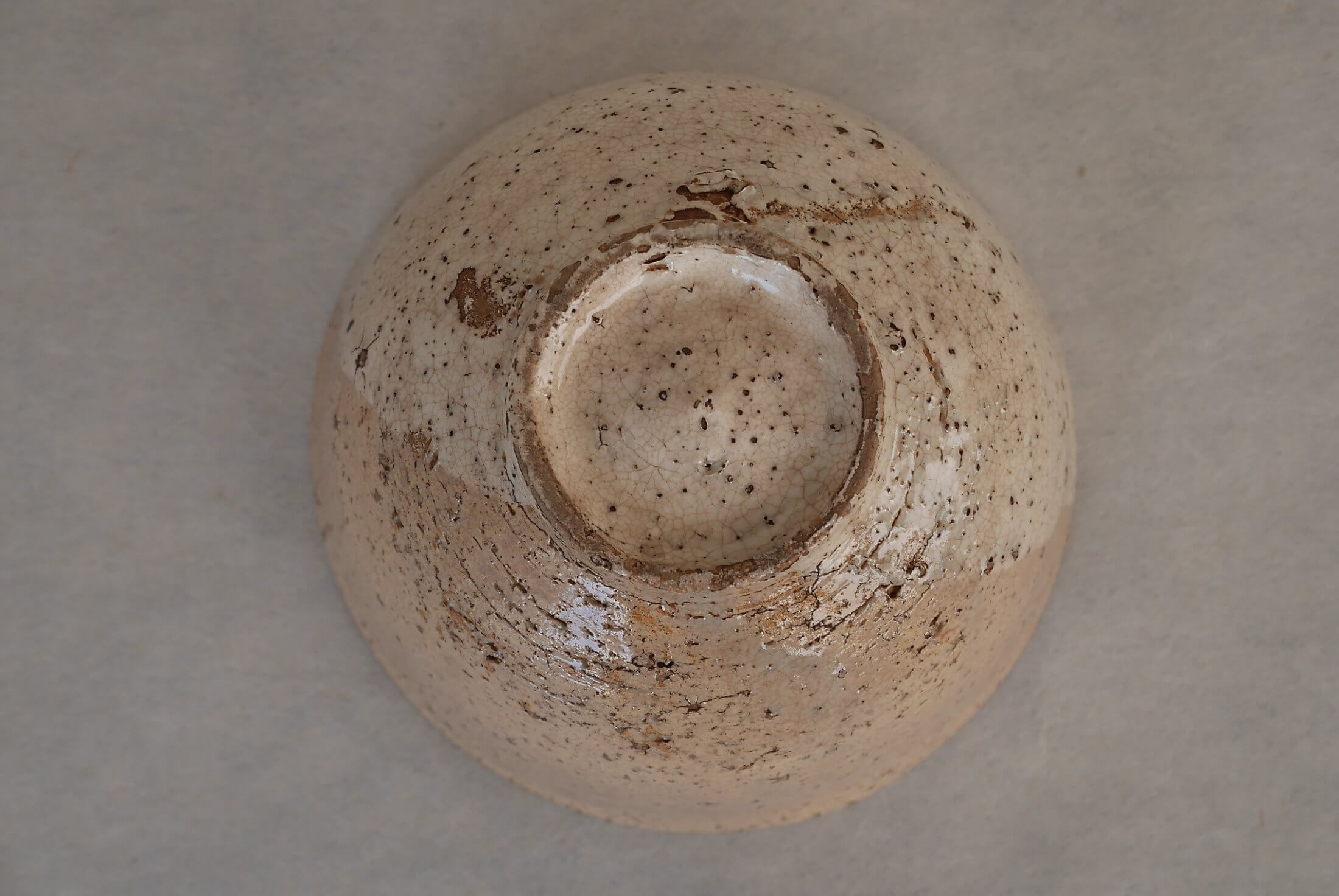
This tea bowl was formed from a coarse reddish clay and fired with a flowing application of white slip over one side. The original clay fissures (tsuchi-haze), areas left unglazed by hima (gaps in the glaze coverage), and the stains acquired through use have merged into a unified and highly evocative visual landscape, giving the bowl a particularly rich and rewarding character.
This bowl closely resembles the celebrated tea bowl known as “Murasuzume”, although it was made in a somewhat smaller size.