Design of Miyōga
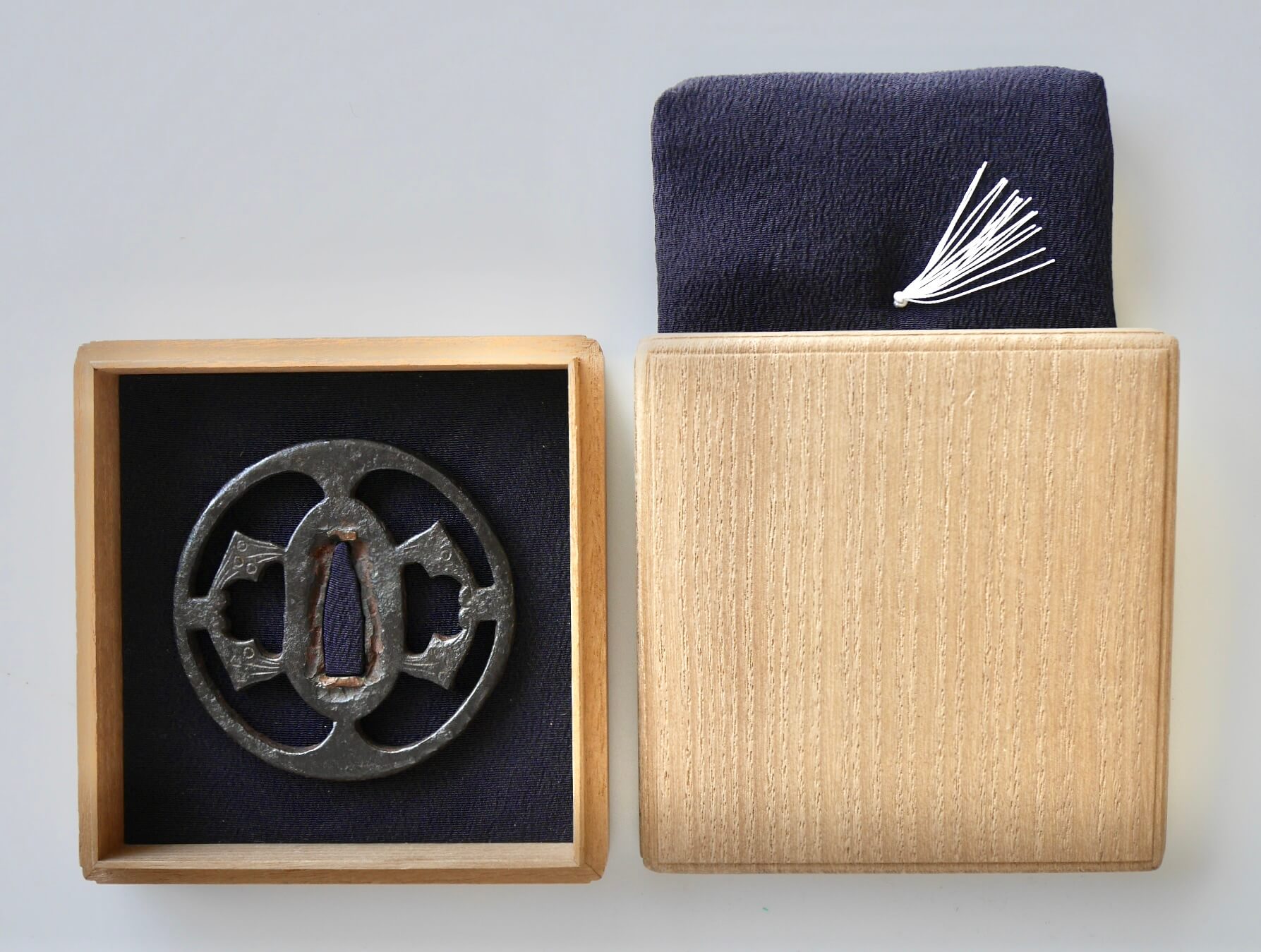
Kanayama tsuba are already recorded as a distinct category in “Tōban Shōkan Kōketsu”, compiled by Matsumiya Kanzan in the Edo period. They are thought to have originated in the Kanayama district of Ōno-shō in Owari Province, an area governed by the Saji clan around the mid-Muromachi period. Their production appears to have come to an end by the Momoyama period, and in the Edo period they came to be referred to as Ōno tsuba.
Kanayama work is characterized by bold, geometric designs and by the presence of abundant, dark, granular tekkotsu prominently expressed along the mimi (rim). Most examples are relatively small, measuring around 7 cm.
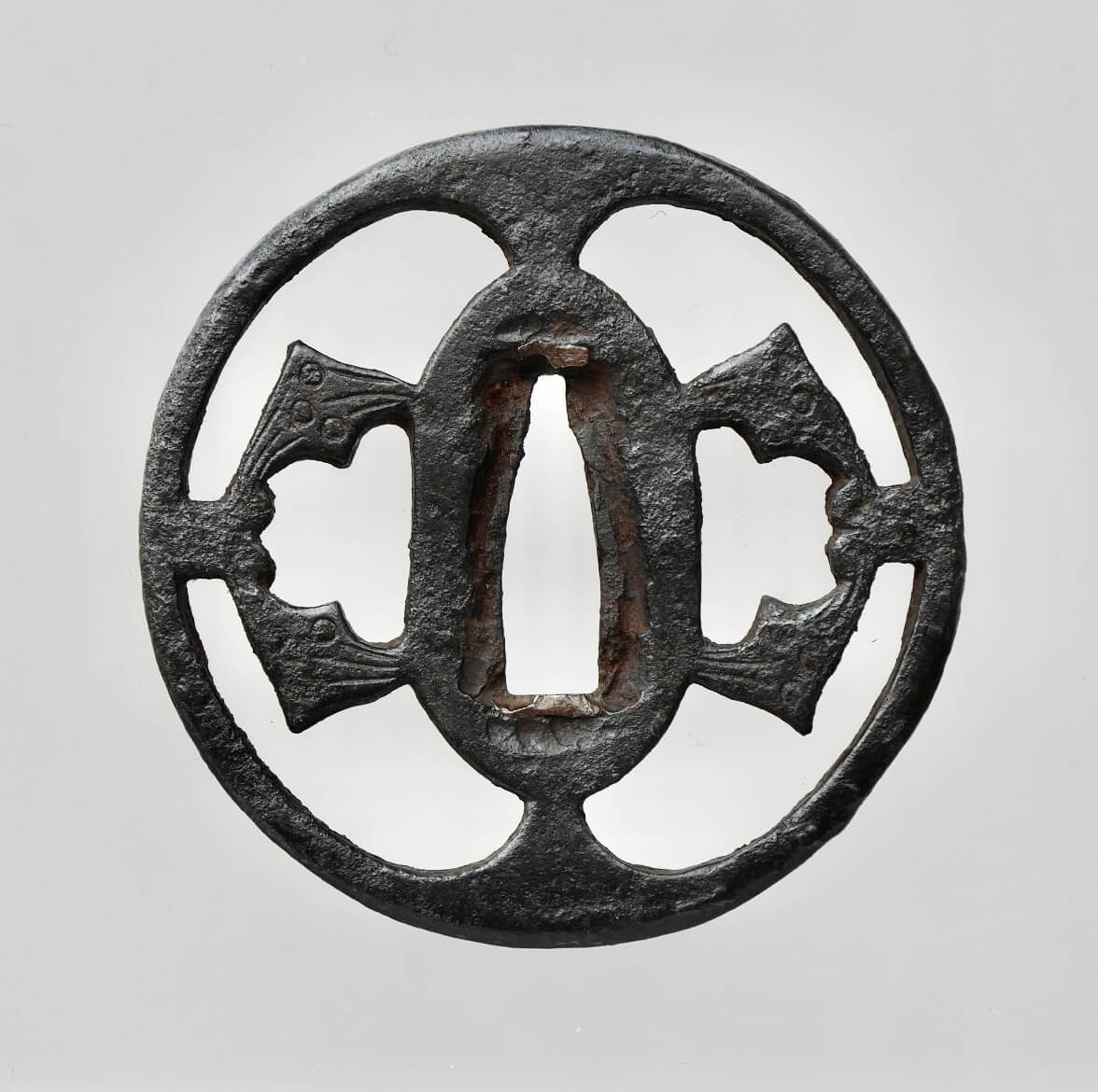
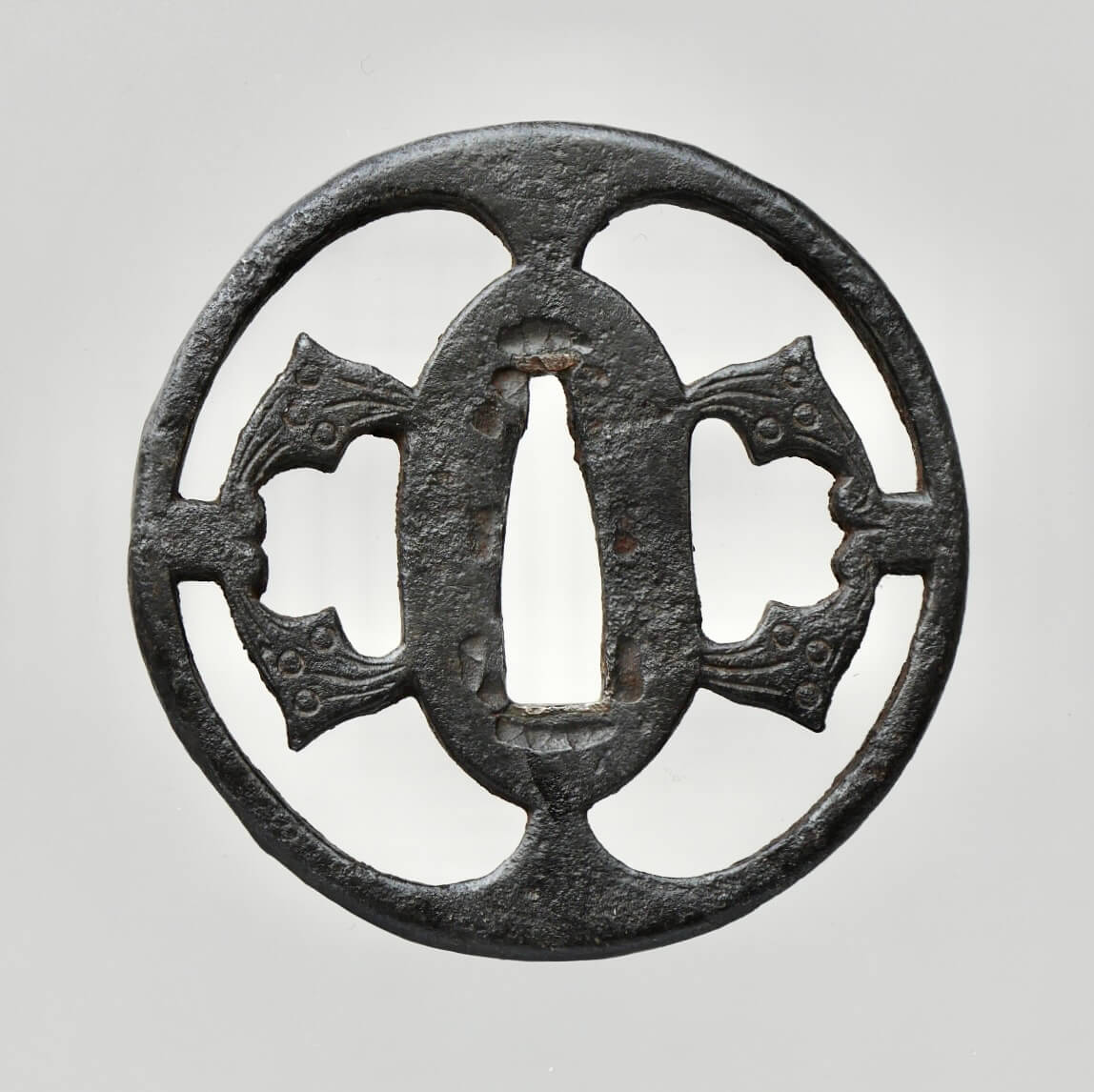
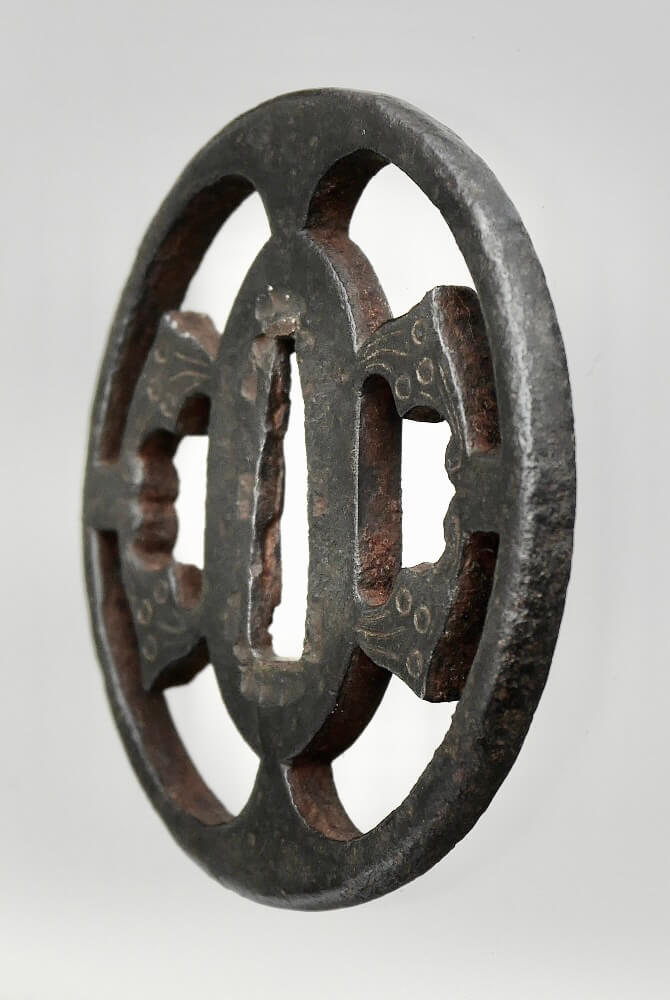
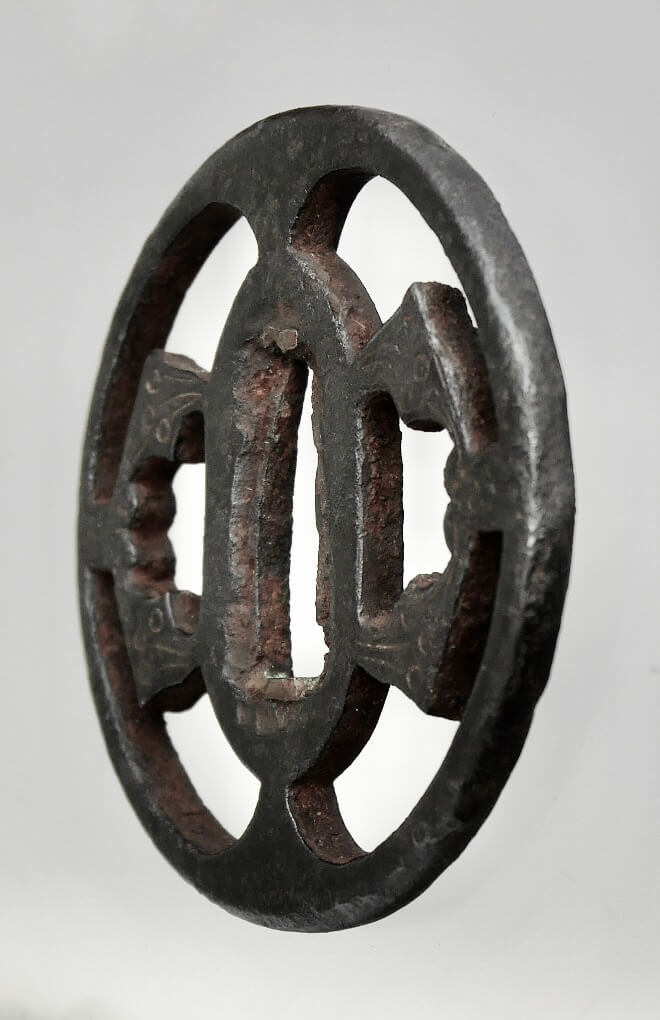
This tsuba features circular reserves on both sides, within which a dakimyōga (embracing ginger motif) is rendered in delicate kebori and executed in openwork. The mimi and surface display plentiful, dark, lustrous tekkotsu, creating a rich and compelling presence.
The sea-cucumber-like (namako) shapes of the reserves recall compositional elements seen in Ko-Shōami work. By the Momoyama period, however, the development of transportation networks likely facilitated the spread of Shōami-style designs throughout the country. At the same time, symmetrical compositions are also a defining characteristic of Kanayama tsuba.
Though modest in size, this piece possesses a strong presence, fits comfortably in the hand, and is a fine work worthy of appreciation.