Design of Matsukawabishi
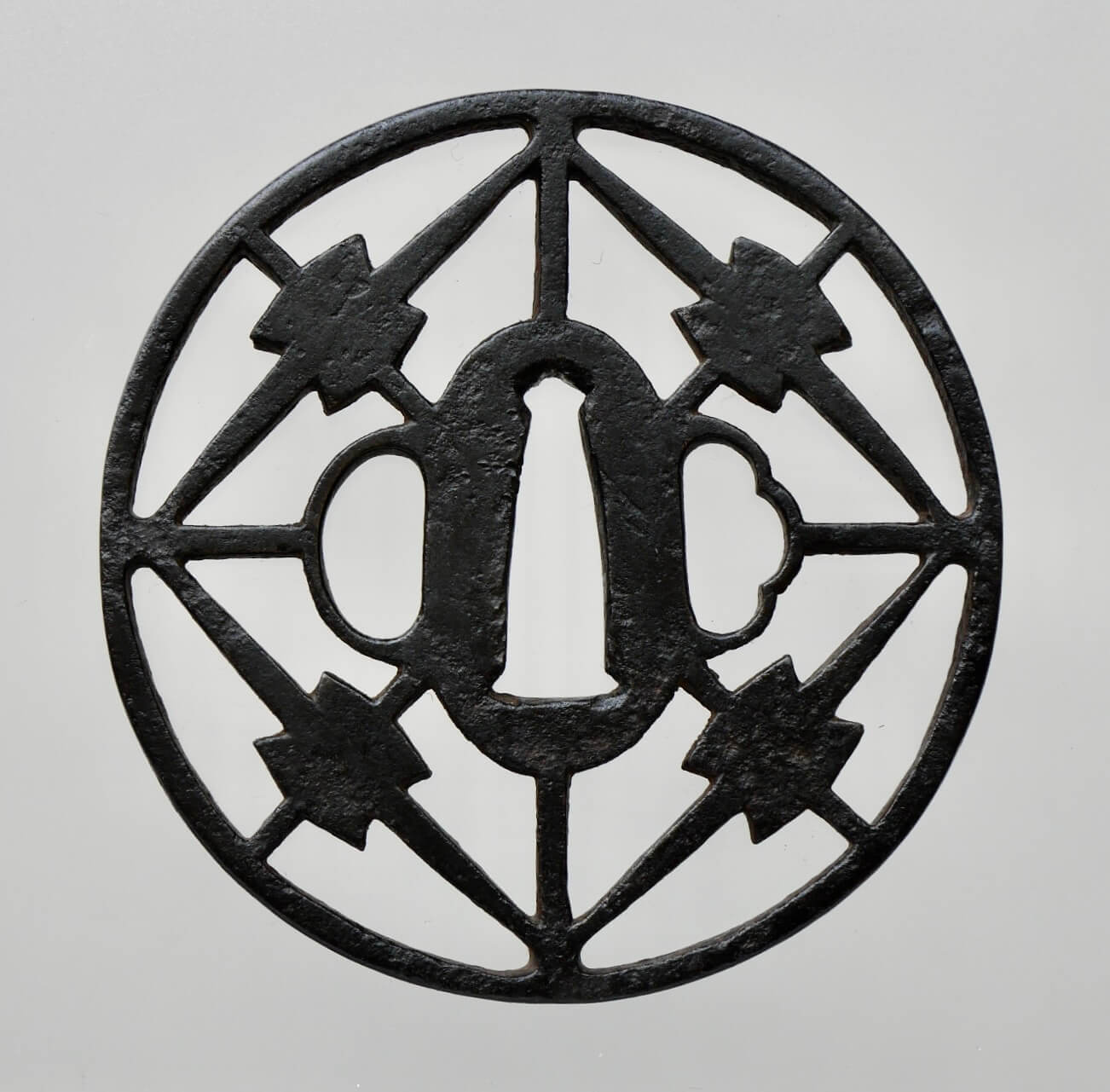
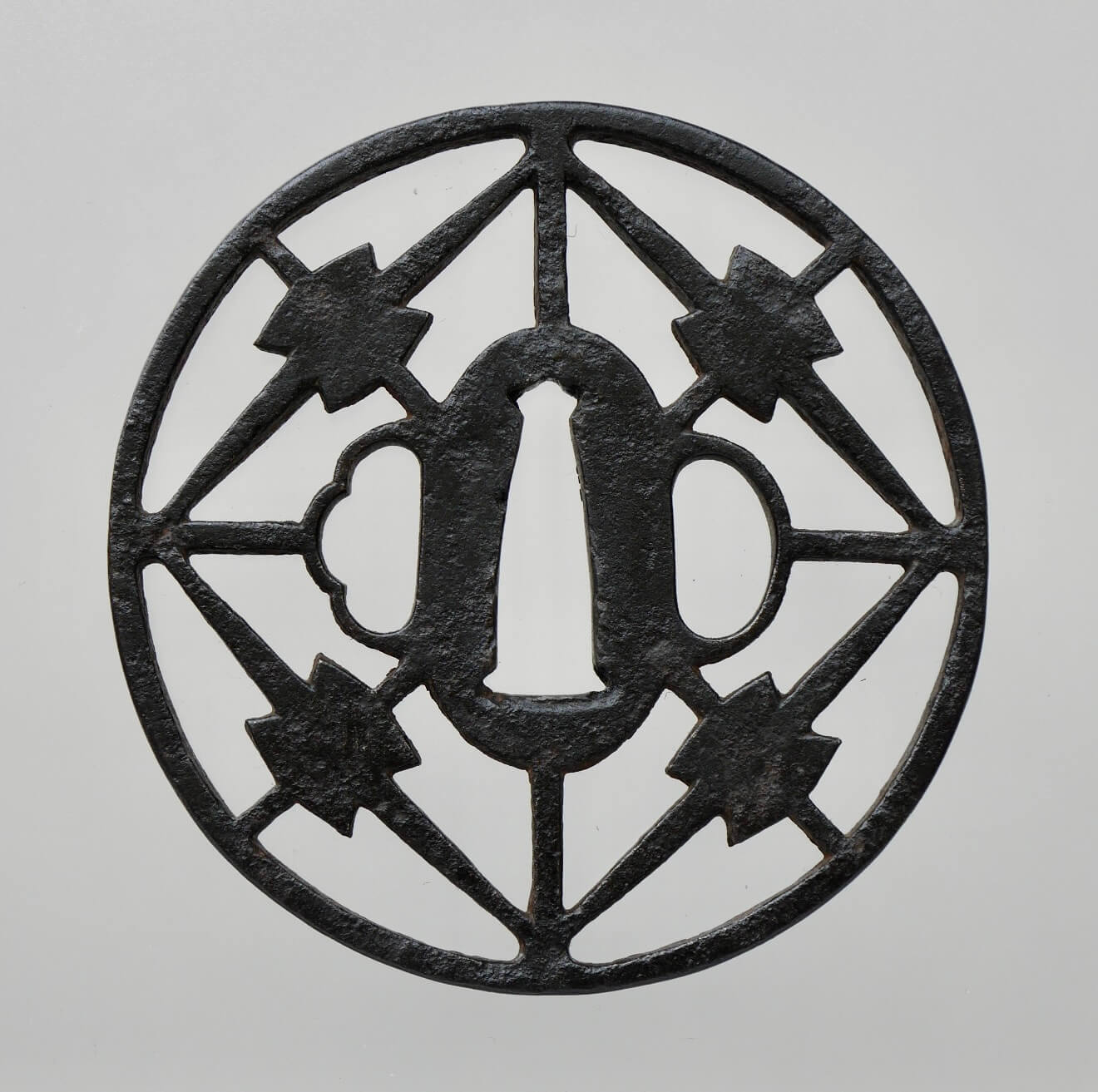
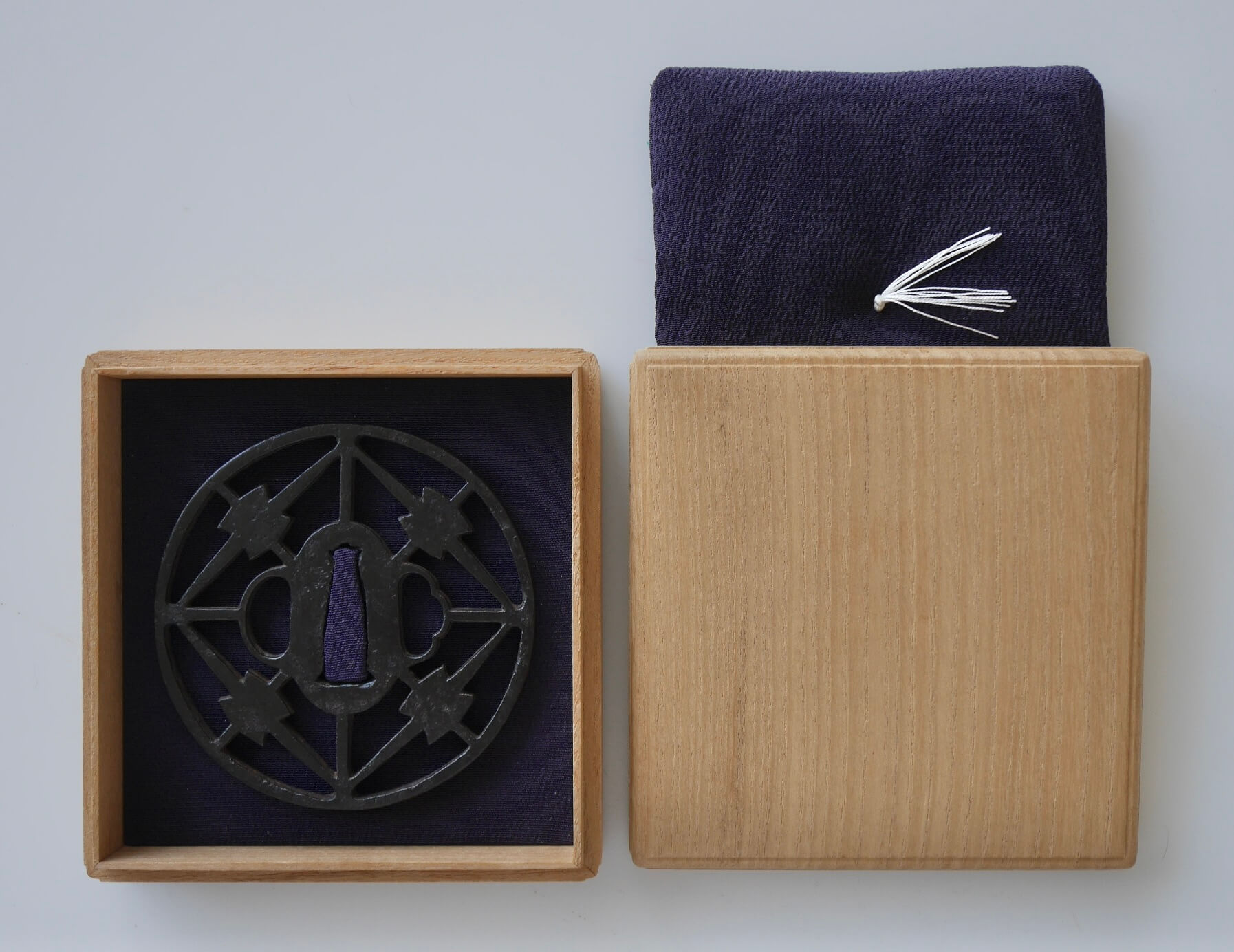
The term Owari sukashi was not used in earlier periods, but was introduced in the early modern era when Akiyama Kyūsaku Ou undertook the classification and organization of sukashi tsuba. Although it remains uncertain whether these works were actually produced in Owari, their yakite technique and the presence of tekkotsu closely resemble those found in the works of Owari-associated masters such as Yamakichibei, Hōan, and Sadahiro, and they have therefore been regarded as their predecessors.
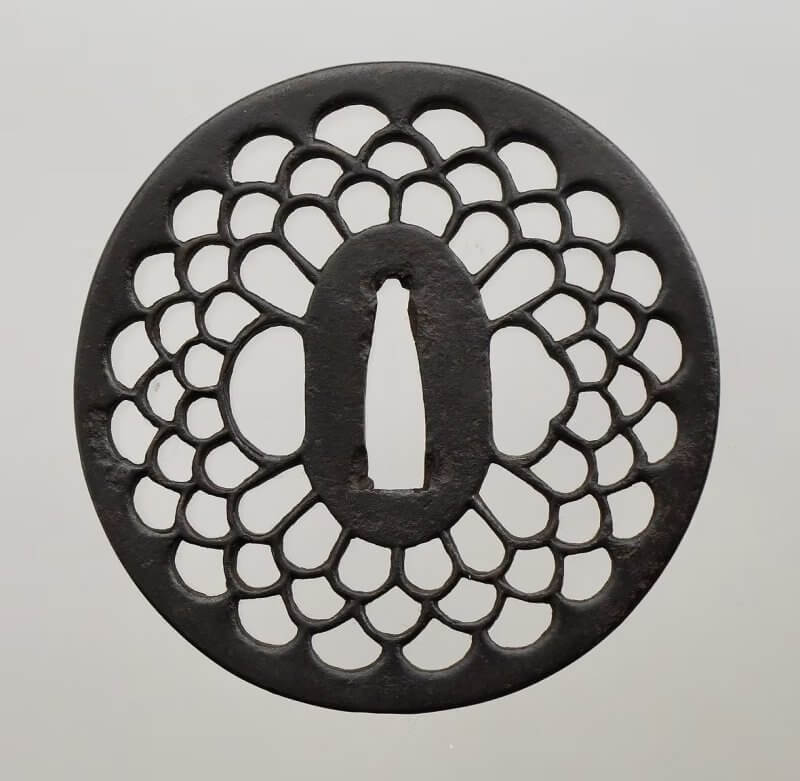
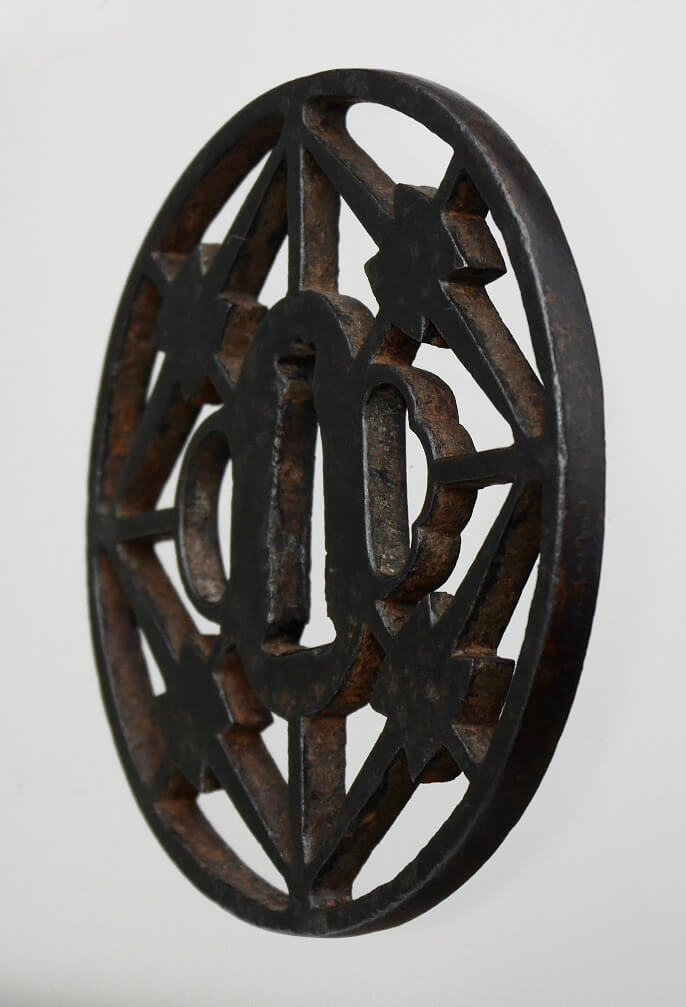
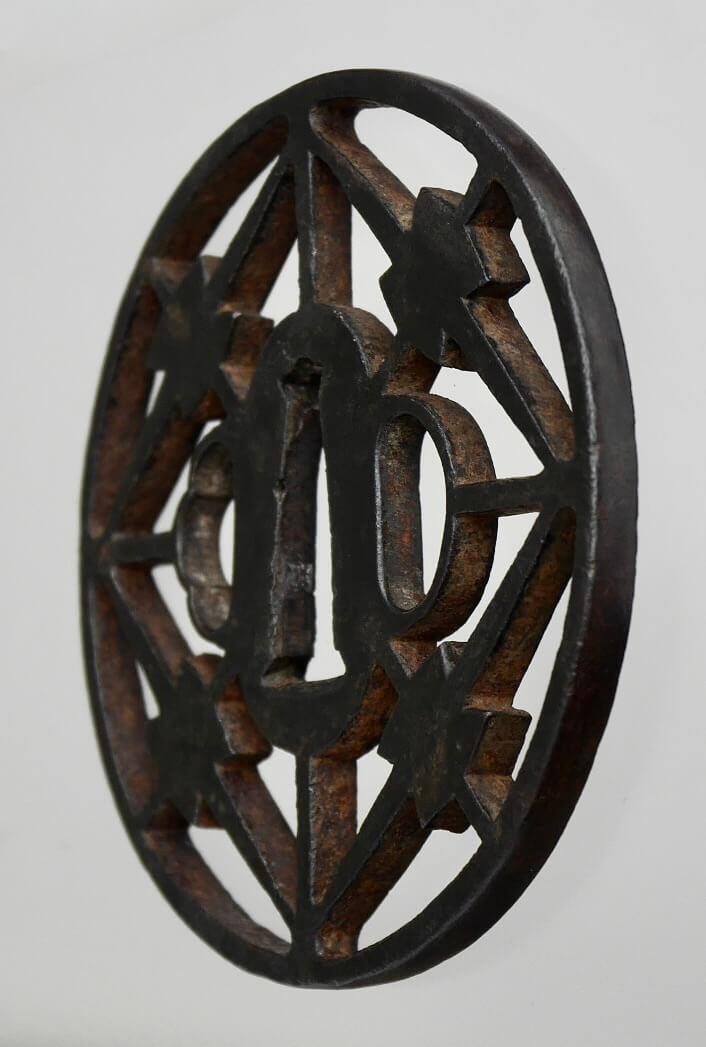
Owari sukashi tsuba of the Muromachi period are typically characterized by a round shape and iron ground with a slightly concave center, a kaku-mimi ko-niku (in between round and square rim), and bold, largely symmetrical sukashi designs, often finished with a hammered surface incorporating visible tekkotsu.
This tsuba conveys such Owari traditions, while the neatly controlled tsuchime and refined workmanship, together with the matsukawabishi motif—akin to sangaibishi (three-tiered diamond crest) and popular during the Momoyama period—evoke the aesthetic spirit of that era. The iron displays a deep, lustrous black tone, and the openwork, expansive and unrestrained in feeling, is particularly appealing. Its larger size further enhances its presence.