Design of Dragon
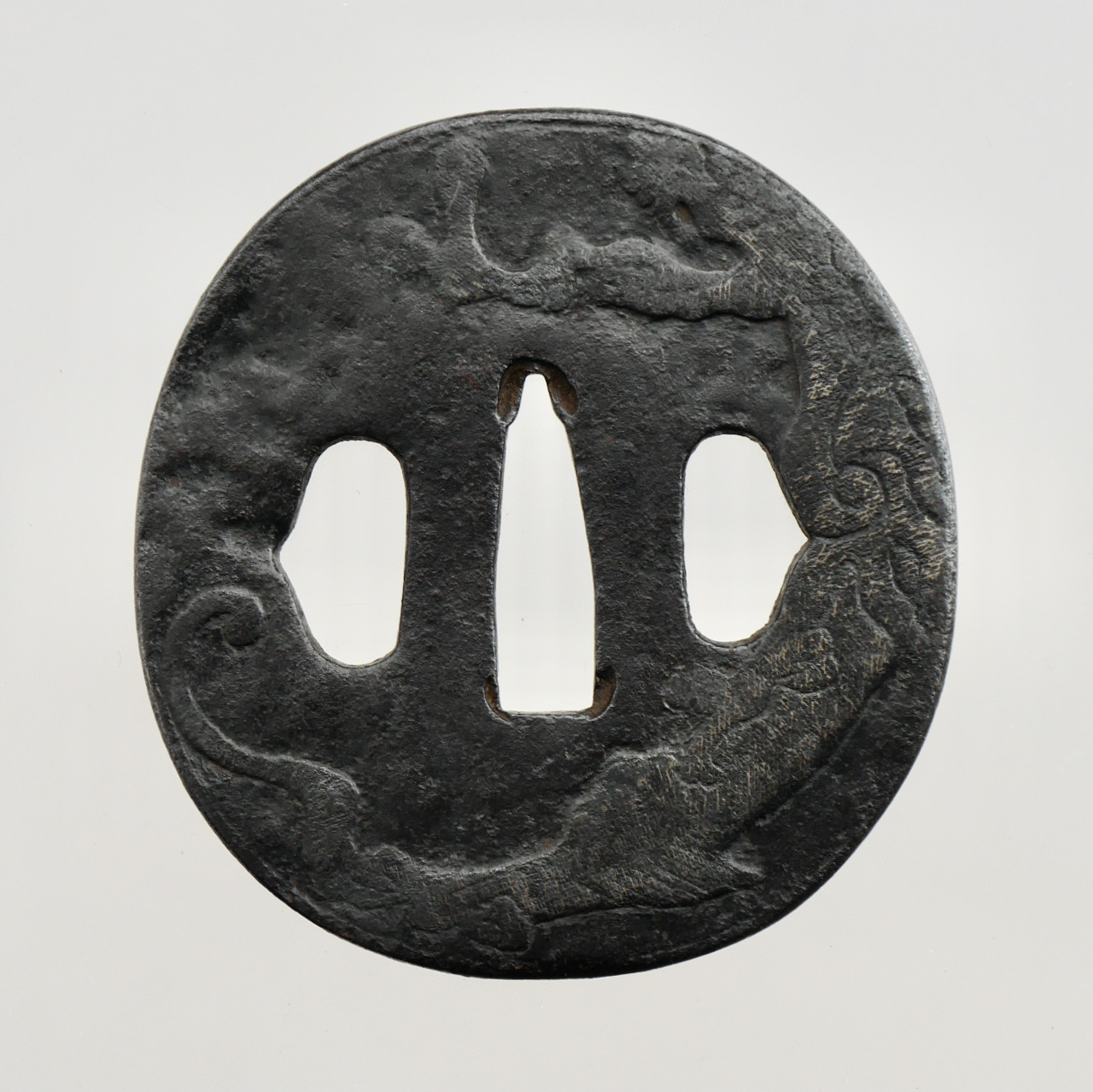
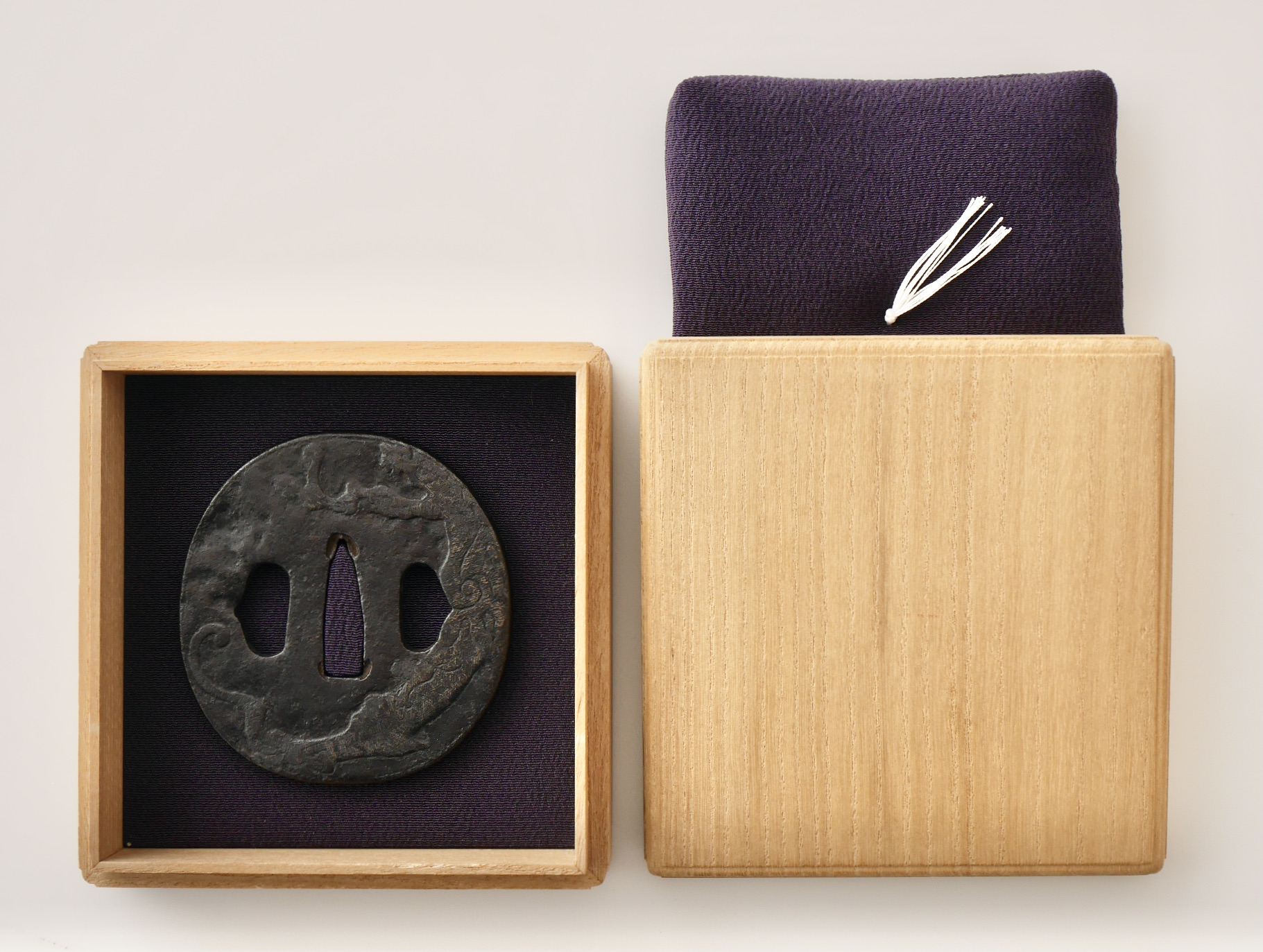
The second generation Shimizu Jingo was born in Genna 6 (1620) and is known to have died in Hōei 7 (1710) at the age of ninety-one, as recorded on a memorial tablet preserved by the Shimizu family. Having lived together with the first generation Jinbei for fifty-five years, his early work was strongly influenced by his predecessor; over time, however, he developed a distinct style of his own, characterized by a somewhat gentler and more refined sensibility. All surviving works are unsigned.
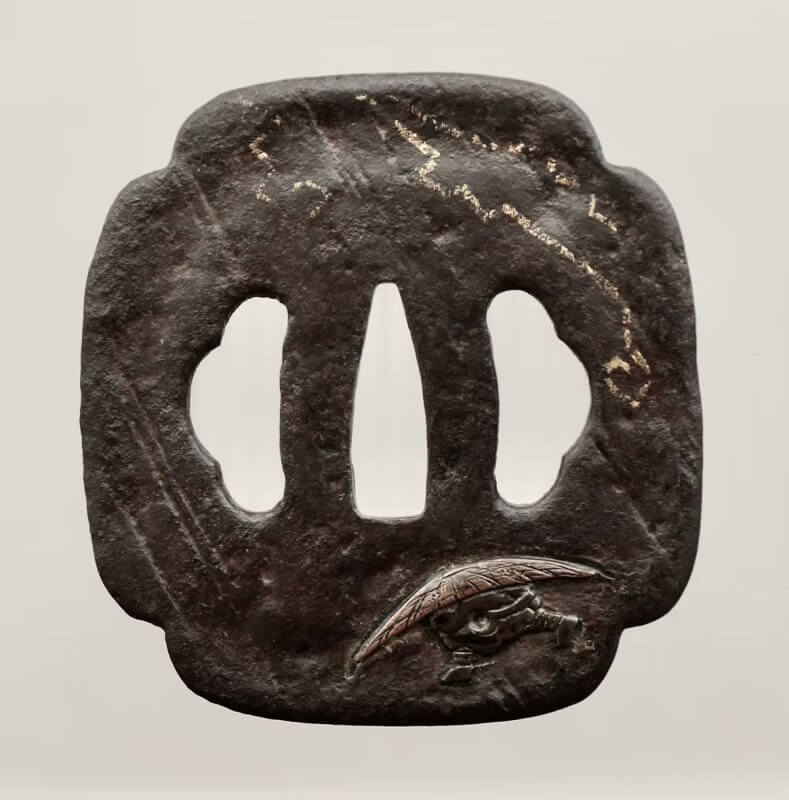
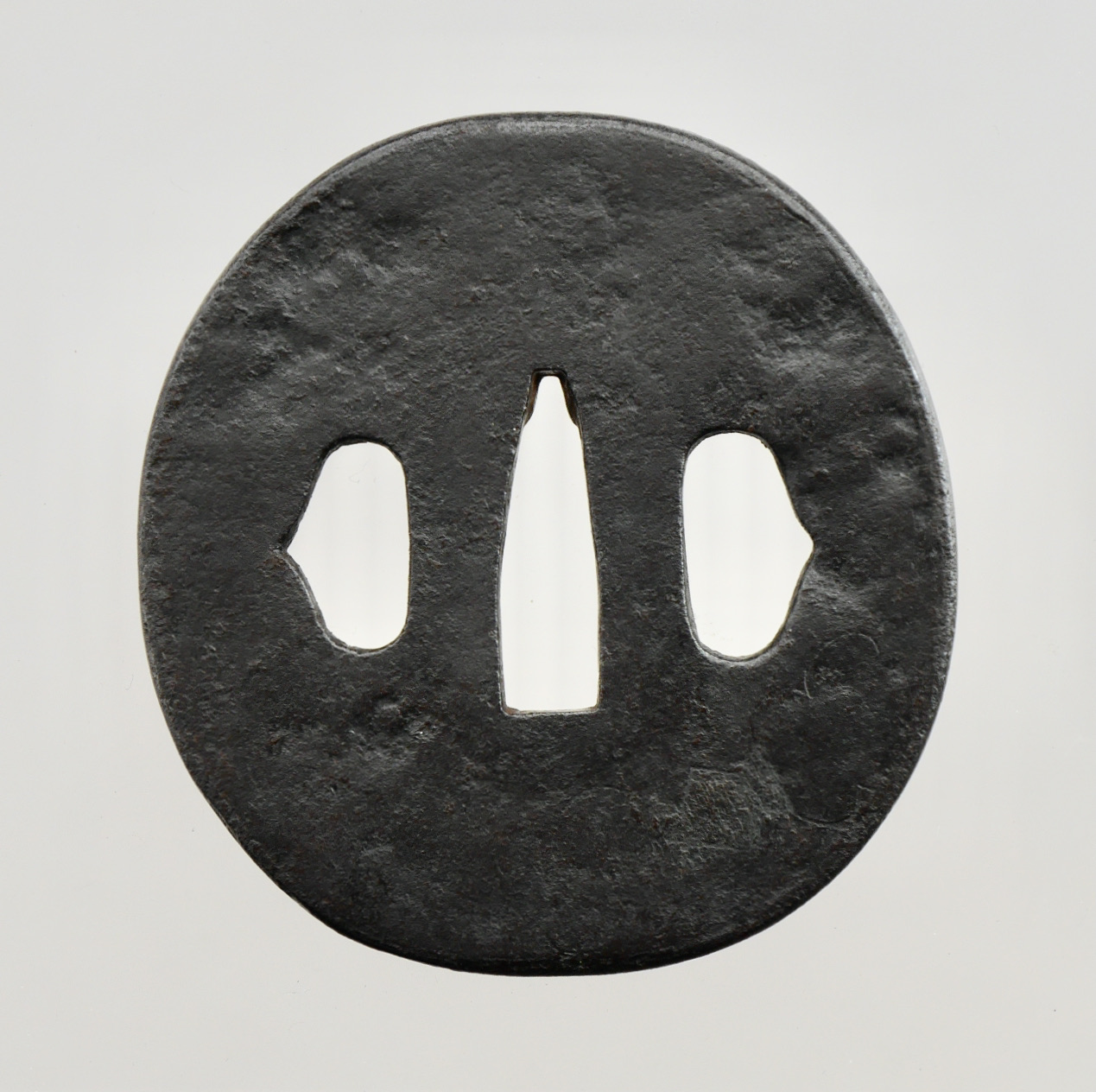
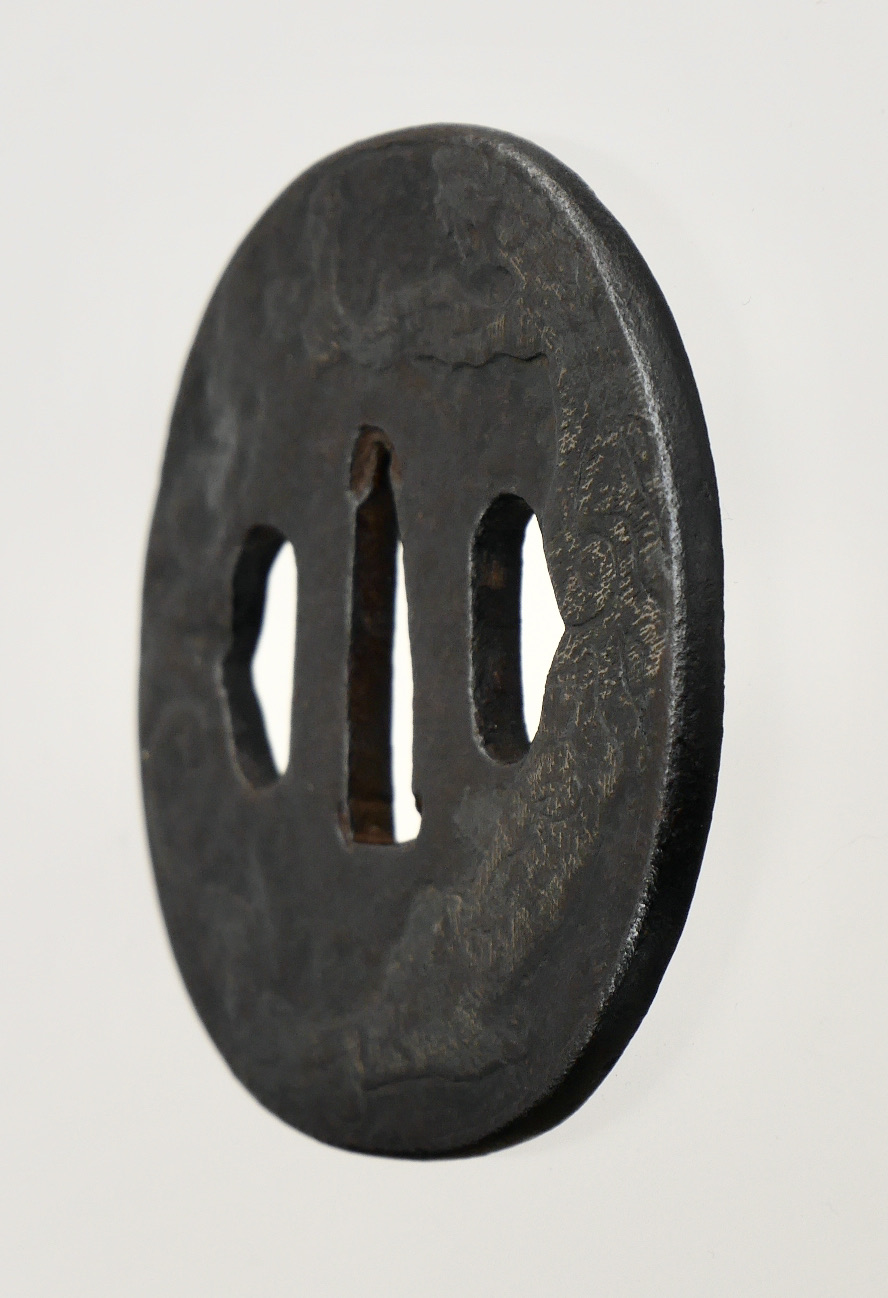
This tsuba presents a development of the dragon motif seen in the work of the first generation, interpreted in a manner unique to the second generation. Whereas the first generation favored a mokko-gata, this example is fashioned in a well-proportioned nagamaru-gata (elongated oval shape). In contrast to the sharp and angular expression of the first generation’s dragon, the face here is slightly rounded, with a softer and more composed expression.
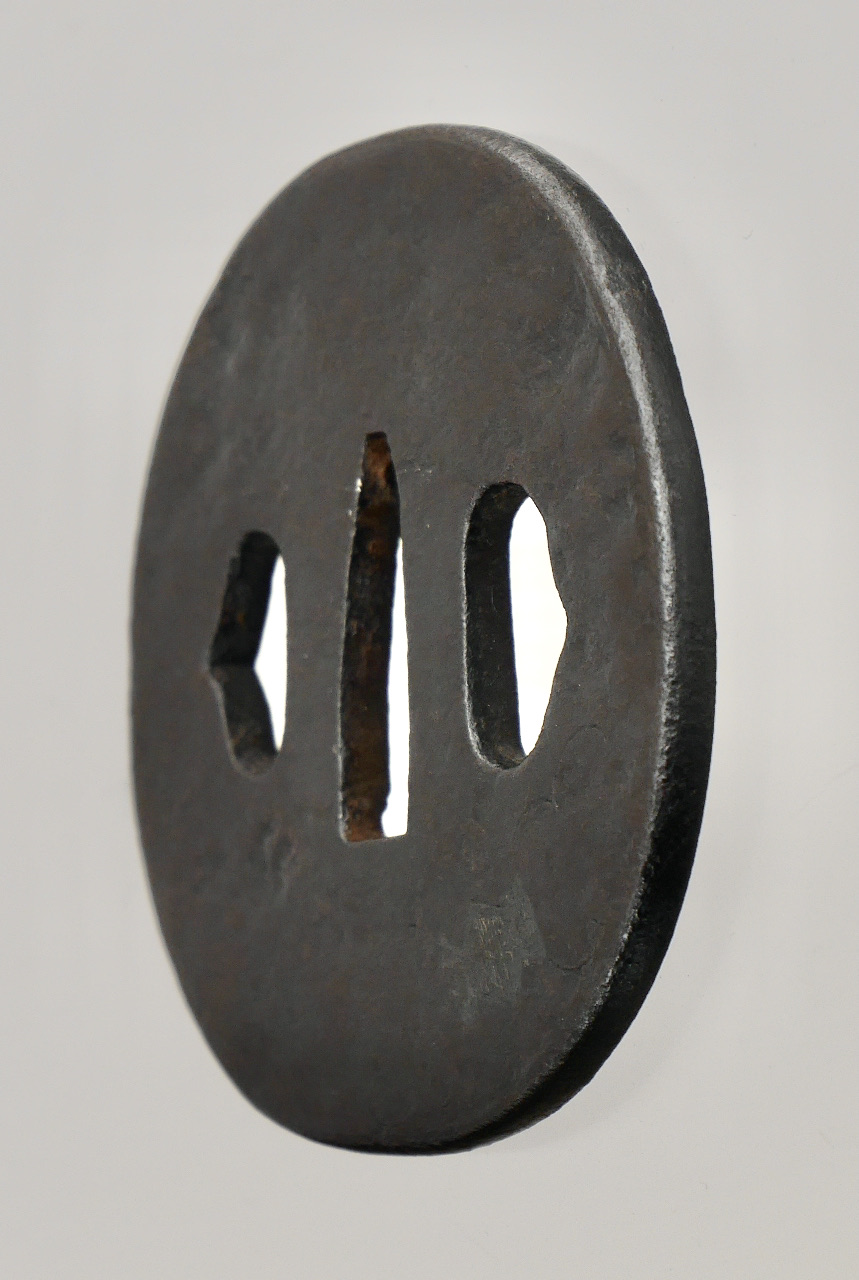
The variation in thickness from the mimi toward the seppa-dai reflects the influence of the first generation, while the addition of a fine incised line along the rim creates a subtle raised border, lending the piece a more orderly and refined appearance—an expression of the second generation’s individuality. The iron exhibits a brilliant, lustrous tone, and the richly textured silver nunome-zōgan further enhances its appeal. Altogether, this is a fine work that clearly expresses the distinctive character of the second generation Jingo.