Design of Hikiryō, Sangaibishi, and Karigane
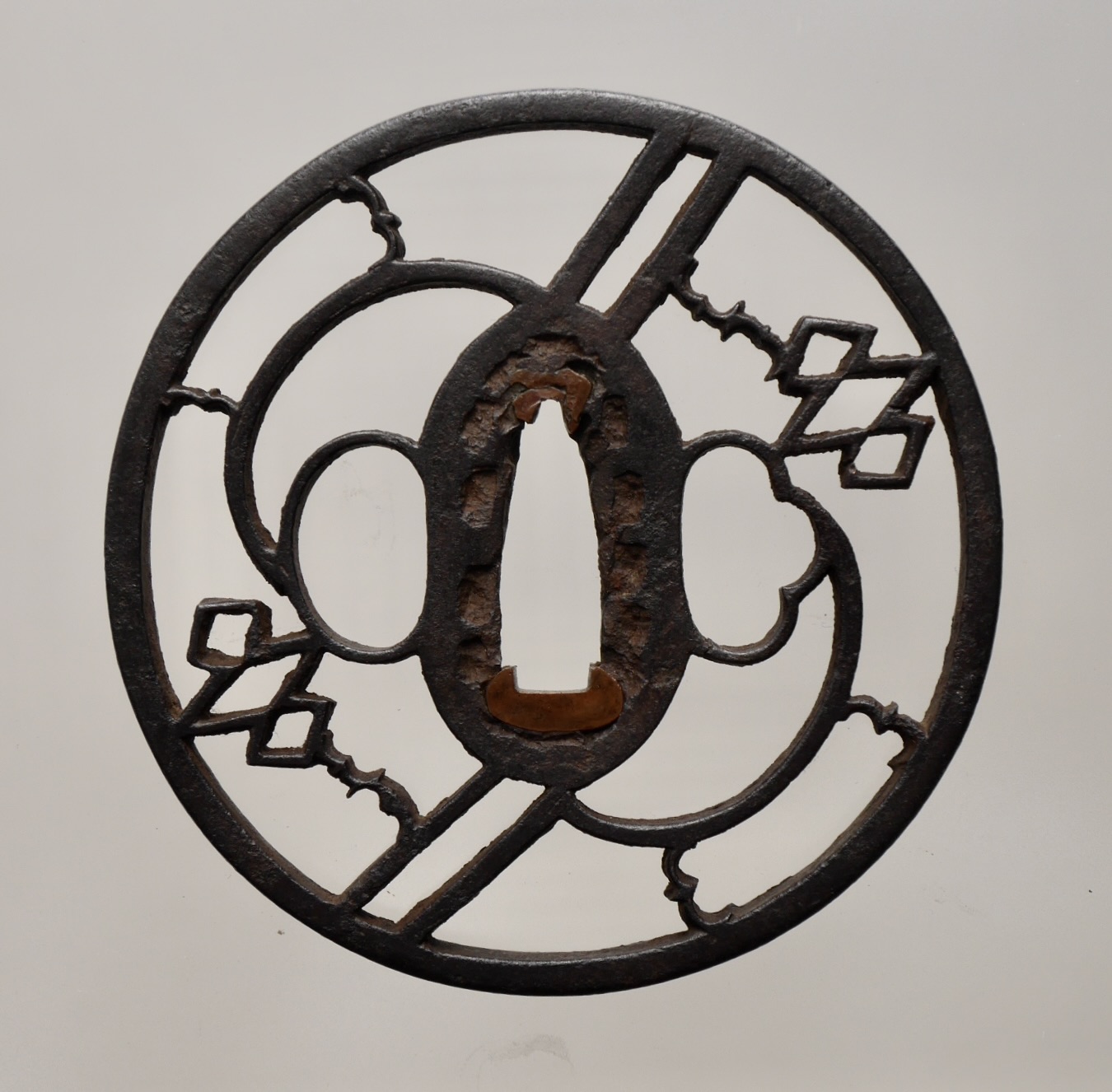
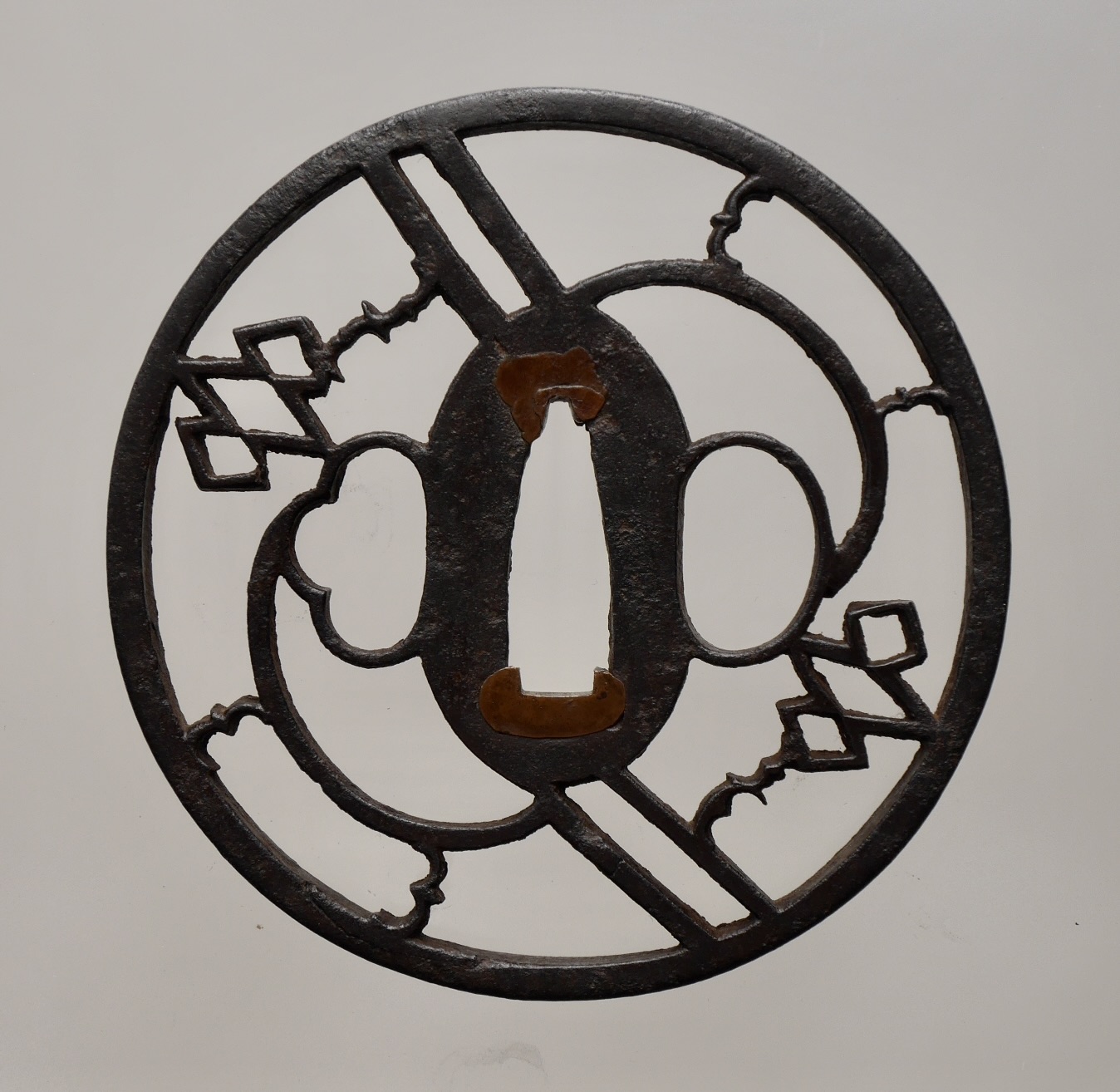
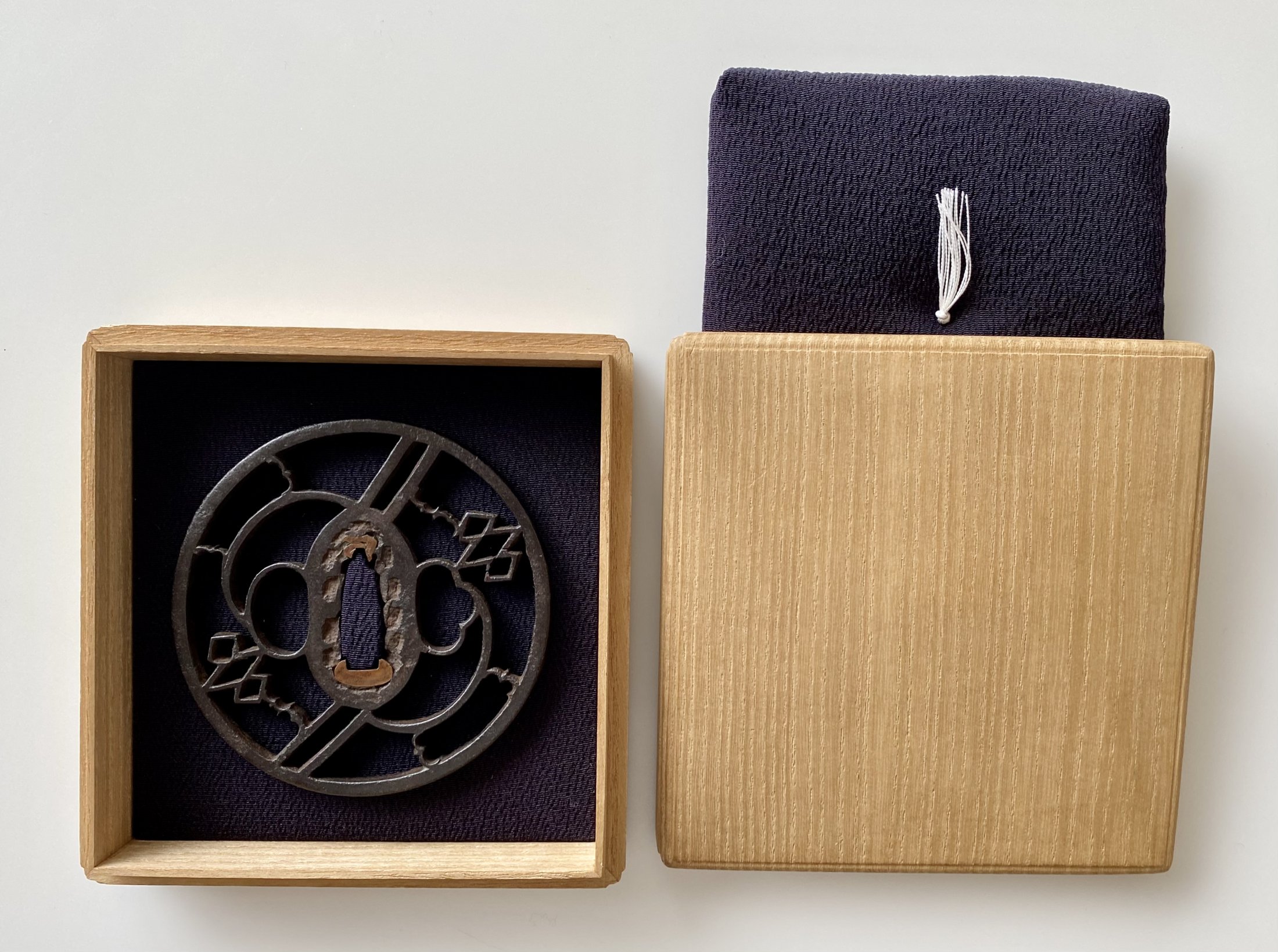
Sukashi tsuba attributed to Ko-Shōami are thought to have already existed by the time of the sixth shogun, Ashikaga Yoshimasa. It is likely that, in accordance with Yoshimasa’s aesthetic preferences, Shōami—one of the ami-shū (a group of court attendants) who served close to the shogun—was among the first to produce iron sukashi tsuba, which in turn inspired the emergence of Kyō sukashi.
While round forms are most common, more elegant shapes such as yatsu-mokkō were later inherited and further developed in the Edo period by Higo metalworkers, including the Hayashi and Nishigaki schools.
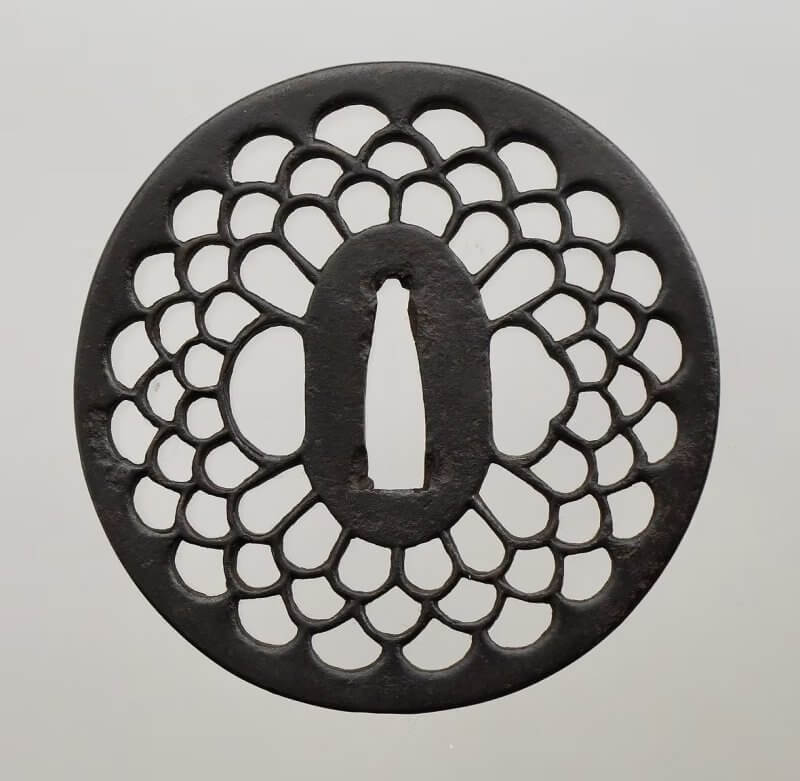
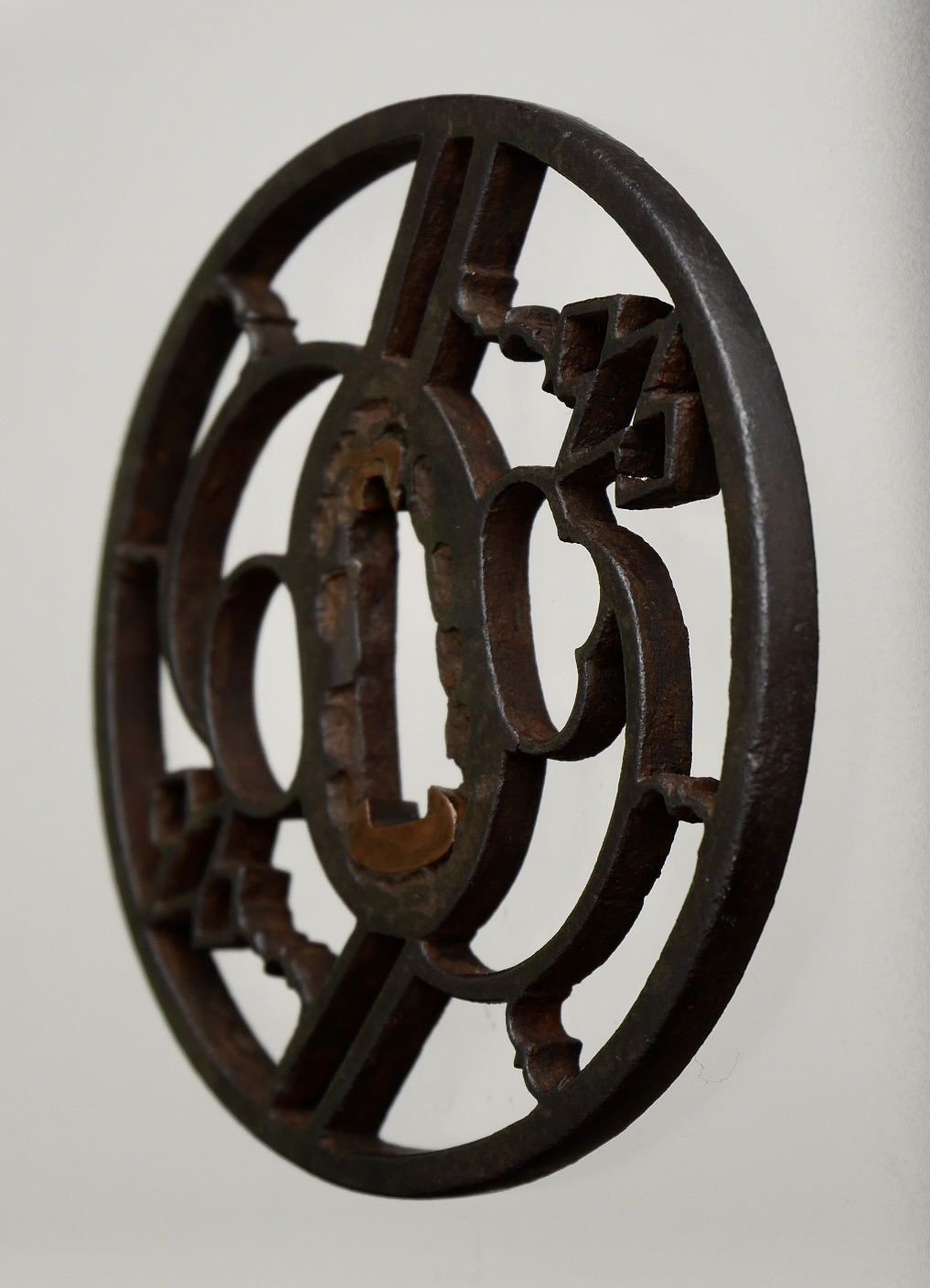
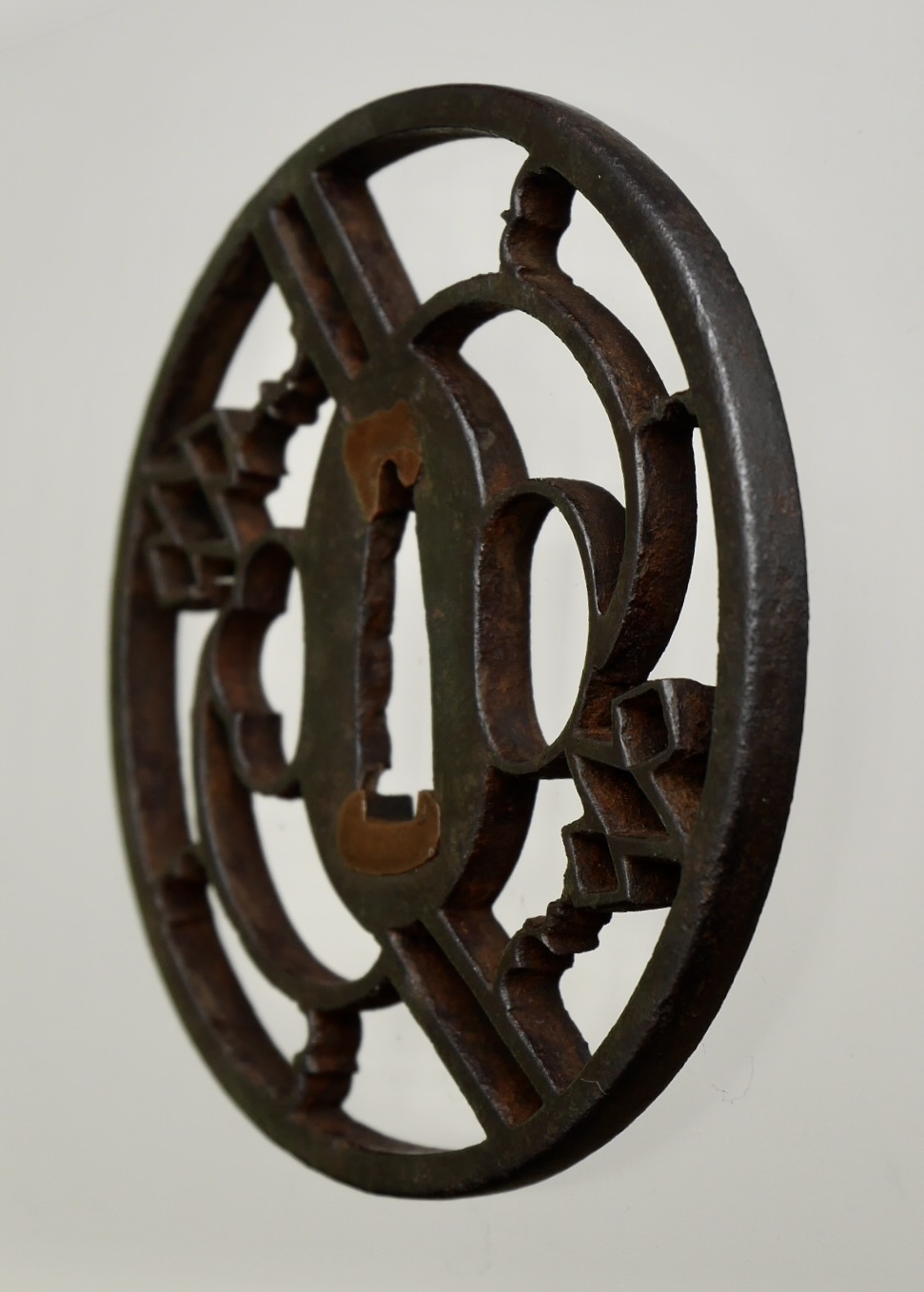
This tsuba is of round form with kaku-mimi (square rim) and a slightly concave center, and the iron displays a deep, lustrous black tone. For these reasons, the NBTHK Hozon certificate attributes it to Owari. However, such dynamically composed, radially balanced designs are rare in Owari tsuba, and the refined execution of the sukashi suggests that it is more likely a work of Ko-Shōami.
The sukashi is delicate and elegant, while the hitsu-ana on either side are slightly rounded and freely shaped. The finely worked tsuchime further supports a dating to the late Muromachi period, around the time of Gotō Jōshin. The iron has a subdued, understated depth, and the graceful, well-balanced sukashi is highly appealing. Altogether, this is a representative work of Ko-Shōami from this period.