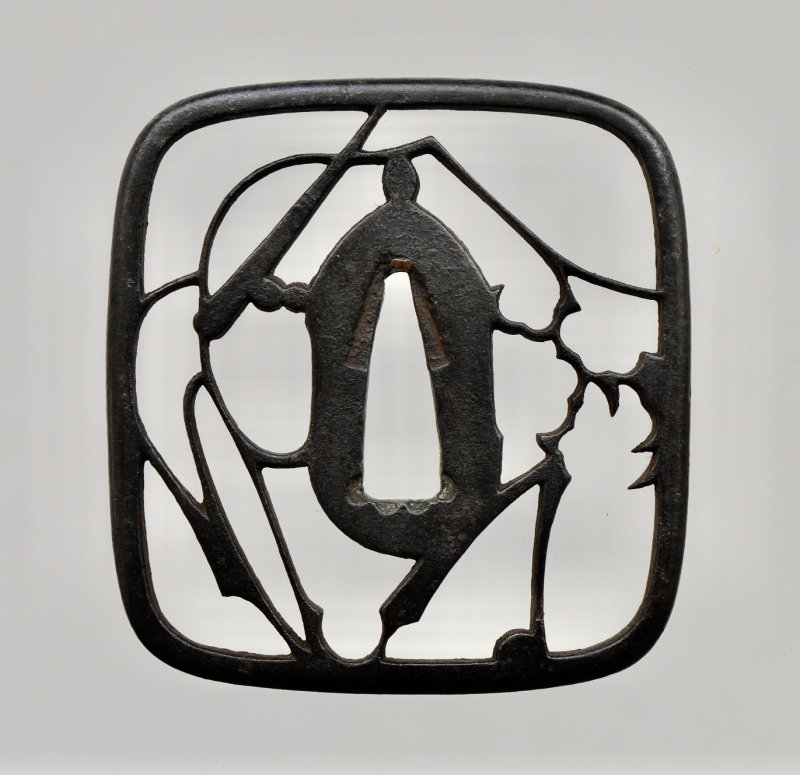
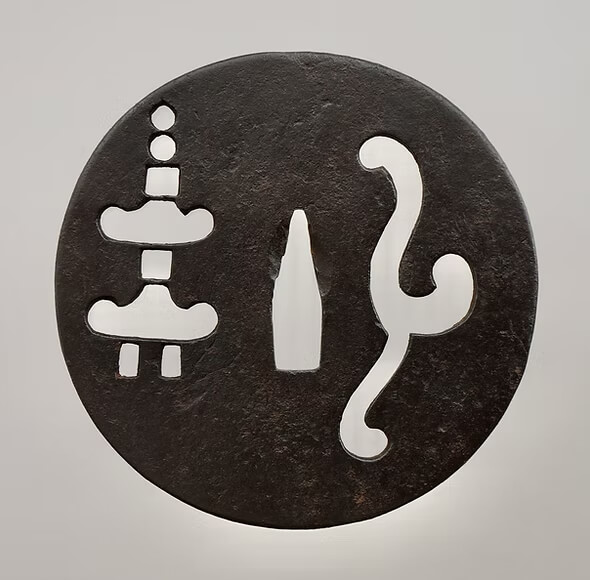
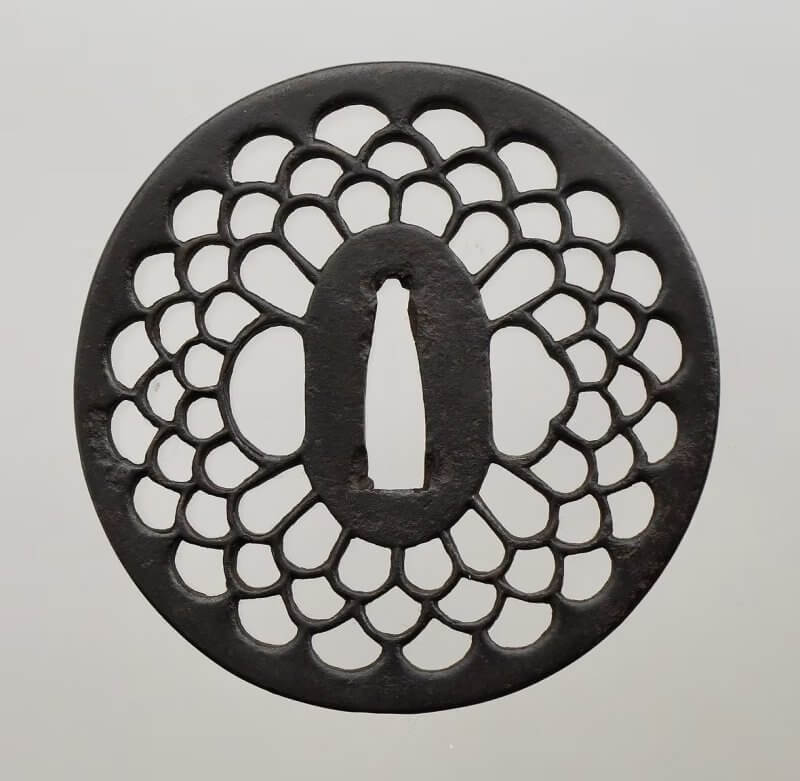
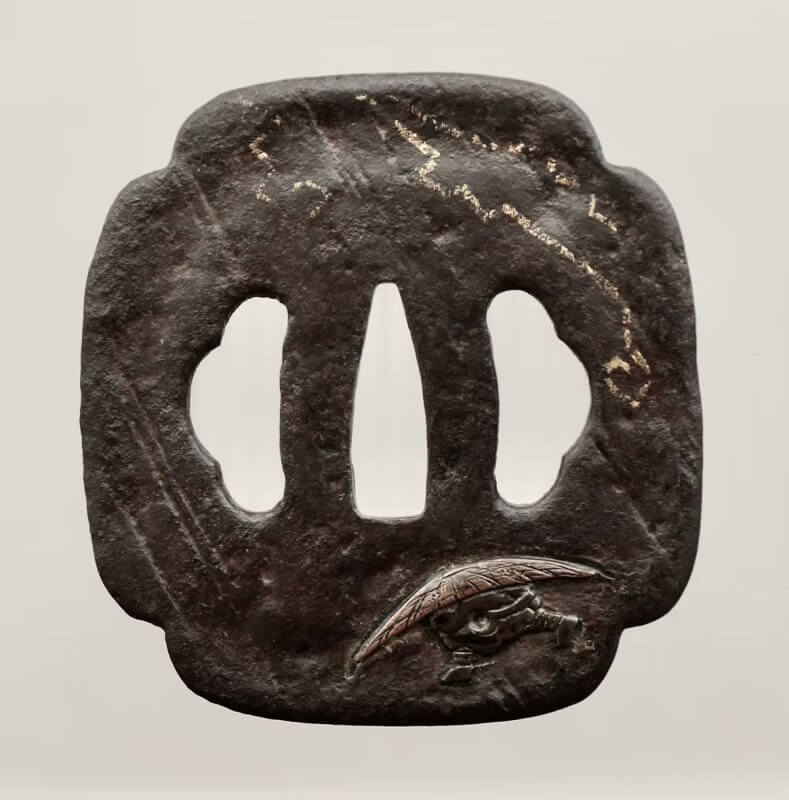
Design of Four Warabite
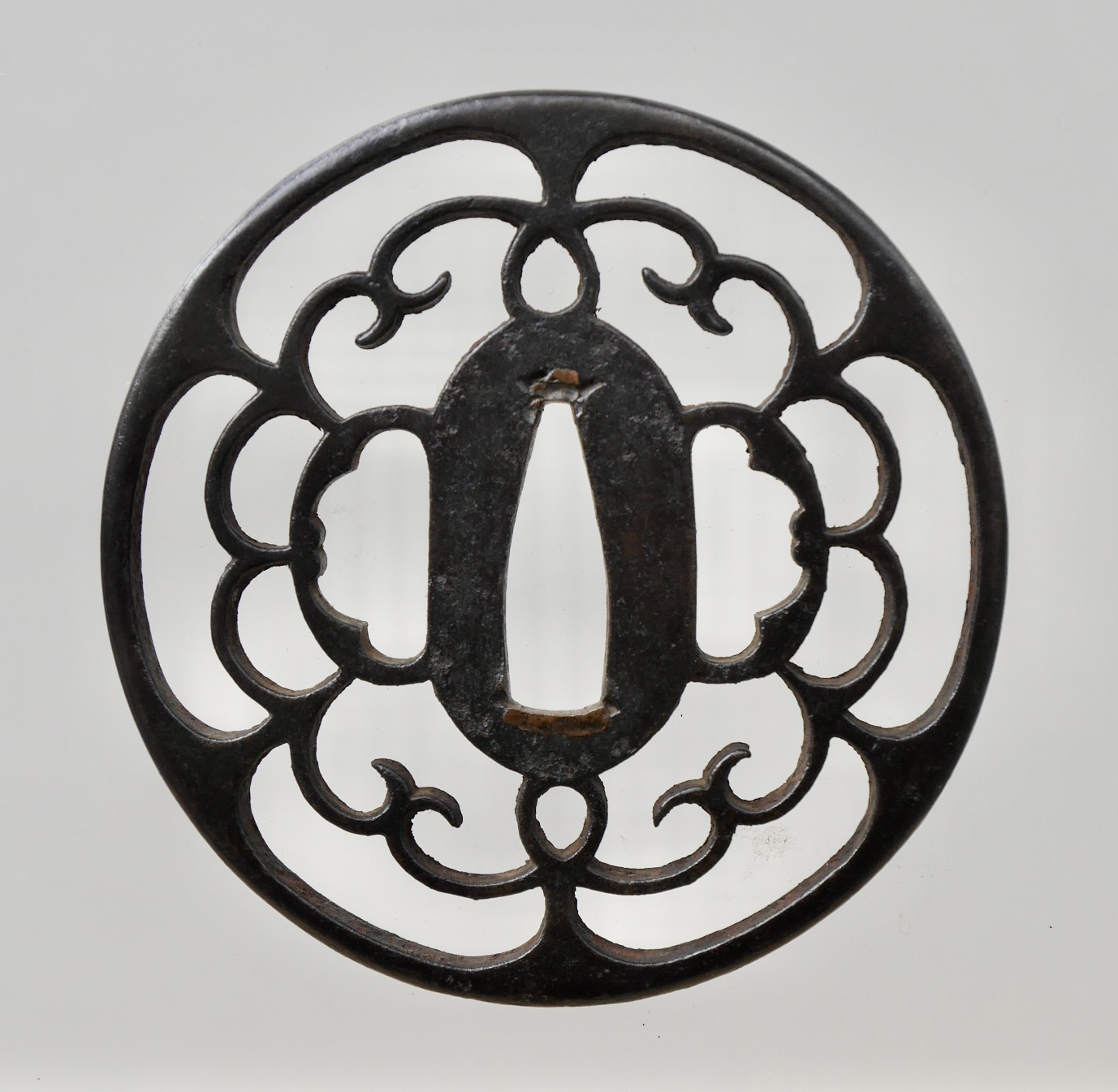
Hayashi Shigemitsu was born in Kanbun 7 (1667) as the son of the master artisan Matashichi, and died in Enkyō 1 (1744). His period of activity spans from the Genroku to Kyōhō eras (1688-1736), coinciding with the flourishing of Edo culture. “Higo Kinkōroku” notes: “Although he generally adhered to the principles of the first generation, his work possesses a refined elegance; consequently, highly meticulous works are rather few.” Distinct from Matashichi and Tōhachi, he produced many works marked by subtle irregularity and full of character.
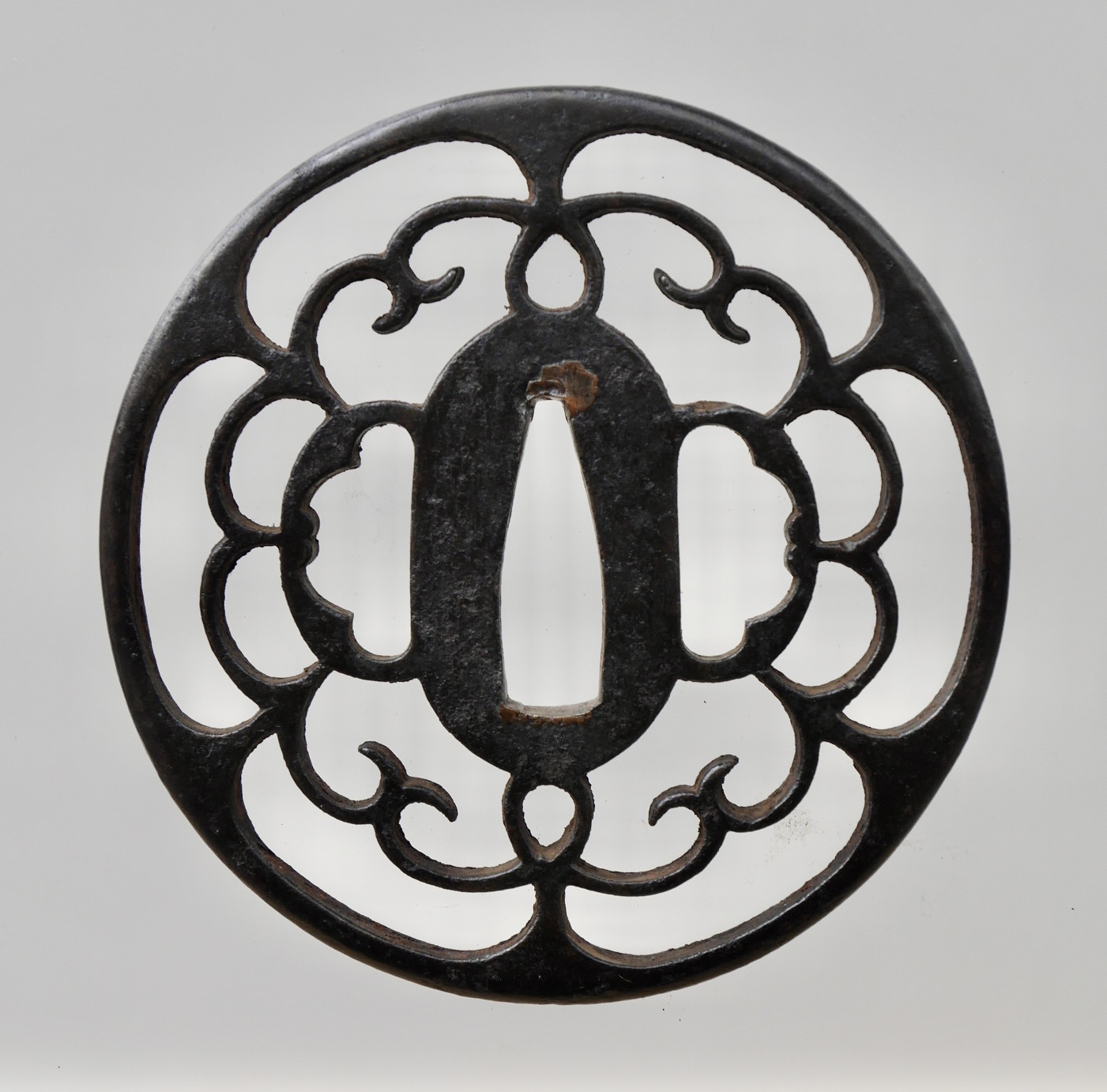
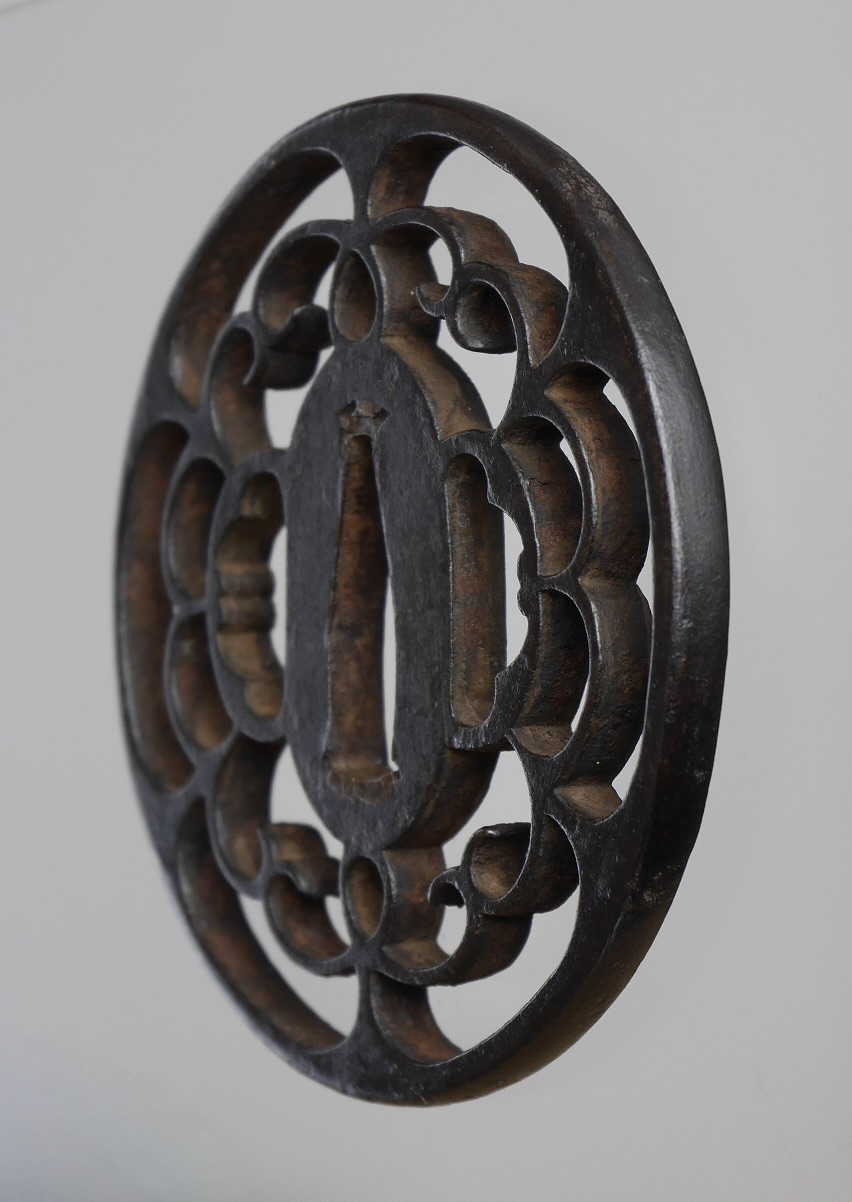
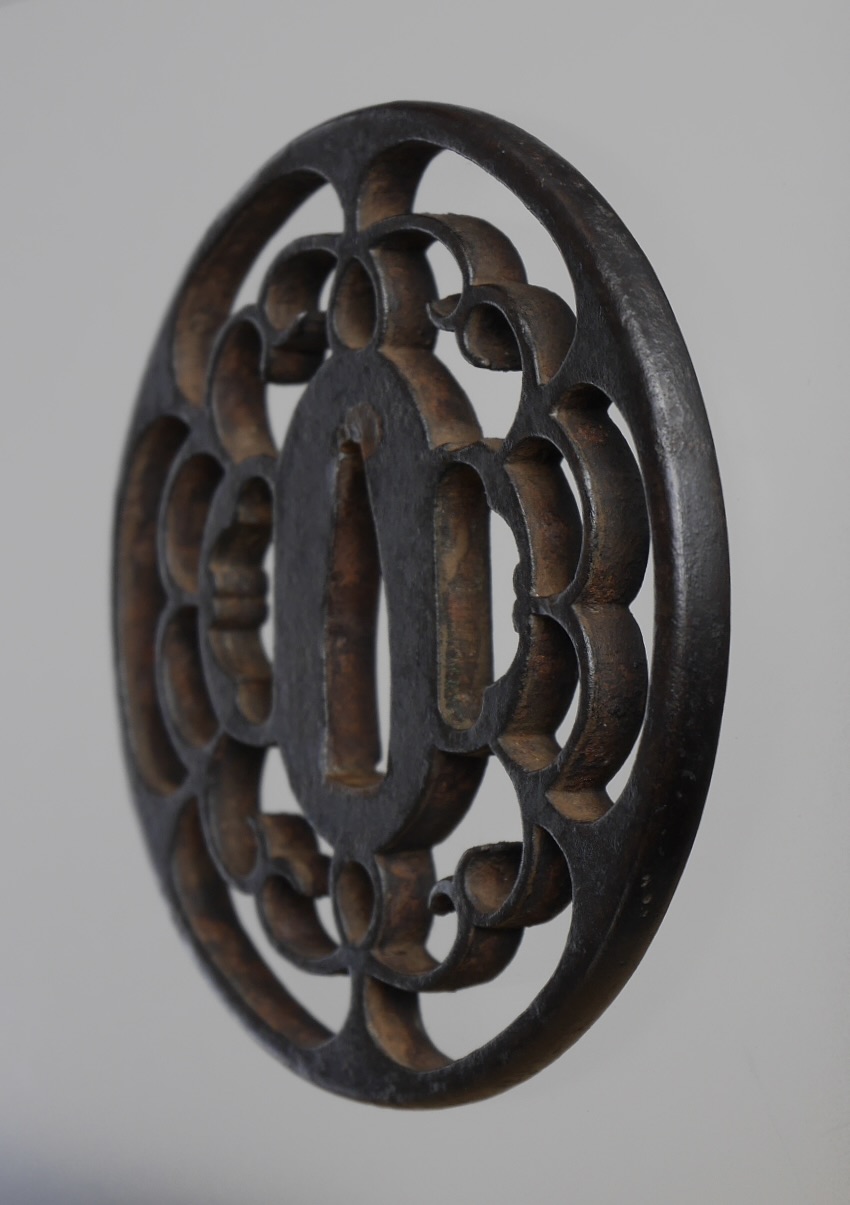
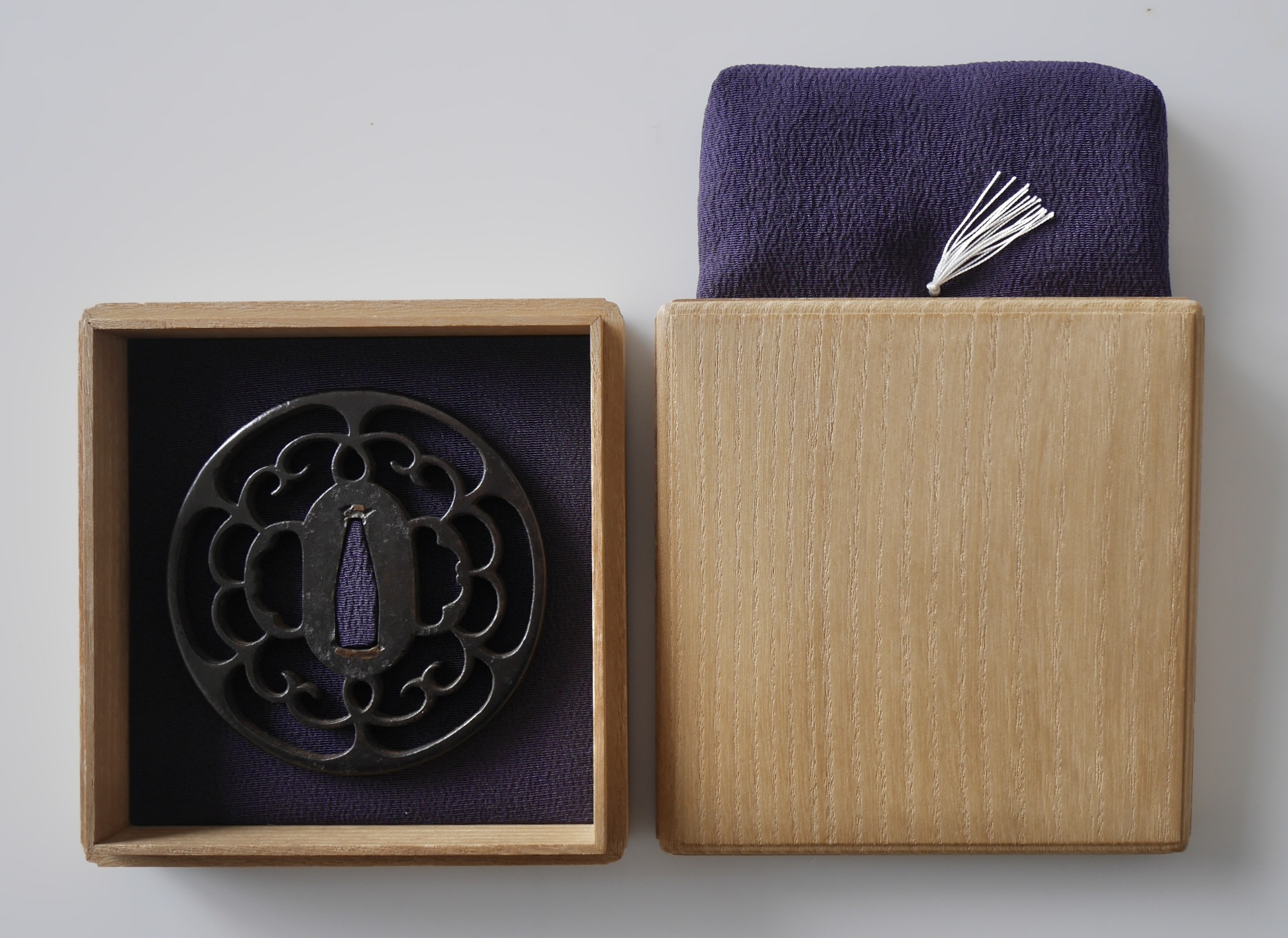
This tsuba, however, is of a well-proportioned round form, and the sukashi is executed with precision, immediately recognizable as a superior work of the Hayashi school. The iron is dense and of a deep, yōkan (Japanese beans cake)-like tone with a quiet, understated quality, while the vertical, clean-cut edges of the openwork—without added thickness recall the manner of Matashichi.
At the same time, the droplet-shaped openings above and below the nakago-ana, the slight irregularity in the warabite forms, the subtle movement in the surface, and the presence of tekkotsu along the mimi suggest that the work is by Shigemitsu, who succeeded Matashichi.
Of relatively large size, and outstanding in workmanship, composition, and iron quality, this is one of Shigemitsu’s most accomplished works.