Design of Four Broken Fans
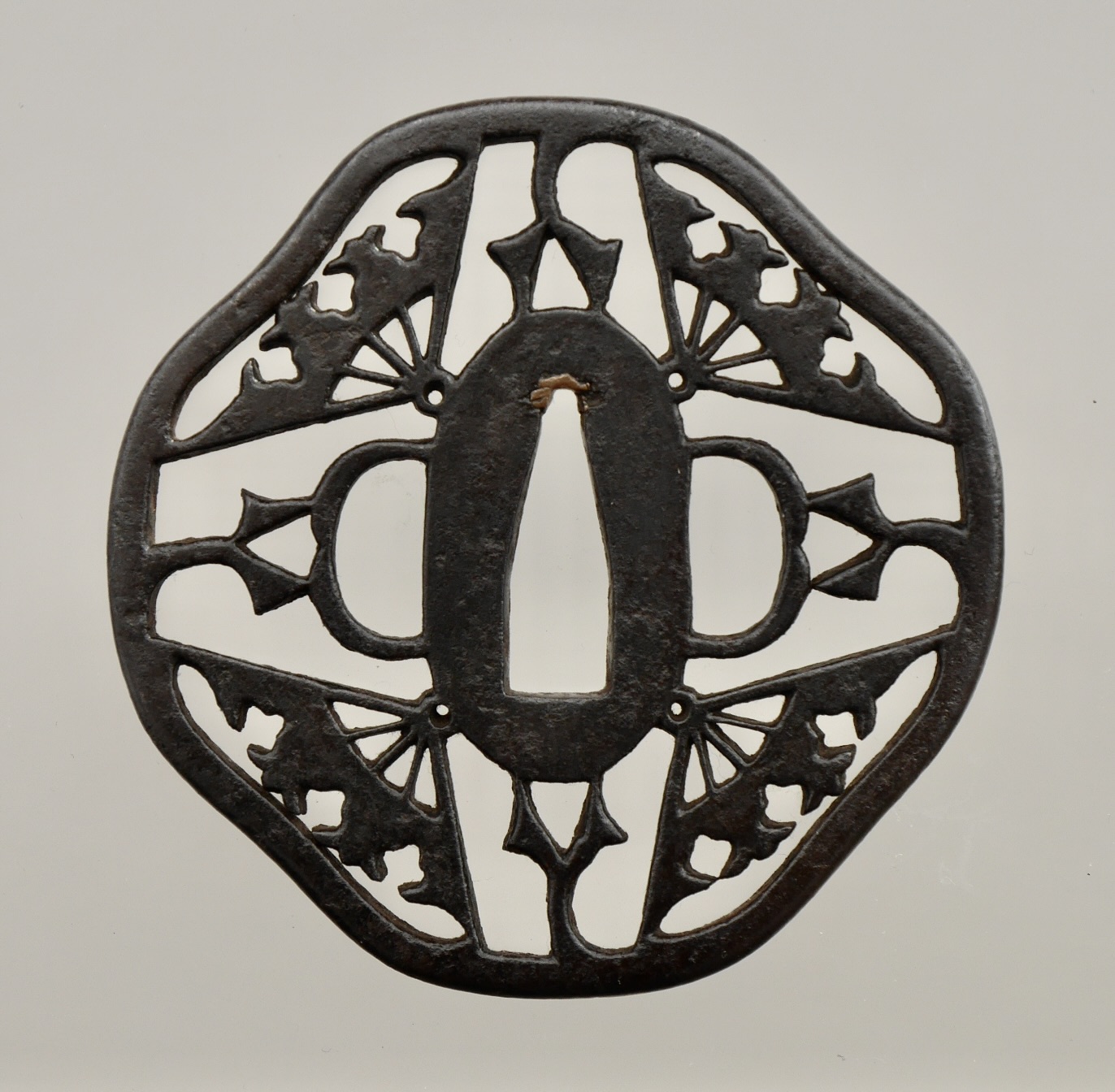
Hayashi Shigemitsu was born in Kanbun 7 (1667) as the son of the master craftsman Matashichi, and died in Enkyō 1 (1744). His period of activity spans from the Genroku to Kyōhō eras (1668-1745), coinciding with the flourishing of Edo culture. “Higo Kinkōroku” notes: “Although he generally adhered to the principles of the first generation, his work possesses a refined elegance; consequently, highly meticulous works are rather few.” In contrast to Matashichi and Tōhachi, he produced works influenced by the aesthetics of wabi-cha, characterized by subtle irregularity and a depth of character.
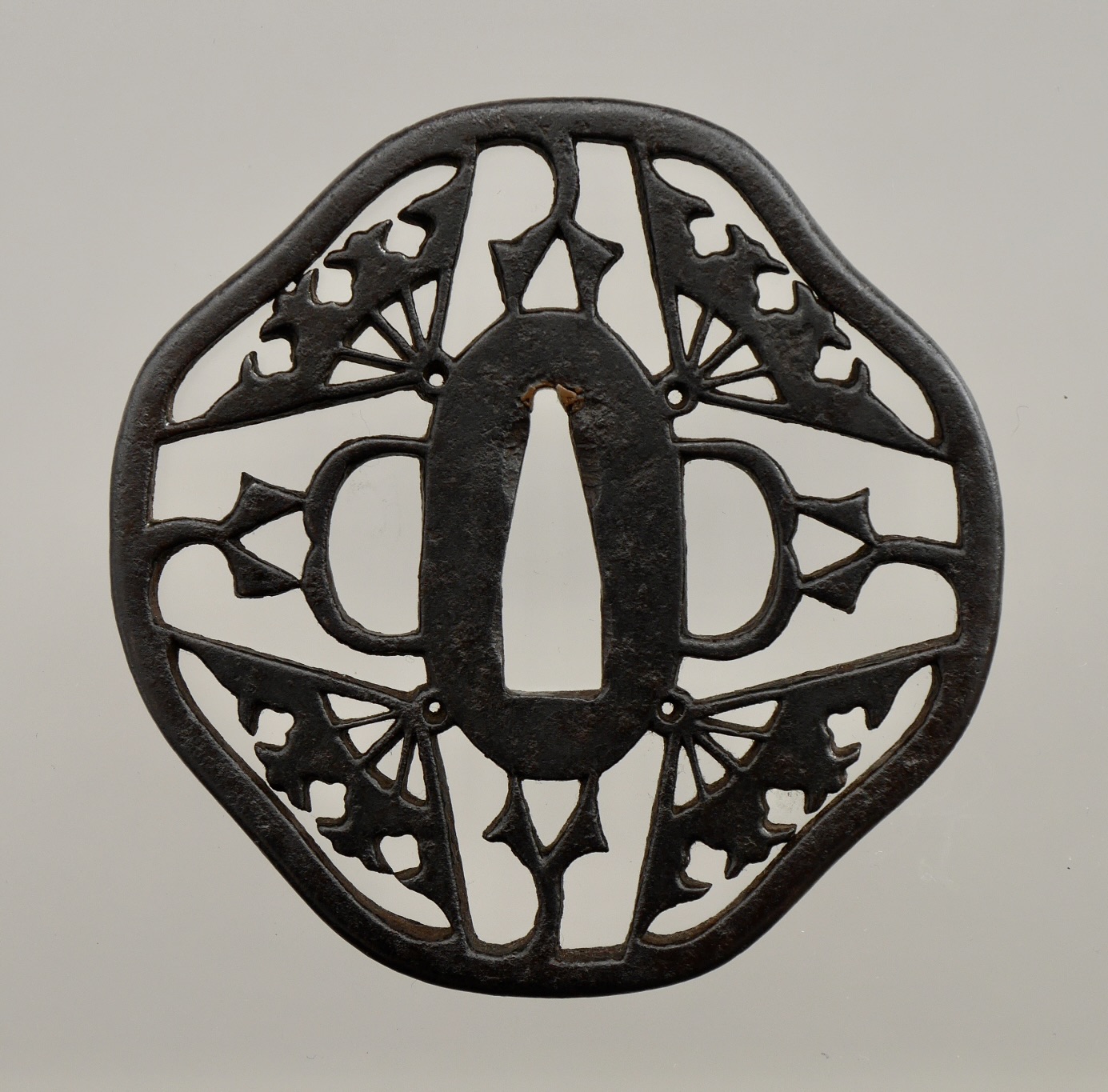
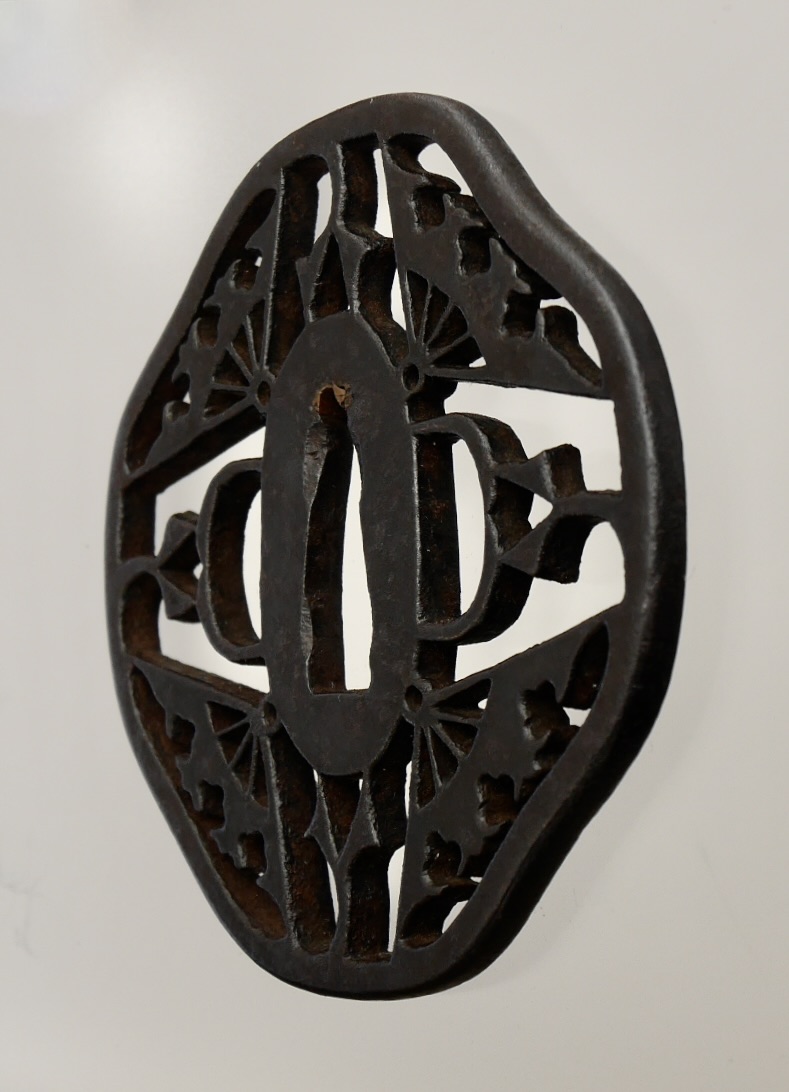
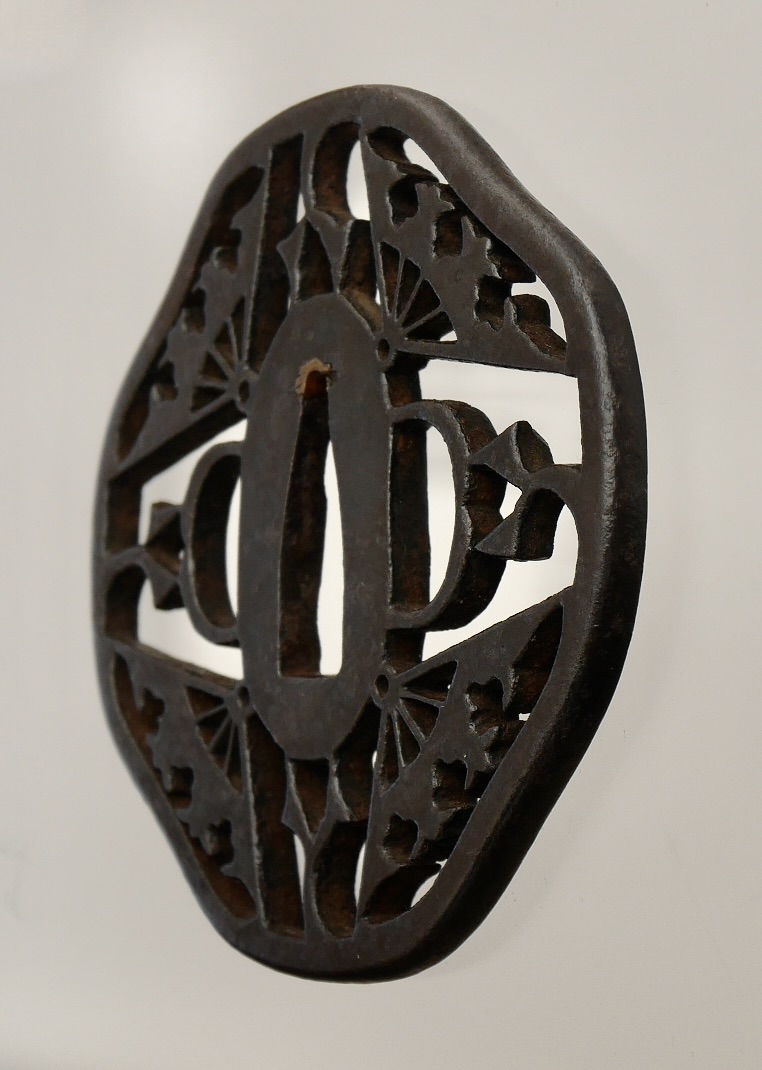
This tsuba is of the distinctive Higo Otafuku-mokkō-gata (rounded quatrefoil form), and is composed with broken fans arranged in four directions, while young leaves appear at the top and bottom as well as at the hitsu-ana. At first glance, the relatively flat surface variations may recall Owari sukashi or Shōami work; however, the seppa-dai being thicker than the mimi and its flat surface, together with the appearance of this design in “Kamiyoshi Tsuba Ehon, indicate that it is a work of the Hayashi school.
While based on the classical motif of broken fans, the design is subtly reinterpreted with delicate movement and variation, reflecting Shigemitsu’s distinctive sensibility. Of generous size, with excellent iron quality and well-preserved condition, this is a fine and highly engaging work.