Design of Karahana
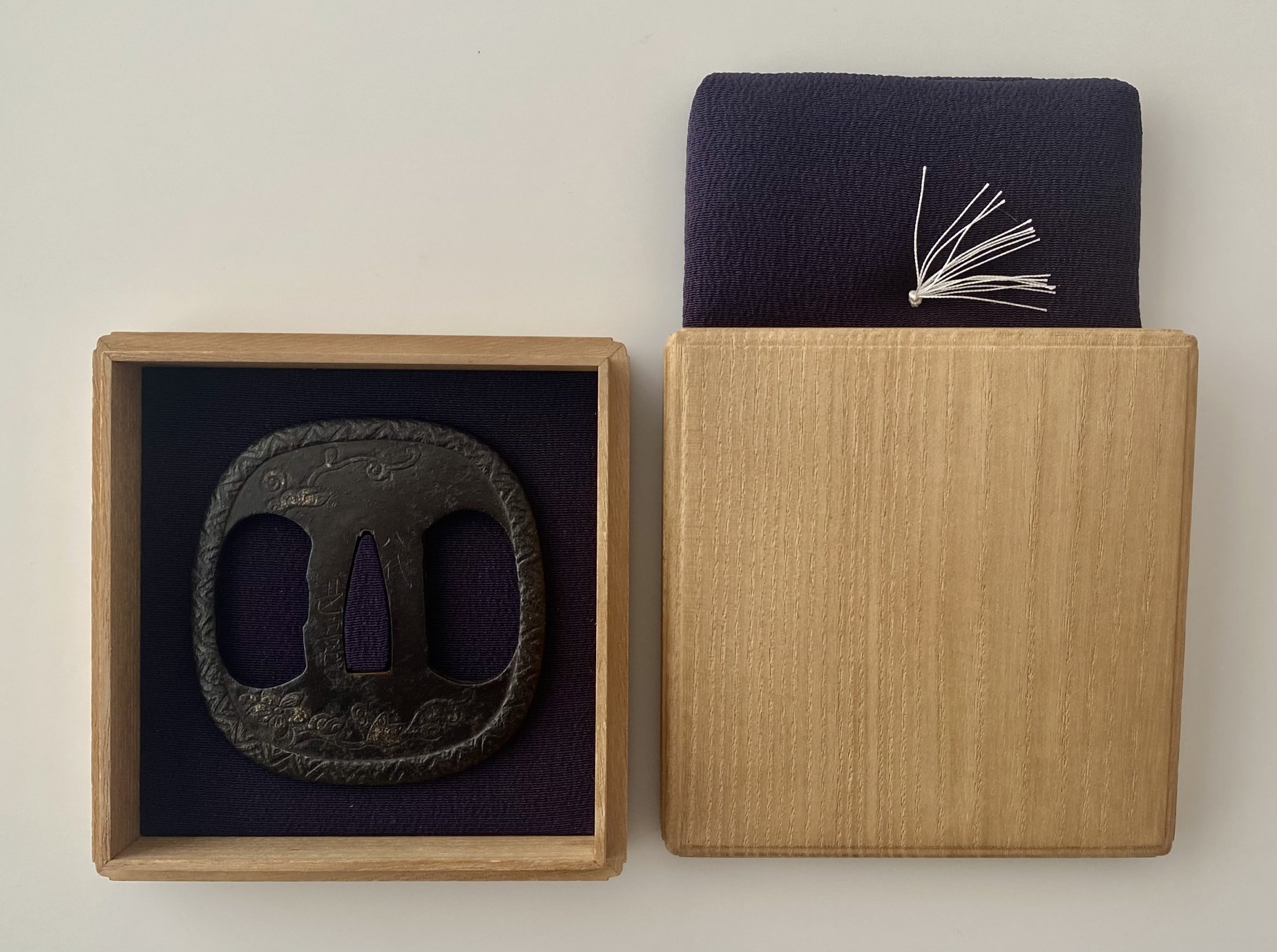
The Shimizu school began with the first-generation Jinbei, a nephew of Hirata Hikozō, and came to an end as a line of kinko with the fifth-generation Shigenaga. Although Shigenaga’s year of birth is unknown, his death in Kaei 7 (1854) suggests that he was active at roughly the same time as Kamiyoshi Fukanobu.
At that time, works in the Jingo style were popular not only in Kumamoto but also in Edo, indicating that the style had gained widespread acclaim. This popularity can be attributed to Shigenaga, demonstrating the high regard in which he was held during his lifetime.
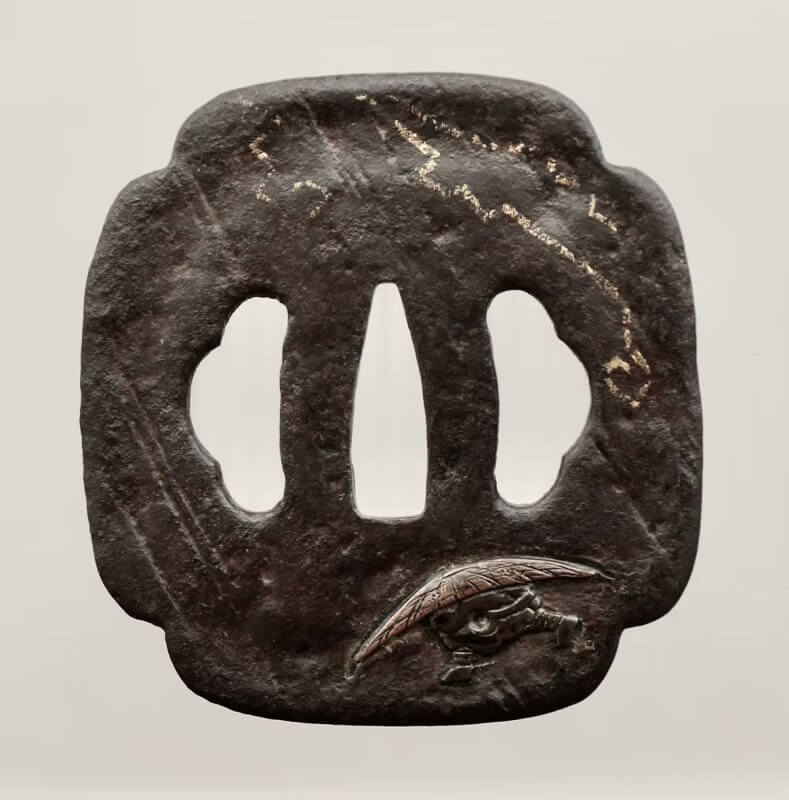
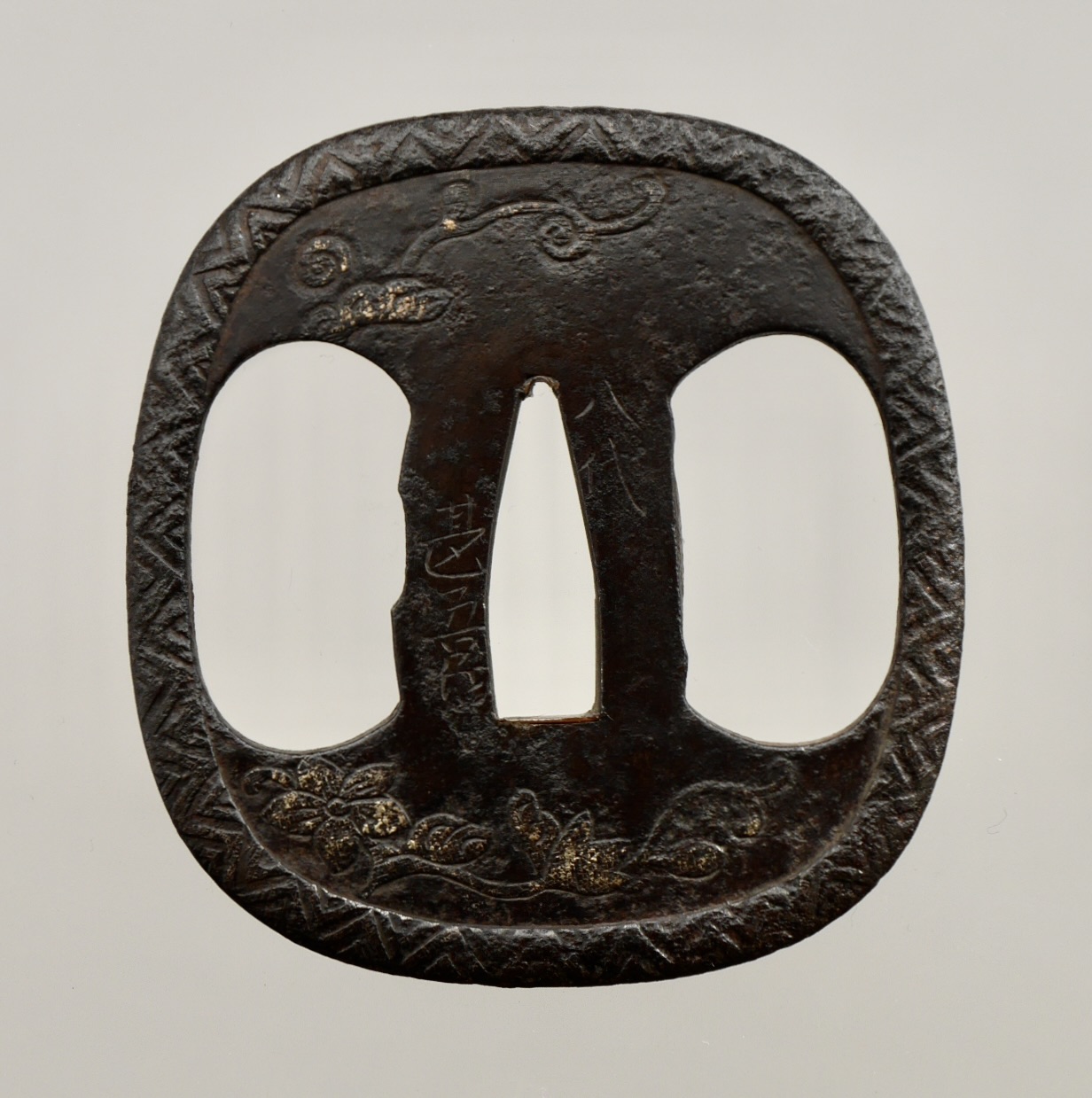
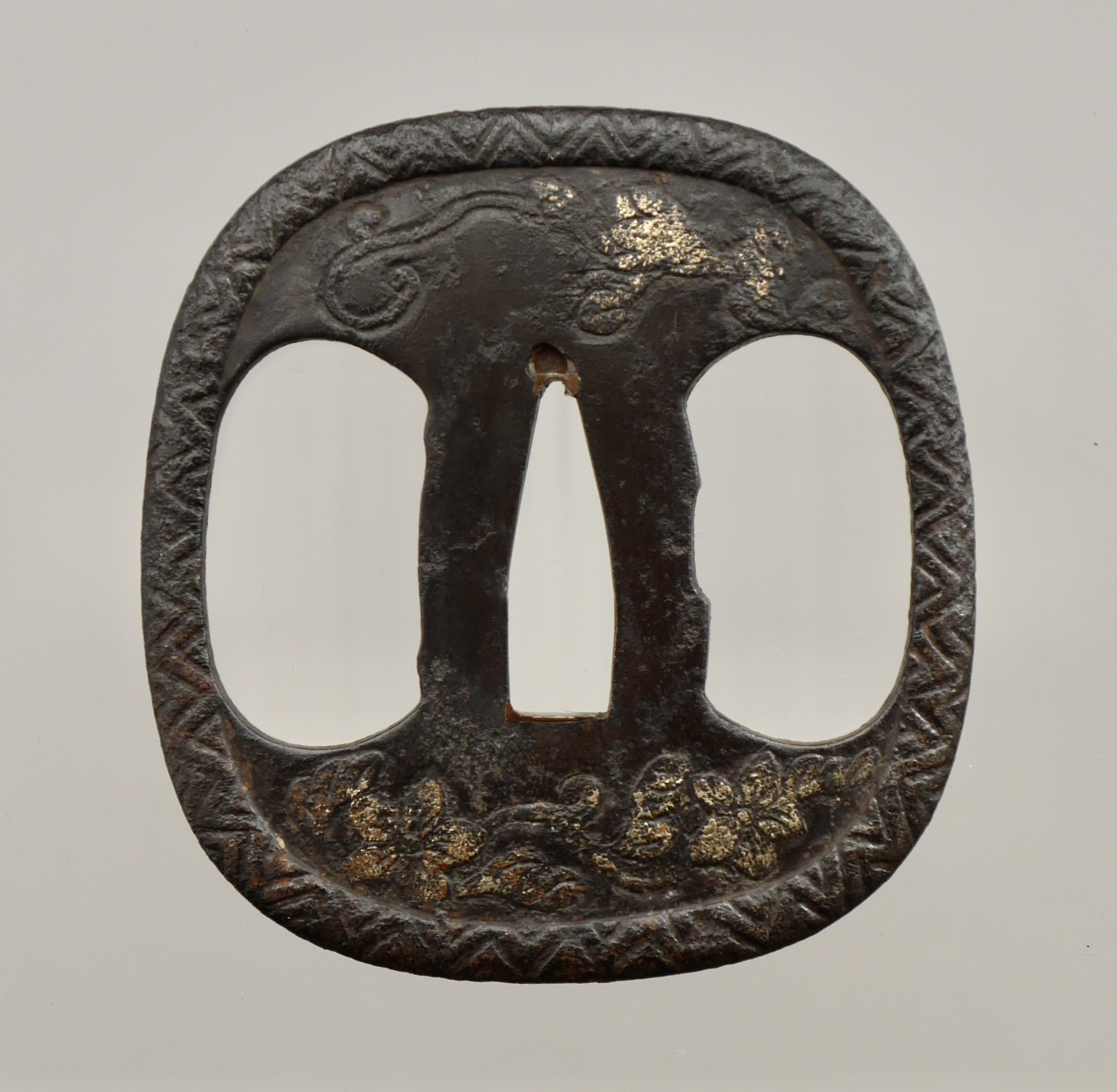
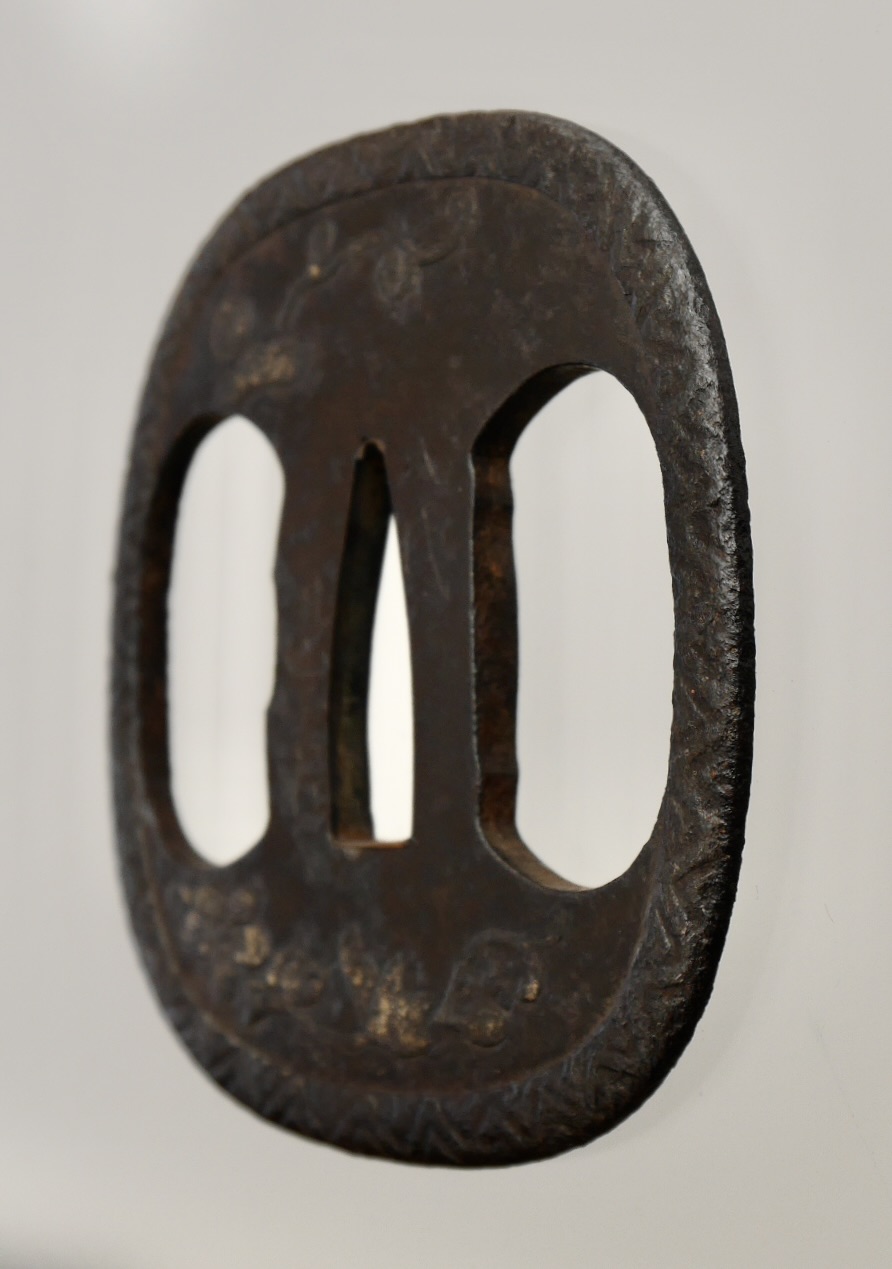
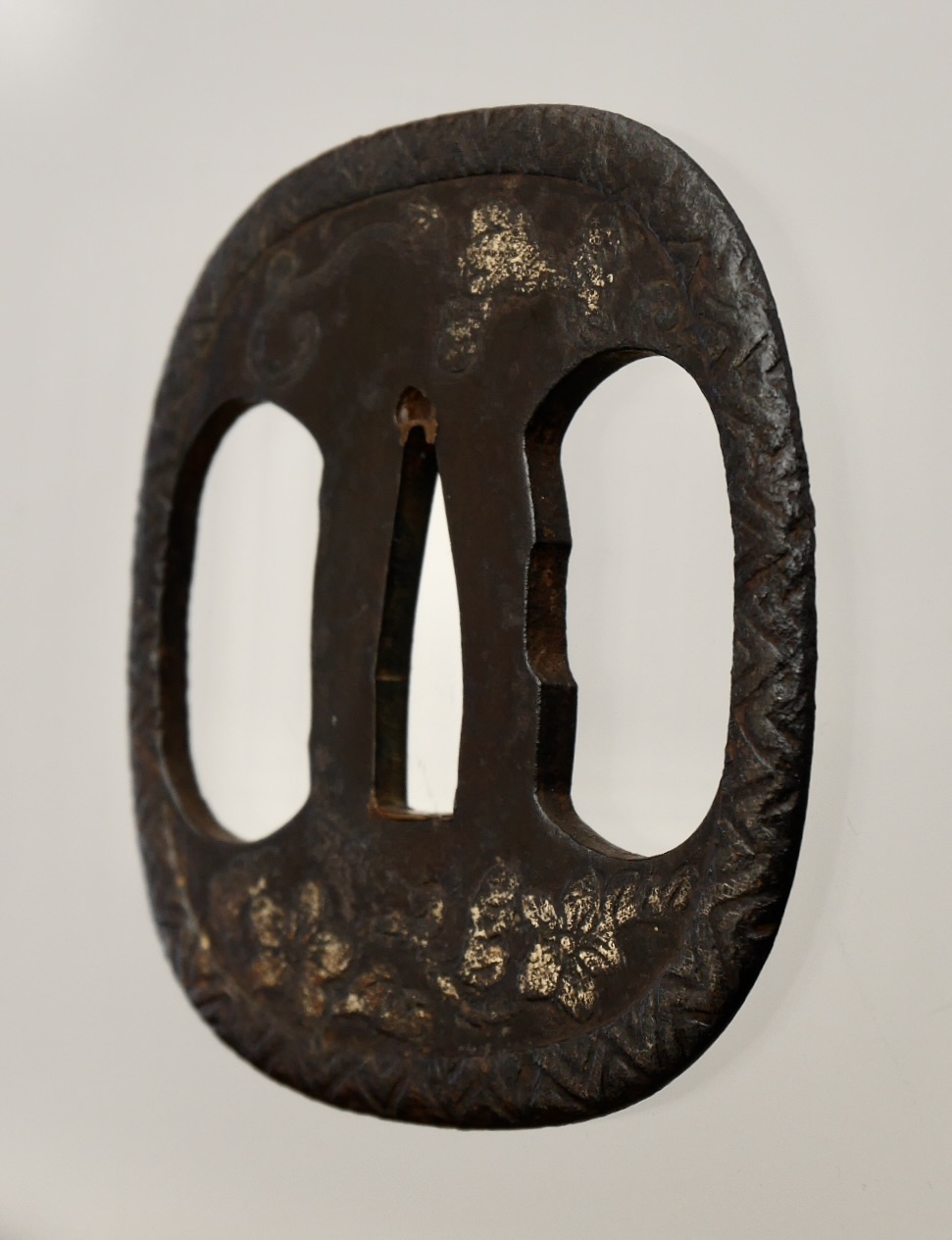
This tsuba is of a somewhat angular aori-gata, with the rim shaped as a raised dote-mimi, and the plate slightly swelling toward the center in its niku-oki. Large hitsu-ana are opened on either side. The surface is decorated with karahana (stylized floral motifs) rendered in low relief, with gold nunome-zōgan applied.
The dote-mimi (embankment-style rim) is further ornamented with an ajiro (woven-bamboo) pattern in silver nunome zōgan, though much of the inlay has been worn away. While karahana motifs can be seen as early as Nanbokuchō-period menuki, in the Edo period they appear almost exclusively within the Shimizu lineage. Such knowledge of classical motifs, combined with refined artistic sensibility, attests to Shigenaga’s excellence as an artisan.
The chisel work of the signature is fine, and the absence of the characteristic openings above and below the nakago-ana suggests that this piece was made in his later years, likely after the age of seventy. Furthermore, the fact that the signature is carved on the reverse indicates that it was probably a commissioned work for a high-ranking samurai.
Of substantial size, with fine preservation and an appealing overall presence, this is an outstanding tsuba by the fifth-generation Jingo.