Design of Sun and Plovers
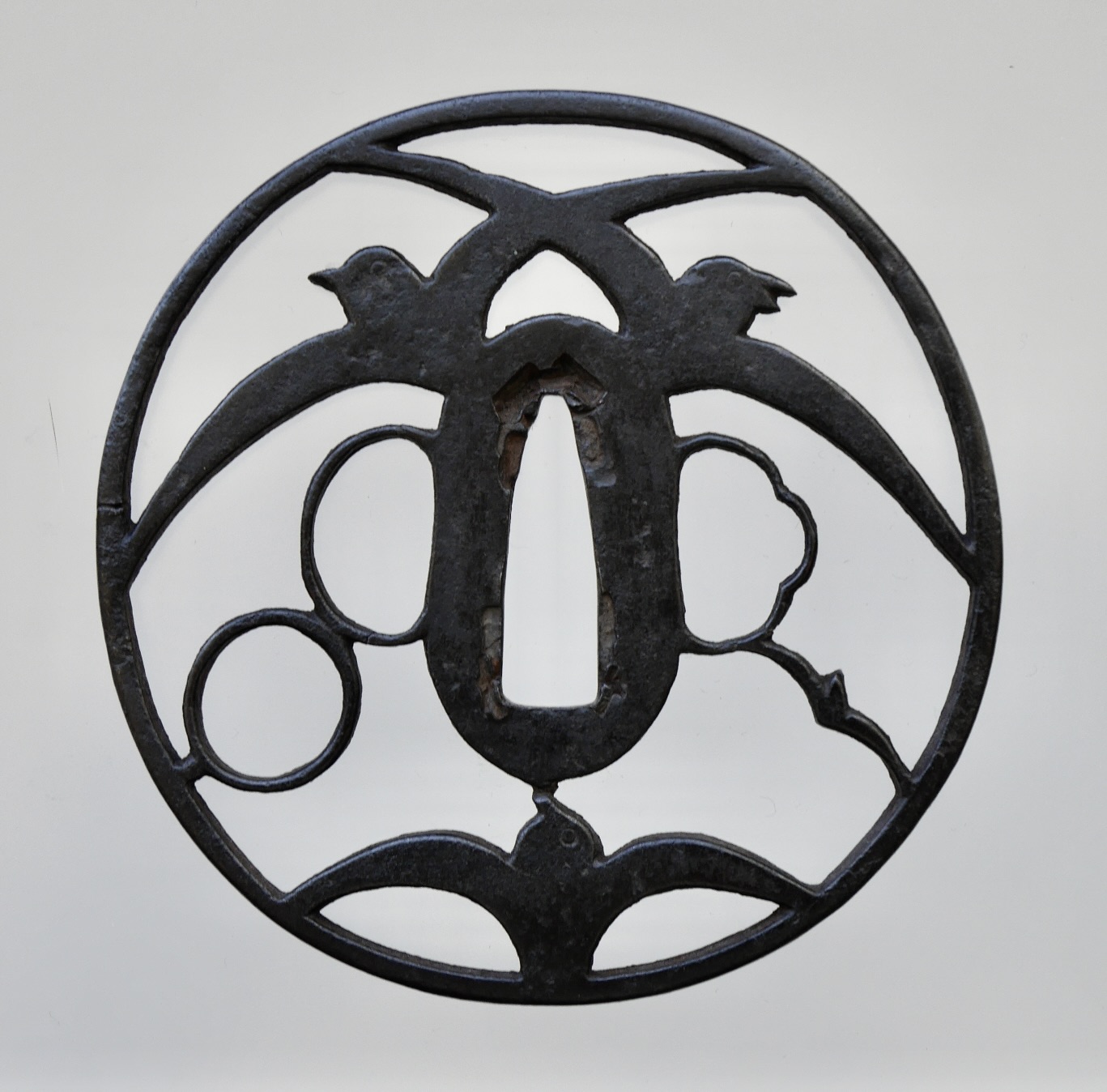
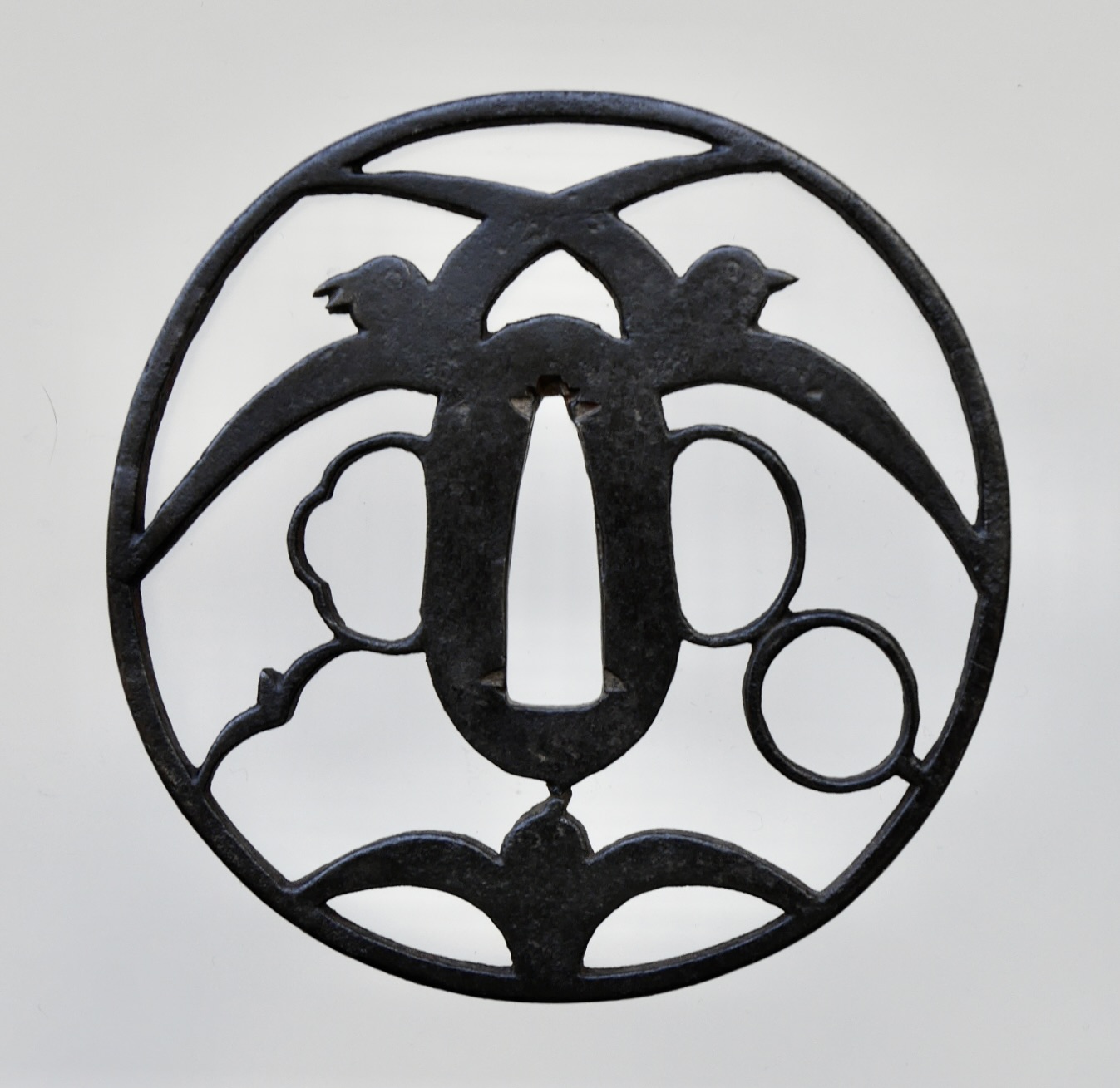
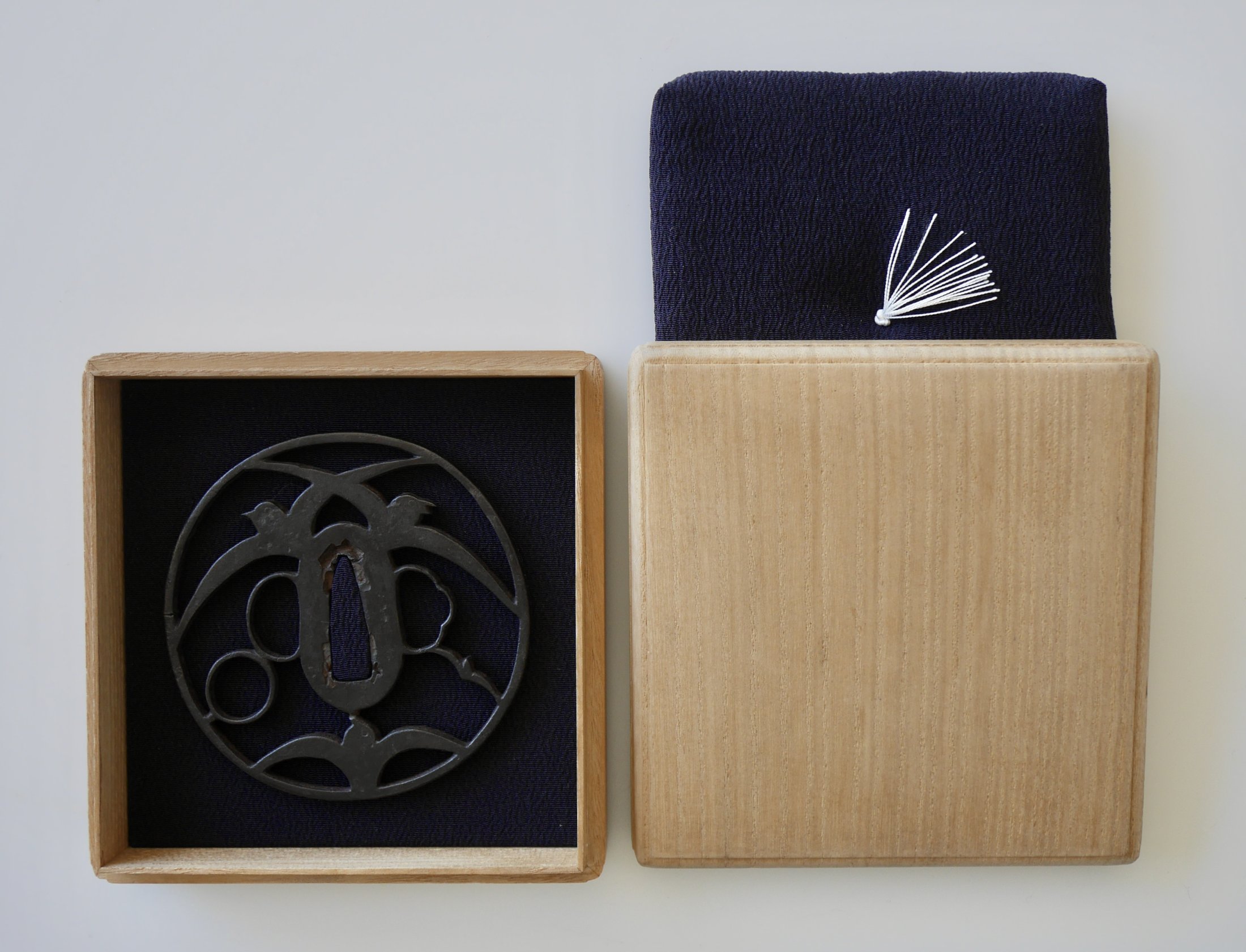
Kyō sukashi is recorded in Honpō Tōkenkō in Kansei 7 (1795) as already existing by the time of the sixth shogun, Ashikaga Yoshimasa. When one thinks of Kyō sukashi, refined and courtly designs such as iris-and-eight bridges, shōgun grass (Sagittaria trifolia), or plum trees typically come to mind. The earliest examples, however, are characterized by features similar to Owari tsuba which shows largely symmetrical compositions, relatively thin construction, and narrow, crescent-shaped hitsu-ana.
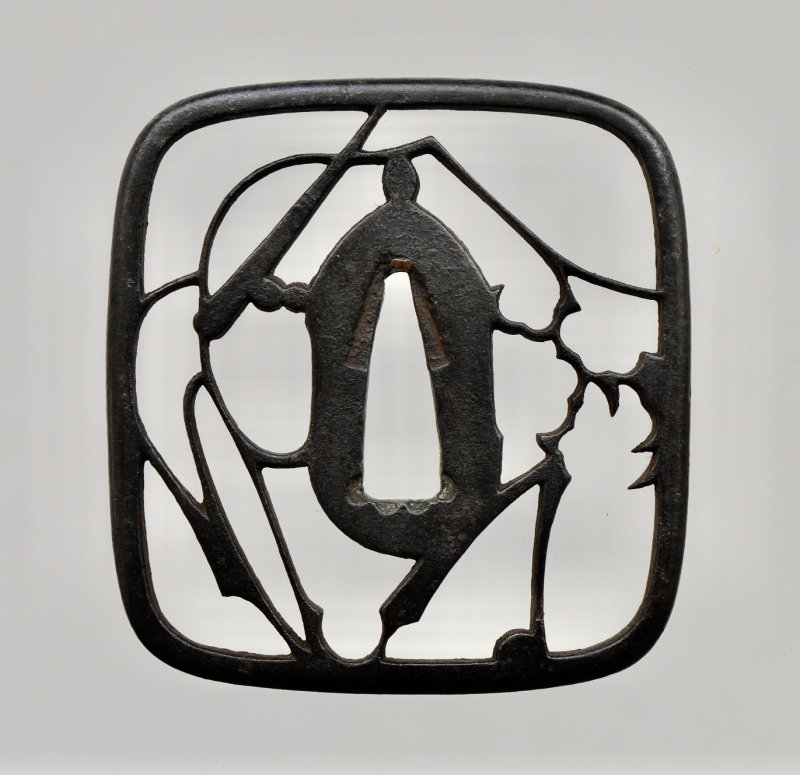
Such designs continued alongside more pictorial styles and gradually developed into works possessing the delicate and aristocratic sensibility characteristic of Kyō sukashi. In this tsuba, the upper section retains the symmetrical composition seen in the earliest phase, while the lower half introduces a dynamic and more elaborate arrangement featuring the sun and small plovers (chidori). Designs of this kind are extremely rare and may well have been created as a special commission.
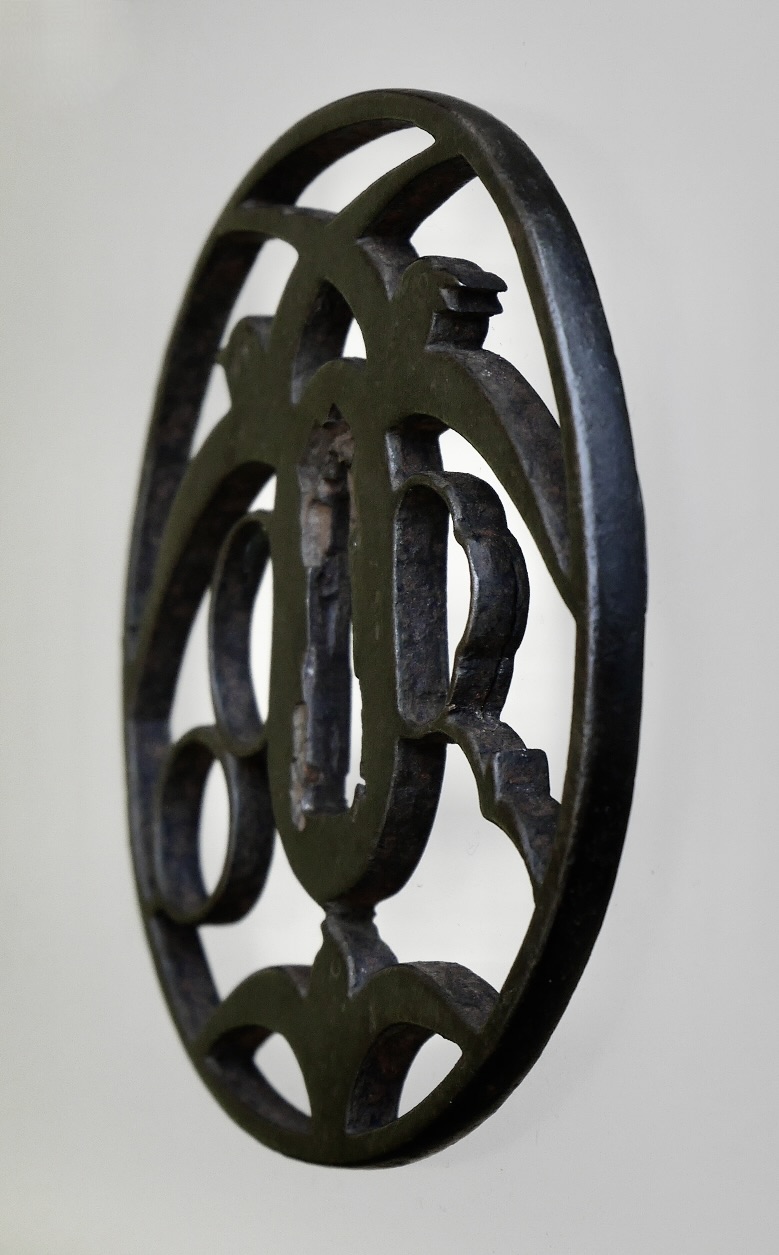
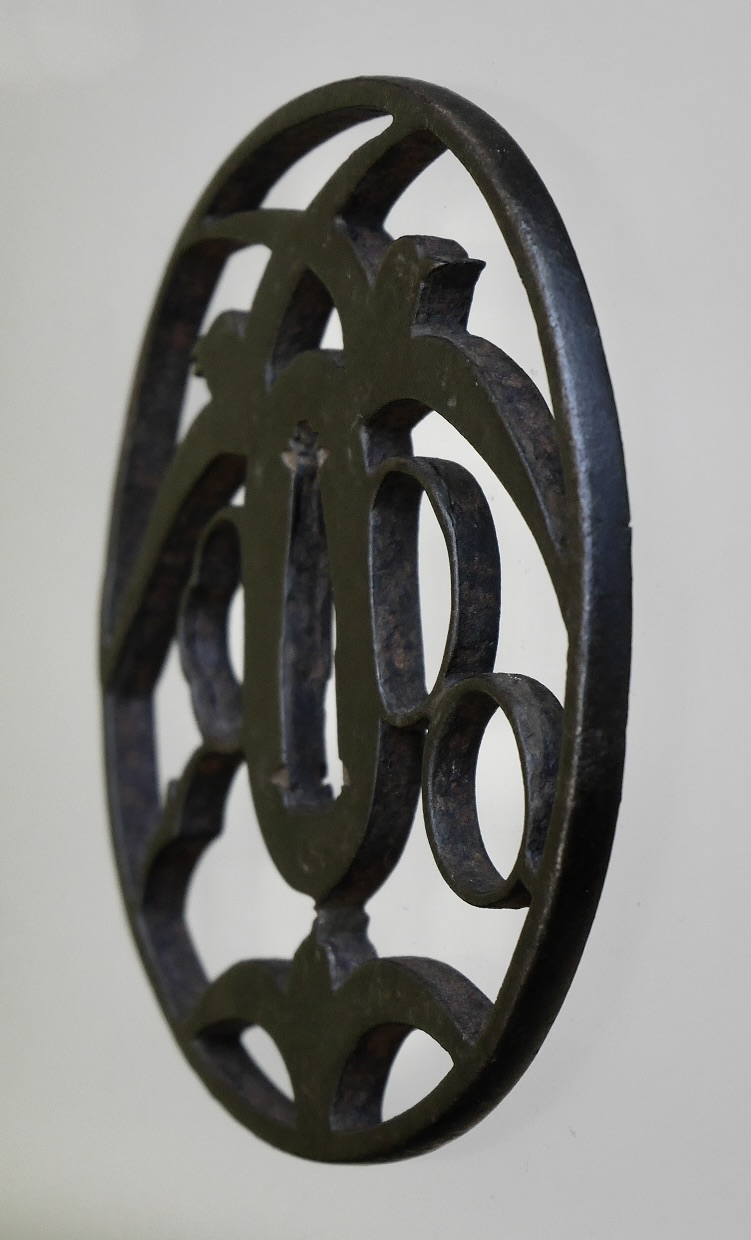
The iron displays an excellent tone, and the piece is of generous size and exceptionally well preserved. The elegant yet dynamic openwork composition gives the work a remarkable presence and enduring appeal.