Design of Plum Tree
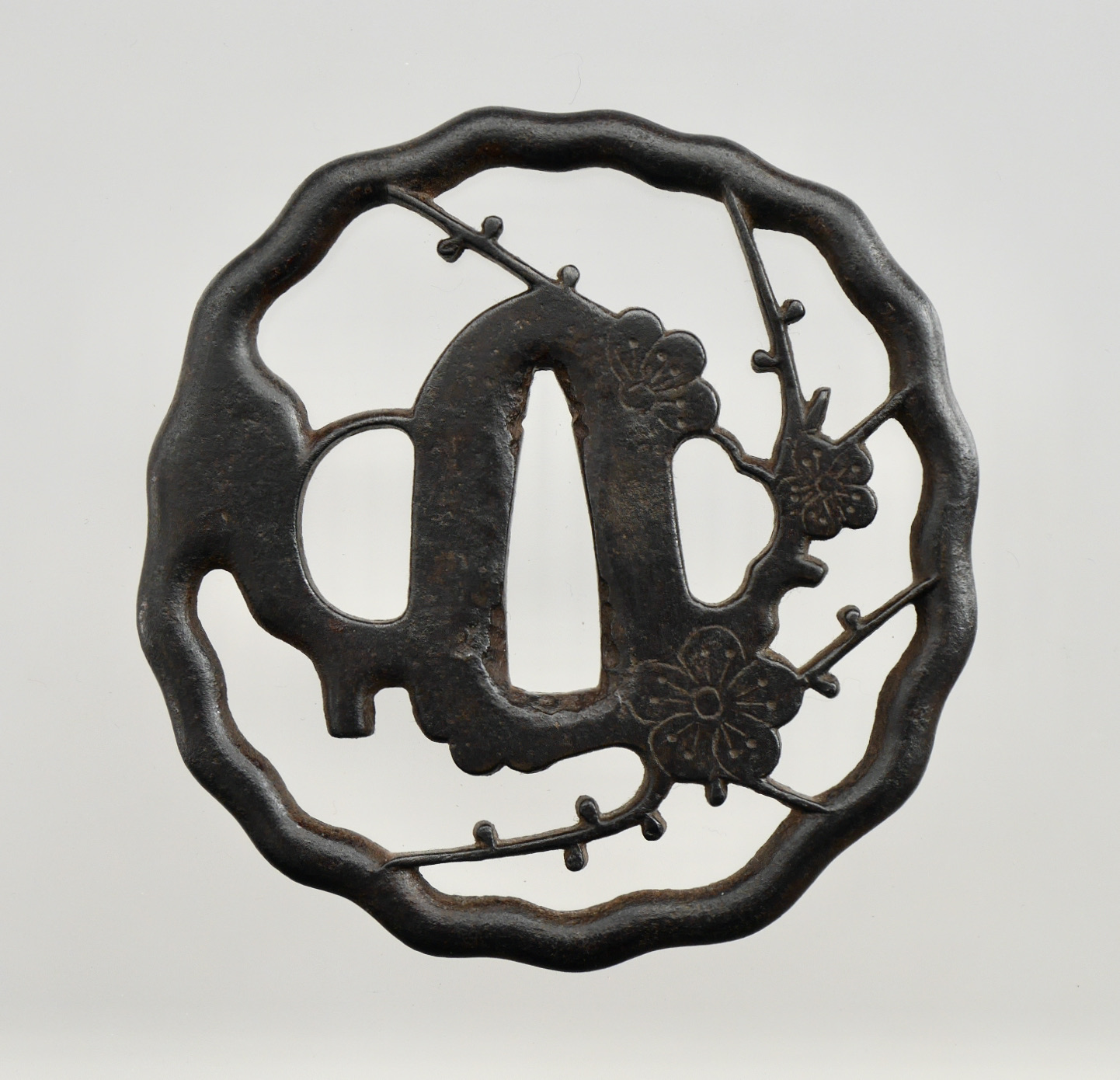
Akasaka tsuba originated in the rapidly developing city of Edo, when the Tadamasa brothers—said to have come either from Owari or Kyō—began their production there. During the time of the first and second generations of Tadamasa, the spirit of the Momoyama period still remained strong, and their works possessed a bold, martial character expressed through tsuchime and yakite.
From the Genroku era (1688–1704) onward, however, beginning with the third-generation Tadatora, the changing trends of the period led to the production of tsuba with polished (migaki-ji) surfaces and a gentler atmosphere. By the time of the fourth-generation Tadatoki, the Akasaka school had also begun producing works in the style of Higo tsuba, then highly admired for their innovative character.
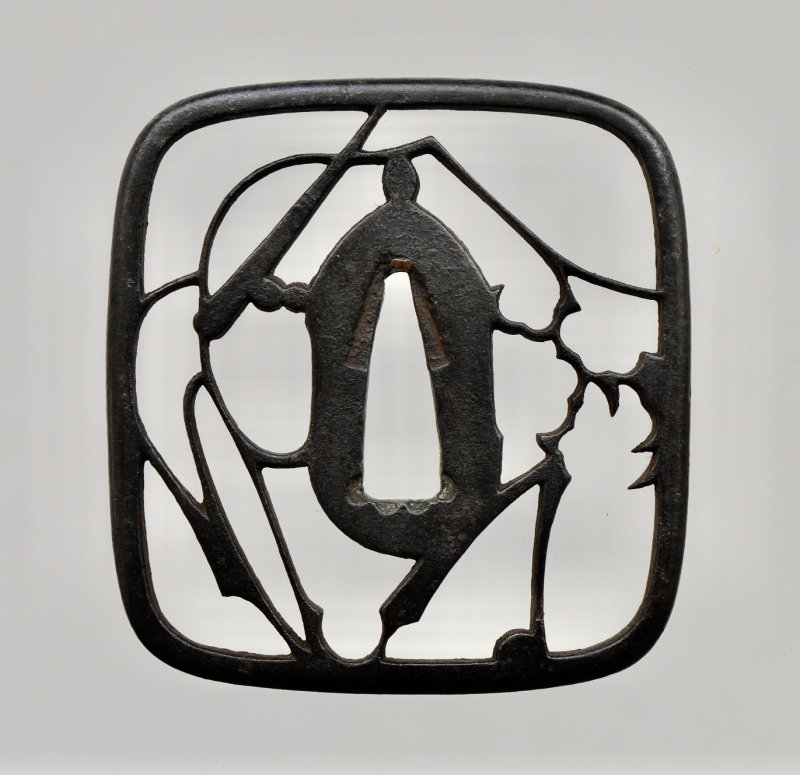
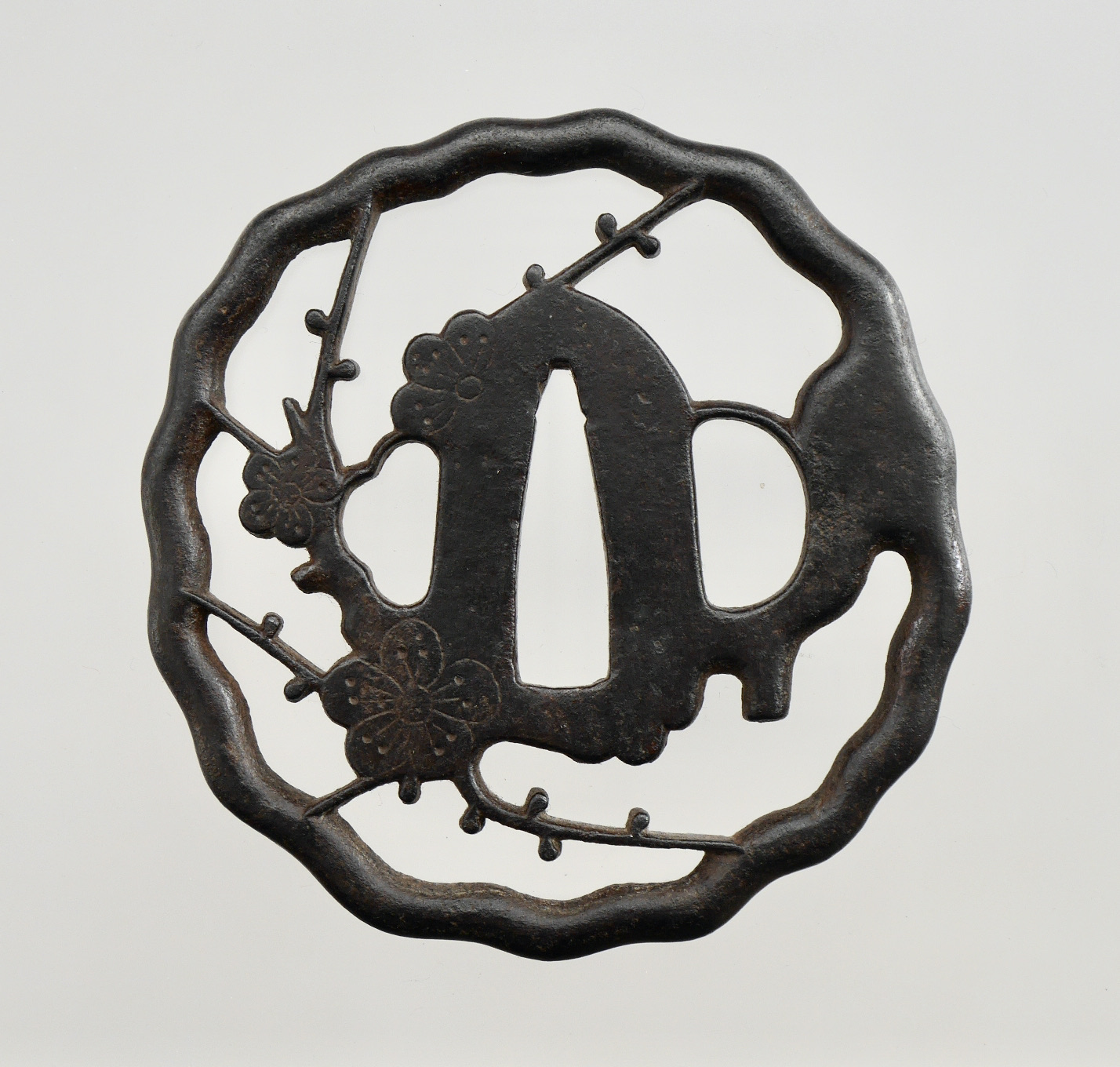
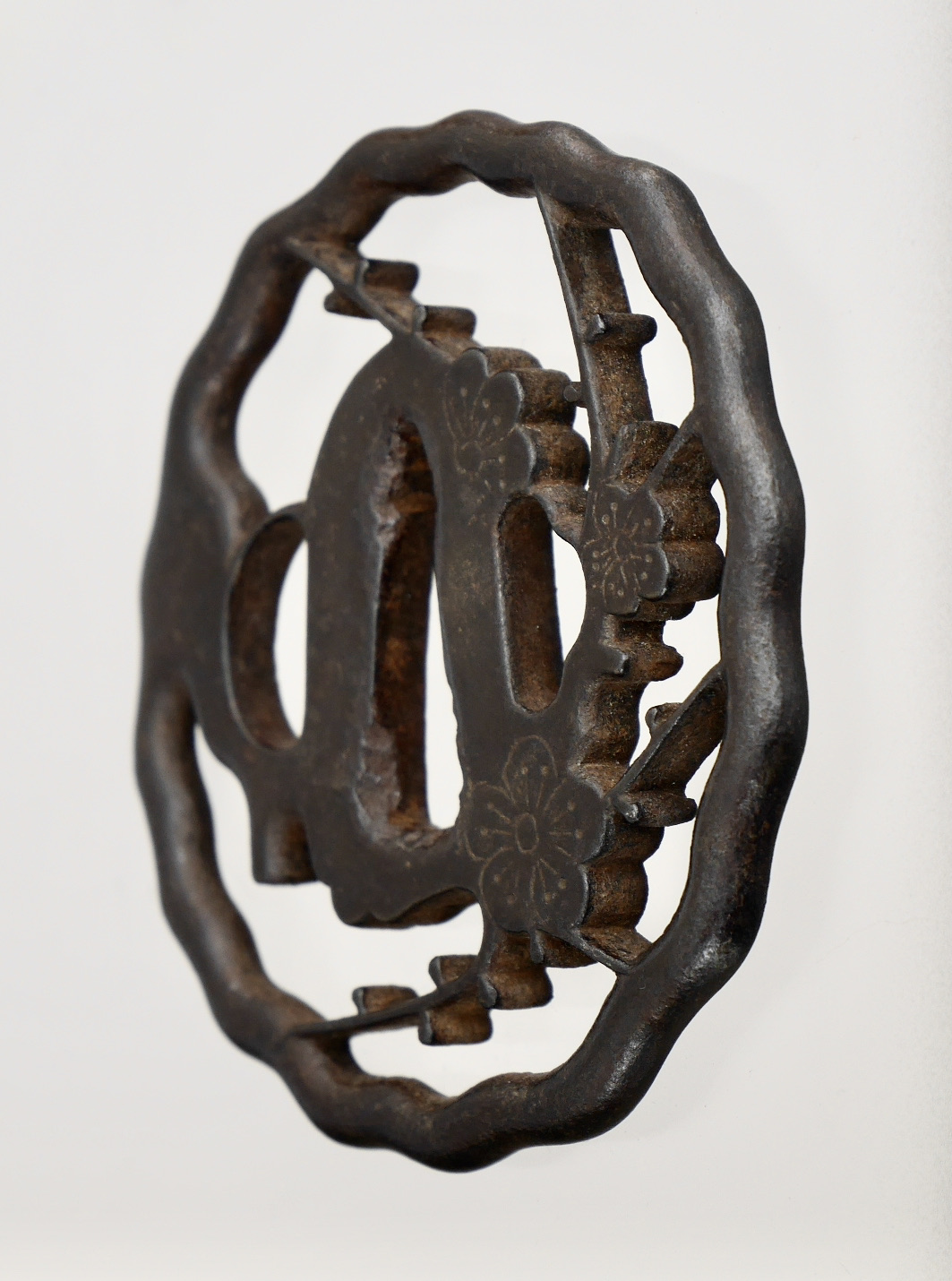
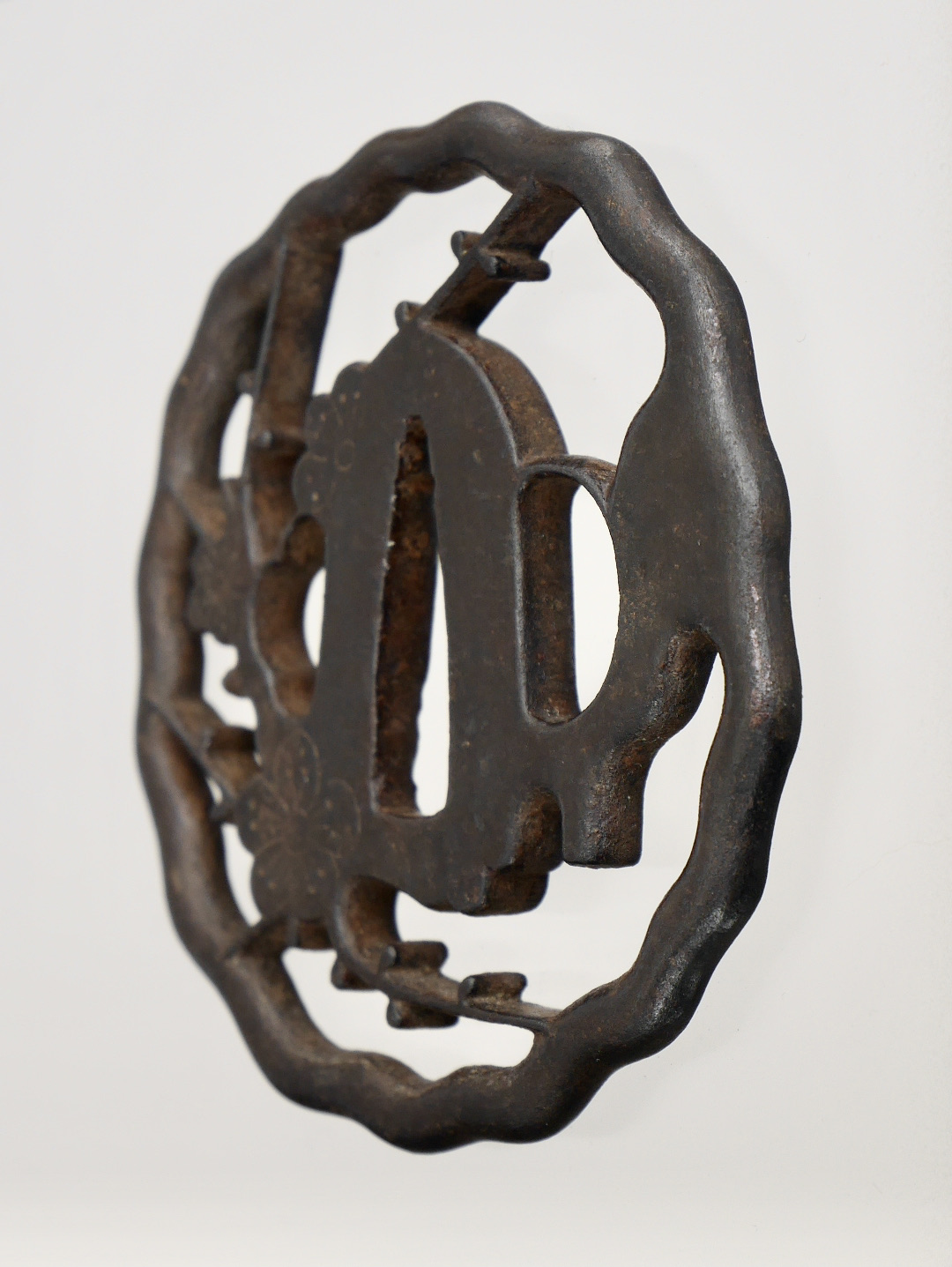
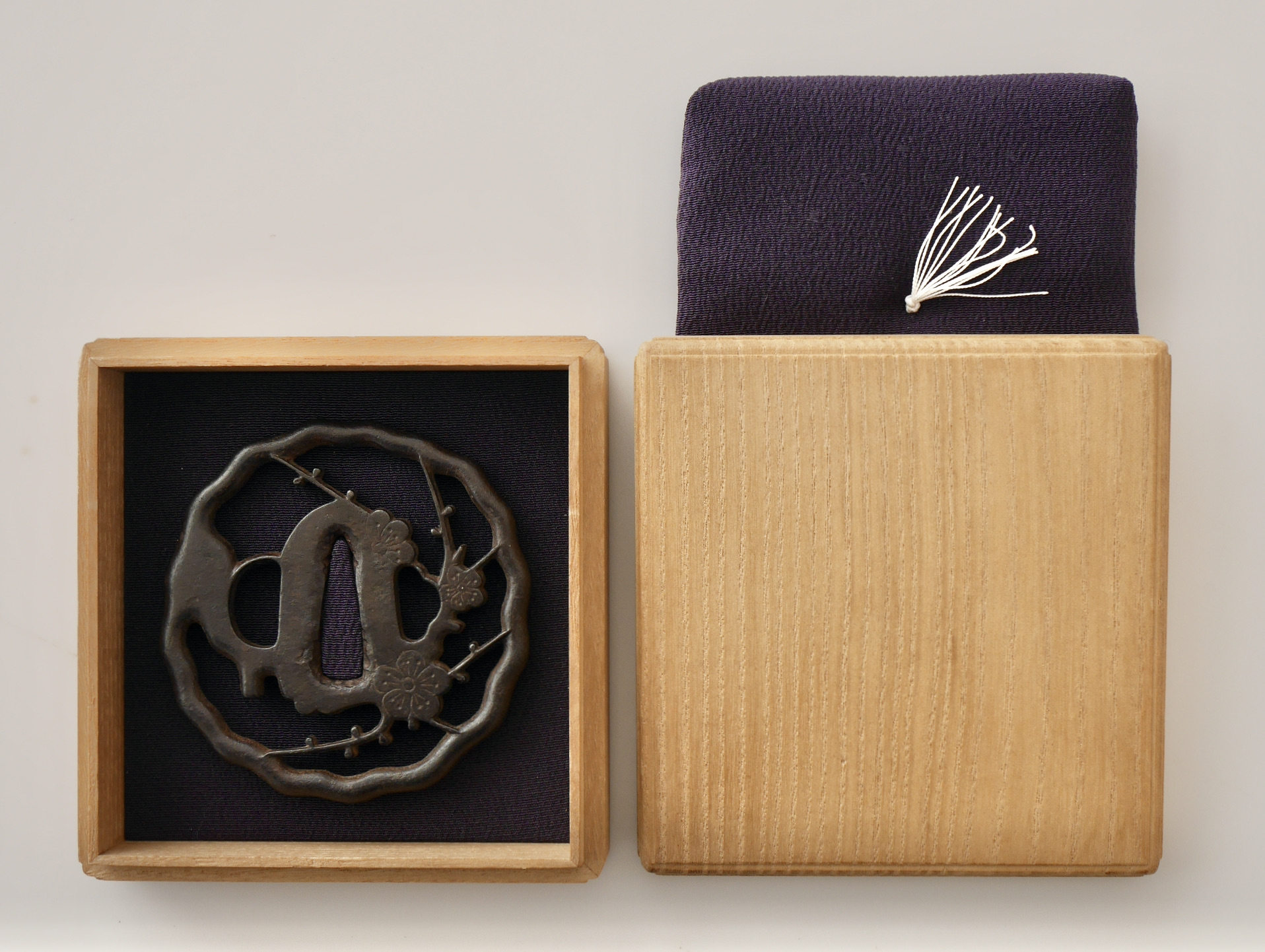
This tsuba is of kawari-gata (unusual form), with a blossoming plum tree rendered in sukashi. Both the form and the design derive from the Hayashi school of Higo; however, the thicker construction and raised central profile are characteristic of Akasaka work, giving the piece a far more brilliant and powerful impression than its Higo counterparts.
This is precisely the individuality associated with Tadatoki, and many signed works in this style are known. The sukashi is carefully executed, well balanced, and possesses a dignified presence. In every respect, the iron quality is excellent, the construction substantial in thickness, and the work stands as a masterful example of the fourth generation.