Design of Snowflakes and Karigane
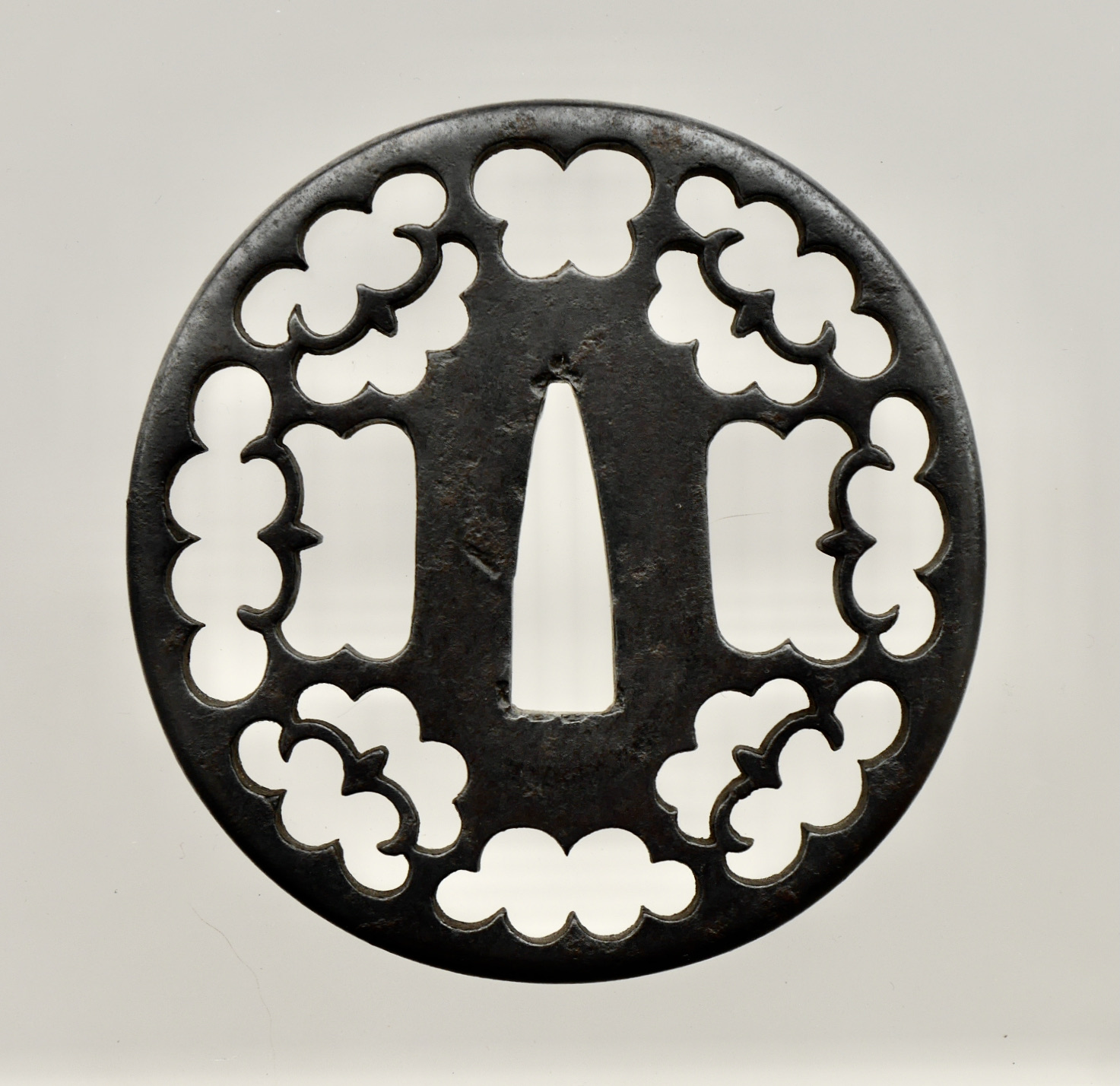
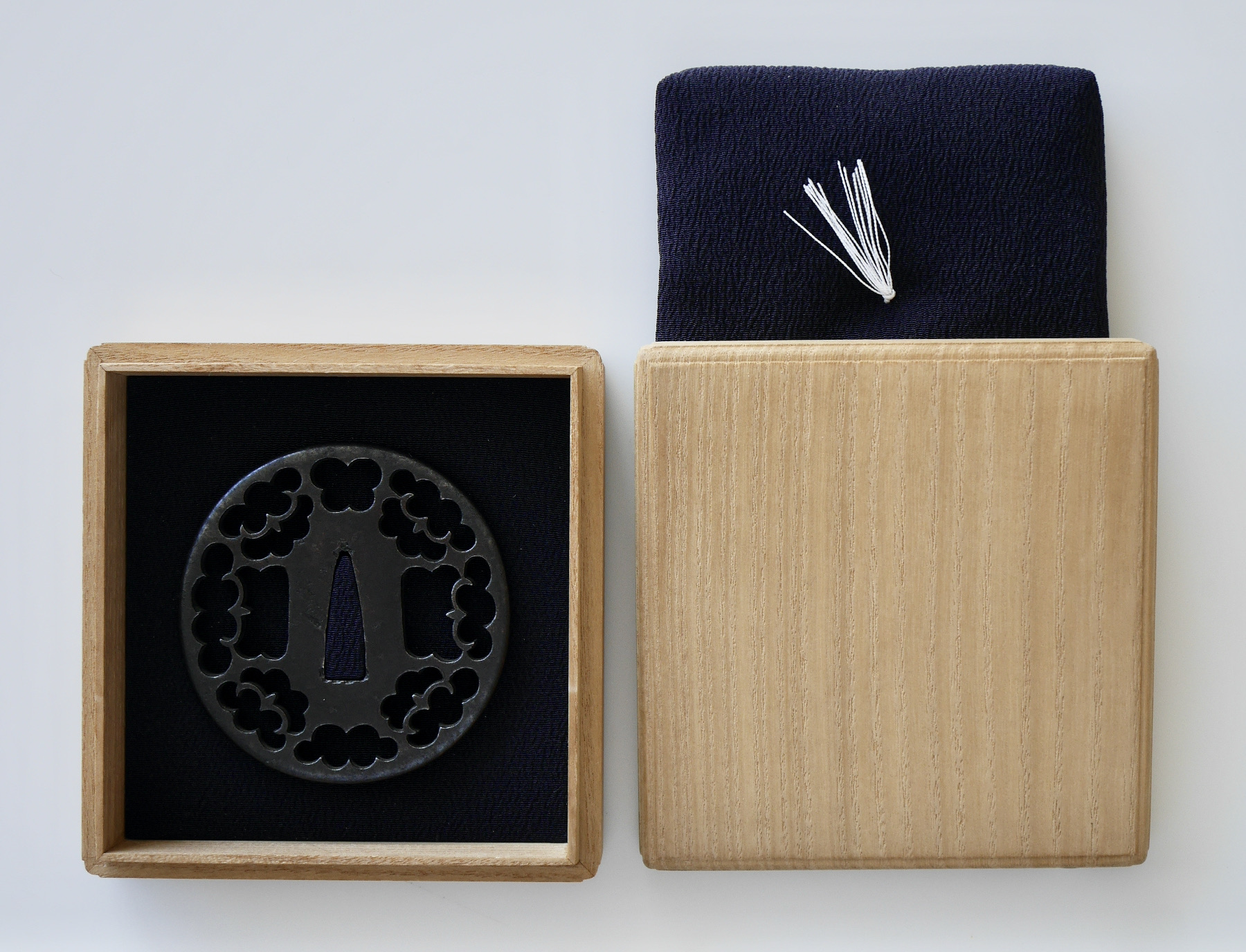
Hayashi Tōhachi was born in Kyōhō 8 (1723) as the grandson of the renowned first-generation Hayashi Matashichi, and died in Kansei 3 (1791) at the age of sixty-nine. The third generation faithfully preserved the style of Matashichi and produced many works of sincere and disciplined workmanship. It has even been said that he was once held in higher esteem than his father, Shigemitsu.
Very few signed tsuba by Tōhachi survive. These consist primarily of a single gomon (crest) sukashi inscribed “Hayashi Matashichi Sandai-me Hayashi Tōhachi saku,” together with a small number of early works signed “Fusayoshi saku.” His works are generally somewhat small in scale and consistently display careful and honest craftsmanship, though tsuba of the extraordinary brilliance associated with Matashichi himself are rarely encountered. Overall, however, the quality of his work remains remarkably high.
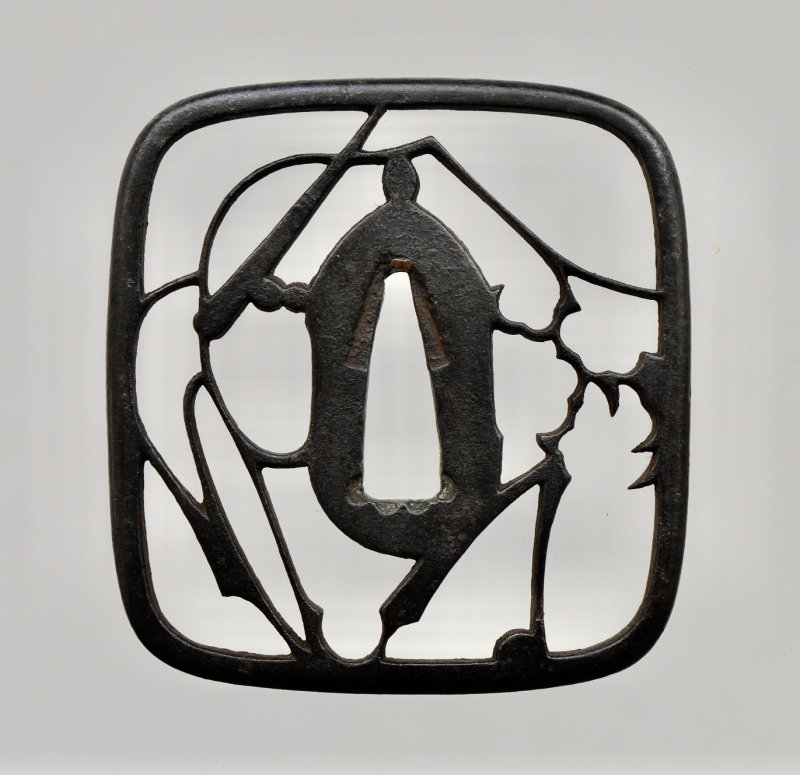
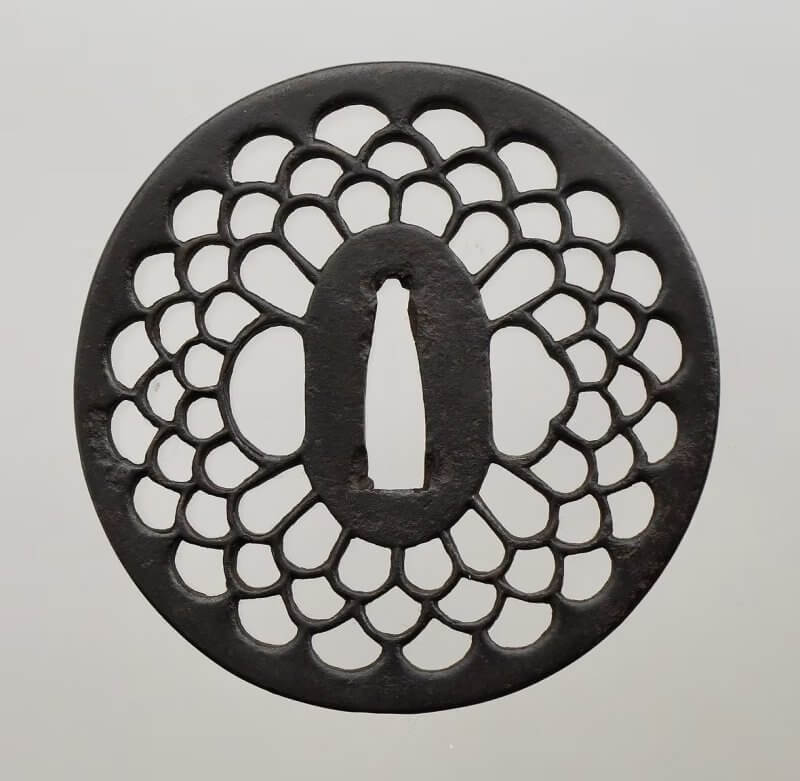
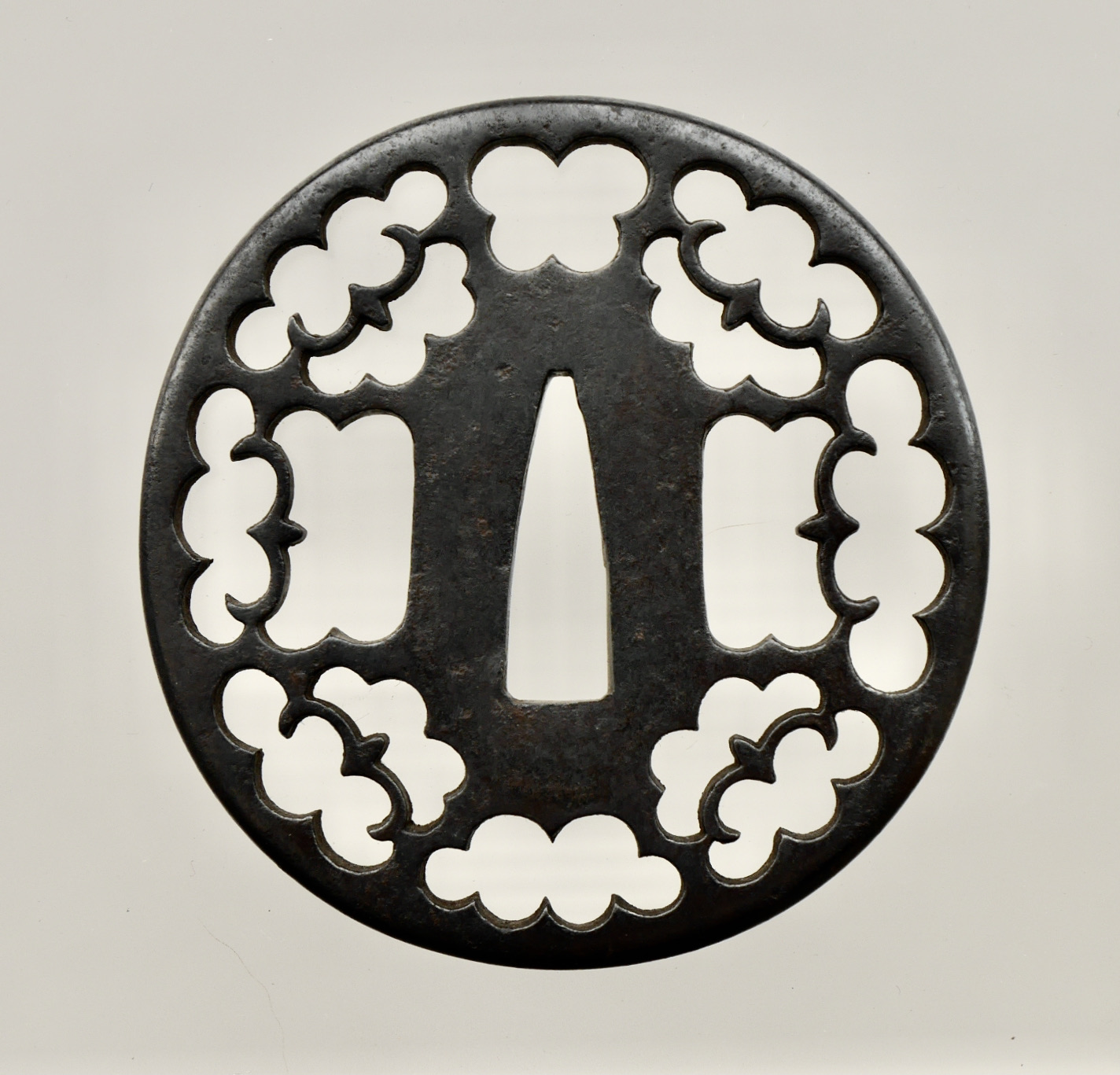
This tsuba is of nagamaru-gata (elongated round form), with the interior pierced in a chrysanthemum outline, within which yukiwa (snowflakes) are rendered in sukashi and linked together by karigane (wild geese). This design appears in the “Kamiyoshi Tsuba Ehon” under the title “Yukiwa Karigane.”
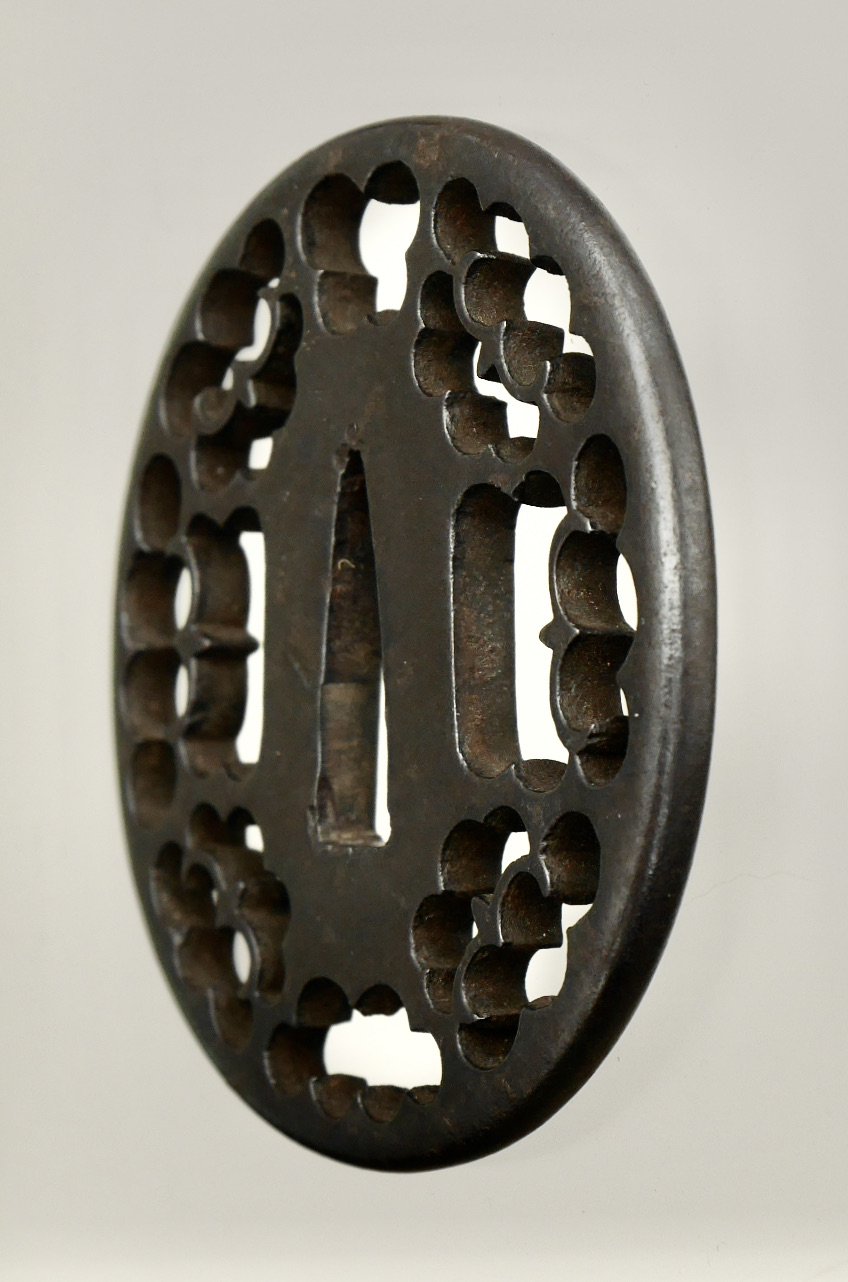
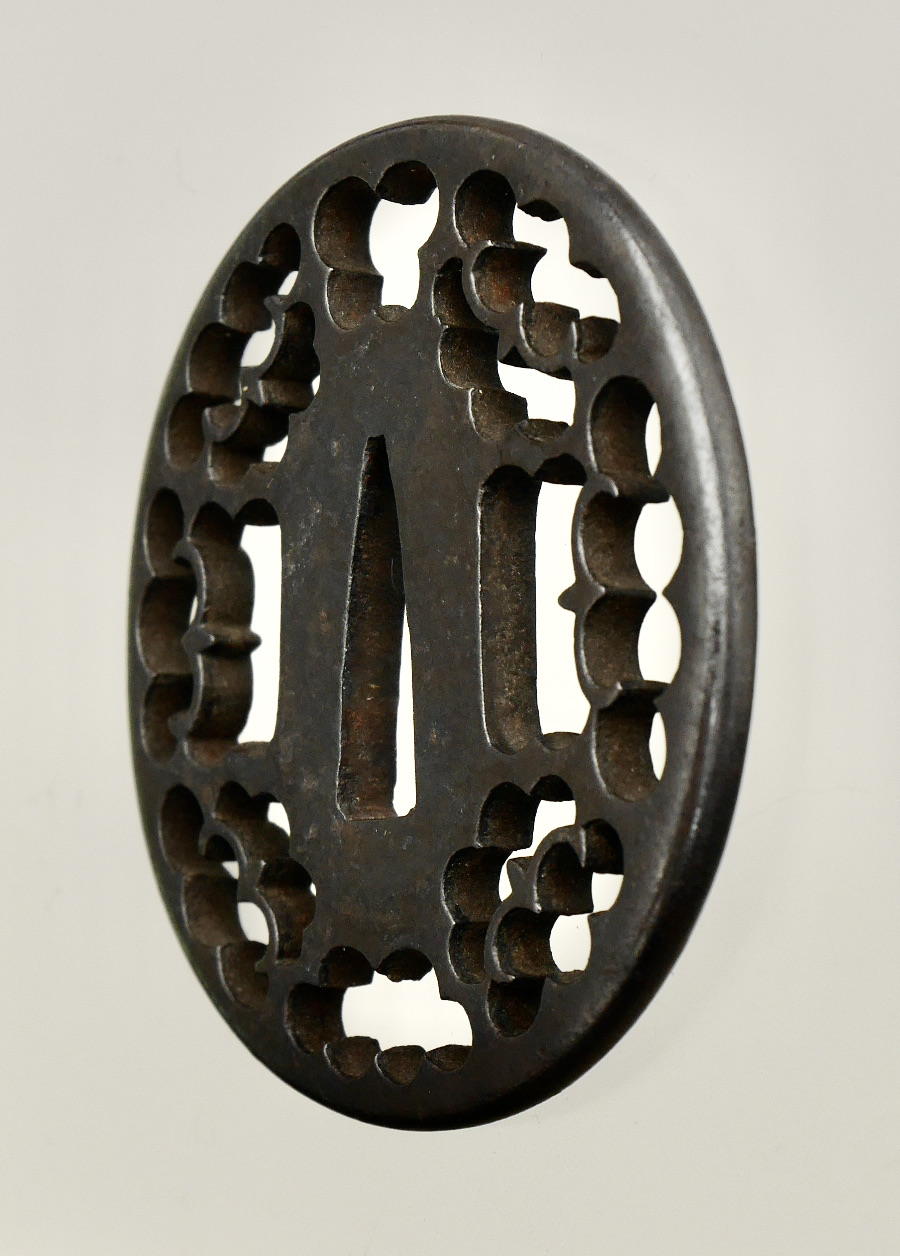
Ordinarily, the edges of Tōhachi’s sukashi tend to be slightly rounded; here, however, they are sharply vertical, displaying a flawless precision reminiscent of Matashichi himself. Though somewhat small in size, the lustrous iron surface is refined and beautifully compact in feeling, while the composition is exceptionally well balanced, fully expressing Tōhachi’s distinctive individuality.
Above and below the nakago-ana appear distinctive chisel marks identified in the Higo Kinkōroku as characteristic of Tōhachi’s tagane.