Design of Kuginuki and Hanabishi Mon
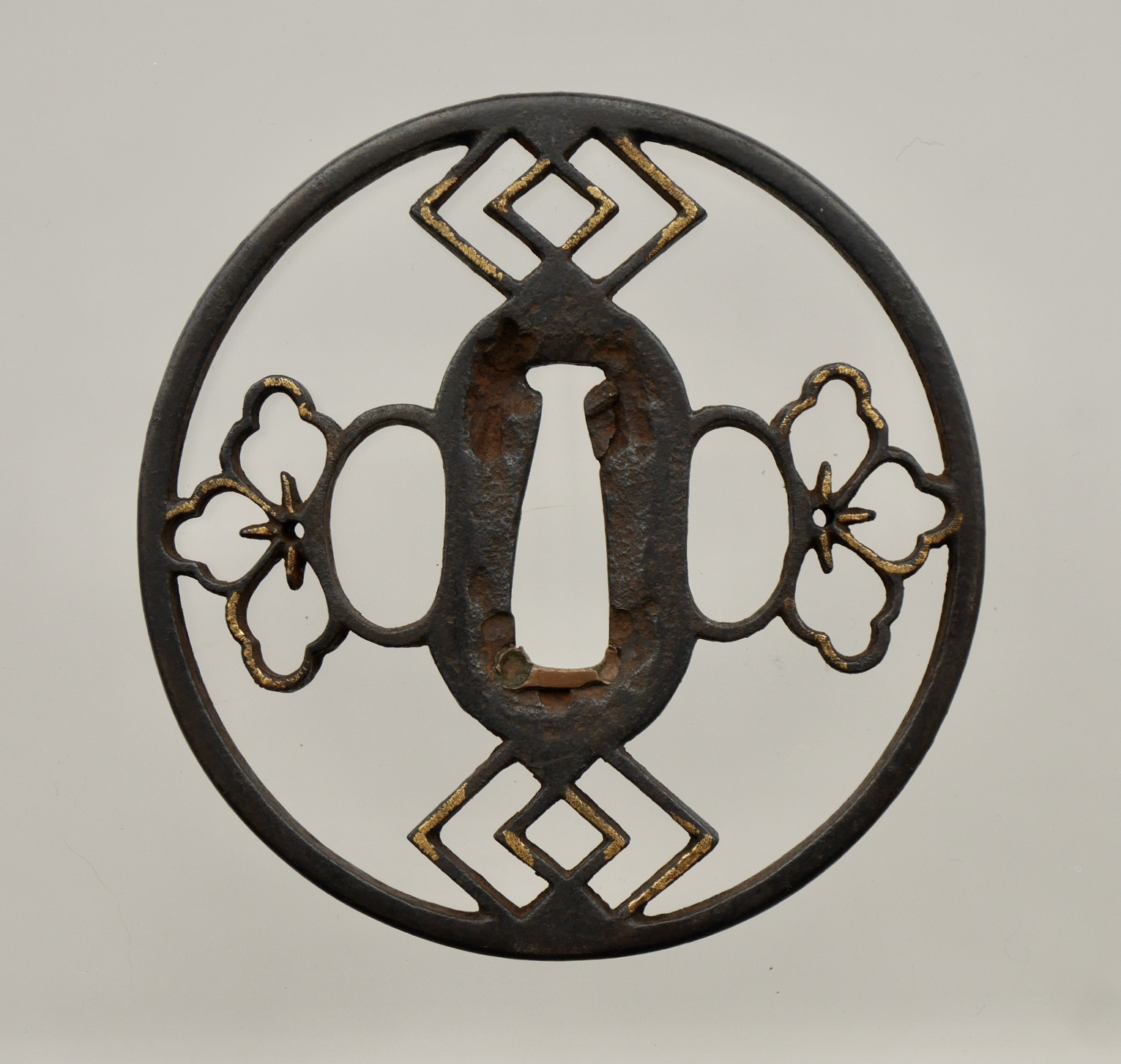
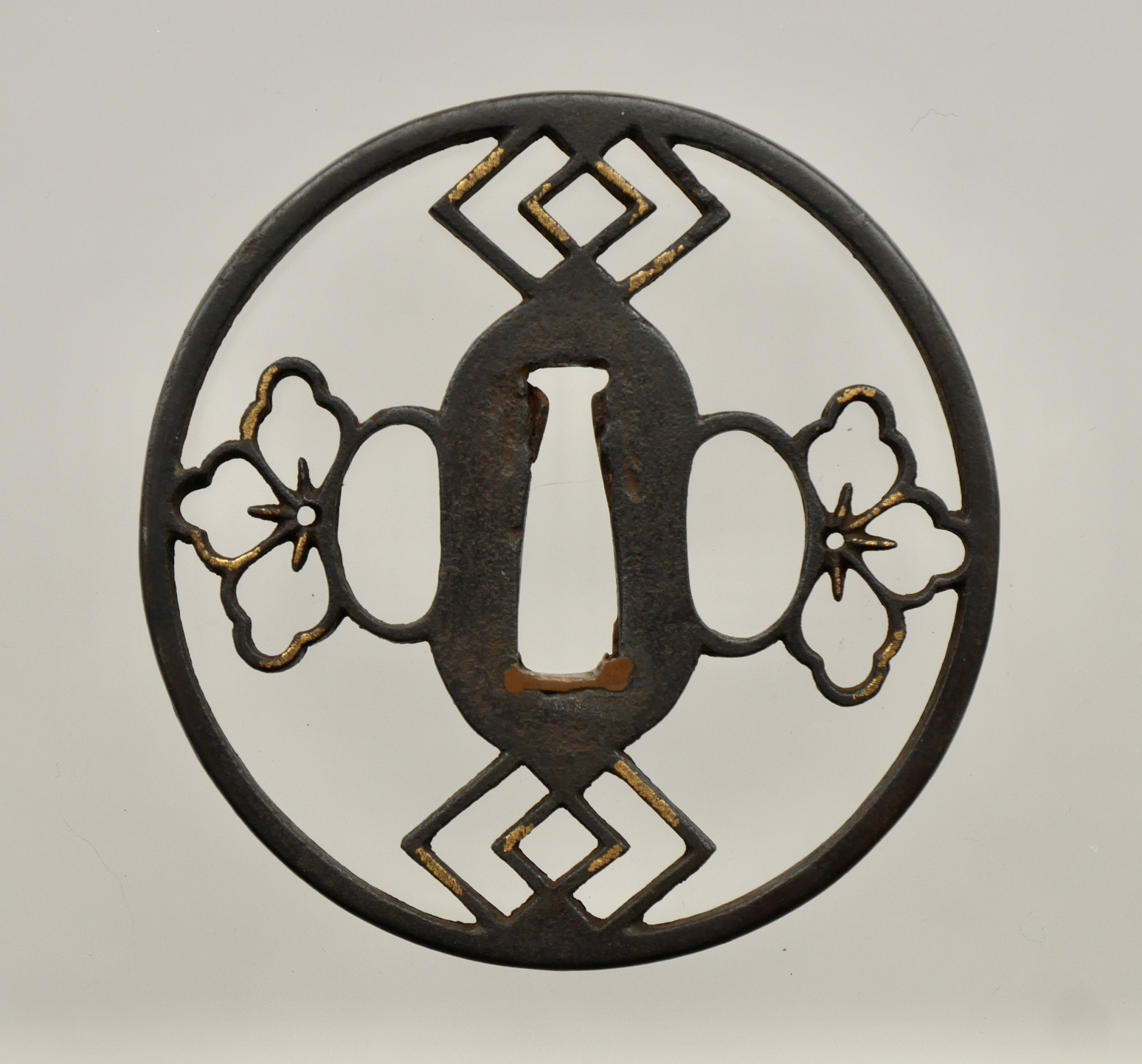
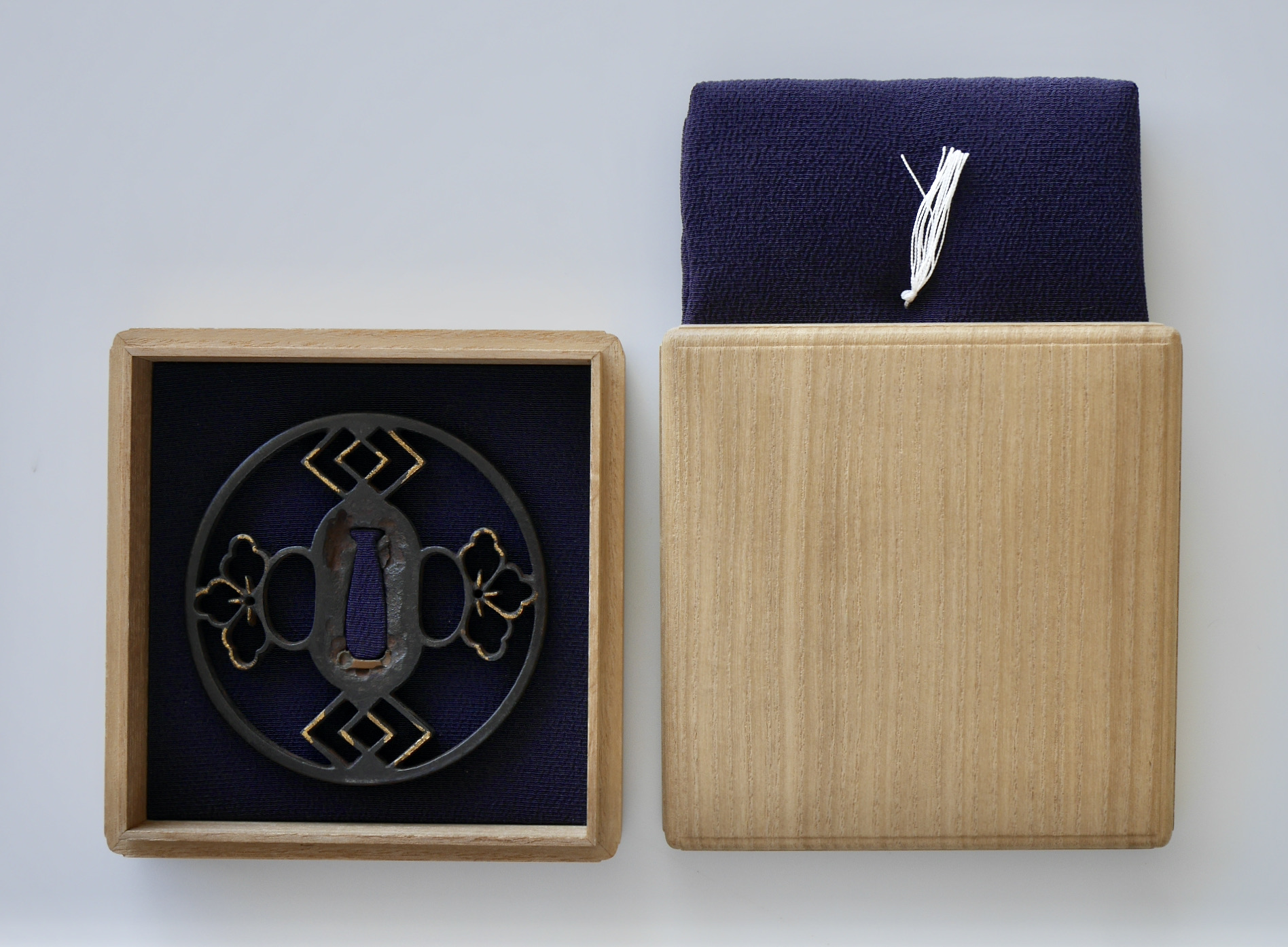
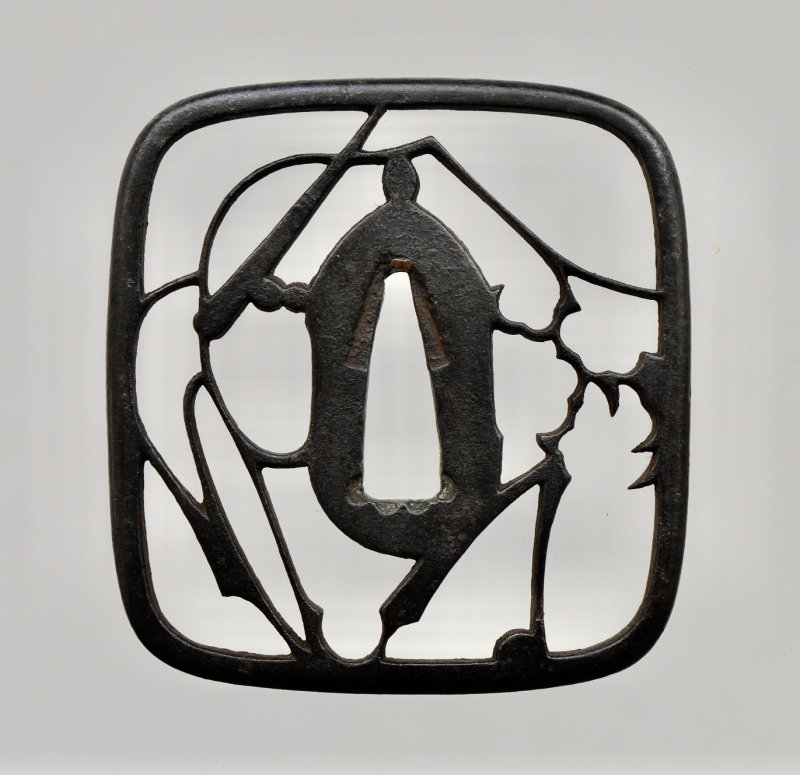
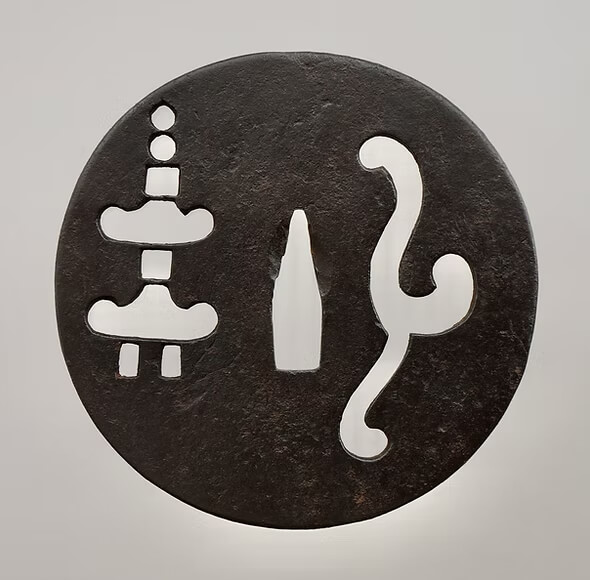
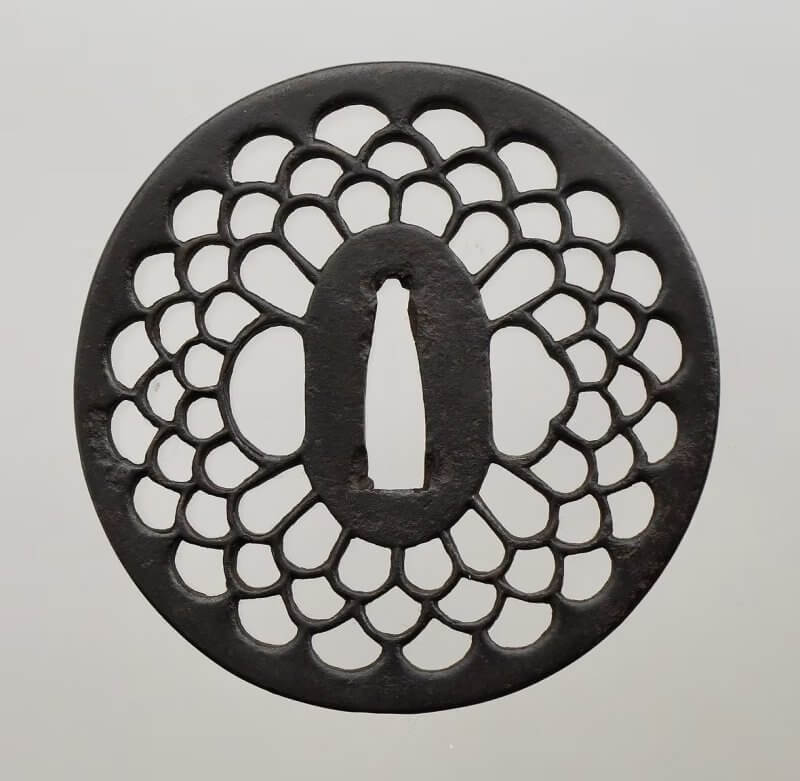
Ko-Shōami sukashi tsuba are thought to have already existed by the time of the sixth shogun, Ashikaga Yoshimasa. It is likely that, in accordance with Yoshimasa’s aesthetic preferences, Shōami which is one of the ami-shū who attended closely upon the shogun—was among the first to produce iron sukashi tsuba, which in turn inspired the emergence of Kyō sukashi. While round forms are most common, more elegant shapes such as yatsu-mokkō (eight quatrefoil form) were later inherited and further developed during the Edo period by Higo Kinko such as the Hayashi and Nishigaki families.
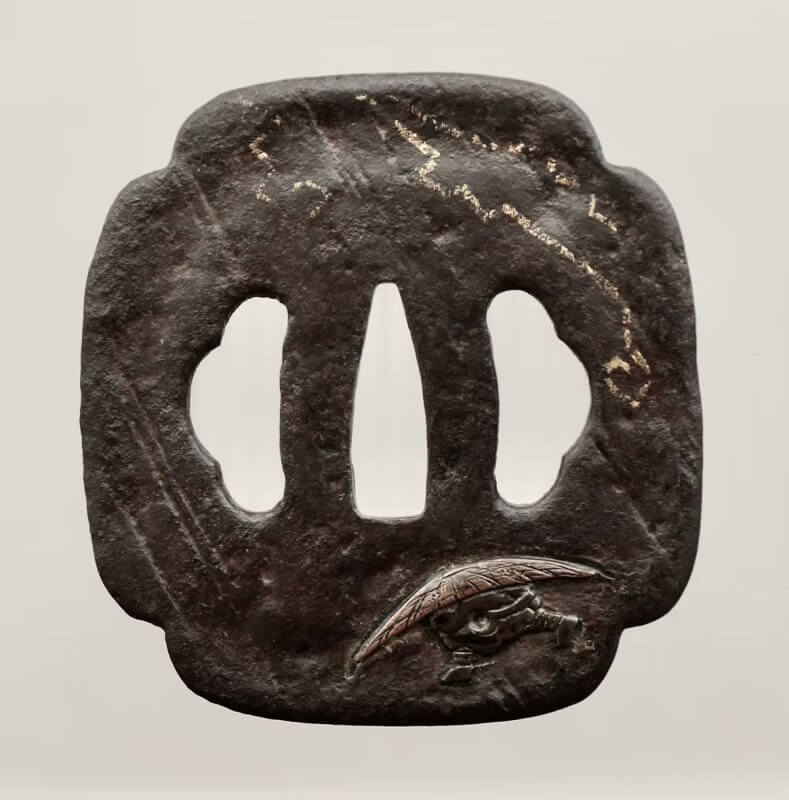
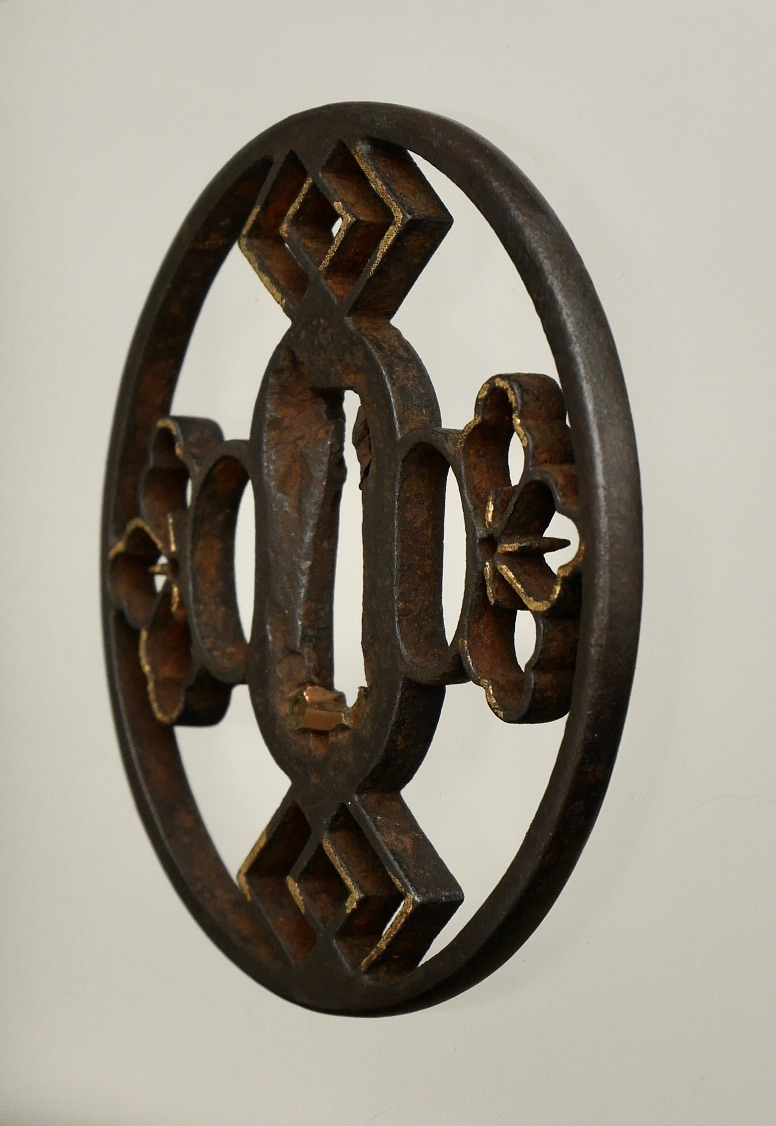
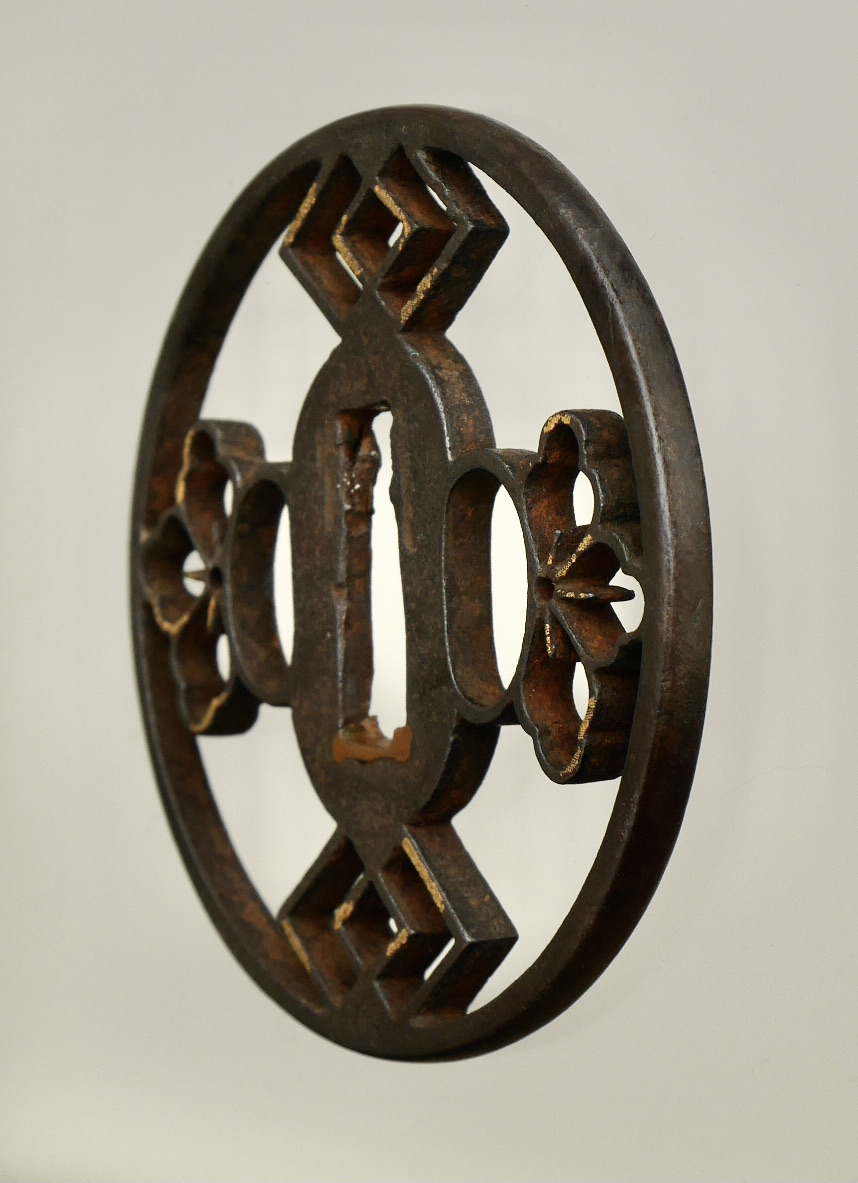
This tsuba displays a symmetrical composition in both vertical and horizontal directions, resembling the bold design approach of Owari tsuba. The sukashi, however, is delicate and refined, and the decorative use of nunome-zōgan further suggests that it is a work of Ko-Shōami.
The somewhat narrow crescent-shaped hitsu-ana on either side indicate a production date around the middle of the Muromachi period. The subdued iron tone, together with the balanced sukashi and elegant inlay, gives the work a distinctive charm. Altogether, it stands as a representative example of Ko-Shōami workmanship.