Design of Woman’s Hats and Snowflake Rings
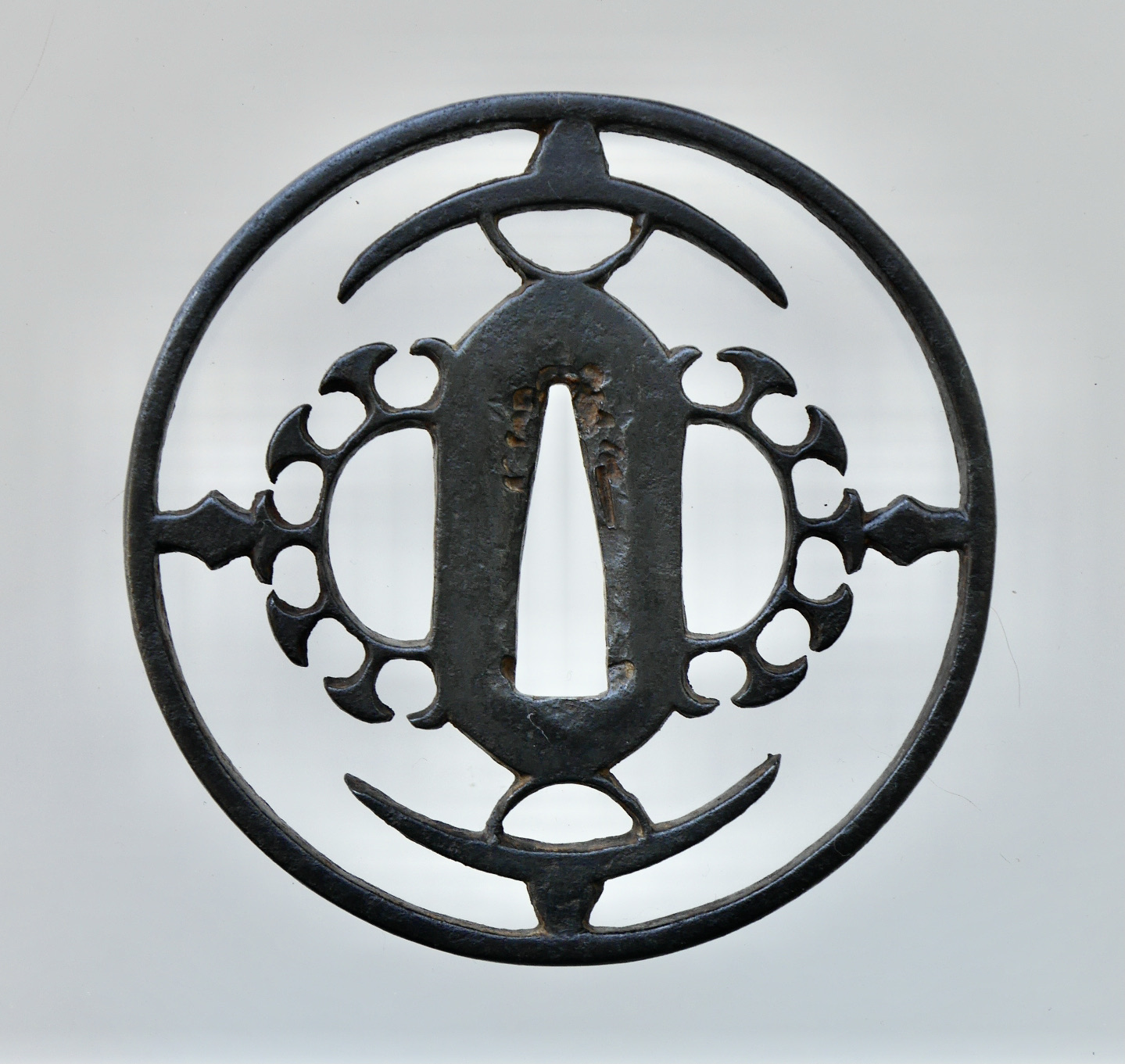
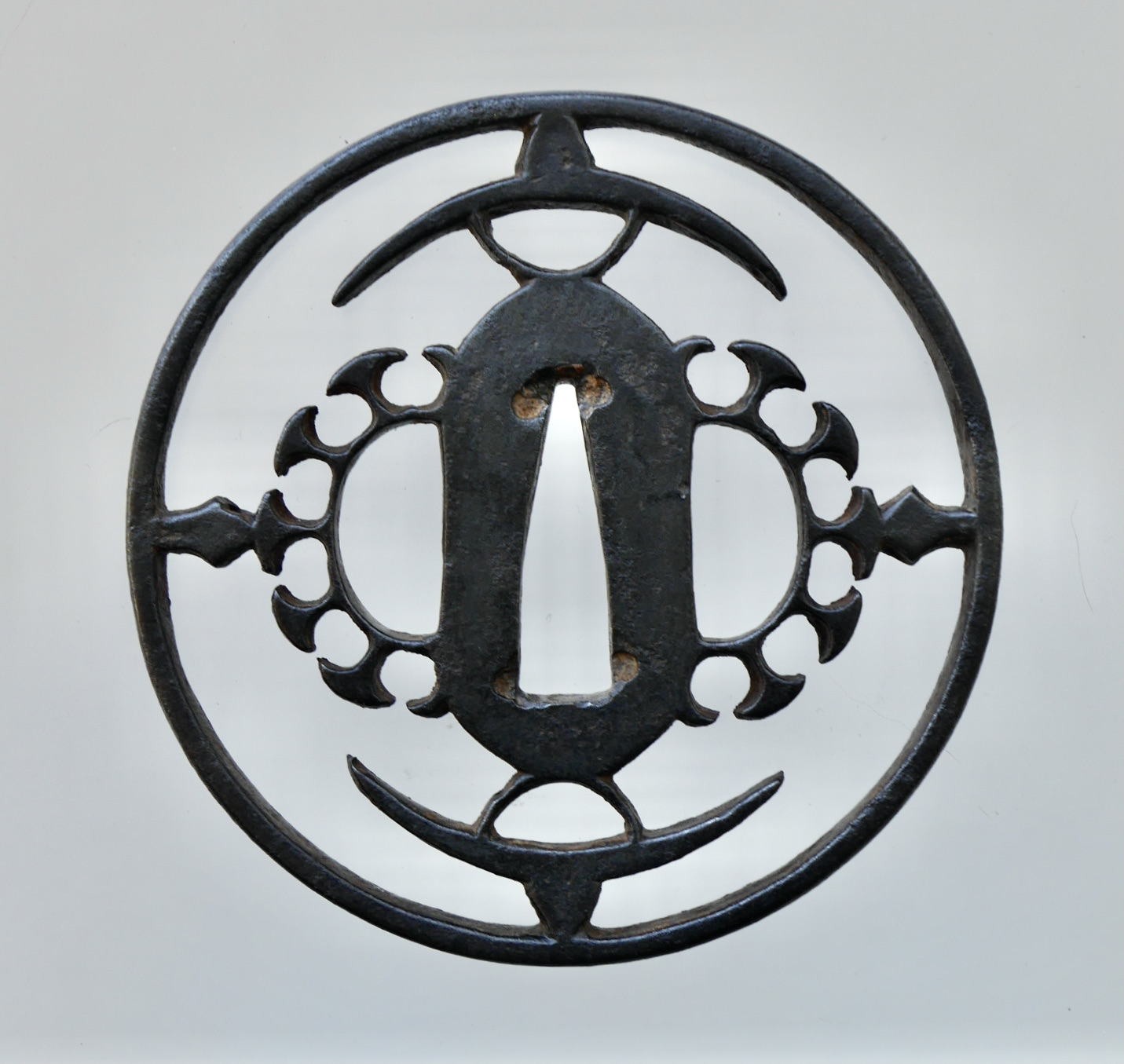
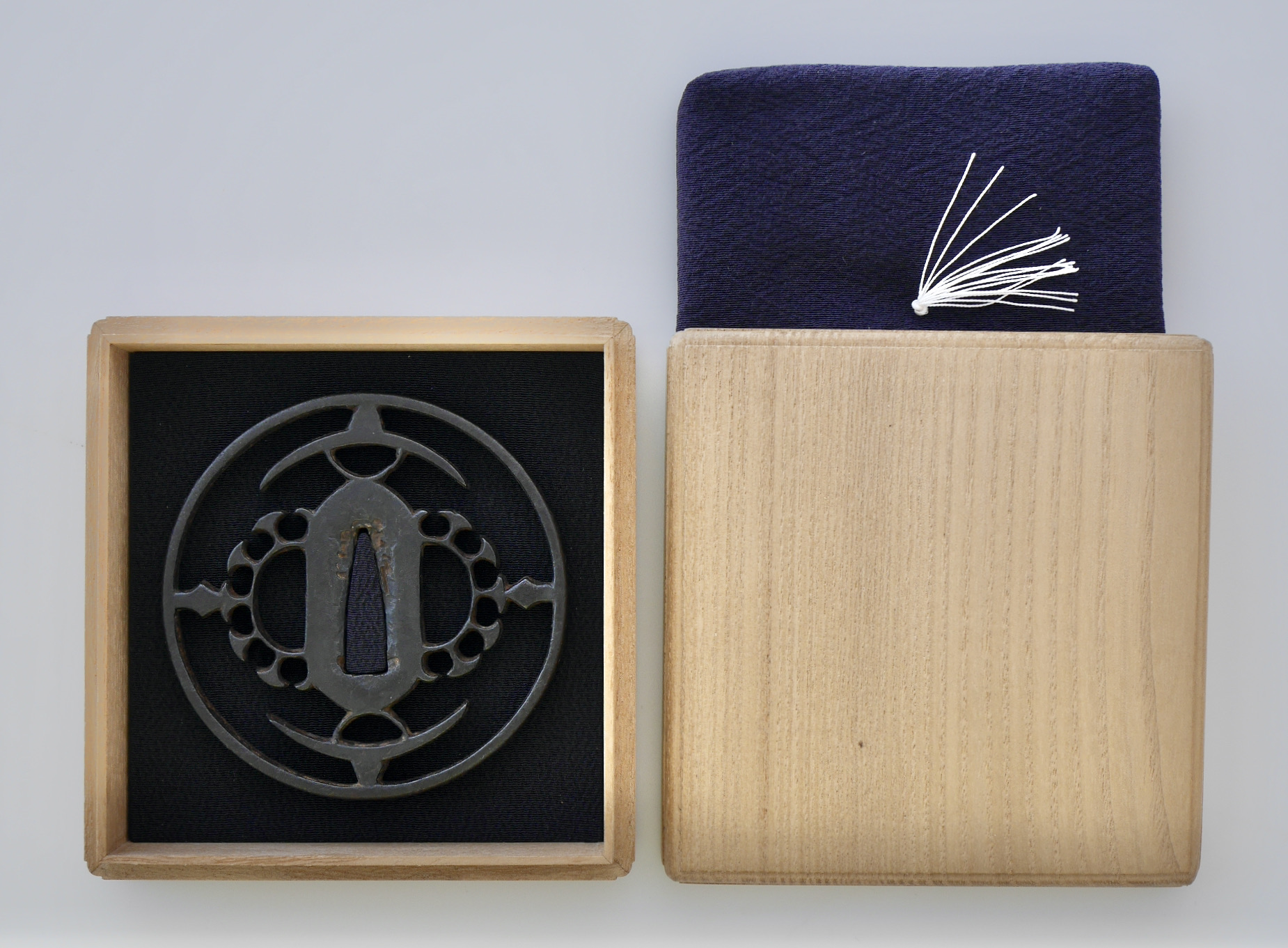
The term Owari sukashi was not used in earlier periods, but was introduced in the early modern era when Akiyama Kyūsaku Ou undertook the classification and organization of sukashi tsuba. Although it remains uncertain whether these works were actually produced in Owari, the yakite and the presence of tekkotsu closely resemble those found in the works of masters associated with Owari, such as Yamakichibei, Hōan, and Sadahiro. Therefore, they have been regarded as their predecessors.
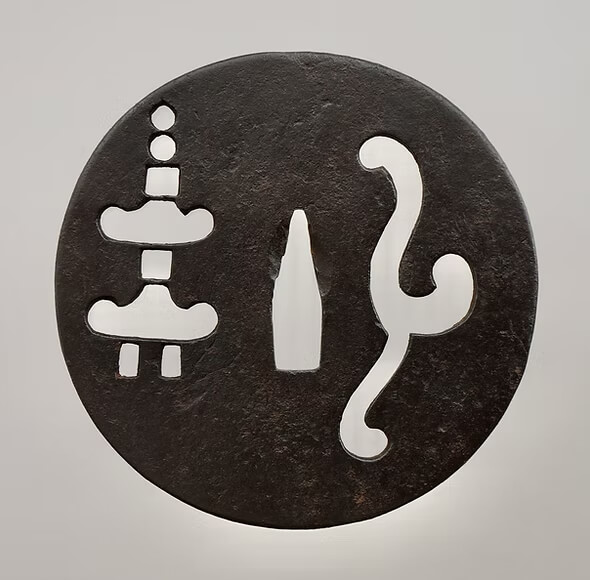
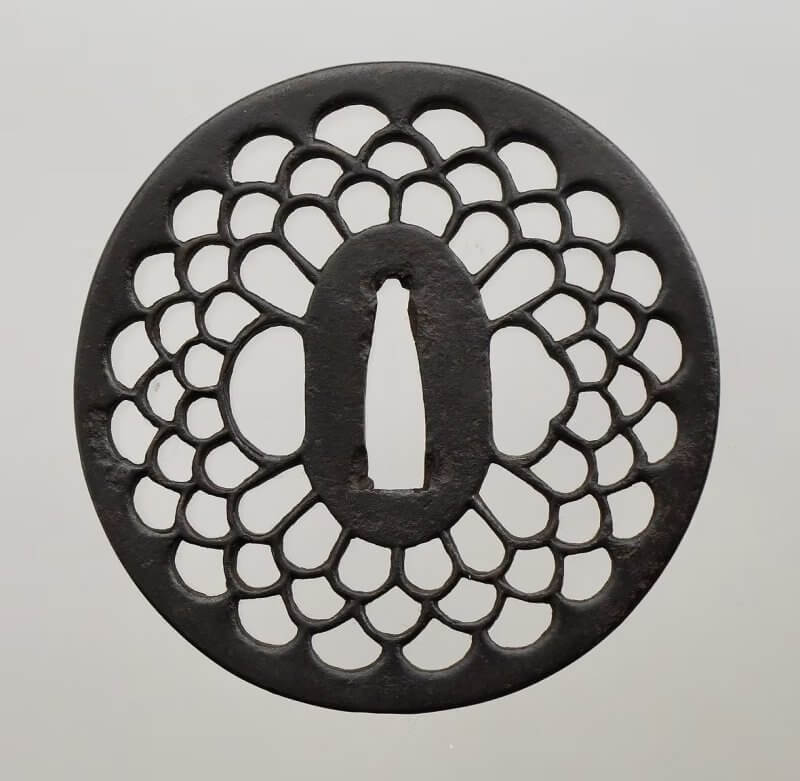
Owari sukashi tsuba of the Muromachi period are typically characterized by iron maru-gata (round form) with a slightly concave center, kaku-mimi ko-niku mimi (in between square and round rim), and bold, largely symmetrical sukashi designs finished with tsuchime incorporating visible tekkotsu.
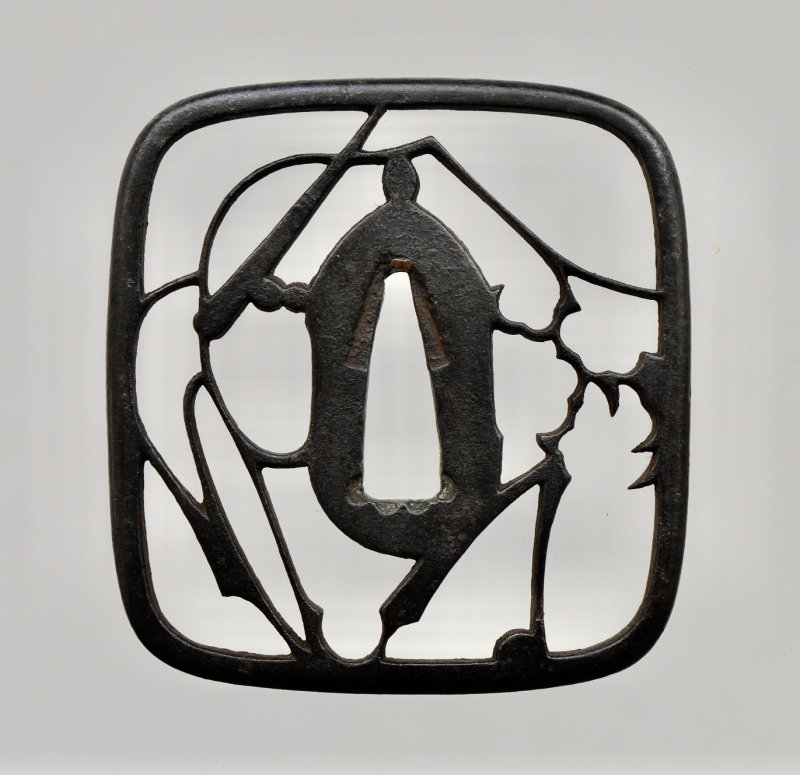
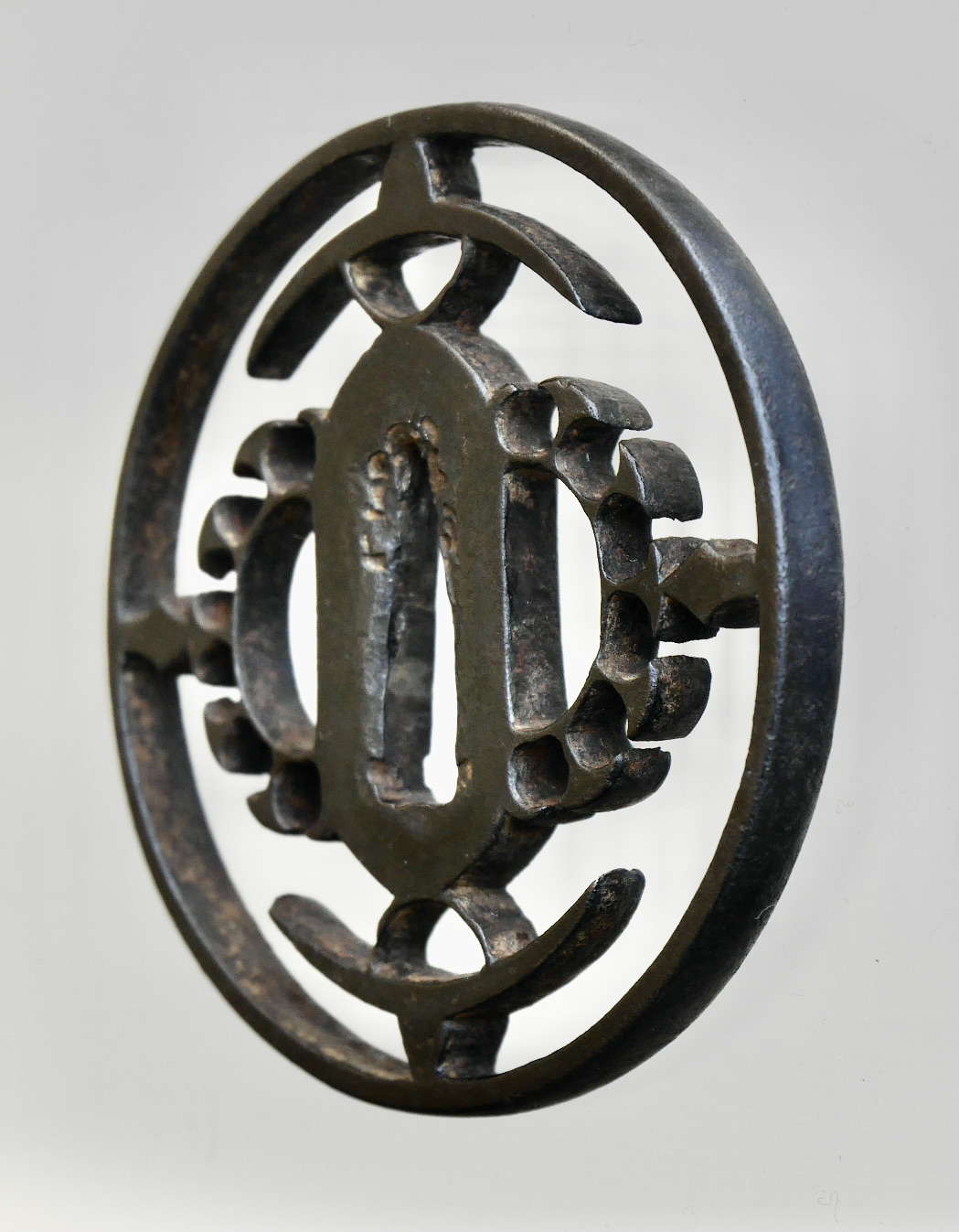
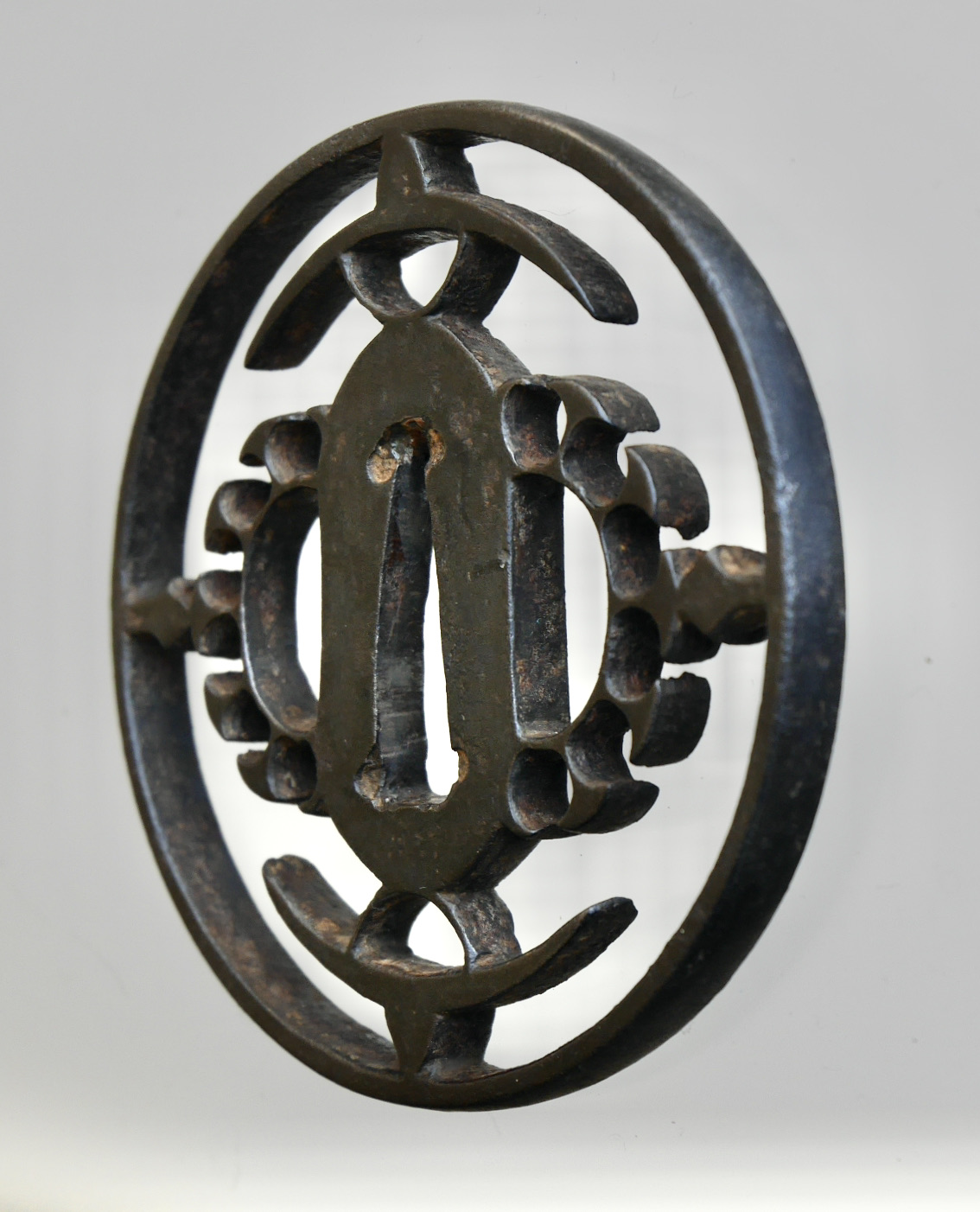
This tsuba is a quintessential example possessing precisely such characteristics, though the tsuchime has become somewhat more subdued, suggesting a production date around the Tenshō era. Yukiwa (snowflake rings) are arranged on the left and right, while ichime-gasa (a woman’s hat) appear above and below, forming an extremely unusual sukashi design. The piece is also notably thick, giving it a powerful and imposing presence.
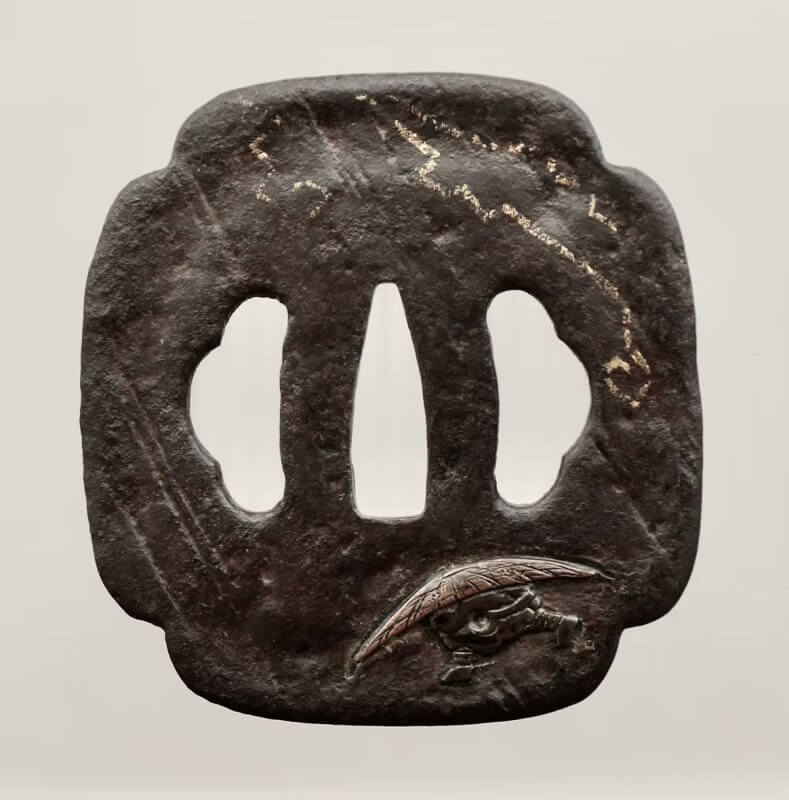
The bold modeling, with the surface dramatically tapering from the mimi toward the seppa-dai, the spaciously treated surface with its subtle variations, and the deep black patina are all exceptionally appealing and endow the work with a distinctive dignity and character.