Design of Mistletoe
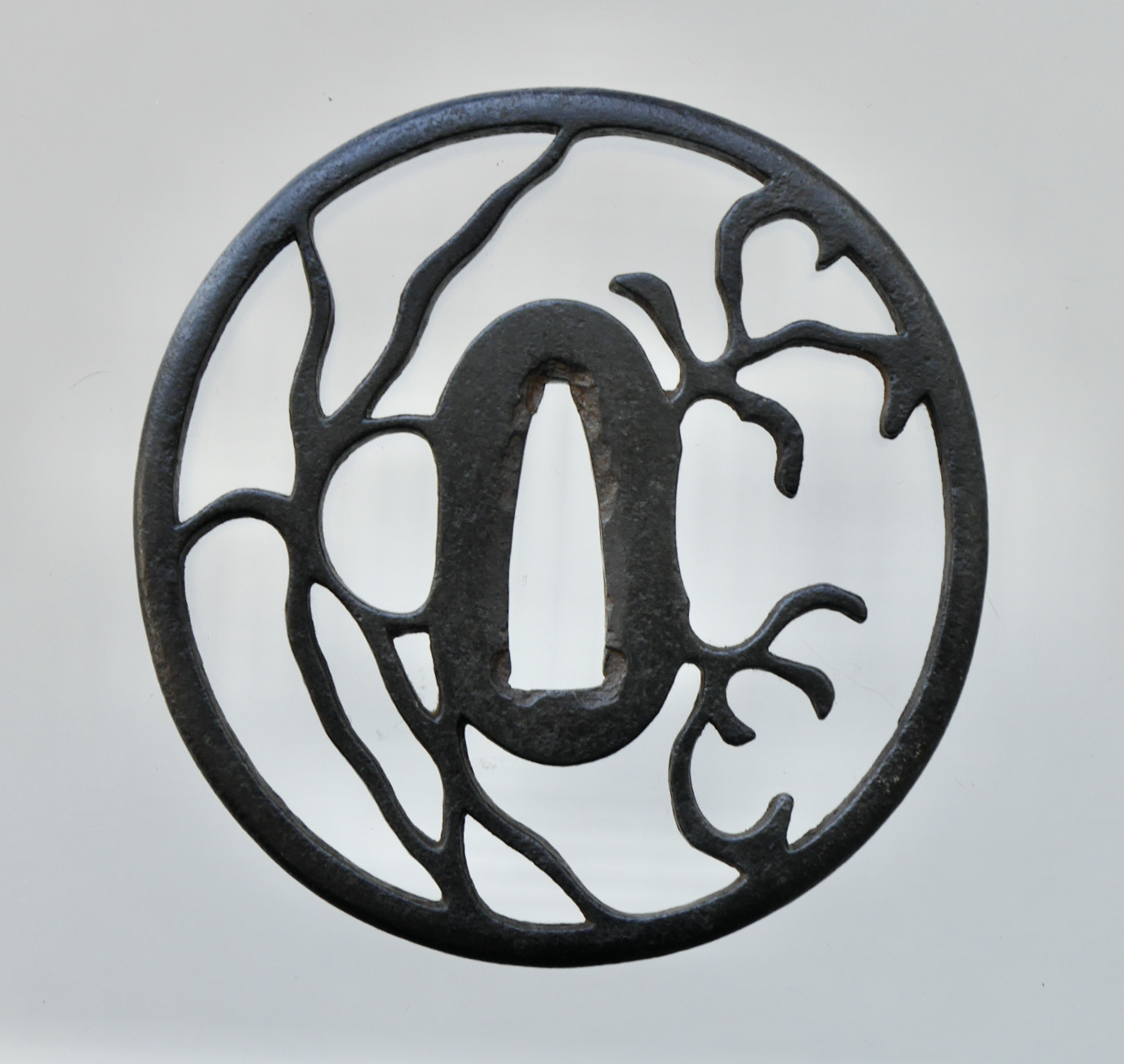
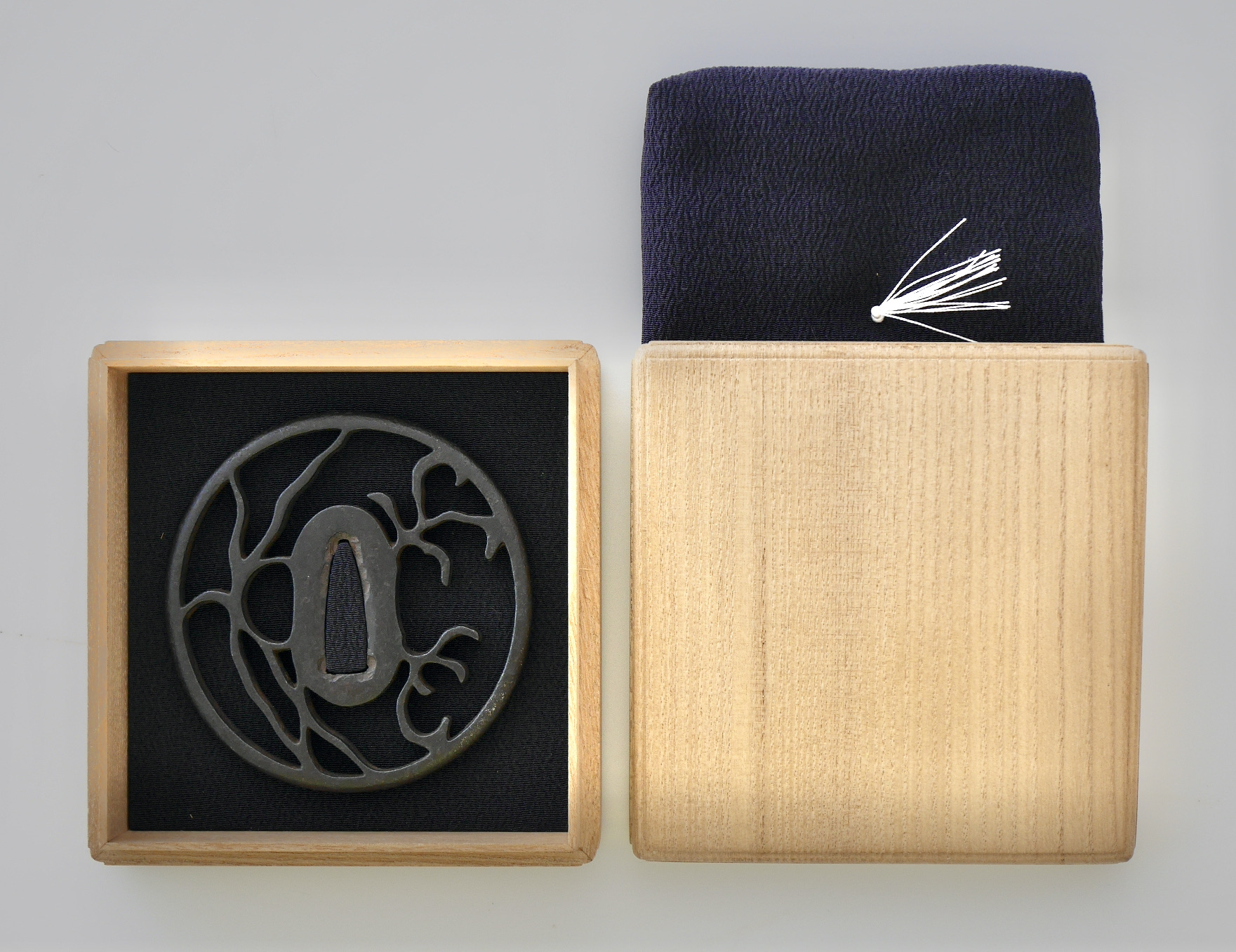
Akasaka tsuba originated in the rapidly developing city of Edo, when the Tadamasa brothers—said to have come either from Owari or Kyō—began their production there. During the time of the first and second generations of Tadamasa, the spirit of the Momoyama period still remained strong, and their works possessed a bold and martial character enhanced by yakite. From the Genroku period (1688-1704) onward, however, beginning with the third-generation Tadatora, the changing aesthetic demands of the period led to the production of tsuba with migaki-ji (polished surfaces) and a gentler atmosphere. At the same time, pictorial compositions were further developed, capturing the heart of samurai who had come to Edo from various regions of the country.
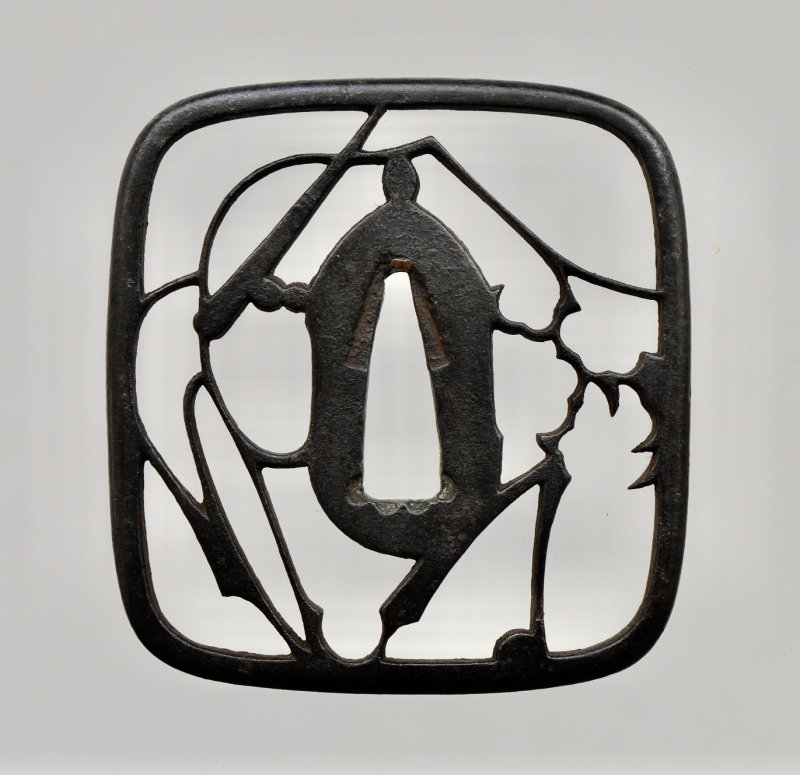
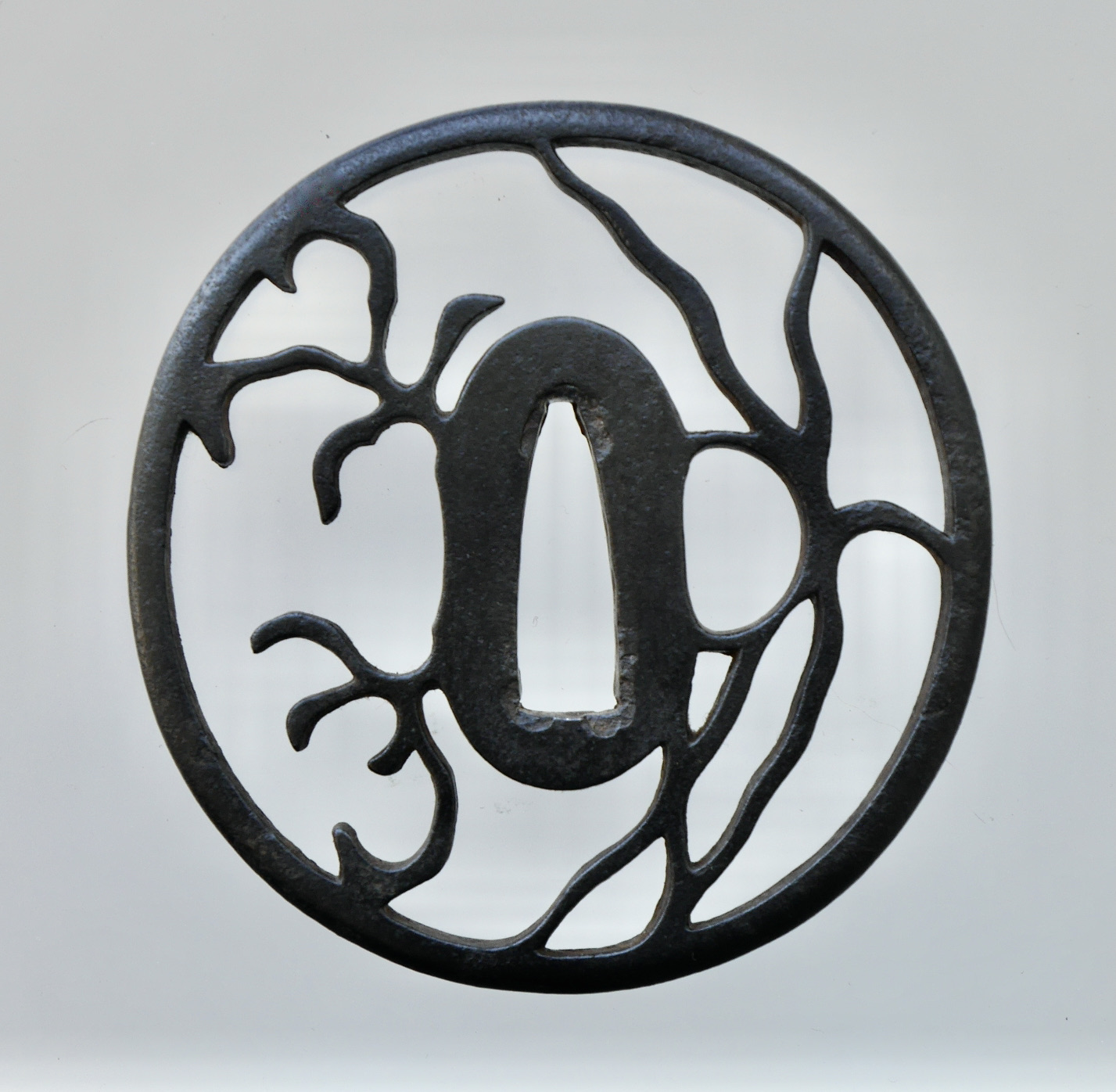
Although this is a rarely encountered design, the shape of the stems and leaves suggests that the motif represents yadorigi (mistletoe). The motif likely references “Yadorigi”, a chapter from The Tale of Genji, and may therefore reflect the cultivated taste and literary sensibility of the original patron.
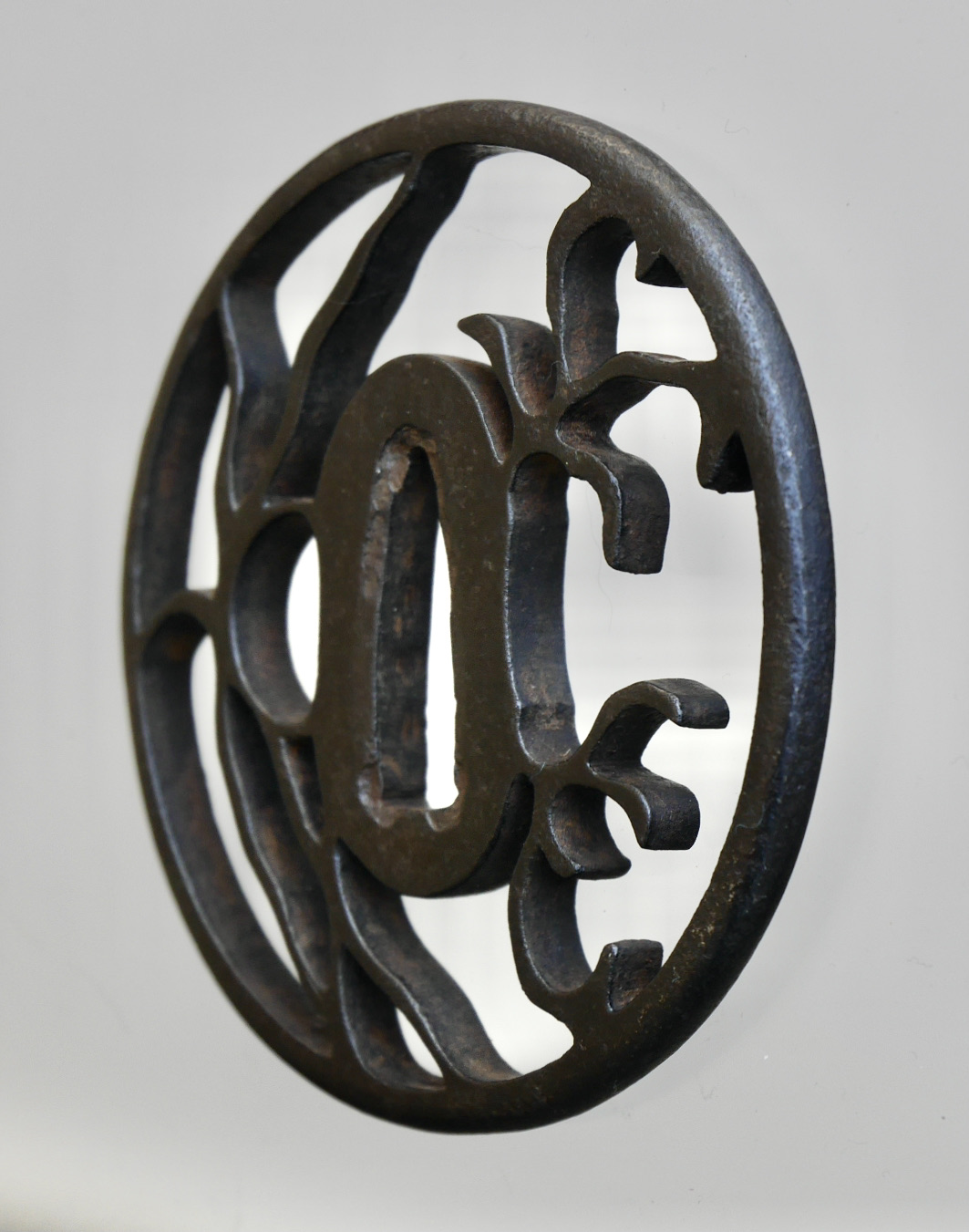
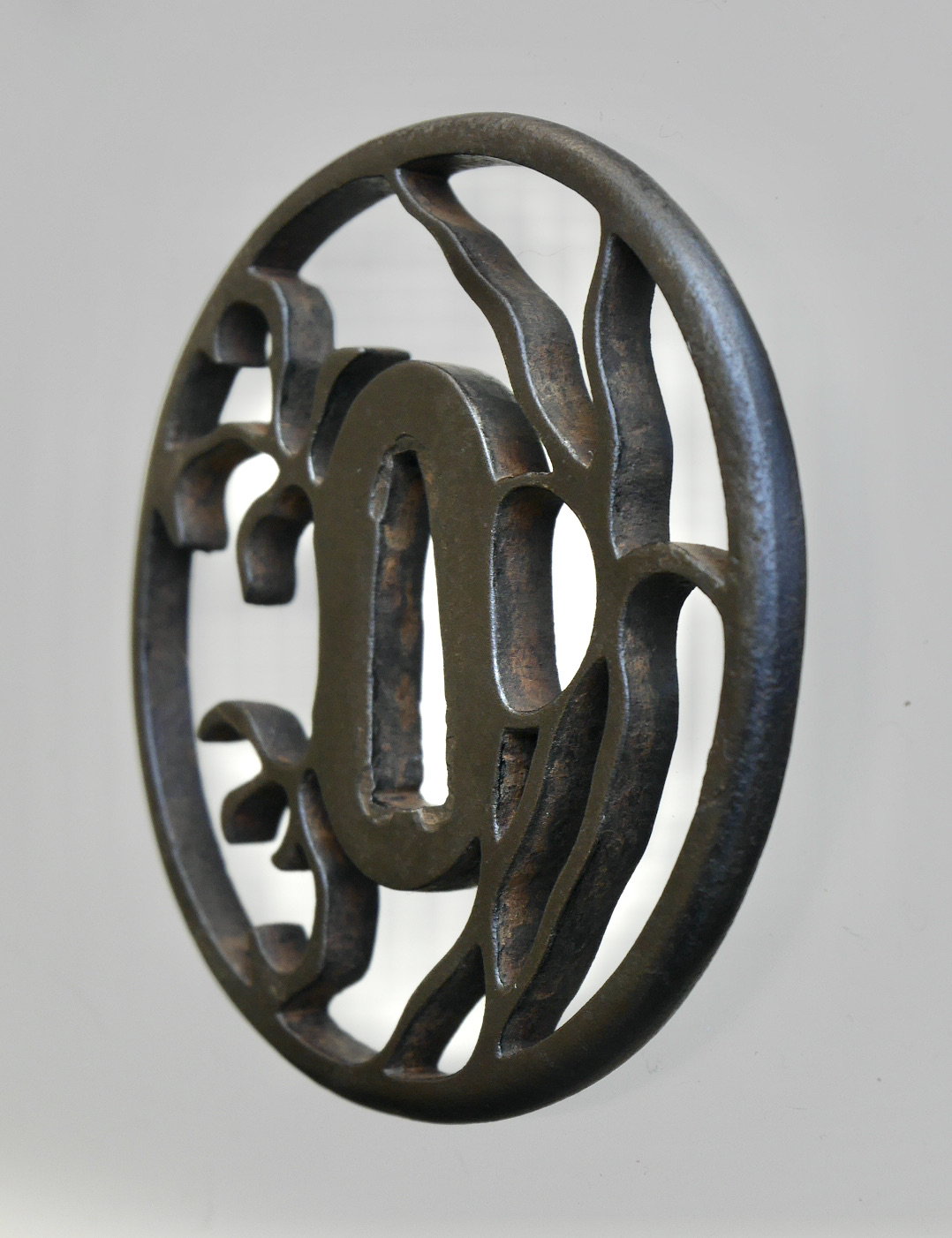
The composition possesses a lively sense of movement together with a spacious and unhurried quality, creating an open and highly atmospheric impression. Though substantial in thickness and dignified in presence, the polished migaki-ji surface imparts a somewhat more delicate sensibility, suggesting that the work may be attributable to the third-generation Tadatora.
The iron displays a luminous, moist richness, and the design itself is superb, making this an excellent work through which the full charm of Akasaka tsuba may be appreciated.