Design of a Figure with Umbrella in a Thunderstorm
The Shimizu school began with the first-generation Jinbei, a nephew of Hirata Hikozō, and came to an end as a line of kinko with the fifth-generation Shigenaga. Although Shigenaga’s year of birth is unknown, his death in Kaei 7 (1854) suggests that he was of a similar age to Kamiyoshi Fukanobu. At that time, works in the Jingo style were popular not only in Kumamoto but also in Edo, indicating that this manner enjoyed widespread acclaim. This popularity can be attributed in part to Shigenaga’s achievements, and it is clear that his work was highly regarded during his lifetime.
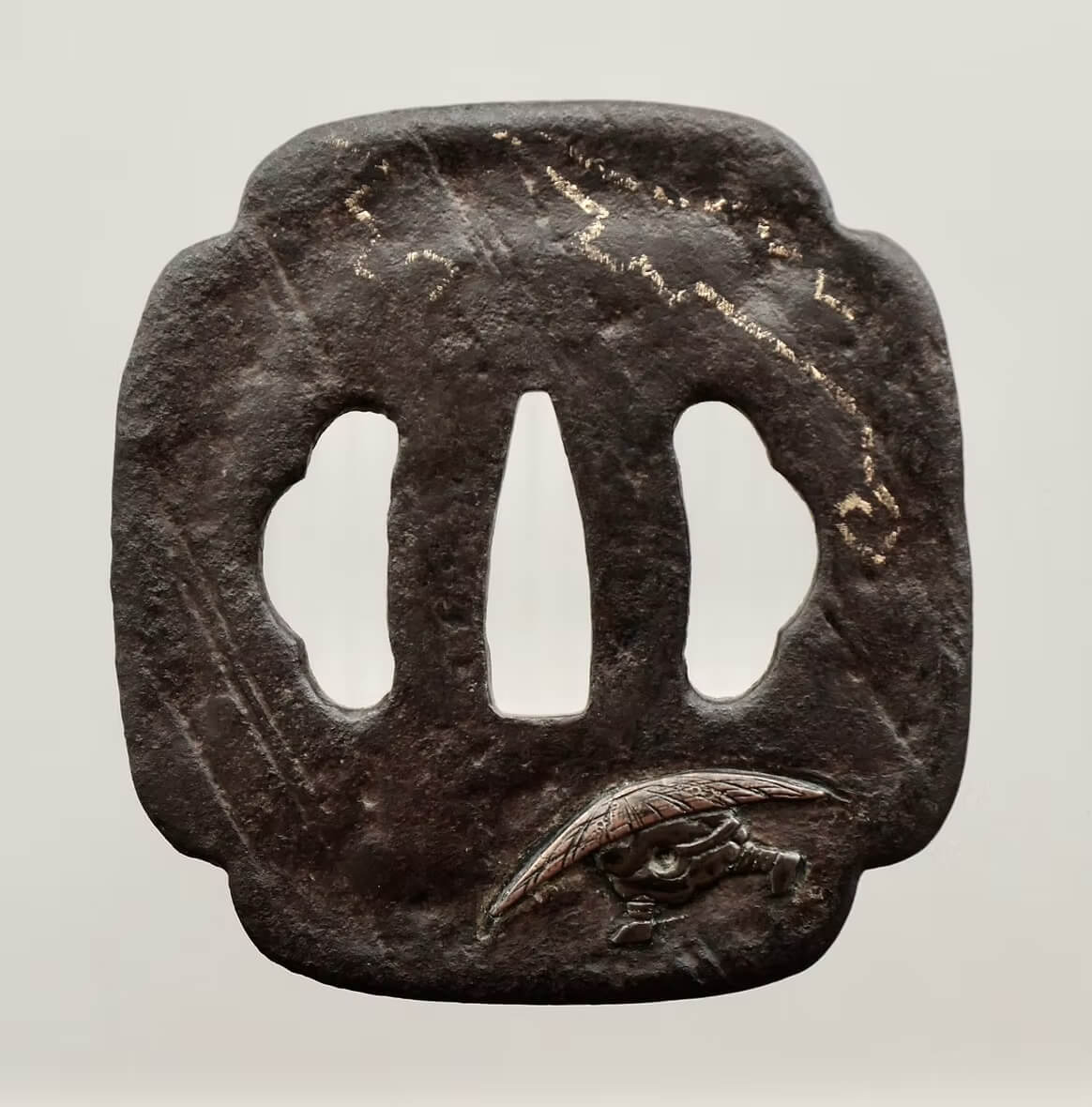
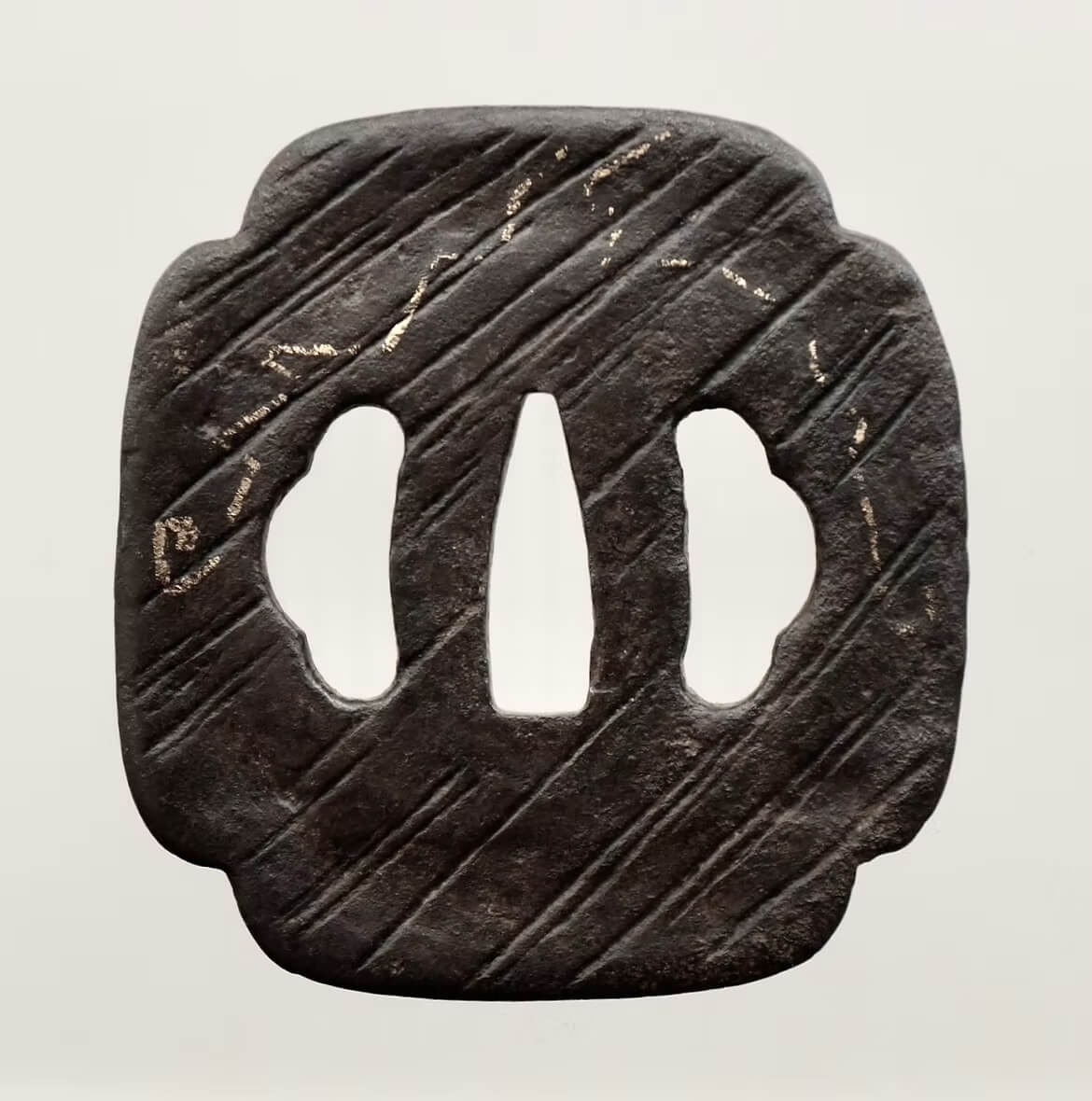
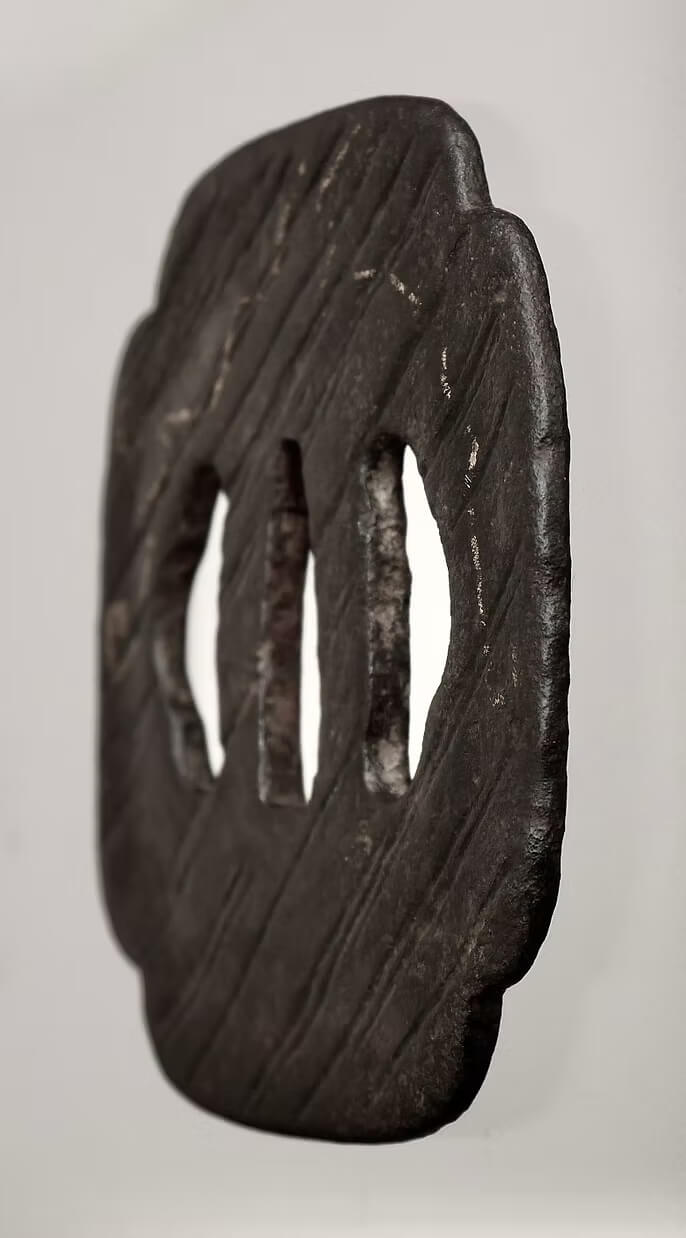
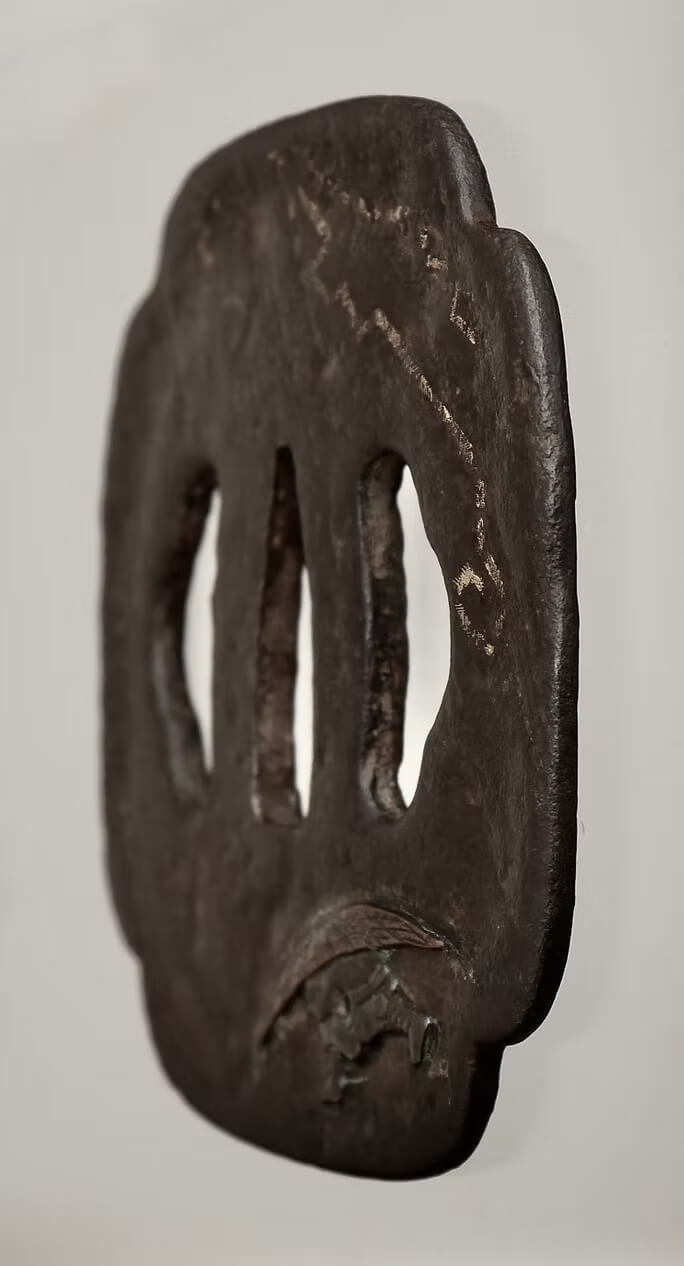
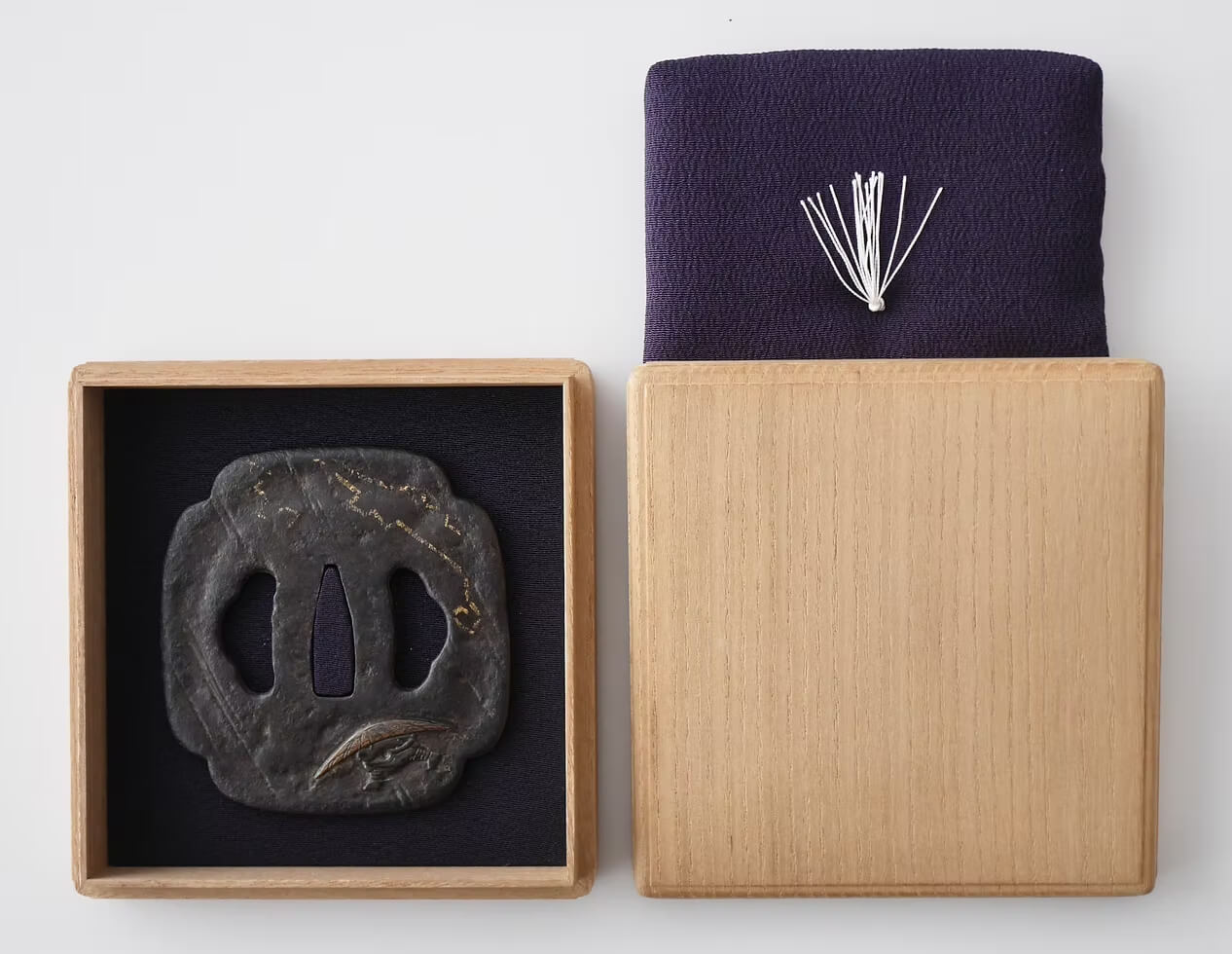
This tsuba takes the somewhat irregular mokkō shape characteristic of the Shimizu tradition and depicts a figure hurrying along beneath a large umbrella in a thunderstorm. The ground is finished with diagonally applied shigure-yasuri of varying intensity, while the lightning, rendered in gold nunome-zōgan, has rounded tips that seem to strike downward. The figure is executed in the distinctive Higo-style black shibuichi, and the umbrella in suaka (copper), both placed in a visually pleasing position toward the lower right of the surface.
This motif appears in the work of the first-generation Shimizu, but thereafter is seen only in pieces by the fifth-generation Shigenaga. Shigenaga is known for adding characteristic openings above and below the nakago-ana; however, after the age of seventy, he ceased this practice and adopted a more standard form. Accordingly, this tsuba is considered to have been made after he reached the age of seventy.
Rich in narrative, this tsuba combines an excellent composition with outstanding iron quality, making it a truly remarkable work.